Hunza Valley
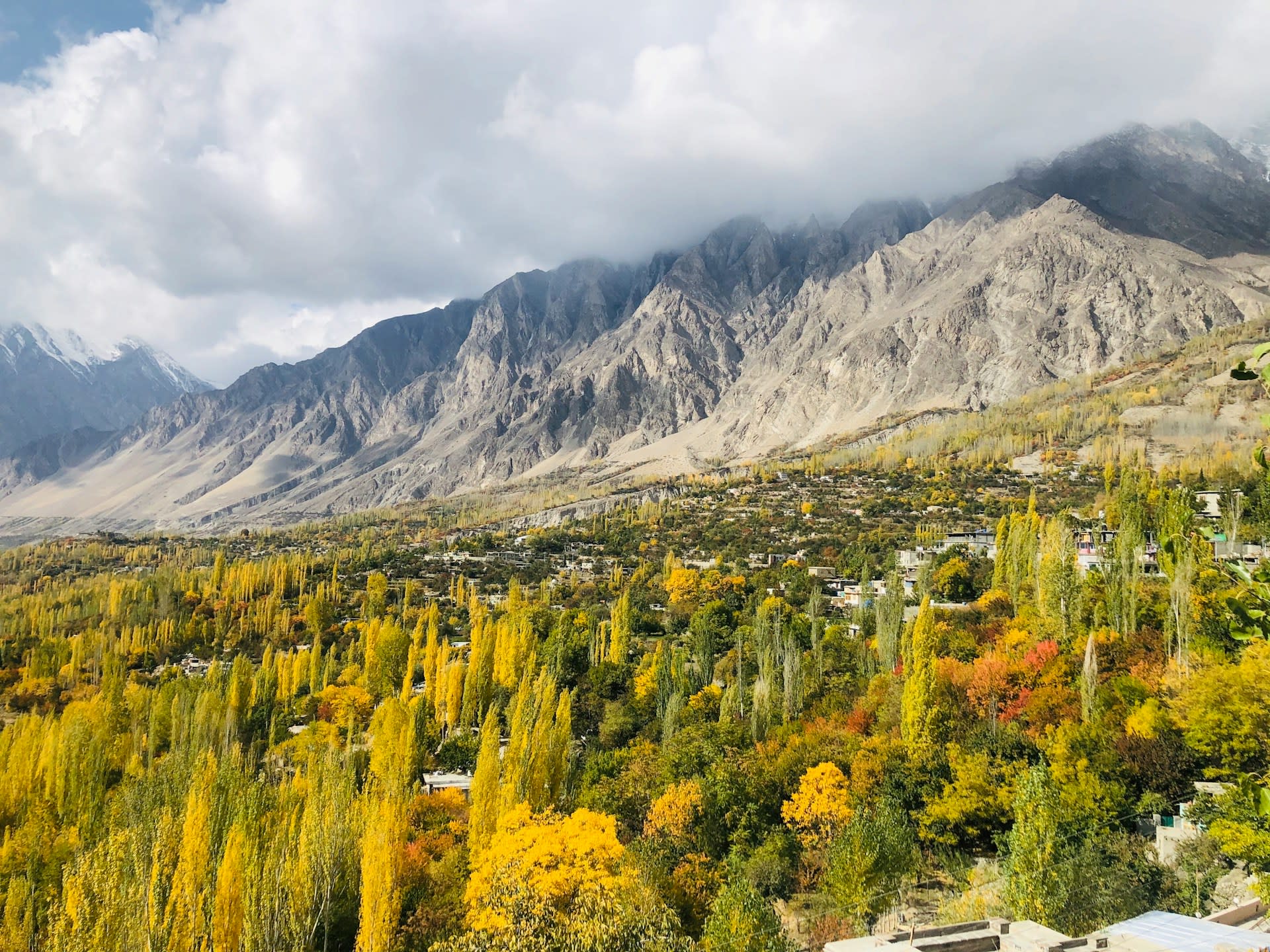
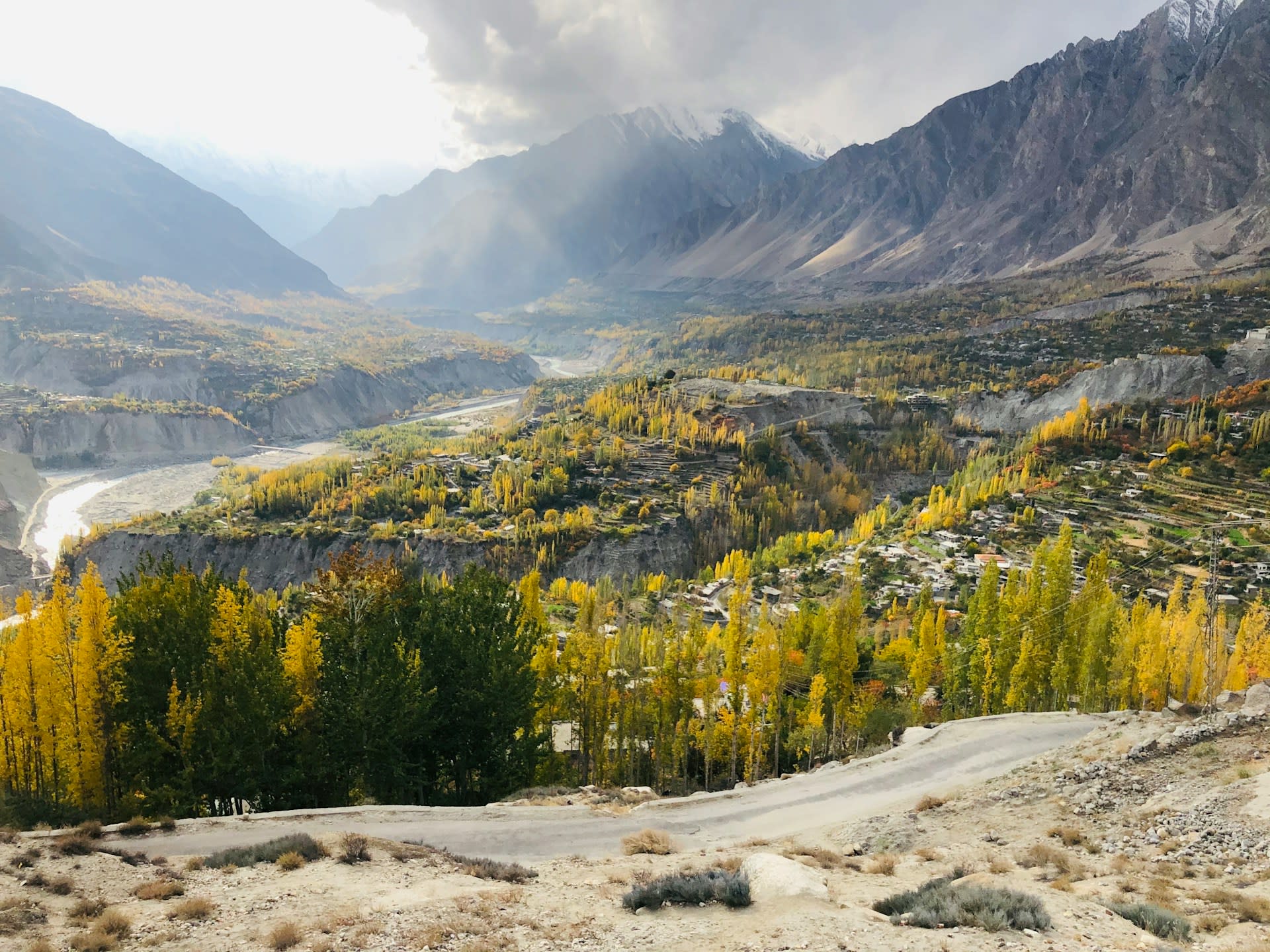
The Hunza Valley is one of the most celebrated mountain landscapes in the world — a deep valley carved into the heart of the Karakoram range, where terraced fields of wheat and apricot orchards cling to near-vertical slopes beneath a ring of 7,000 m peaks. The valley was historically an independent princely state, and its capital Karimabad retains much of its traditional character. Often associated with legends of extraordinary longevity among its people, Hunza has drawn travellers for over a century and continues to be regarded as one of Pakistan's — and the world's — most breathtaking destinations.
🌍 Geography and Ecosystem
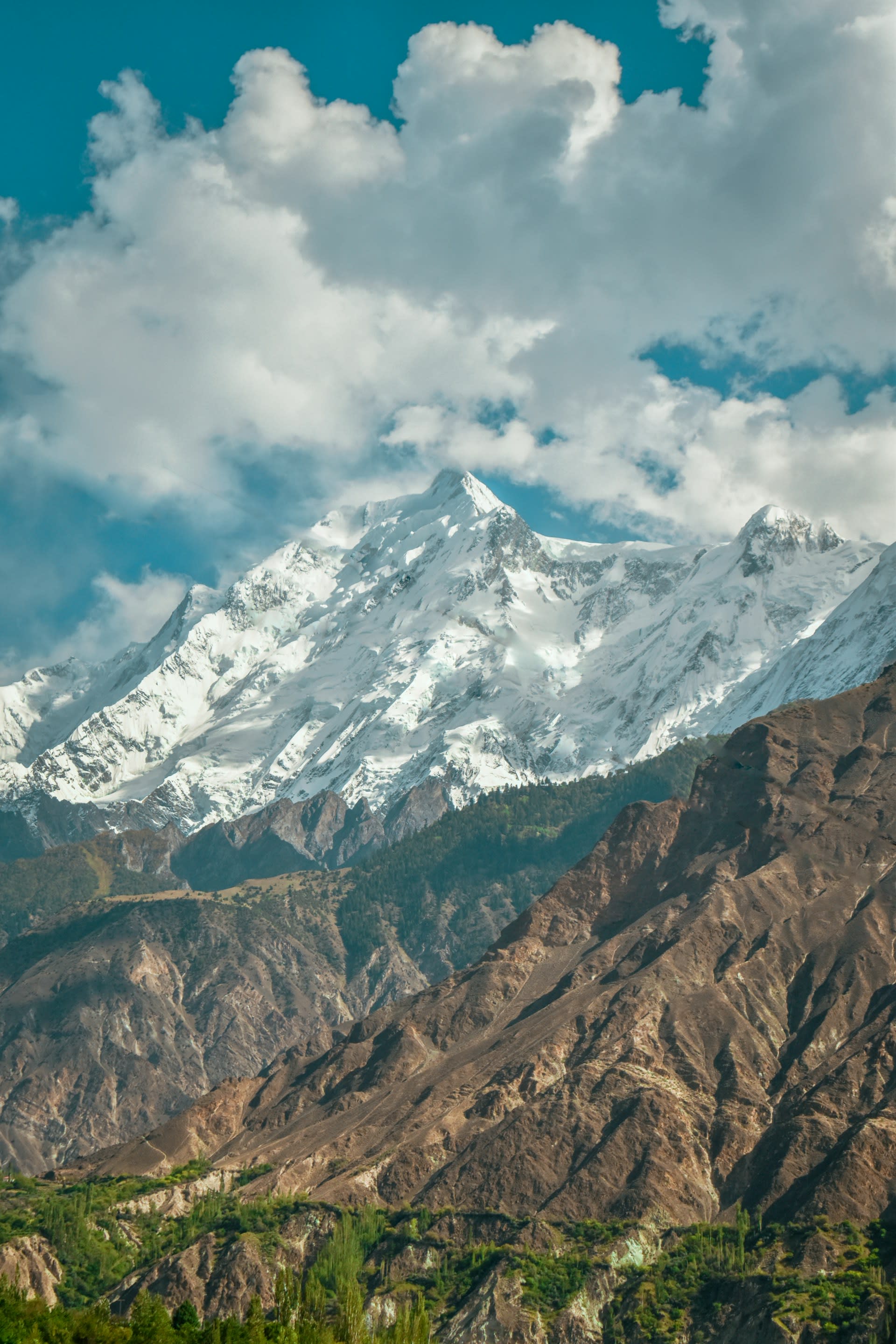
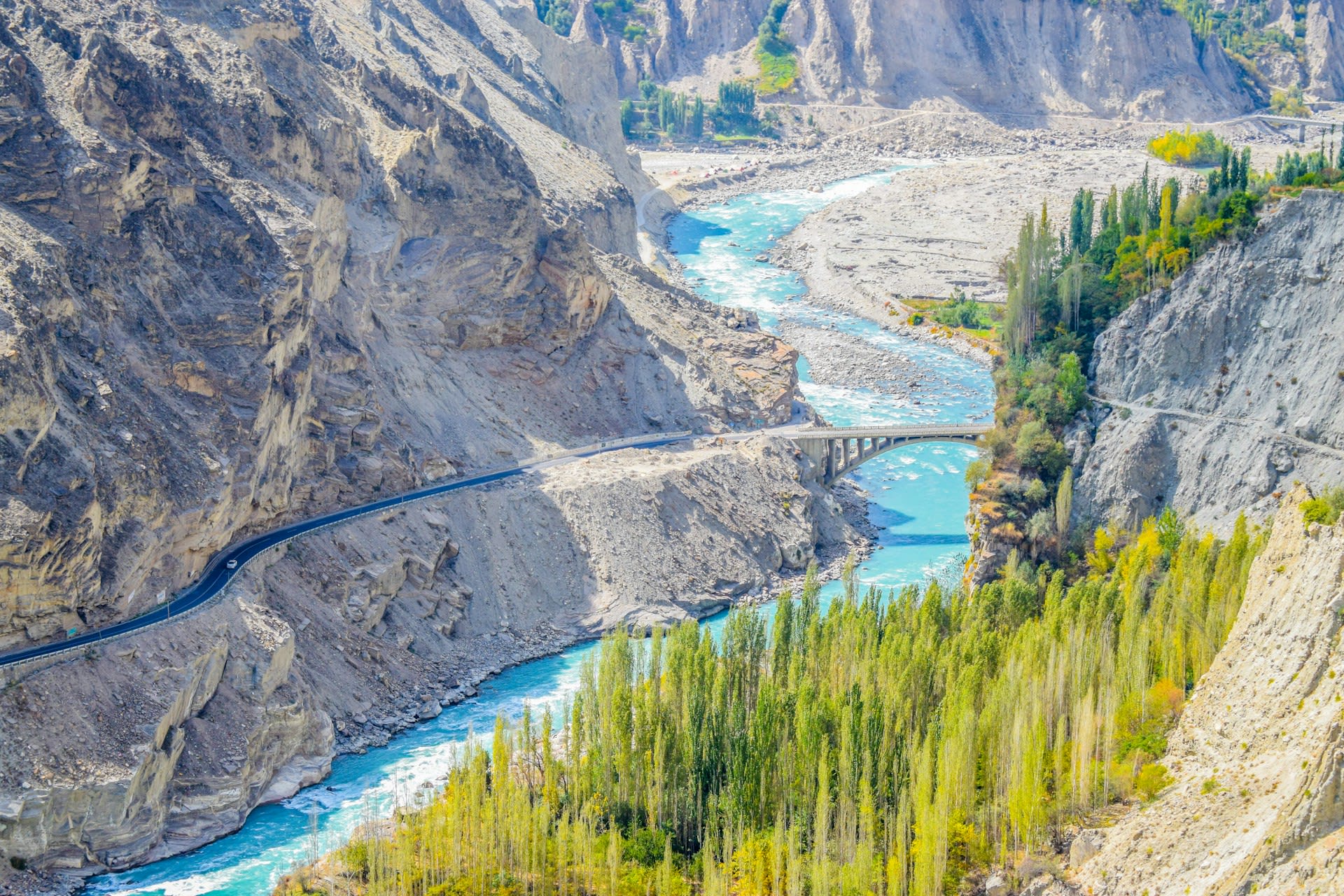
Hunza sits at an elevation of approximately 2,400 m where the Hunza River cuts through the Karakoram. The valley is flanked by some of the world's highest mountains:
- Surrounding Peaks: Rakaposhi (7,788 m), Ultar Sar (7,388 m), and Bojahagur Duanasir II (7,329 m) form the immediate mountain walls of the valley, with views that rank among the most dramatic on Earth.
- Attabad Lake: Created in 2010 when a landslide dammed the Hunza River, this vivid turquoise lake has become one of Pakistan's most photographed natural features.
- Glaciers: The Ultar and Ghulkin glaciers descend to near valley level, and the vast Batura Glacier (57 km long) begins just above the valley, one of the world's longest outside the polar regions.
- Traditional Agriculture: The valley's terraced irrigation system, centuries old, channels glacial meltwater to cultivate apricots, mulberries, grapes, wheat, and potatoes on slopes that appear impossibly steep.
📜 History and Cultural Significance
Hunza was an independent mountain state for centuries, ruled by the Mir (prince) from the ancient Baltit Fort above Karimabad. Its strategic position on the Silk Road gave it significant importance as a waypoint for trade caravans moving between China, Central Asia, and the Indian subcontinent. The valley came under British influence in 1891 and was absorbed into Pakistan at independence. The people of Hunza are predominantly Ismaili Muslims, followers of the Aga Khan, whose development programs have brought widespread literacy, healthcare, and education to the valley since the 1980s. The Karakoram Highway (KKH), completed in 1978 after two decades of construction and hundreds of lives, finally linked Hunza to the outside world by road.
🏃 Activities and Attractions
Hunza offers one of Pakistan's richest concentrations of natural and cultural attractions:
- Baltit and Altit Forts: Two beautifully restored medieval fortresses offer insights into Hunza's royal history and commanding views over the valley and its mountain walls.
- Eagle's Nest Viewpoint: The classic viewpoint above Duikar village for sunrise views over the valley with Rakaposhi and Ultar Sar dramatically lit in the early morning light.
- Attabad Lake: Boat trips on the extraordinary turquoise lake through the submerged landscape of the former Gojal valley.
- Trekking: Trails to Ultar Meadows, Borith Lake, and the vast Batura Glacier offer accessible to challenging alpine experiences within the valley.
- Apricot Season: April blossom and August harvest are the most celebrated seasons, when the valley turns pink and gold and dried apricots are sold on every roadside.
💡 Travel Tips
How to Get There: Fly to Gilgit airport from Islamabad (subject to weather) or drive the Karakoram Highway from Islamabad — a spectacular 2-day journey of approximately 600 km. Coordinates: 36.32° N, 74.65° E.
Best Time to Visit: April–May for spring blossom; July–September for clear skies and trekking; October for autumn colours. November–March sees snowfall at higher elevations.
What to Bring: Warm layers for cold nights even in summer, good trekking shoes, sun protection at altitude, and some Pakistani rupees — ATMs are limited above Gilgit.
Accommodation: Karimabad has numerous guesthouses and hotels at all price points. The Old Hunza Inn and Eagle's Nest Hotel are particularly renowned for their views.
Best Time to Visit: April–May for spring blossom; July–September for clear skies and trekking; October for autumn colours. November–March sees snowfall at higher elevations.
What to Bring: Warm layers for cold nights even in summer, good trekking shoes, sun protection at altitude, and some Pakistani rupees — ATMs are limited above Gilgit.
Accommodation: Karimabad has numerous guesthouses and hotels at all price points. The Old Hunza Inn and Eagle's Nest Hotel are particularly renowned for their views.
🌱 Conservation
The Karakoram Highway and increasing tourist numbers have brought both economic benefit and environmental pressure to the Hunza Valley. Plastic waste along the KKH and in the valley is a growing problem. The Aga Khan Development Network has been instrumental in sustainable development programs that balance modernisation with conservation of traditional architecture, water management systems, and cultural heritage. Climate change is accelerating glacier retreat across the Karakoram, threatening the long-term water supply for valley agriculture and downstream communities.
✨ Conclusion
Hunza Valley is the kind of place that inspires lifelong devotion in those who visit. Its combination of sublime mountain scenery, ancient history, warm hospitality, and extraordinary apricot orchards creates an experience that is difficult to replicate anywhere else in the world. It is the heart of Pakistani mountain tourism and one of Asia's greatest natural treasures.