Balochistan Beach
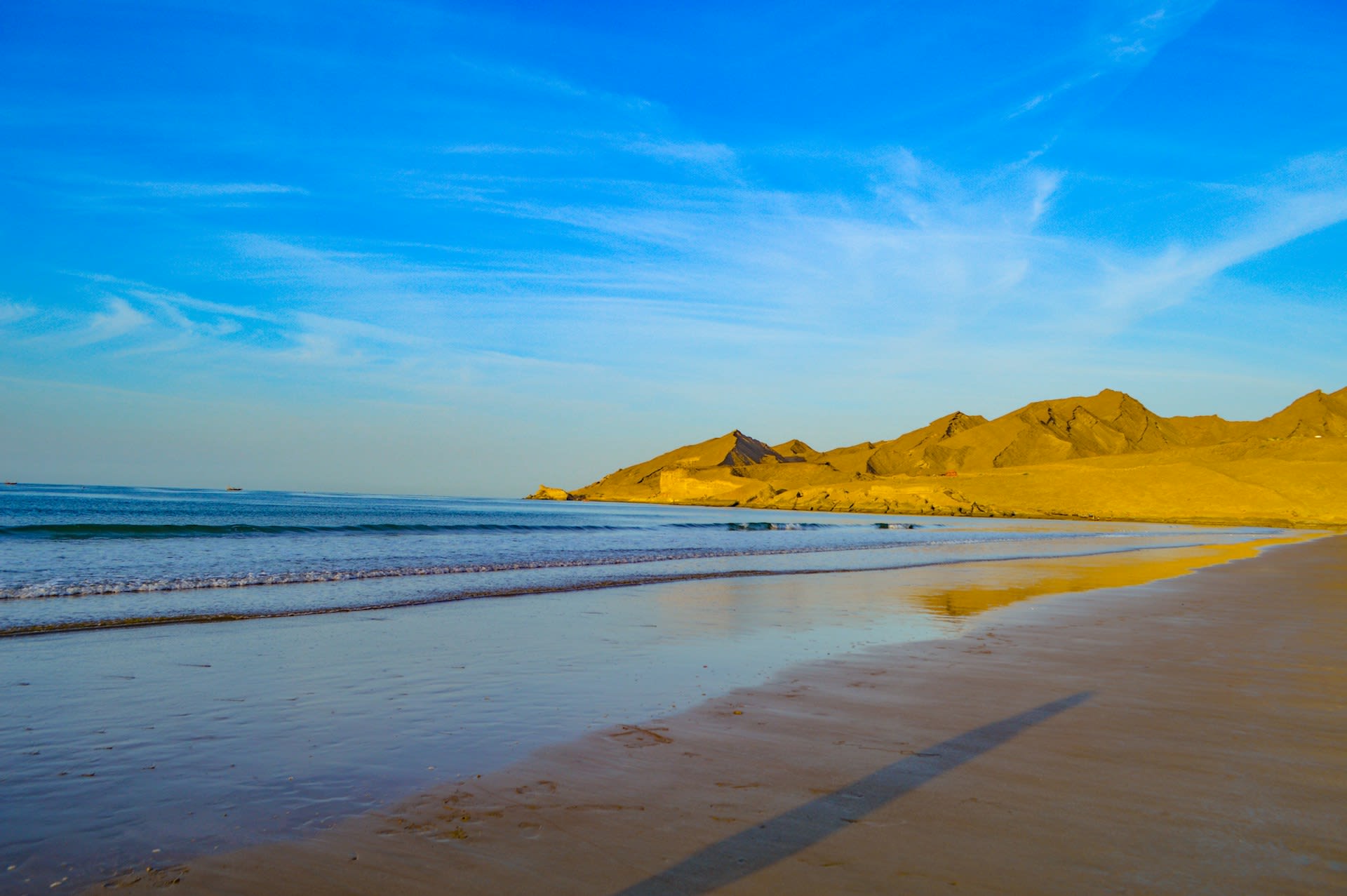
Balochistan has one of the longest and least-explored coastlines in Asia, stretching over 770 km along the Arabian Sea. Cut off from the main tourist circuit by its remoteness, the Balochistan coast rewards adventurous visitors with vast empty beaches, extraordinary cliff formations, sea turtle nesting grounds, and the raw industrial spectacle of Gadani — one of the world's largest ship-breaking beaches. This is Pakistan's wild south, where the desert meets the sea in landscapes of austere grandeur.
🌍 Geography and Ecosystem
The Balochistan coast stretches from the Indus Delta in the east to the Iranian border at Gwadar in the west. Its character shifts dramatically across its length:
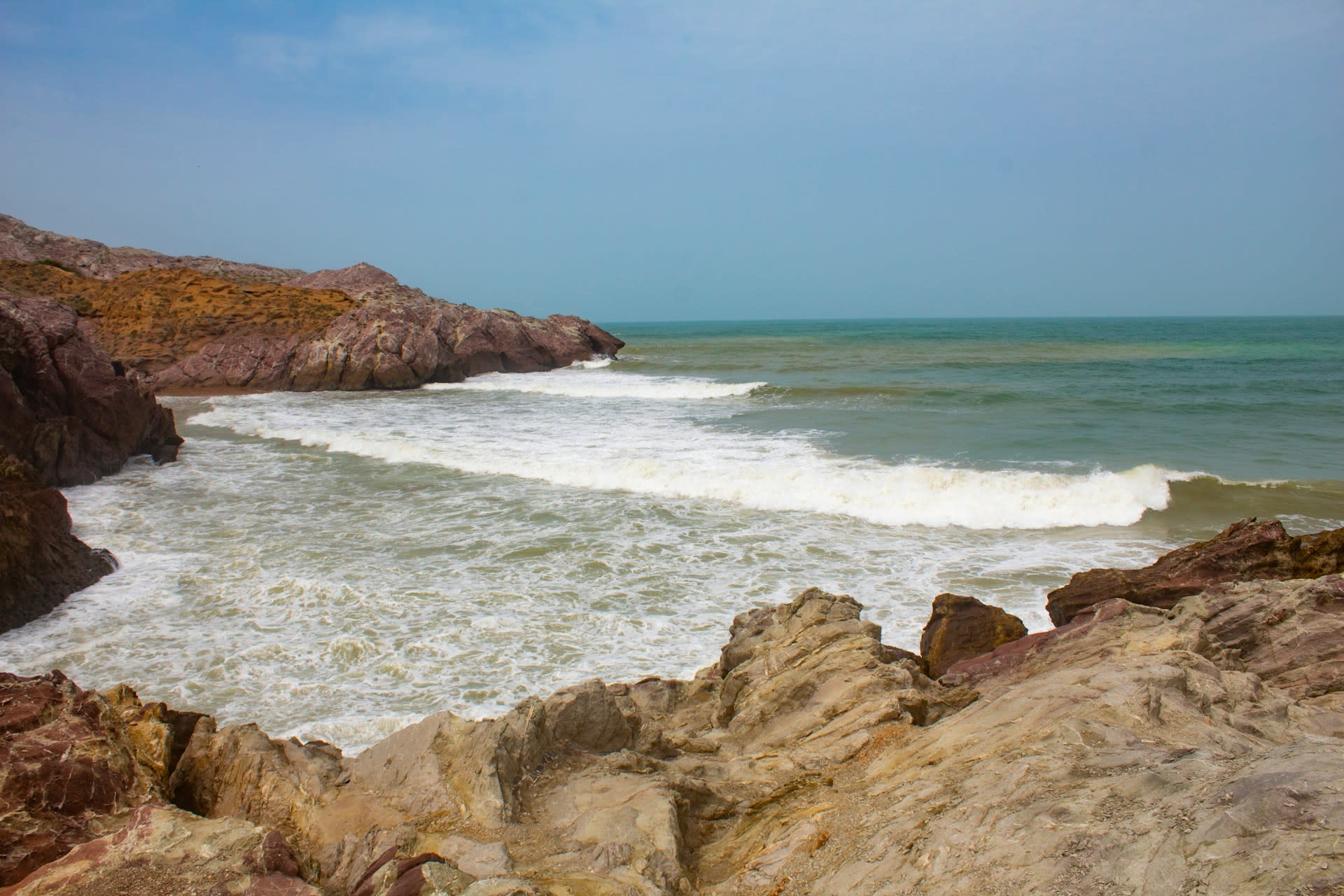
- Makran Coastal Highway: One of Asia's most scenically dramatic coastal roads, the Makran Highway hugs the cliff edges above the Arabian Sea, revealing sweeping vistas of turquoise water and golden rock formations.
- Sea Turtle Nesting: Beaches around Jiwani and Gwadar are important nesting grounds for green and loggerhead sea turtles, protected within the Jiwani Coastal Wetland nature reserve.
- Astola Island: Pakistan's largest offshore island, known as 'Haft Talar' (Seven Hills), is an uninhabited marine reserve supporting breeding seabirds and hawksbill turtles.
- Hingol National Park: Pakistan's largest national park covers a dramatic section of the Balochistan coast, featuring the famous Princess of Hope and Sphinx rock formations carved by wind erosion.
📜 History and Cultural Significance
The Balochistan coast has been an important maritime corridor since antiquity. The ancient port of Gwadar was part of the trade networks connecting the Indus Valley civilisation with Mesopotamia and Arabia. Alexander the Great's army marched along part of this coast during his return from India in 325 BCE, suffering severe hardship in the Makran desert. The Baloch people, who have inhabited this region for over a thousand years, developed a culture of seafaring, fishing, and desert trade that persists in coastal communities today. Gwadar is now the centrepiece of the China-Pakistan Economic Corridor (CPEC), a massive infrastructure project transforming the region.
🏃 Activities and Attractions
The Balochistan coast offers adventurous and off-the-beaten-track experiences:
- Makran Coastal Highway Drive: The journey from Karachi to Gwadar along the Makran Highway is one of Pakistan's great road trips, with dramatic coastal scenery throughout.
- Hingol National Park: Visiting the Princess of Hope rock formation and the Kund Malir Beach — often described as the most beautiful beach in Pakistan — within this coastal national park.
- Astola Island: Boat trips to this uninhabited marine reserve for snorkelling, birdwatching, and experiencing one of the Arabian Sea's most pristine ecosystems.
- Gadani Beach: Witnessing the extraordinary industrial spectacle of ship-breaking, where massive ocean-going vessels are manually dismantled on the beach.
💡 Travel Tips
How to Get There: Fly to Karachi and drive west along the Makran Coastal Highway, or fly directly to Gwadar. Some sections require a No Objection Certificate (NOC) from local authorities. Coordinates: 25.1° N, 66.7° E.
Best Time to Visit: October to March, when temperatures are moderate. The summer monsoon (July–August) can make roads impassable and the heat (40°C+) is extreme.
What to Bring: Ample water and food supplies, fuel, a first-aid kit, and sun protection. Infrastructure along much of the coast is minimal.
Accommodation: Gwadar has hotels catering to the CPEC business community. Along the coast, accommodation is extremely basic or non-existent — camping on the beach is the norm for independent travellers.
Best Time to Visit: October to March, when temperatures are moderate. The summer monsoon (July–August) can make roads impassable and the heat (40°C+) is extreme.
What to Bring: Ample water and food supplies, fuel, a first-aid kit, and sun protection. Infrastructure along much of the coast is minimal.
Accommodation: Gwadar has hotels catering to the CPEC business community. Along the coast, accommodation is extremely basic or non-existent — camping on the beach is the norm for independent travellers.
🌱 Conservation
Hingol National Park and the Jiwani Coastal Wetland protect critical sections of the Balochistan coast. Sea turtle nesting beaches face threats from uncontrolled development, light pollution disorienting hatchlings, and poaching of eggs. The rapid expansion of Gwadar port under CPEC has raised significant conservation concerns about dredging impacts on marine habitats, mangrove destruction, and the displacement of fishing communities. Pakistani marine biologists and international conservation organisations are working to establish better-enforced marine protected areas along the Makran coast.
✨ Conclusion
Balochistan's coastline is one of Asia's great undiscovered travel destinations — vast, wild, and largely untouched by mass tourism. For those willing to navigate its remoteness, it delivers extraordinary experiences of empty beaches, dramatic geology, and authentic coastal communities that few outsiders ever encounter. It is Pakistan's best-kept natural secret.