Lofoten Islands
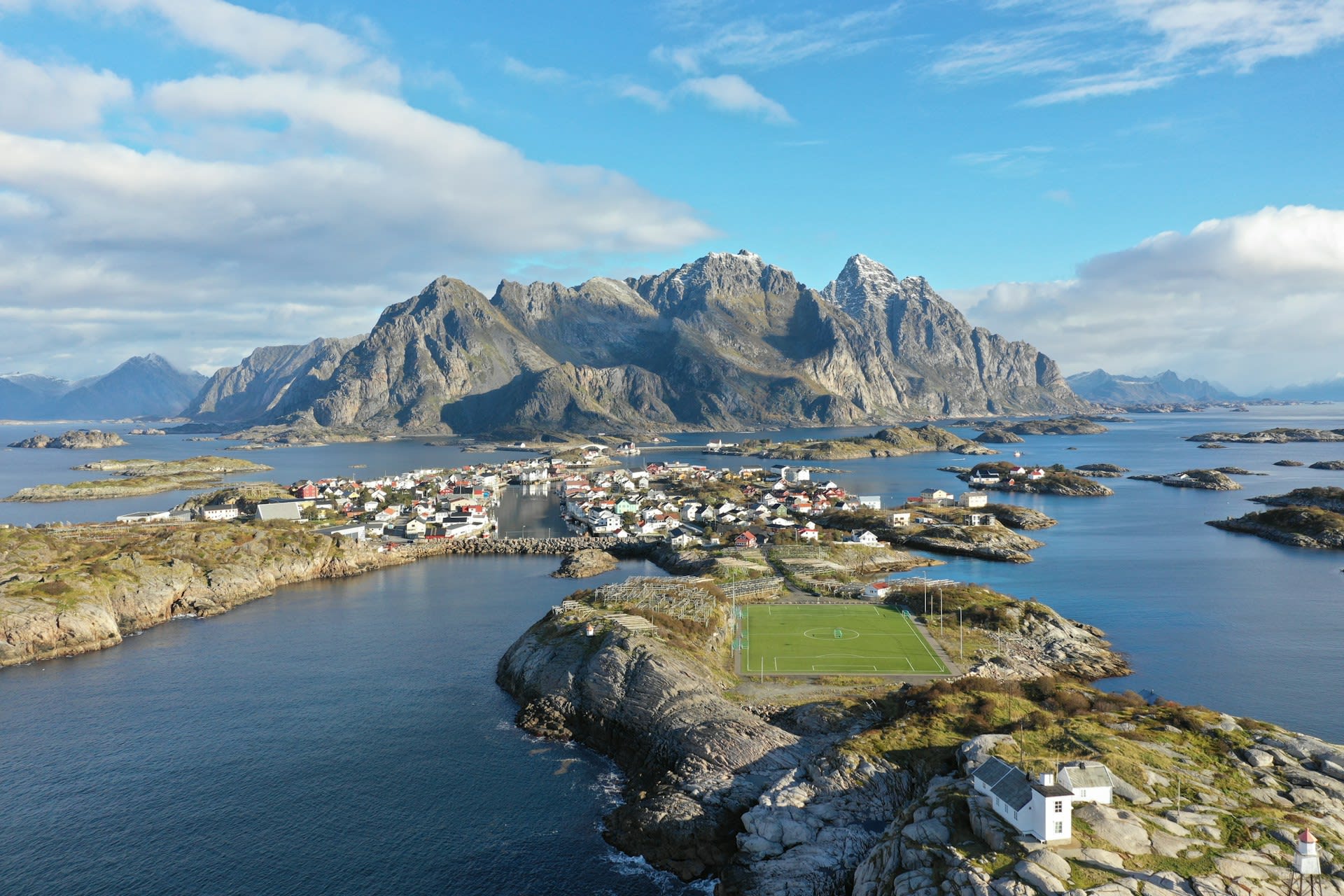
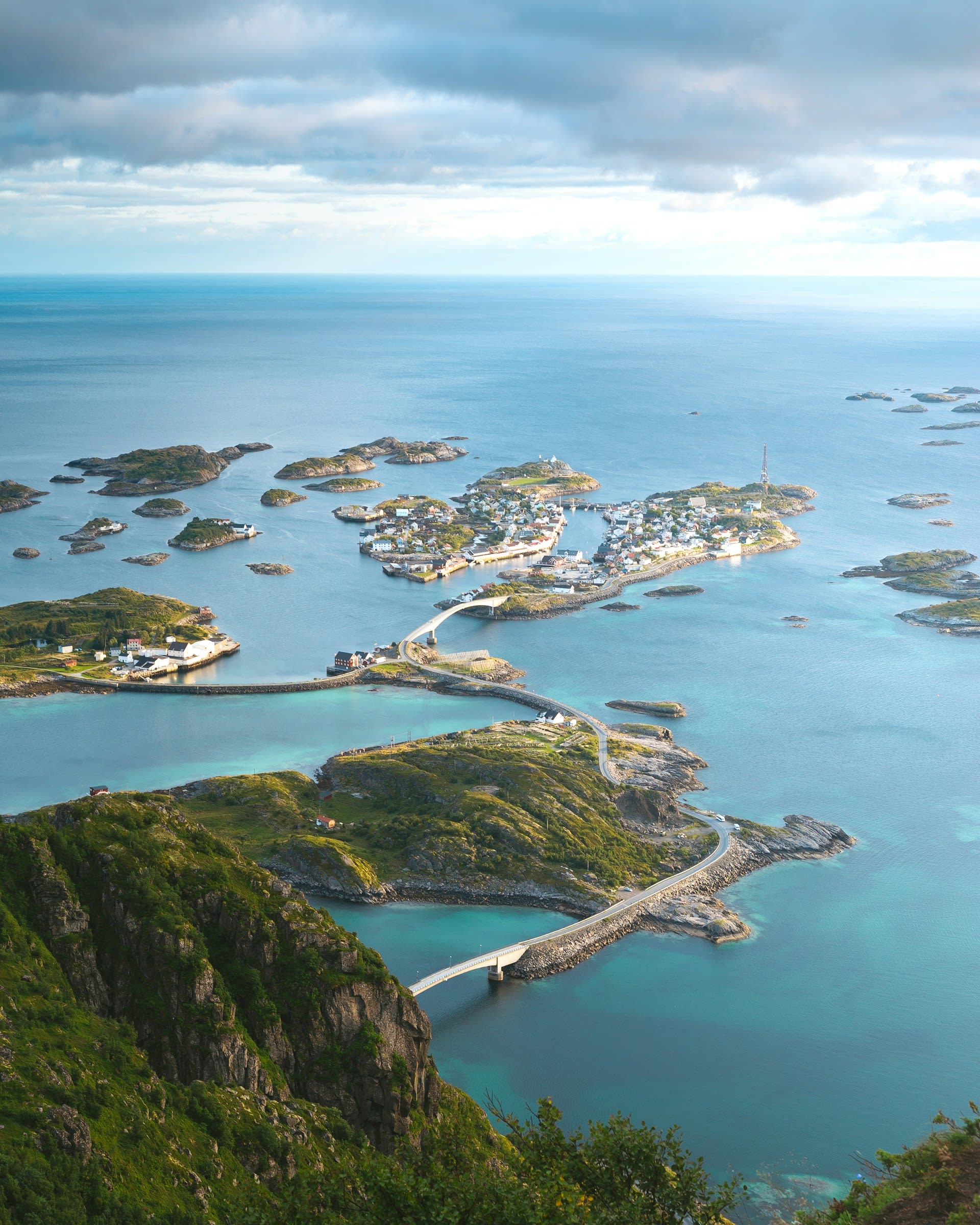
The Lofoten Islands form a 160-kilometre chain of islands and skerries in Nordland county, sitting between 67°N and 68°N latitude — well inside the Arctic Circle — yet warmed by the Gulf Stream to temperatures far milder than their latitude would suggest. The archipelago's defining character is its paradox: knife-edged granite peaks rising 1,000 metres directly from sea level, sheltering beaches of white sand and turquoise water that would not look out of place in the tropics, yet set against Arctic light that transforms the landscape every hour. Fishing has defined human life here for over 6,000 years and the rorbu — the iconic red-and-yellow fisherman's cabin perched on stilts over the water — remains Lofoten's most recognisable image. The islands are among Norway's top three most visited destinations and are increasingly recognised as one of the finest wilderness photography locations in the northern hemisphere.
🌍 Geography and Ecosystem
- Svolværgeita (Goat Peaks): Twin spires of bare granite rising 764 metres above the island capital Svolvær, these pinnacles are the most iconic summit silhouette in Lofoten and attract technical climbers from across Europe. The infamous 'King of Lofoten' leap between the two pinnacles — a 1.5-metre gap at 764 metres altitude — has been attempted by very few and fatally by several.
- Uttakleiv and Haukland Beaches: Despite their Arctic latitude, these beaches on the western coast of Vestvågøya feature white sand and water clarity that rivals the Mediterranean. The surrounding peaks frame the beaches for extraordinary photographic compositions, particularly at the midnight sun solstice when light falls at a flat 3-degree angle for the entire 24 hours.
- Moskenesstraumen (Maelstrom): One of the world's most powerful tidal currents, flowing between Moskenesøya and the tiny island of Mosken at up to 7 knots. The maelstrom inspired Edgar Allan Poe's 1841 story 'A Descent into the Maelström' and Jules Verne's 'Twenty Thousand Leagues Under the Sea'. It remains genuinely dangerous to small vessels at peak flow.
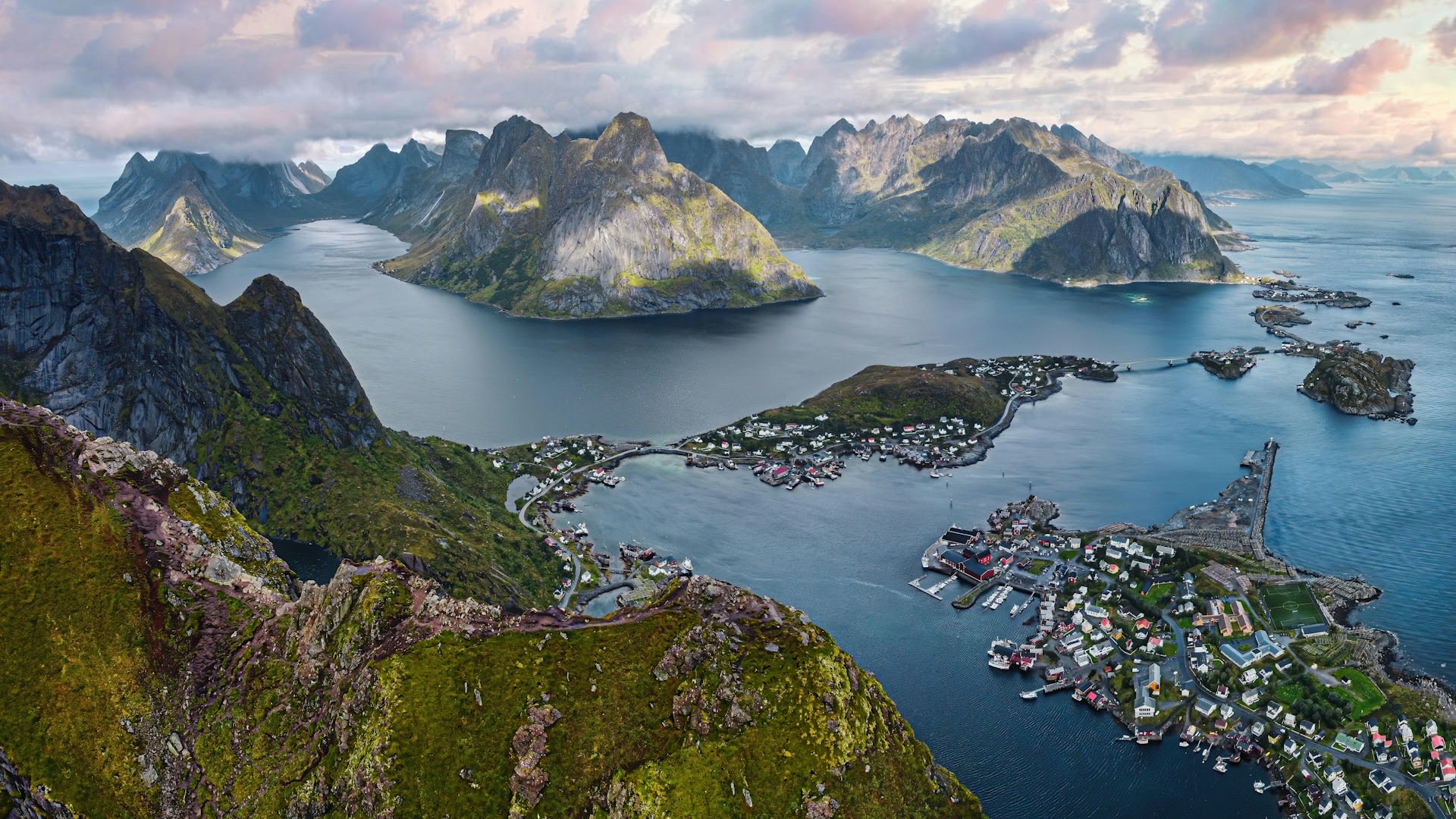
- Reine and Hamnøy Fishing Villages: The village of Reine, built on a narrow promontory in Reinefjorden with the Reinebringen ridge as backdrop, is consistently voted among the most beautiful villages in the world. Neighbouring Hamnøy, with its red rorbu cabins reflected in perfectly still fjord water, is among Norway's most photographed landscapes.
📜 History and Cultural Significance
The winter cod fishery has been the economic spine of the islands for at least 1,000 years. Historical records from the 12th century document Bergen merchants travelling to Lofoten to purchase dried and salted cod (stockfish), and by the 15th century Lofoten stockfish had become a primary protein source across Catholic Europe from Portugal to Poland. The Hanseatic League established trading monopolies over the fishery that lasted until the 18th century. Today the annual winter fishery — January to April — still attracts fishing vessels from across Norway and contributes significantly to Norwegian export revenue, with approximately 30,000 tonnes of skrei landed annually in recent years.
🏃 Activities and Attractions
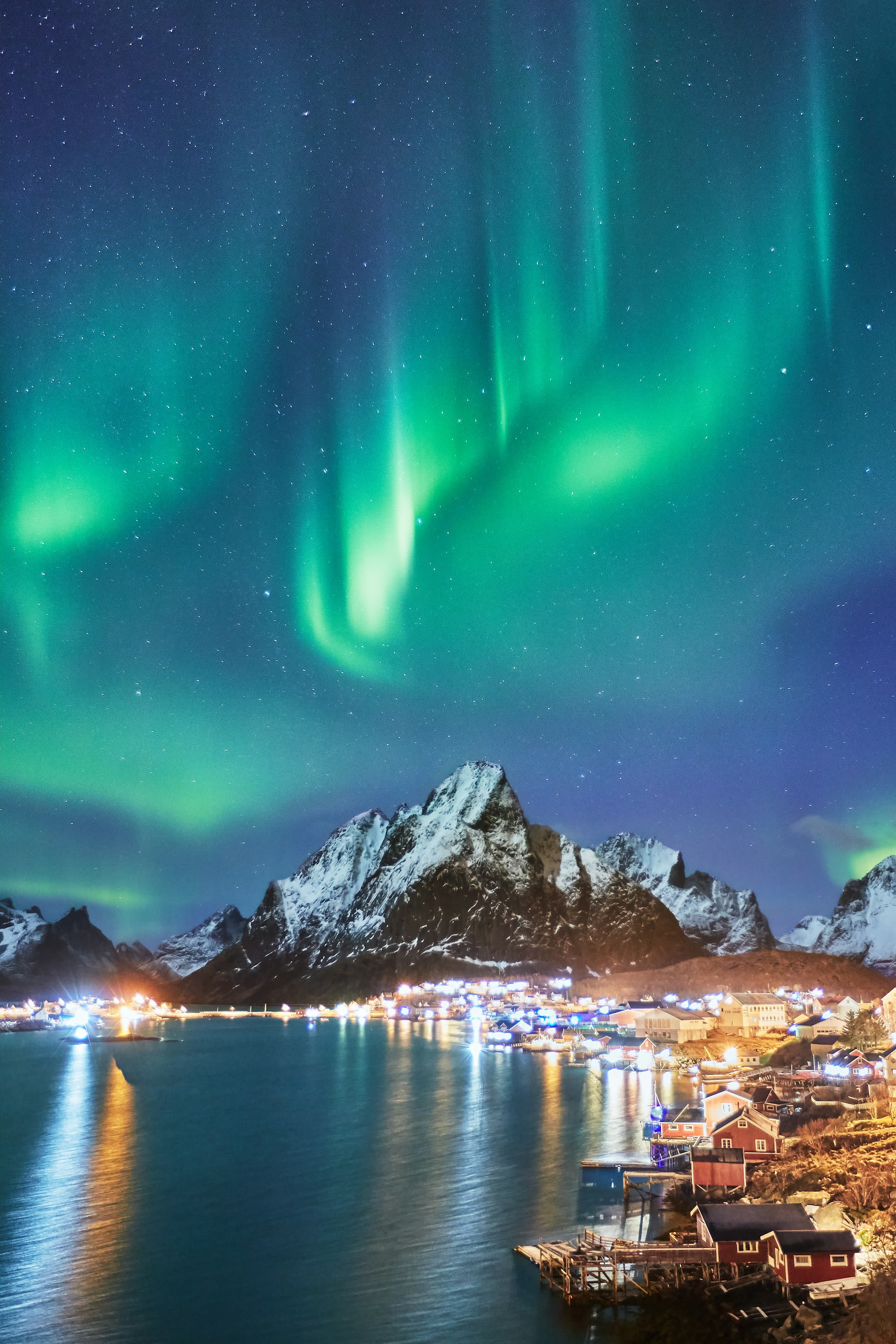
- Northern Lights Viewing: Between late September and late March, Lofoten's combination of low light pollution, frequent clear skies, and dramatic mountain-and-fjord backdrops makes it one of Scandinavia's premier aurora borealis destinations. Guided photography tours depart from Svolvær and Reine nightly during the auroral season, and several dedicated aurora camps offer remote viewing away from village lighting.
- Hiking Reinebringen and Svolværgeita: The steep 1.5-hour ascent of Reinebringen (448 m) from Reine village rewards with what is arguably the finest panoramic view in all of Norway: a 360° sweep of the Reinefjorden, the Moskenesstraumen, and the jagged Lofoten Wall ridgeline. Fixed ropes assist the steepest sections. Svolværgeita requires technical climbing equipment and experience.
- Sea Fishing and Rorbu Life: Winter cod season (February–April) offers visitors the opportunity to join professional fishermen on traditional wooden boats for genuine Arctic deep-sea fishing. Several fishing villages rent rorbu cabins allowing guests to experience the daily rhythm of a fishing community that has changed little in 150 years.
- Surfing: Lofoten has emerged as one of Europe's most dramatic surf destinations. Unstad Beach, on the northwestern coast of Vestvågøya, hosts waves generated by North Atlantic storms and breaks year-round. Surfing under the midnight sun in June or in the shadow of snow-covered peaks in February represents an experience available nowhere else on Earth at this latitude.
- Lofotr Viking Museum: The 83-metre reconstructed chieftain's hall at Borg is the centrepiece of an open-air museum that includes boat-building demonstrations, feasting halls, and animal husbandry with period breeds. The annual Viking Festival in August brings 300+ costumed re-enactors from across Europe for three days of immersive Norse culture.
💡 Travel Tips
Best Season: June–August for midnight sun, hiking, and beaches. February–March for winter cod season and best aurora probability combined with longer daylight than deep winter. Avoid early November to late January if you are uncomfortable with near-total darkness.
Accommodation: Rorbu cabin rental is the quintessential Lofoten experience — available in Å, Reine, Hamnøy, Henningsvær, and Kabelvåg. Book 6–9 months in advance for summer stays. Svolvær offers more conventional hotel options.
Driving Tips: The E10 Lofoten highway features several narrow tunnels and one-lane bridges. Drive slowly and use passing places. Cyclists share the road and deserve wide berth on the mountain sections. Speed limits are strictly enforced.
🌱 Conservation
On land, the rapid growth of tourism — visitor numbers exceeded 800,000 annually before the pandemic — has generated visible impacts on the most popular trails, including severe erosion on the Reinebringen ascent path, littering at remote beaches, and pressure on freshwater sources near camping sites. Lofoten municipality introduced a visitor management plan in 2022 requiring guided access to the steepest trail sections and prohibiting wild camping within 500 metres of the most visited viewpoints. The traditional cod fishery, which has operated sustainably for a millennium, faces new pressure from warming ocean temperatures that are shifting cod spawning grounds northward, a trend that scientists at the Institute of Marine Research in Bergen project will continue through the 21st century.