

Ouzoud Waterfalls
The Ouzoud Waterfalls, known locally as 'Cascades d’Ouzoud,' are one of Morocco’s most stunning natural attractions. Located in the Middle Atlas region, near the village of Tanaghmeilt, these waterfalls are renowned for their dramatic beauty and serene surroundings. Cascading down a series of cliffs, the Ouzoud Waterfalls create a picturesque scene of misty spray, lush vegetation, and vibrant rainbow arcs. This guide delves into the geography, history, activities, travel tips, conservation efforts, and visitor testimonials related to the Ouzoud Waterfalls, offering a comprehensive look at this magnificent natural wonder.
🌍 Geography and Natural Features
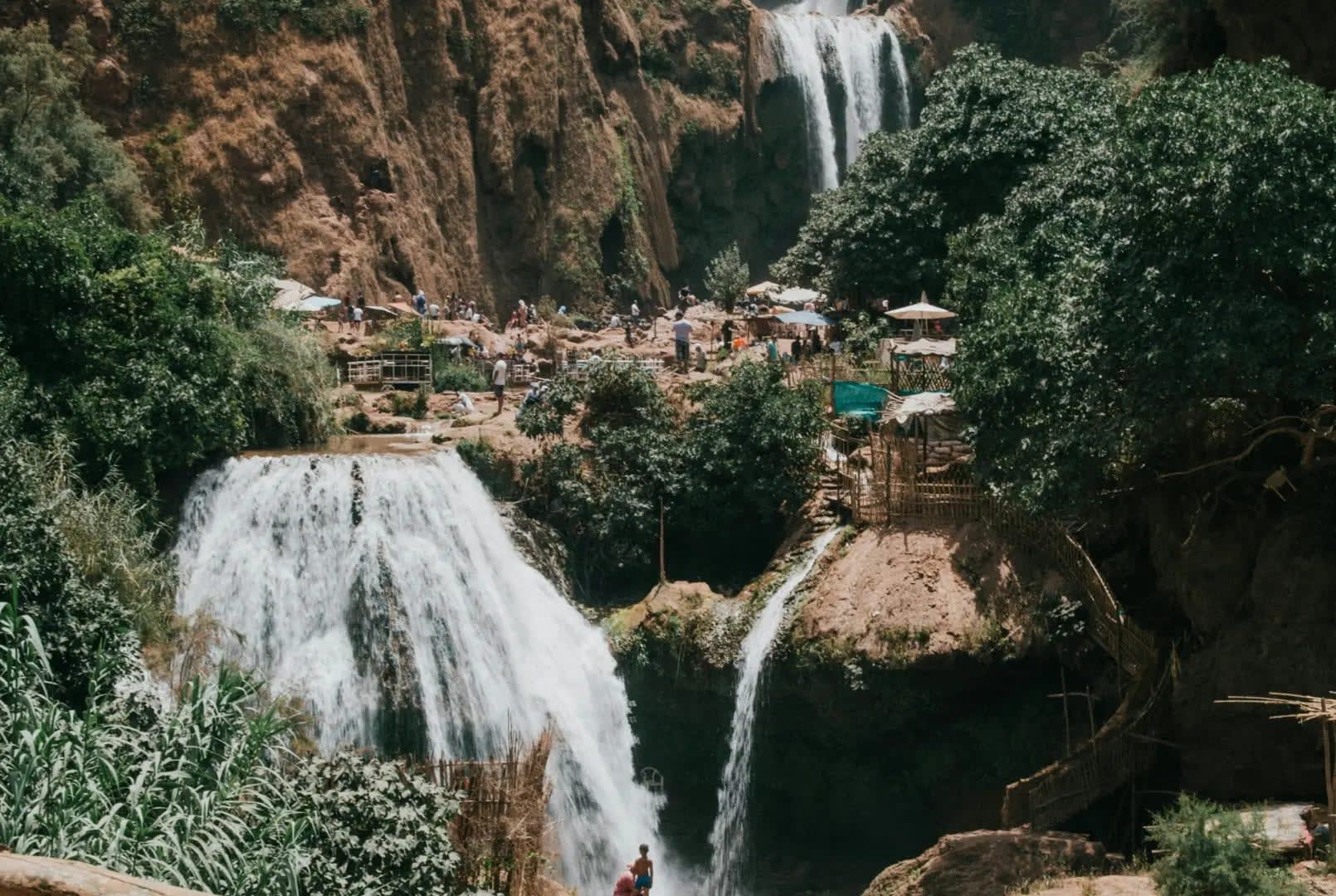
The Ouzoud Waterfalls are situated in the Azilal Province of Morocco, within the Atlas Mountains. The falls are a series of three main cascades that descend over 100 meters (328 feet) into a deep gorge, surrounded by rugged cliffs and lush greenery. The area is characterized by its striking topography and diverse flora and fauna.
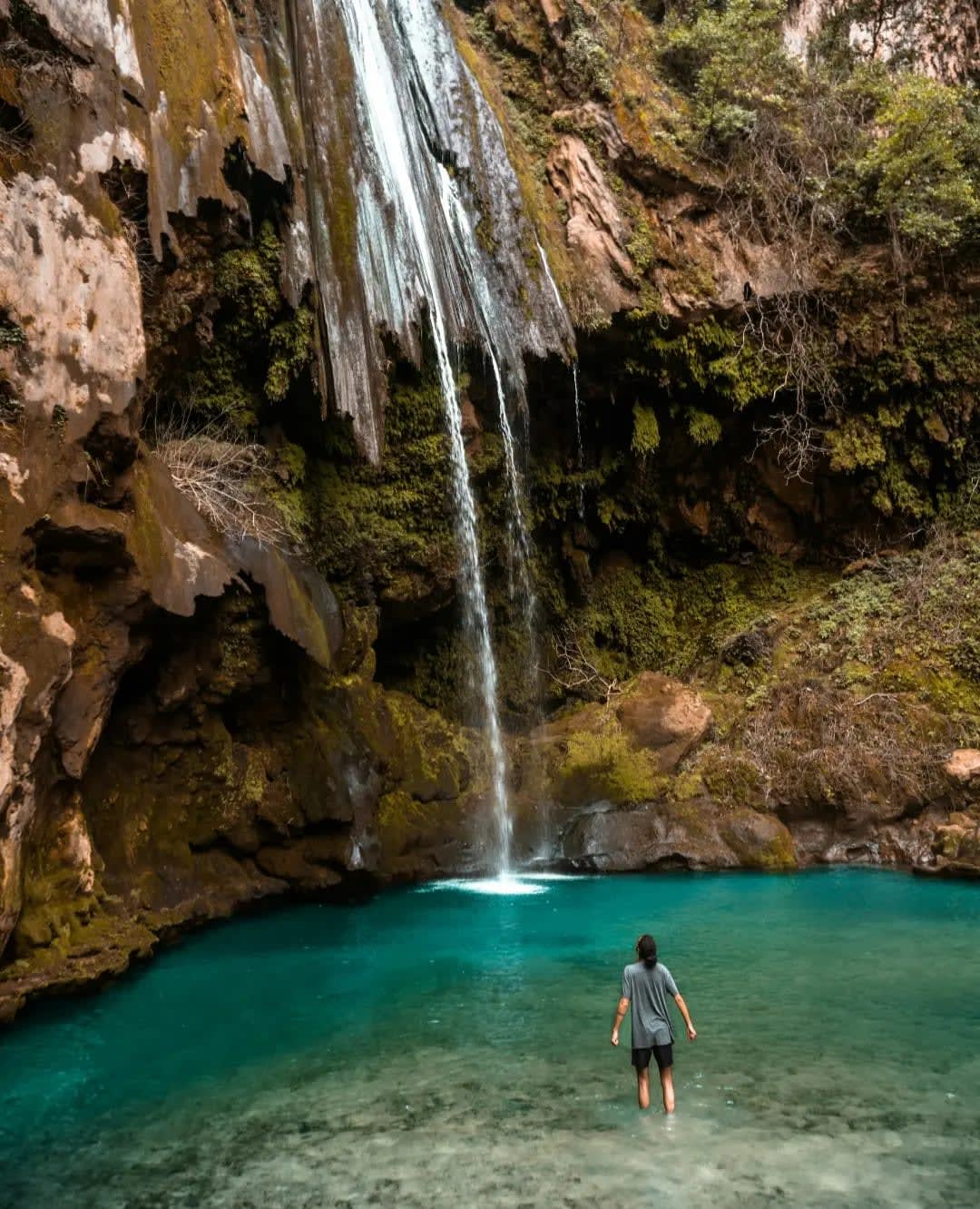
- Waterfall Formation: The Ouzoud Waterfalls are formed by the Ouzoud River, which originates in the High Atlas Mountains. As the river flows over the cliffs, it creates a series of dramatic cascades and plunge pools. The erosion of the rock by the river has resulted in a series of stepped waterfalls that offer spectacular views and a soothing ambiance.
- Surrounding Landscape: The surrounding landscape is characterized by rugged cliffs, fertile valleys, and dense vegetation. The area around the waterfalls is rich in plant life, including olive trees, fig trees, and various shrubs. The lush greenery contrasts beautifully with the rocky cliffs and the clear blue waters of the cascades.
- Climate and Weather: The climate in the Ouzoud Waterfalls area is typically Mediterranean, with hot, dry summers and mild, wet winters. Summer temperatures can reach up to 30°C (86°F), while winter temperatures are cooler but generally mild. Rainfall is more common in the winter months, contributing to the lush vegetation and the flow of the waterfalls.
📜 History and Cultural Significance
The Ouzoud Waterfalls have long been a site of natural beauty and cultural significance. The area has been inhabited for centuries, and its natural features have played a role in local traditions and customs.
Historical Significance: The Ouzoud Waterfalls have been known to local Berber communities for centuries. The falls are mentioned in local folklore and are considered a symbol of natural beauty and strength. Historically, the waterfalls were a crucial water source for the surrounding agricultural lands and have been integral to local livelihoods.
Cultural Importance: The area around the waterfalls is home to traditional Berber villages, where local customs and practices have been preserved. The waterfalls are often associated with traditional ceremonies and festivals. The local communities, including the village of Tanaghmeilt, play an important role in preserving the cultural heritage of the region and welcoming visitors.
Tourism Development: In recent decades, the Ouzoud Waterfalls have become a popular tourist destination, attracting visitors from around the world. The development of infrastructure, such as hiking trails, viewpoints, and local amenities, has facilitated access to the falls while aiming to balance tourism with environmental preservation.
Historical Significance: The Ouzoud Waterfalls have been known to local Berber communities for centuries. The falls are mentioned in local folklore and are considered a symbol of natural beauty and strength. Historically, the waterfalls were a crucial water source for the surrounding agricultural lands and have been integral to local livelihoods.
Cultural Importance: The area around the waterfalls is home to traditional Berber villages, where local customs and practices have been preserved. The waterfalls are often associated with traditional ceremonies and festivals. The local communities, including the village of Tanaghmeilt, play an important role in preserving the cultural heritage of the region and welcoming visitors.
Tourism Development: In recent decades, the Ouzoud Waterfalls have become a popular tourist destination, attracting visitors from around the world. The development of infrastructure, such as hiking trails, viewpoints, and local amenities, has facilitated access to the falls while aiming to balance tourism with environmental preservation.
🏃 Activities and Attractions
The Ouzoud Waterfalls offer a range of activities and attractions that cater to different interests, from outdoor adventures to cultural experiences. Visitors can enjoy exploring the natural beauty of the area and engaging with local traditions.
- Hiking and Trekking: The area around the Ouzoud Waterfalls is ideal for hiking and trekking. Several trails lead to different viewpoints of the falls, offering varying perspectives and photo opportunities. The trails vary in difficulty, from easy walks along the river to more challenging hikes that offer panoramic views of the waterfalls and the surrounding landscape.
- Boat Rides: A popular activity at the Ouzoud Waterfalls is taking a boat ride in the pools at the base of the falls. These small boats, often rowed by local fishermen, allow visitors to get close to the cascades and experience the refreshing mist created by the falling water. Boat rides offer a unique perspective on the waterfalls and provide an opportunity to see the surrounding flora and fauna.
- Wildlife Watching: The area around the waterfalls is home to a variety of wildlife, including Barbary macaques, which can often be seen in the surrounding forested areas. Birdwatchers can also enjoy spotting various species of birds that inhabit the region. Wildlife watching is best done early in the morning or late in the afternoon when animals are most active.
- Cultural Visits: Visitors can explore the nearby Berber villages and learn about traditional customs and practices. Local markets offer a chance to experience traditional crafts, foods, and cultural artifacts. Engaging with local residents provides insights into the traditional ways of life and the cultural significance of the waterfalls.
💡 Travel Tips
To ensure a pleasant and safe visit to the Ouzoud Waterfalls, consider the following travel tips:
Best Time to Visit: The best time to visit the Ouzoud Waterfalls is during the spring (March to May) and autumn (September to November) when temperatures are moderate and the weather is generally pleasant. Summer can be quite hot, while winter temperatures are cooler but still relatively mild. The waterfalls are most impressive during the spring and early summer when water flow is at its peak.
Getting There: The Ouzoud Waterfalls are located about 150 kilometers (93 miles) northeast of Marrakech. The most common way to reach the falls is by car or taxi from Marrakech, which takes approximately 2.5 to 3 hours. Public transportation options, such as buses, are also available but may require transfers. Guided tours from Marrakech can provide convenient transportation and additional information about the area.
What to Bring: Pack comfortable and lightweight clothing suitable for outdoor activities, including hiking shoes, a hat, and sunscreen. If you plan to take a boat ride or explore the pools, consider bringing a swimsuit and a towel. Also, carry sufficient water, snacks, and a camera to capture the stunning scenery.
Health and Safety: Stay hydrated and use sunscreen to protect yourself from the sun. Be cautious on the trails, as they can be uneven and slippery, especially near the waterfalls. If you plan to engage in wildlife watching, maintain a respectful distance from animals and avoid feeding them. Be mindful of local customs and follow any guidelines provided by tour guides or park rangers.
Best Time to Visit: The best time to visit the Ouzoud Waterfalls is during the spring (March to May) and autumn (September to November) when temperatures are moderate and the weather is generally pleasant. Summer can be quite hot, while winter temperatures are cooler but still relatively mild. The waterfalls are most impressive during the spring and early summer when water flow is at its peak.
Getting There: The Ouzoud Waterfalls are located about 150 kilometers (93 miles) northeast of Marrakech. The most common way to reach the falls is by car or taxi from Marrakech, which takes approximately 2.5 to 3 hours. Public transportation options, such as buses, are also available but may require transfers. Guided tours from Marrakech can provide convenient transportation and additional information about the area.
What to Bring: Pack comfortable and lightweight clothing suitable for outdoor activities, including hiking shoes, a hat, and sunscreen. If you plan to take a boat ride or explore the pools, consider bringing a swimsuit and a towel. Also, carry sufficient water, snacks, and a camera to capture the stunning scenery.
Health and Safety: Stay hydrated and use sunscreen to protect yourself from the sun. Be cautious on the trails, as they can be uneven and slippery, especially near the waterfalls. If you plan to engage in wildlife watching, maintain a respectful distance from animals and avoid feeding them. Be mindful of local customs and follow any guidelines provided by tour guides or park rangers.
🌱 Conservation
Conservation efforts at the Ouzoud Waterfalls focus on preserving the natural environment and supporting sustainable tourism practices. These initiatives aim to protect the area’s ecological and cultural resources while promoting responsible tourism.
Environmental Protection: Efforts are made to minimize the environmental impact of tourism on the Ouzoud Waterfalls. This includes managing waste, protecting natural habitats, and preventing erosion. Visitors are encouraged to follow the principles of 'Leave No Trace' to help preserve the pristine condition of the area.
Sustainable Tourism: Promoting sustainable tourism practices is a key focus in the Ouzoud Waterfalls area. This involves encouraging responsible behavior among visitors, such as staying on designated trails, respecting wildlife, and supporting local businesses. Sustainable tourism initiatives aim to balance the benefits of tourism with the need to protect the natural and cultural heritage of the region.
Community Involvement: Conservation efforts often involve working with local communities to promote environmental stewardship and cultural preservation. Community-based programs may include educational initiatives, conservation workshops, and projects to support traditional crafts and practices. By involving local residents in conservation efforts, these programs help to foster a sense of ownership and commitment to protecting the waterfalls and their surroundings.
Environmental Protection: Efforts are made to minimize the environmental impact of tourism on the Ouzoud Waterfalls. This includes managing waste, protecting natural habitats, and preventing erosion. Visitors are encouraged to follow the principles of 'Leave No Trace' to help preserve the pristine condition of the area.
Sustainable Tourism: Promoting sustainable tourism practices is a key focus in the Ouzoud Waterfalls area. This involves encouraging responsible behavior among visitors, such as staying on designated trails, respecting wildlife, and supporting local businesses. Sustainable tourism initiatives aim to balance the benefits of tourism with the need to protect the natural and cultural heritage of the region.
Community Involvement: Conservation efforts often involve working with local communities to promote environmental stewardship and cultural preservation. Community-based programs may include educational initiatives, conservation workshops, and projects to support traditional crafts and practices. By involving local residents in conservation efforts, these programs help to foster a sense of ownership and commitment to protecting the waterfalls and their surroundings.
✨ Conclusion
The Ouzoud Waterfalls stand as one of Morocco’s most captivating natural wonders, offering a stunning display of cascading water amidst a picturesque landscape. The dramatic beauty of the waterfalls, combined with the rich cultural heritage and diverse activities available in the area, makes for an unforgettable experience. From hiking and wildlife watching to cultural exploration and boat rides, there is something for every traveler to enjoy. Conservation efforts are crucial in preserving the natural environment and supporting sustainable tourism practices. A visit to the Ouzoud Waterfalls is not only a chance to witness one of Morocco’s most beautiful natural landmarks but also an opportunity to engage with the local culture and contribute to the conservation of this extraordinary destination.


