
Dadès Valley
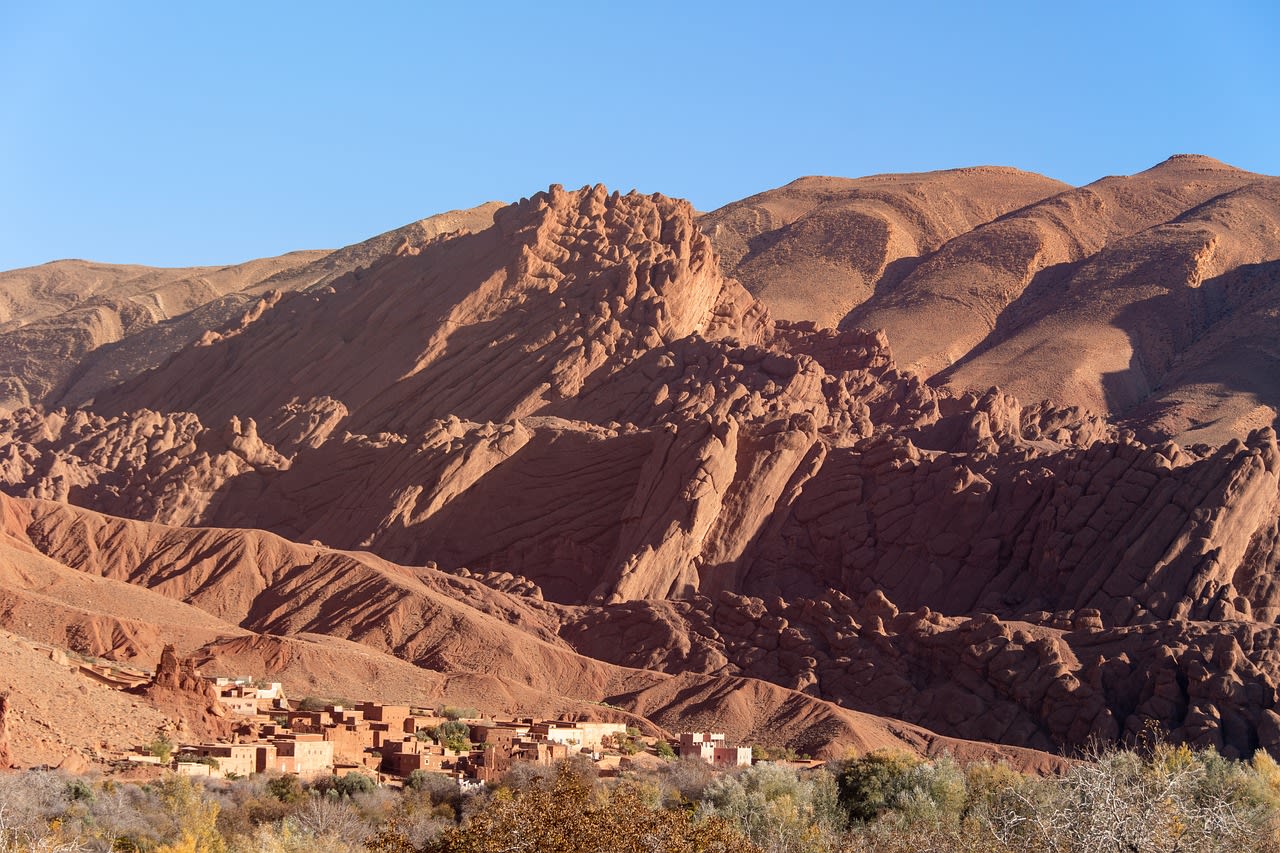
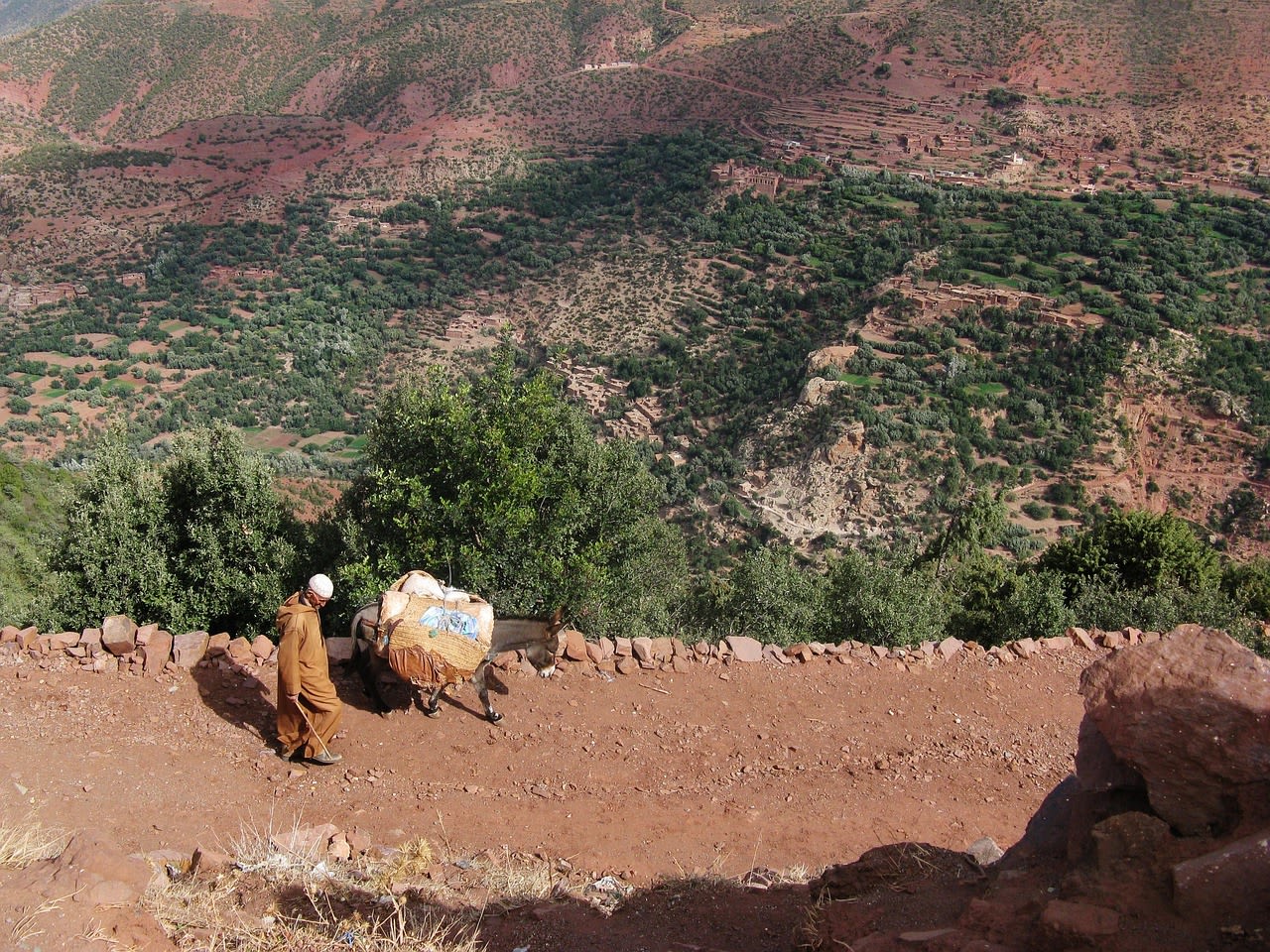
The Dadès Valley is a 120 km canyon corridor in the Drâa-Tafilalet region of southern Morocco, carved by the Dadès River through the southern flank of the High Atlas Mountains between the administrative centres of Boumalne Dadès and Msemrir. The valley is part of the famous 'Road of the Thousand Kasbahs' (Route des Mille Kasbahs), the circuit of kasbah and ksar (fortified village) architecture in red-brown mud brick (pisé) that lines the pre-Saharan valleys of Morocco in one of the most concentrated concentrations of earthen architecture in the world. The upper Dadès Gorge — the deepest and most dramatic section, between Boumalne and the village of Msemrir — is a landscape of extraordinary sculpted red sandstone and limestone formations, vertical canyon walls, and the characteristic Moroccan transition from oasis palmeries through rose gardens to the high piste tracks of the Atlas backcountry. The lower valley around El Kelaa des M'Goun is the heart of the Valley of Roses — Morocco's rose-growing capital where thousands of tonnes of Rosa damascena are harvested each May and distilled into rose water and attar of roses, the raw material for the French perfume industry.
🌍 Geography and Ecosystem
- Dadès Gorge (Monkey Fingers): The upper gorge section above Aït Oudinar village contains the most dramatic geological features — particularly the Monkey Fingers (Doigts de Singe) formation: twisted, eroded sandstone pillars of orange and ochre rock sculpted by differential erosion into organic forms that bear a remarkable resemblance to grasping fingers when lit by lateral sunlight. The gorge road at this point narrows to a single lane between vertical cliff faces with the Dadès River 20 m below — one of the most dramatic canyon road drives in North Africa. Hiking trails follow the river through the narrow gorge sections inaccessible to vehicles.
- Valley of Roses: The section of the Dadès Valley around El Kelaa des M'Goun and Aït Benhaddou el-Kelaa — approximately 40 km west of Boumalne — is the primary rose-cultivation zone. Rosa damascena (the Damask rose, introduced from Syria via al-Andalus in the medieval period) is grown on terraced fields irrigated by the Dadès and M'Goun rivers, harvested by hand in a 6-week window from late April to mid-May when the buds are at maximum essential oil content. The Festival des Roses at Kelaat M'Gouna (first week of May) is one of Morocco's major cultural festivals — a pageant, market, and celebration of the rose harvest that draws visitors from across Morocco and internationally.
- Kasbah Architecture: The Dadès Valley is lined with kasbahs — fortified earthen towers and compounds built from pisé (compacted earth mixed with straw) in the characteristic Moroccan pre-Saharan architectural tradition. The kasbahs were defensive structures protecting families and trade goods in the unstable tribal politics of the 18th–19th centuries; many are now partially ruined, their earthen walls eroding in the characteristic melting form of dried mud. The most photogenic are the kasbah cluster at Aït Benhaddou (UNESCO World Heritage Site, 30 km from Boumalne — the most famous kasbah in Morocco, used as a film location from Lawrence of Arabia to Gladiator) and the working kasbahs of Taourirt and Timidert in the valley itself.
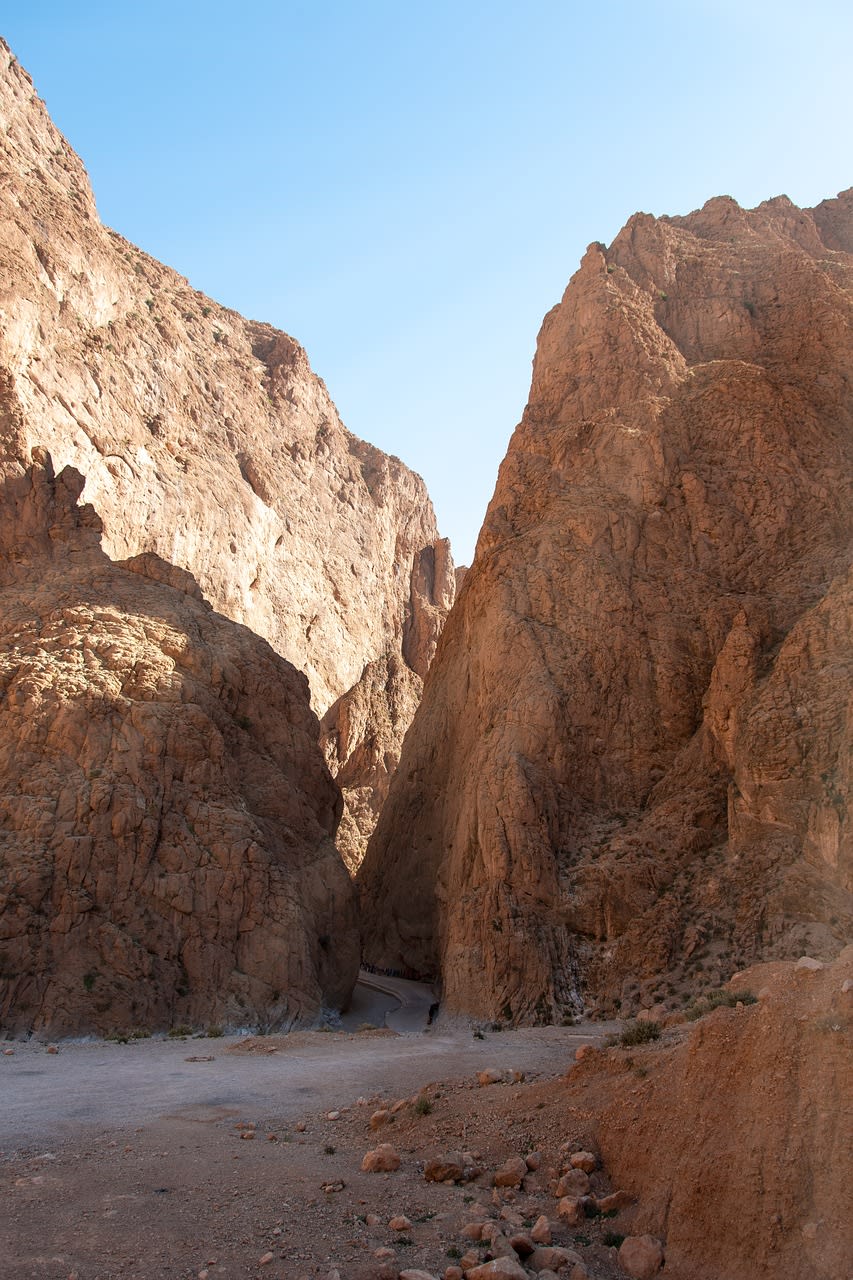
- Todra Gorge: Thirty km east of Boumalne Dadès on the parallel Todra River, the Todra Gorge is one of the most dramatic canyon landscapes in Morocco — a 300 m deep slot canyon only 10 m wide at its narrowest point, with vertical salmon-pink limestone walls so close that little direct sunlight reaches the river below. Todra is Morocco's premier rock climbing destination (over 150 routes, French grade 4–8b) and is easily combined with the Dadès Valley on a circuit of the pre-Saharan Atlas valleys. The two gorges together — Dadès (red sandstone) and Todra (pink limestone) — represent the dual geological personalities of the southern Atlas.
📜 History and Cultural Significance
The Dadès Valley's rose culture was established in the medieval period — Rosa damascena is not native to Morocco but was introduced from the Middle East via al-Andalus (Islamic Spain) and has been cultivated in the valley since at least the 15th century. The rose industry developed commercially in the 20th century as French parfumeurs (Chanel, Guerlain, Dior) established contracts with Moroccan rose growers for essential oil supply. The Dadès and M'Goun valleys now produce approximately 2,000–3,000 tonnes of rose petals annually — the second-largest production in the world after Bulgaria's Rose Valley in the Balkans.
🏃 Activities and Attractions
- Dadès Gorge Drive and Hike: The road from Boumalne Dadès to Msemrir (64 km) traverses the full gorge sequence — from the lower valley kasbahs through the Monkey Fingers formation to the high-altitude Berber villages at the gorge head. The gorge road above Aït Oudinar (25 km from Boumalne) is a paved switchback through the canyon's most dramatic section, crossing the river five times on narrow bridges. Beyond Msemrir the road becomes a 4WD piste continuing over the Tizi n'Oughbar pass (2,629 m) to the Todra Gorge — the classic day circuit from Boumalne. Short hiking trails in the gorge (marked from Aït Oudinar) access sections of the canyon inaccessible by road.
- Rose Festival (May): The Festival International des Roses at Kelaat M'Gouna (typically the first weekend of May — dates vary with harvest) is one of the finest cultural festivals in southern Morocco — three days of rose market, traditional music, Berber dance, local food, and the famous rose queen pageant in the town square. The festival coincides with the peak rose harvest, and the hillside fields of pink roses in bloom (visible from the road approaching M'Gouna) are one of the most striking agricultural landscapes in Africa. Even outside festival season, rose water and rose products can be purchased directly from cooperatives in the valley at prices far below the Marrakech tourist shops.
- Aït Benhaddou Kasbah: The UNESCO World Heritage ksar of Aït Benhaddou (30 km northwest of Ouarzazate, accessible as a half-day from Boumalne) is the most preserved kasbah village in Morocco — its ochre earthen towers above the Ounila River have been used as a film location for dozens of major productions (Gladiator, Kingdom of Heaven, Game of Thrones, Babel) and represent the architectural ideal of the pre-Saharan kasbah tradition. A guided walk through the inhabited upper ksar explains the earthen construction technique, the family organisation of the kasbah spaces, and the ongoing conservation work.
- Atlas Trekking: The mountains above the Dadès Valley — particularly the M'Goun massif (4,071 m, the second highest peak in Morocco) accessible from the village of El Kelaa — provide serious multi-day trekking in the High Atlas interior. The M'Goun circuit (4–6 days) traverses high passes, remote Berber villages, and the M'Goun summit plateau in landscapes that most tourists driving the gorge road below never see. Local guides from the Association des Guides et Accompagnateurs de Montagne in Kelaat M'Gouna are available for all trekking levels.
💡 Travel Tips
Best Season: March–May is the finest period — spring flowers and rose bloom (May) in the valley, mild temperatures, and clear air after winter rains. October–November is the second best period — the summer heat has subsided, the Atlas light is excellent, and the valley is less crowded than March–May. June–August is hot (35–40°C in the valley floor) but the upper gorge above 2,000 m is pleasant. December–February can bring snow to the Atlas passes and frost in the gorge — the landscape in winter light is spectacular and accommodation is very inexpensive.
Accommodation: The gorge village of Aït Oudinar (25 km from Boumalne) has several small guesthouses and one auberge directly above the Monkey Fingers formation — the most spectacular location for overnight in the gorge. Boumalne Dadès town has more hotel options at lower prices. The traditional dar (courtyard guesthouse) accommodation run by Berber families in the gorge villages provides the most authentic experience.
🌱 Conservation
The kasbahs are deteriorating at accelerating rates — the earthen construction material has a natural lifespan of 50–100 years without maintenance, and the depopulation of traditional kasbah communities (as younger generations move to Ouarzazate, Marrakech, and Casablanca) means that many are no longer maintained. UNESCO and the Moroccan Ministry of Culture fund conservation work at Aït Benhaddou, but the hundreds of working and semi-ruined kasbahs in the Dadès and other pre-Saharan valleys receive no formal protection. Their gradual dissolution — returning to the earth from which they were built — is an irreversible process.


