Diani Beach
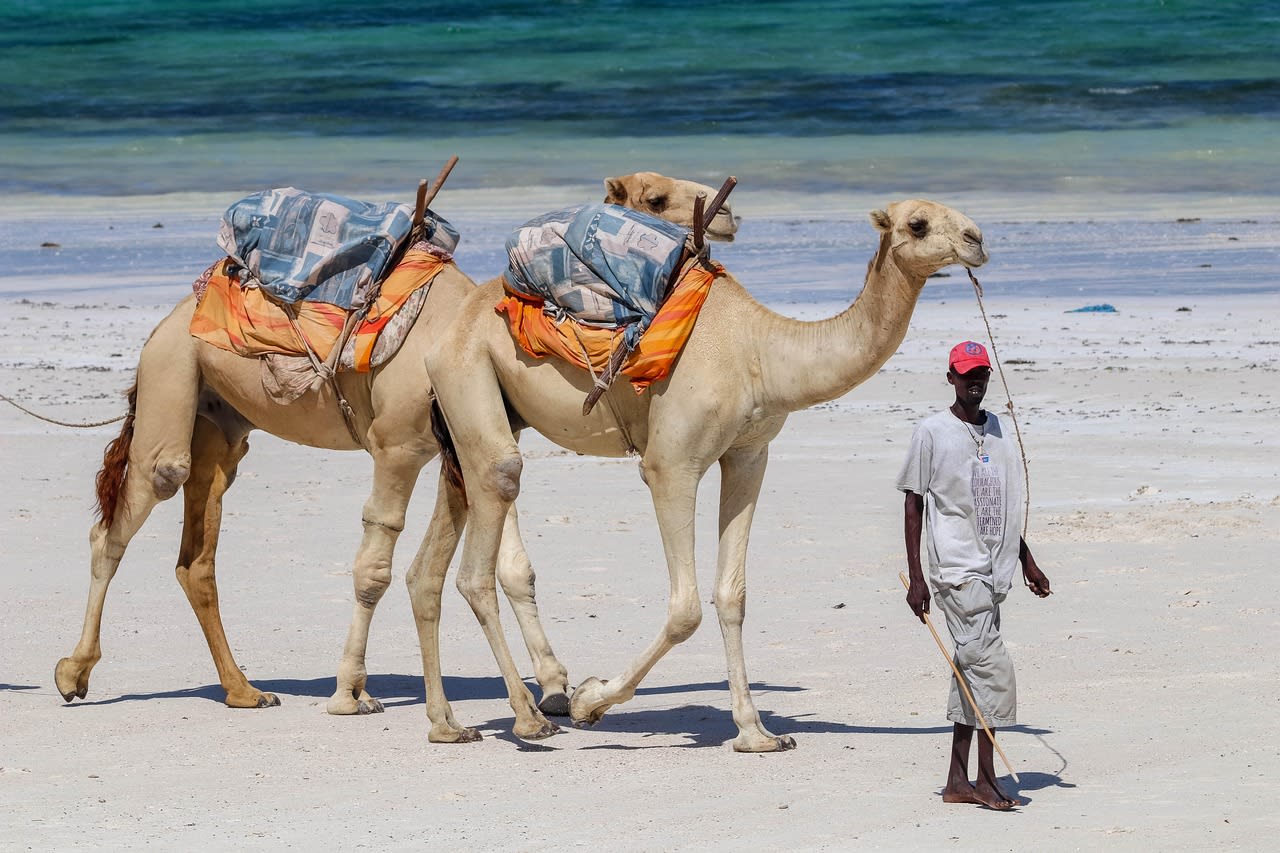
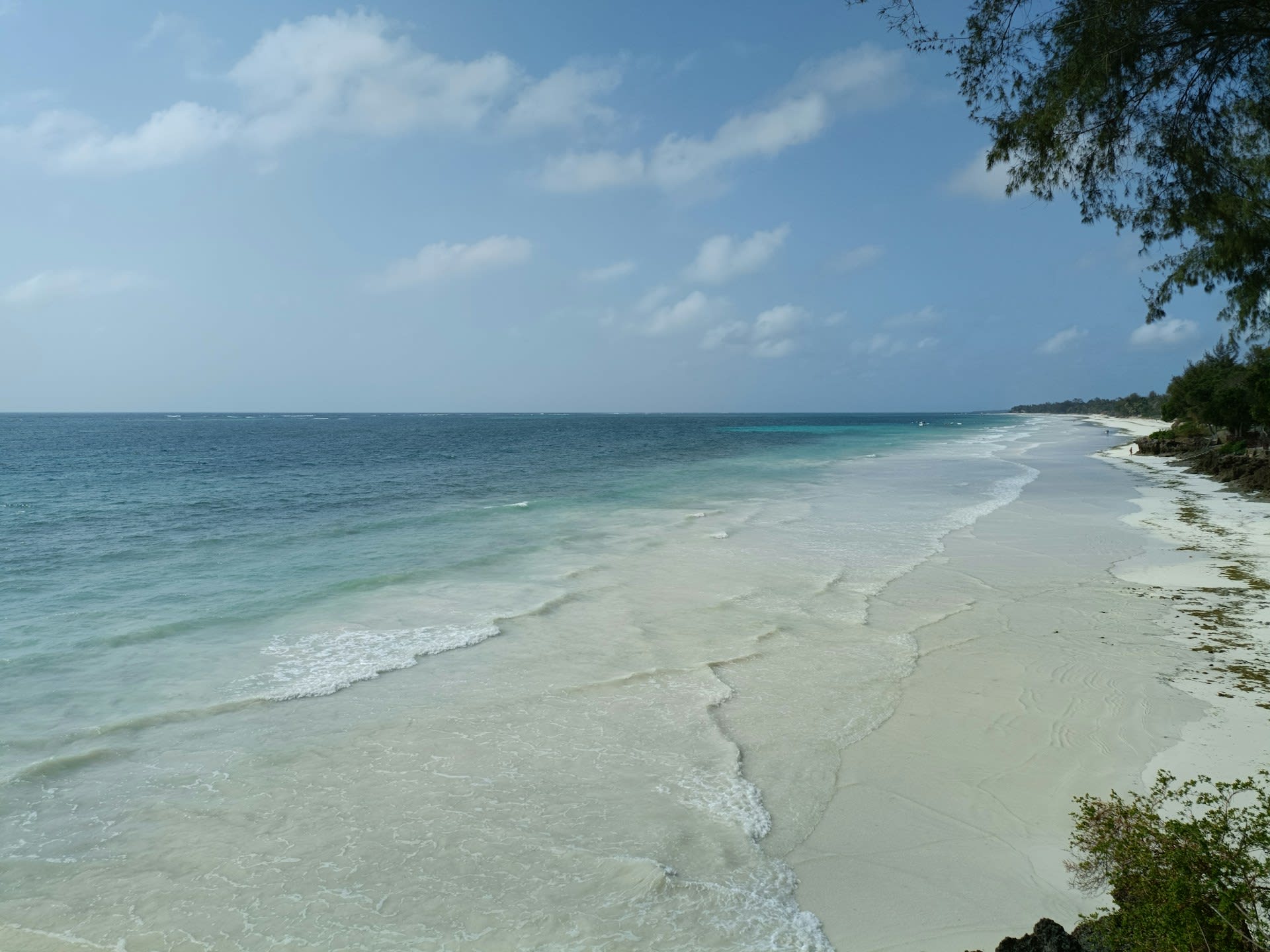
Diani Beach is a 17 km stretch of white coral sand on Kenya's south coast in Kwale County, consistently ranked among Africa's finest beaches and winner of the World Travel Awards' Africa's Leading Beach Destination for multiple consecutive years. The beach sits on a narrow coastal strip between the warm Indian Ocean and a ribbon of indigenous coastal forest — one of the most biodiverse and threatened ecosystems in East Africa — that shelters the Angolan colobus monkey, the endangered Aders' duiker, and over 200 bird species. The fringing coral reef running parallel to the beach 200–500 metres offshore creates a protected lagoon of translucent turquoise water ideal for swimming year-round. Historically a trading coast visited by Arab dhow merchants, Swahili fishermen, and Portuguese navigators, Diani today balances a well-developed tourism infrastructure with genuine natural values — the colobus monkeys move freely through the hotel gardens and the reef remains largely intact despite decades of coastal development.
🌍 Geography and Ecosystem
- Fringing Coral Reef: The reef running parallel to Diani Beach is part of the Diani-Chale Marine National Reserve, protecting an area of coral gardens, sea grass beds, and sandy channels of high marine biodiversity. The reef hosts over 150 fish species including reef sharks, rays, sea turtles (green and hawksbill), and occasional whale sharks in deep water offshore. Snorkelling from the beach at high tide is straightforward, with the reef edge accessible on a short swim.
- Colobus Monkey Forest: The Colobus Conservation project at Diani operates a rescue and rehabilitation centre for Angolan colobus monkeys — large black-and-white primates that inhabit the coastal forest canopy. The monkeys were historically killed crossing roads between forest fragments; Colobus Conservation has installed rope bridges (colobridges) over the main beach road, dramatically reducing road mortality and making Diani one of the few beach destinations in Africa where primates are a genuine wildlife attraction alongside the beach itself.
- Shimba Hills National Reserve: The forested hills 15–20 km inland from Diani are the only Kenyan habitat for the sable antelope (Hippotragus niger) — one of Africa's most magnificent antelope species — and also shelter leopard, elephant, buffalo, and the rare roan antelope. A day trip from Diani combines beach time with forest wildlife that many coastal visitors would otherwise miss entirely.
- Tidal Mudflats and Mangroves: The creek mouths north and south of the main beach strip — particularly Galu Creek and Mwachema River — support mangrove forest and tidal mudflats that are highly productive feeding grounds for migratory shorebirds. The Diani area is a significant waypoint on the East African-West Asian flyway, with wader counts of thousands of birds during October–November and March–April migration windows.
📜 History and Cultural Significance
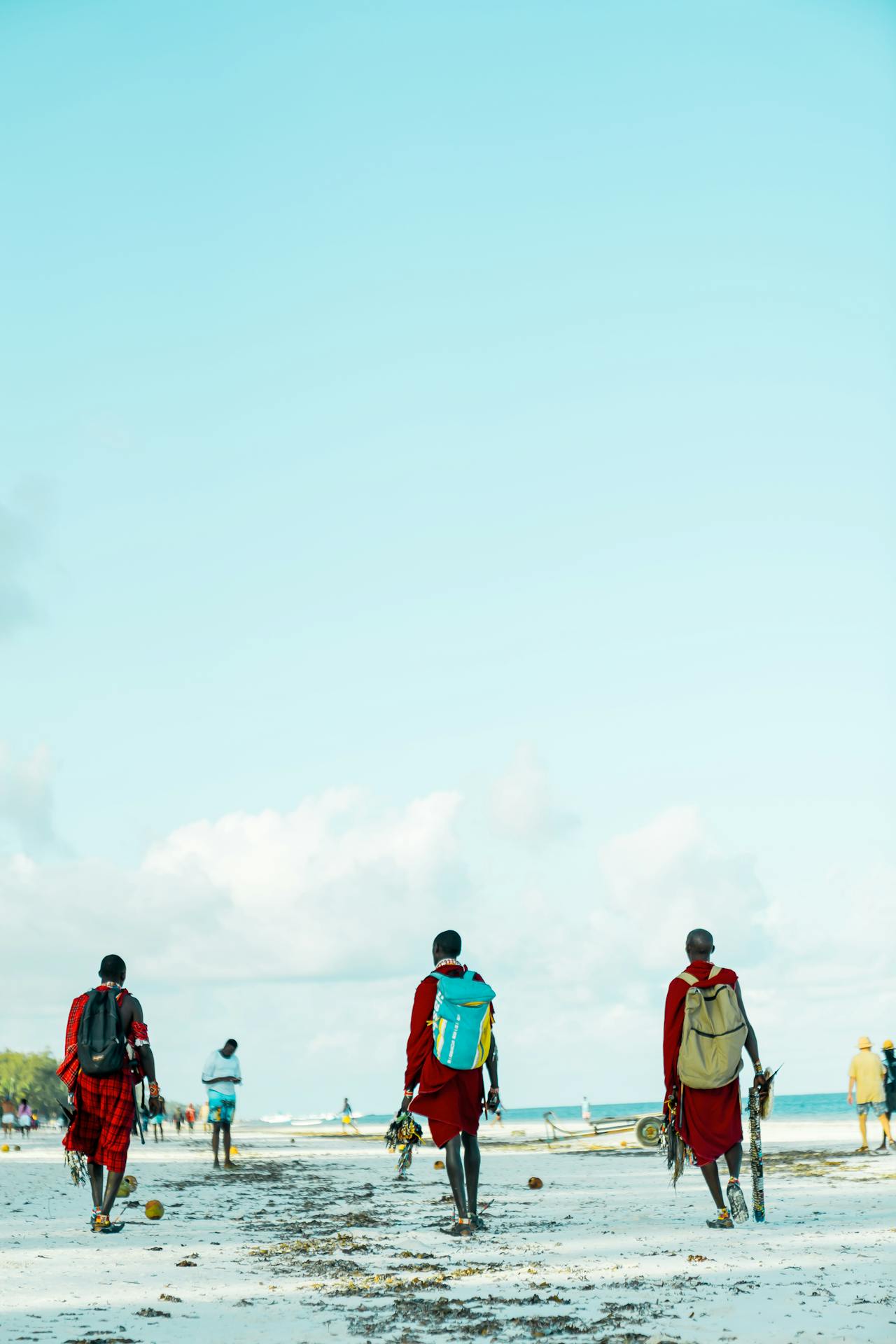
The Diani area itself was a Digo people homeland — a Mijikenda subgroup whose sacred forests (kayas) are UNESCO-inscribed heritage sites. British colonial presence from the late 19th century gradually transformed the south coast into a plantation economy producing coconuts and cashews, with the beach strip itself attracting the first tourist development in the 1960s after Kenyan independence. Tourism expanded rapidly through the 1970s–80s, and Diani today has the most developed tourism infrastructure on the Kenya coast — a double-edged inheritance that provides employment to tens of thousands of local people while generating the conservation pressures that threaten the coastal forest and reef.
🏃 Activities and Attractions
- Snorkelling and Diving on the Reef: The Diani-Chale Marine National Reserve offers snorkelling at the reef edge accessible by glass-bottom boat or short swim from the beach at high tide. Dive operators offer PADI courses and guided dives to coral gardens, the Coral Garden dive site (8–15 m), and deeper sites including the Diani Reef Wall and Neptunes Wall where pelagic fish species, reef sharks, and eagle rays are regularly encountered. November–March is best for underwater visibility (20–30 m).
- Colobus Conservation Centre Visit: A guided tour of the Colobus Conservation centre in the forest behind the beach provides close encounters with habituated colobus monkeys, education about coastal forest ecology, and the opportunity to support a genuinely effective conservation operation through entrance fees. Dawn walks along the forest edge to observe colobus groups foraging in the canopy before the beach heat builds are among the most memorable experiences Diani offers.
- Dolphin Watching and Deep-Sea Fishing: Spinner dolphins and bottlenose dolphins are resident offshore and can be observed on morning boat tours departing from Diani's beach operators. Between July and October, humpback whale sightings are possible further offshore. Deep-sea fishing for marlin, sailfish, and dorado operates from Shimoni harbour further south — the Pemba Channel off the south Kenya coast is one of the finest big-game fishing destinations in the Indian Ocean.
- Wasini Island and Kisite-Mpunguti Marine Park: A full-day excursion south by boat to Wasini Island and Kisite-Mpunguti Marine National Park — one of the better-preserved coral reef systems on the Kenya coast, with snorkelling among pristine coral gardens and resident spinner dolphin pods. The excursion typically includes a traditional Swahili seafood lunch at Wasini village, where the coral ruins of an 18th-century Swahili settlement are incorporated into the restaurant gardens.
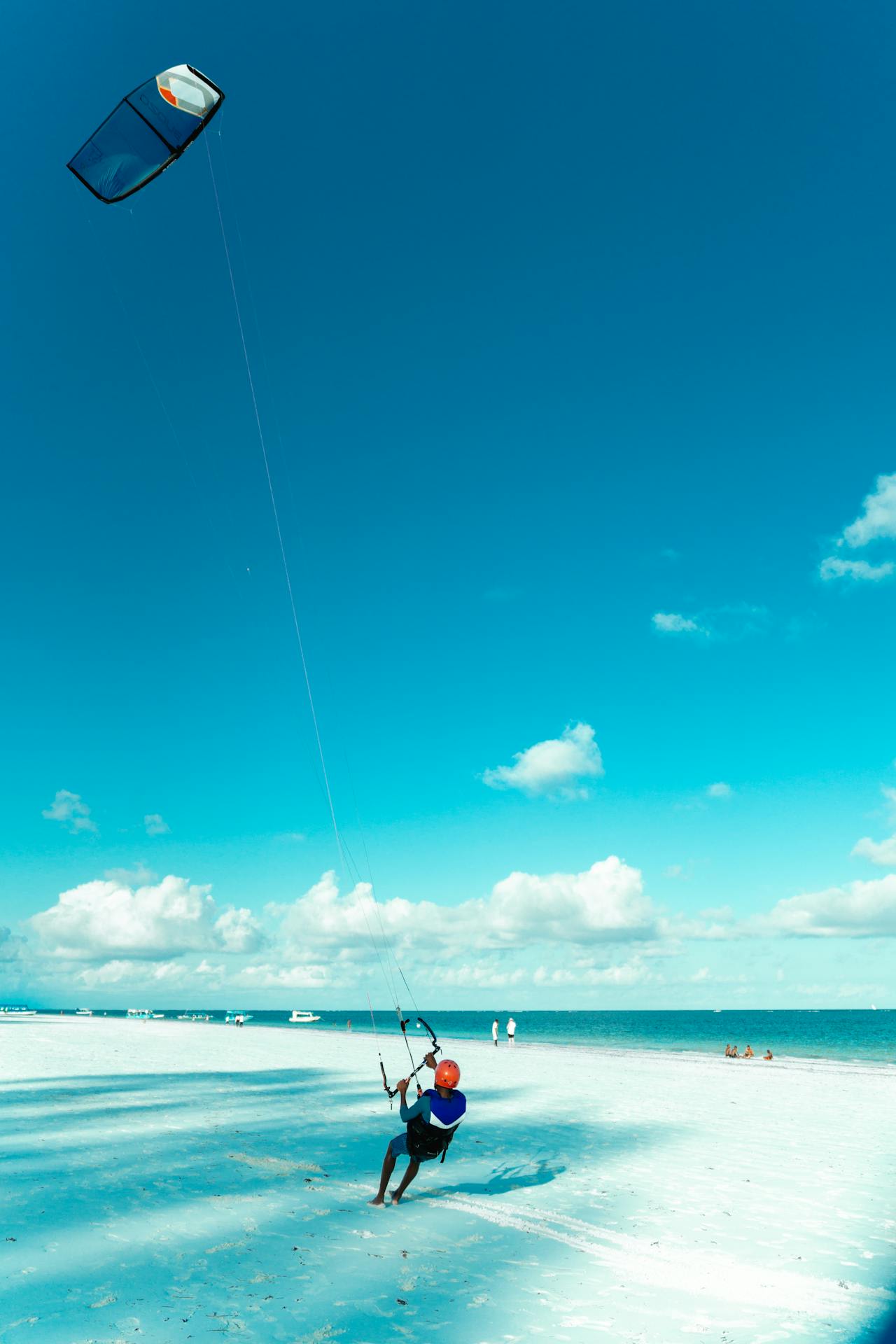
- Kite Surfing: The consistent southeasterly trade wind (June–September) and the flat water of the reef lagoon make Diani one of East Africa's premier kite surfing destinations. Several schools operate on the beach with instruction for beginners. The same conditions make stand-up paddleboarding straightforward for all skill levels — the lagoon inside the reef provides flat water regardless of open-ocean conditions.
💡 Travel Tips
Best Season: October–March (short rains and dry season) is optimal — warm temperatures (28–32°C), lower humidity, and the best marine visibility. June–August brings the southeasterly kaskazi trade wind — excellent for kite surfing and comfortable temperatures (25–28°C) but sometimes strong wind on the beach. April–May is the long rains (masika) — the wettest period with some closures, but dramatically lower prices and empty beaches.
Accommodation: Diani has the widest range of beach accommodation on the Kenya coast — from luxury all-inclusive resorts (Baobab Beach Resort, Leopard Beach Resort) to mid-range hotels, self-catering cottages, and budget guesthouses along the 17 km strip. The southern end of the beach around Galu is quieter and less developed; the central strip near the shopping centre is more lively.
🌱 Conservation
On land, the Colobus Conservation organisation has been the most effective conservation intervention — the colobridges over the beach road have reduced colobus road mortality by over 95% since their installation, and the organisation now operates primate rescue and rehabilitation services across the south coast. The East African Coastal Forest that Diani sits within is classified as one of the world's 25 biodiversity hotspots, with over 75% of its original extent already lost to agriculture and urban development. The forest patches behind Diani Beach are among the most accessible remaining fragments of this ecosystem and their protection is directly dependent on the economic value placed on them by the tourism industry.