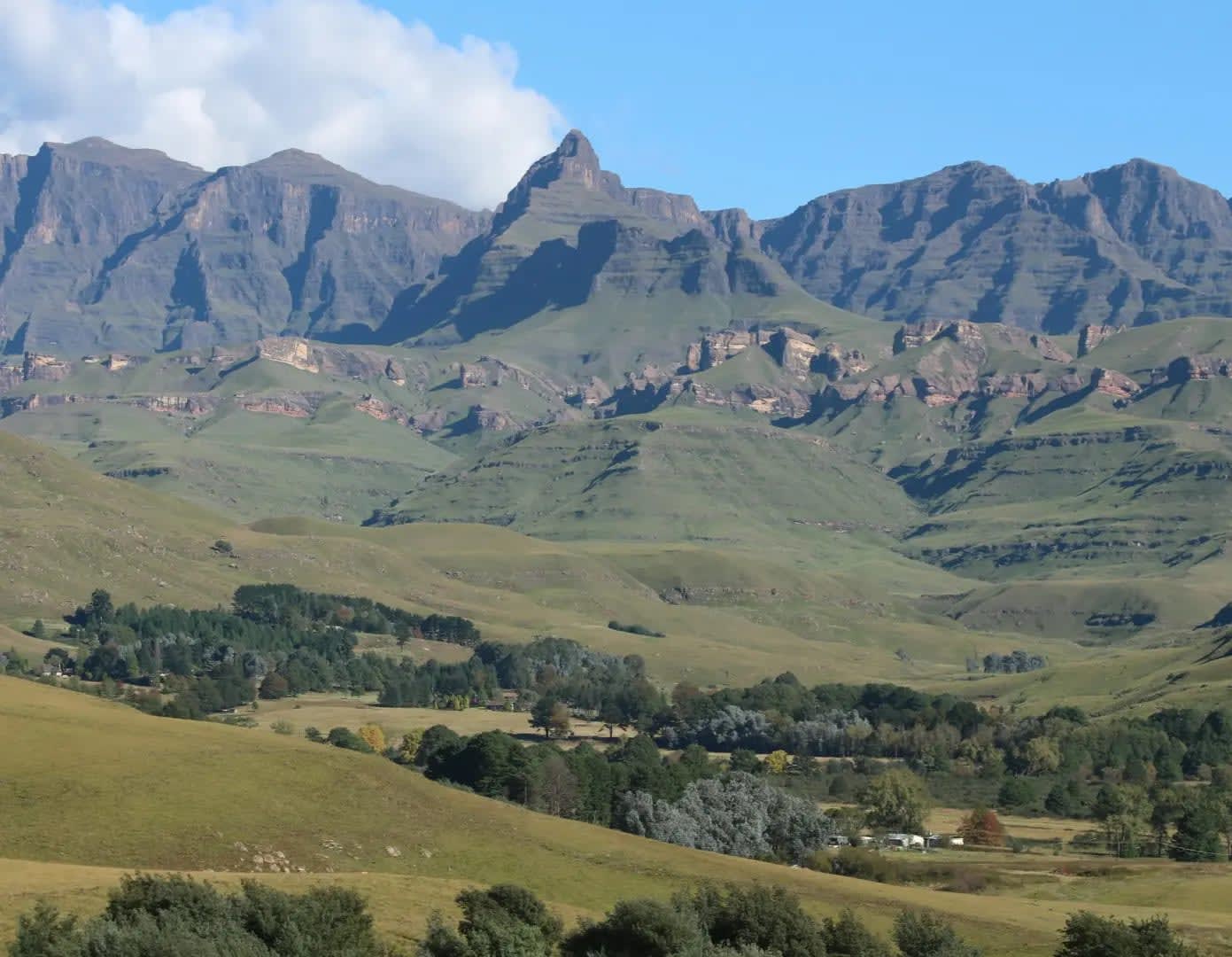
Drakensberg Mountains
Welcome to the Drakensberg Mountains, South Africa’s highest mountain range and one of its most breathtaking natural treasures. Known for rugged cliffs, rolling valleys, and rich history, the Drakensberg offers something for every traveler. From challenging hikes to San rock art sites, it is a place where adventure and cultural heritage meet.
🌍 Geography and Natural Features
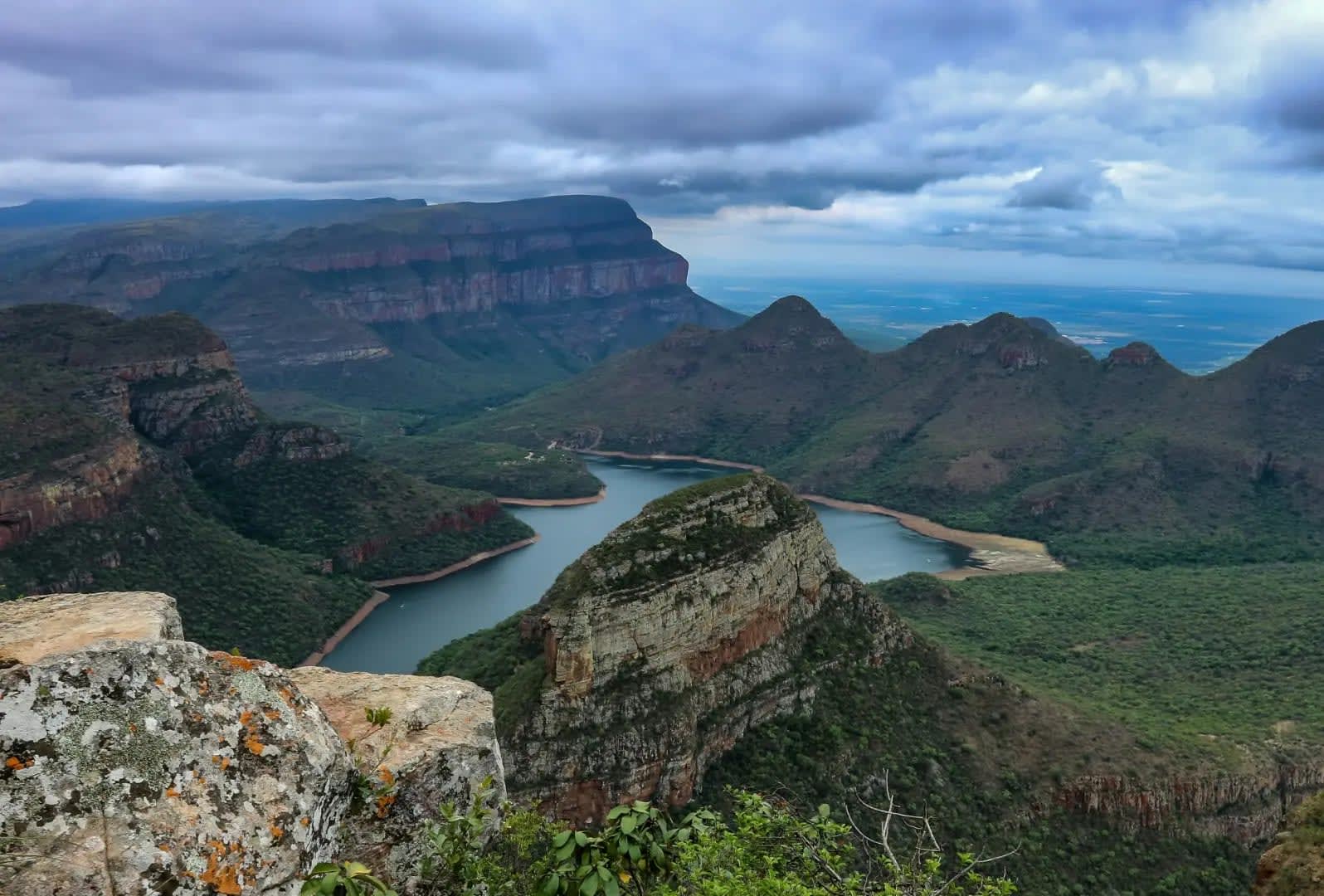
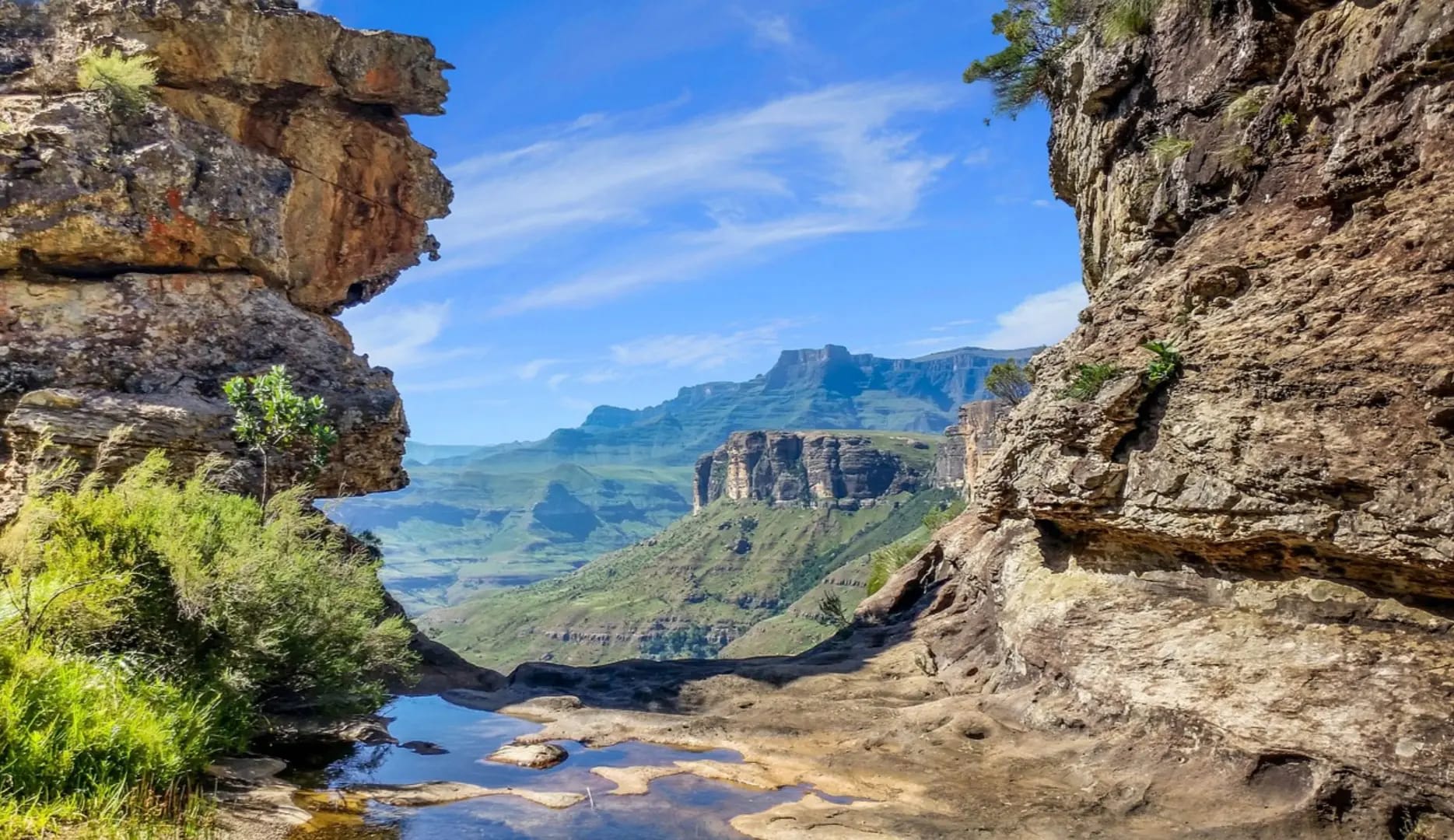
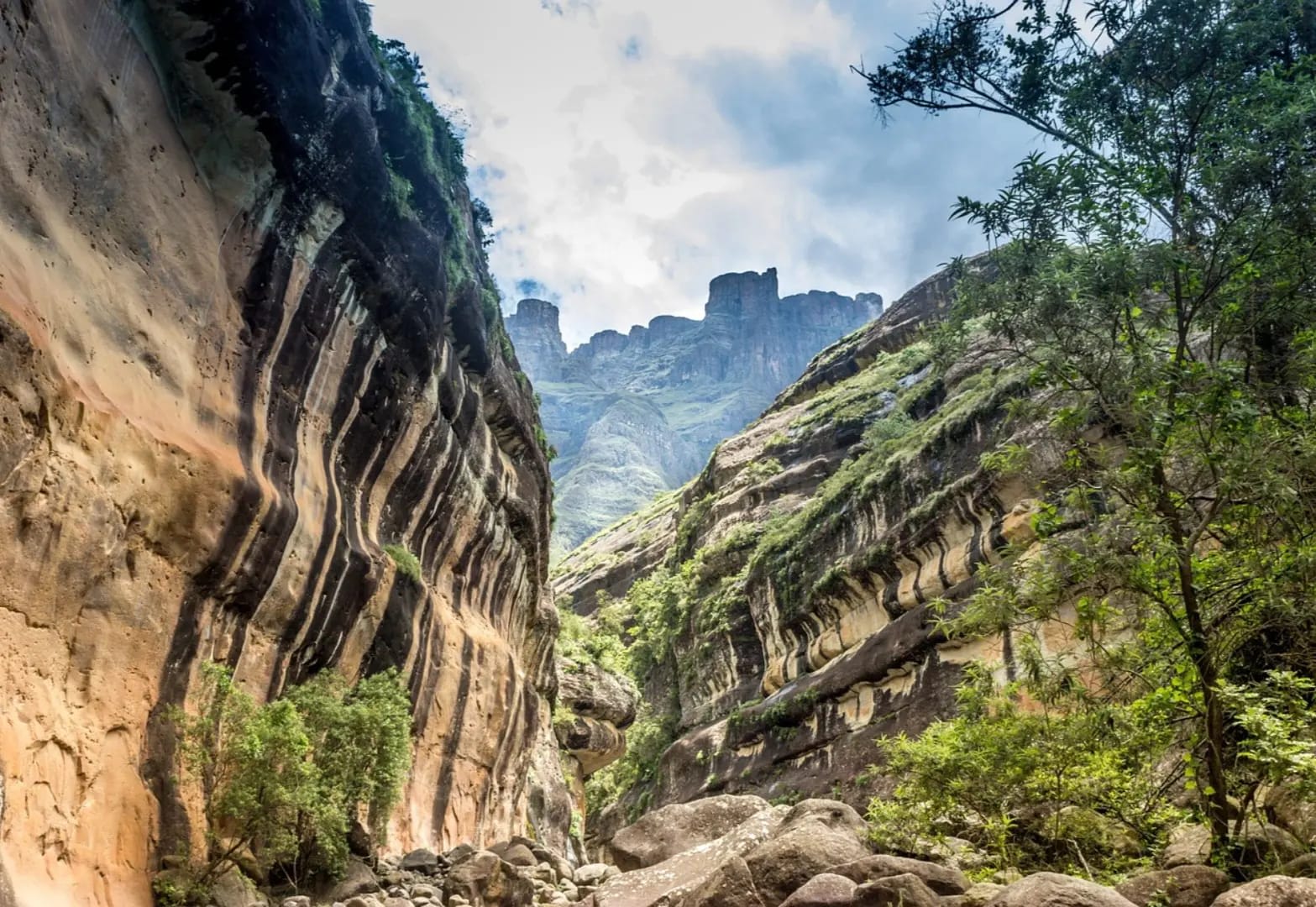
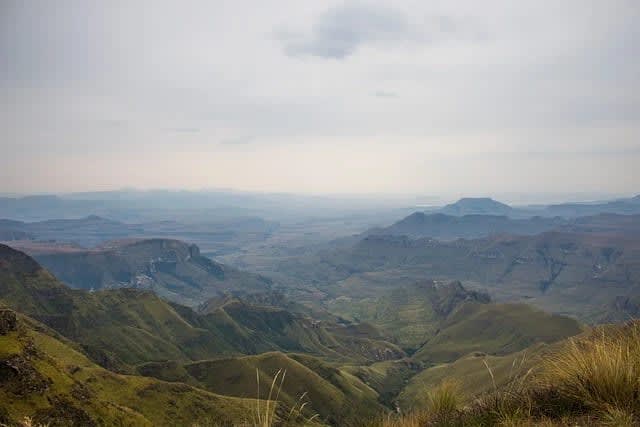
The Drakensberg Mountains stretch over 1,000 kilometers across South Africa, forming a natural barrier between the highveld and the lowveld. The range’s dramatic landscapes include towering cliffs, deep valleys, and lush forests. The region’s diverse ecosystems support rare plant species, a variety of bird species, and several mammals, including antelope and baboons.
- Amphitheatre : One of the most iconic landmarks, this massive rock wall is over five kilometers wide and features impressive cliffs.
- Tugela Falls : Located within the Amphitheatre, these falls are one of the highest in the world and offer a spectacular sight.
- Cathedral Peak : A popular area known for challenging hikes and panoramic views of the surrounding landscape.
- San Rock Art : The Drakensberg is home to hundreds of ancient rock art sites, where visitors can see well-preserved paintings created by the San people.
- Flora and Fauna : The region hosts a range of unique plant and animal species, including endangered birds like the bearded vulture and rare flowers that bloom seasonally.
📜 History and Cultural Significance
The Drakensberg Mountains have a rich cultural heritage, serving as home to the San people for thousands of years. The area is famous for its rock art, which offers insight into the beliefs and daily lives of these early inhabitants.
San People and Rock Art : The San people created thousands of rock paintings on cliffs and in caves, depicting animals, rituals, and scenes from their lives.
UNESCO World Heritage Site : The uKhahlamba-Drakensberg Park was declared a UNESCO World Heritage Site in 2000 for its natural beauty and cultural significance.
Conservation Efforts : Today, the park is carefully managed to preserve its unique landscapes and historical sites, making it a vital part of South Africa’s cultural and natural heritage.
San People and Rock Art : The San people created thousands of rock paintings on cliffs and in caves, depicting animals, rituals, and scenes from their lives.
UNESCO World Heritage Site : The uKhahlamba-Drakensberg Park was declared a UNESCO World Heritage Site in 2000 for its natural beauty and cultural significance.
Conservation Efforts : Today, the park is carefully managed to preserve its unique landscapes and historical sites, making it a vital part of South Africa’s cultural and natural heritage.
🏃 Activities and Attractions
The Drakensberg Mountains offer a variety of activities for adventurers and nature enthusiasts alike. With its rugged terrain and rich heritage, there’s no shortage of ways to explore.
- Hiking and Trekking : The Drakensberg has trails for all skill levels, including routes to Tugela Falls, Cathedral Peak, and the Amphitheatre.
- Bird Watching : The mountains are home to a variety of bird species, including the endangered bearded vulture and the cape vulture.
- Guided Rock Art Tours : Explore the ancient San rock art with guided tours that provide insight into the region’s cultural heritage.
- Horseback Riding : Enjoy horseback trails that wind through the scenic valleys and up the lower slopes of the mountains.
- Fishing : Several rivers and dams in the area offer trout fishing, popular among visitors looking for a relaxing outdoor experience.
💡 Travel Tips
How to Get There : The Drakensberg region is accessible by road, with major routes from Johannesburg and Durban. Car rentals or organized tours are available.
Best Time to Visit : The best time to visit is during spring (September to November) and autumn (March to May) when temperatures are mild, and hiking conditions are ideal. Summer offers lush green landscapes but can bring rain, while winter is dry and cool, with occasional snow on the peaks.
What to Bring : Essentials include sturdy hiking boots, warm clothing for higher altitudes, sun protection, and a camera. For those hiking, be sure to carry sufficient water and snacks.
Accommodation and Services : A variety of lodges, guesthouses, and camping facilities are available, ranging from luxury resorts to basic accommodations near popular trails.
Best Time to Visit : The best time to visit is during spring (September to November) and autumn (March to May) when temperatures are mild, and hiking conditions are ideal. Summer offers lush green landscapes but can bring rain, while winter is dry and cool, with occasional snow on the peaks.
What to Bring : Essentials include sturdy hiking boots, warm clothing for higher altitudes, sun protection, and a camera. For those hiking, be sure to carry sufficient water and snacks.
Accommodation and Services : A variety of lodges, guesthouses, and camping facilities are available, ranging from luxury resorts to basic accommodations near popular trails.
🌱 Conservation Efforts
The Drakensberg Mountains are part of a protected UNESCO World Heritage Site, with a focus on conserving both natural and cultural resources. Conservation efforts help maintain the region’s unique biodiversity and historical sites.
Conservation Policies : Visitors are encouraged to follow ‘Leave No Trace’ principles, stick to designated trails, and respect rock art sites.
Community Involvement : Local communities are involved in conservation programs, which support eco-friendly tourism and protect the area’s natural resources.
Research and Monitoring : Ongoing research and wildlife monitoring help maintain the health of ecosystems and preserve endangered species like the bearded vulture.
Conservation Policies : Visitors are encouraged to follow ‘Leave No Trace’ principles, stick to designated trails, and respect rock art sites.
Community Involvement : Local communities are involved in conservation programs, which support eco-friendly tourism and protect the area’s natural resources.
Research and Monitoring : Ongoing research and wildlife monitoring help maintain the health of ecosystems and preserve endangered species like the bearded vulture.
✨ Conclusion
The Drakensberg Mountains are a magnificent destination that combines South Africa’s natural beauty with rich cultural heritage. From the impressive peaks and cascading waterfalls to the ancient rock art of the San people, the Drakensberg offers visitors a journey through history and a chance to experience one of the world’s most beautiful mountain landscapes. Whether hiking the trails or exploring cultural sites, the Drakensberg promises an unforgettable adventure.