Tsingy de Bemaraha
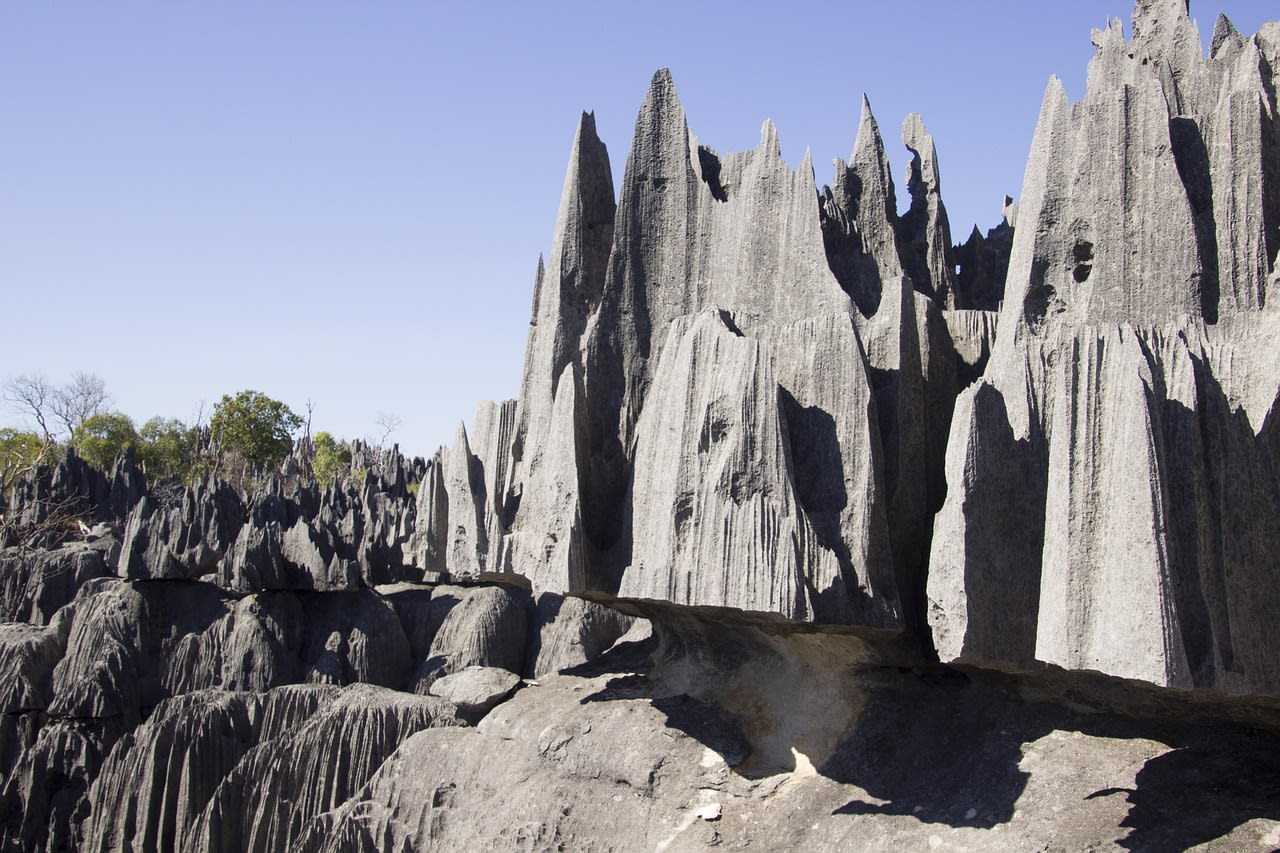
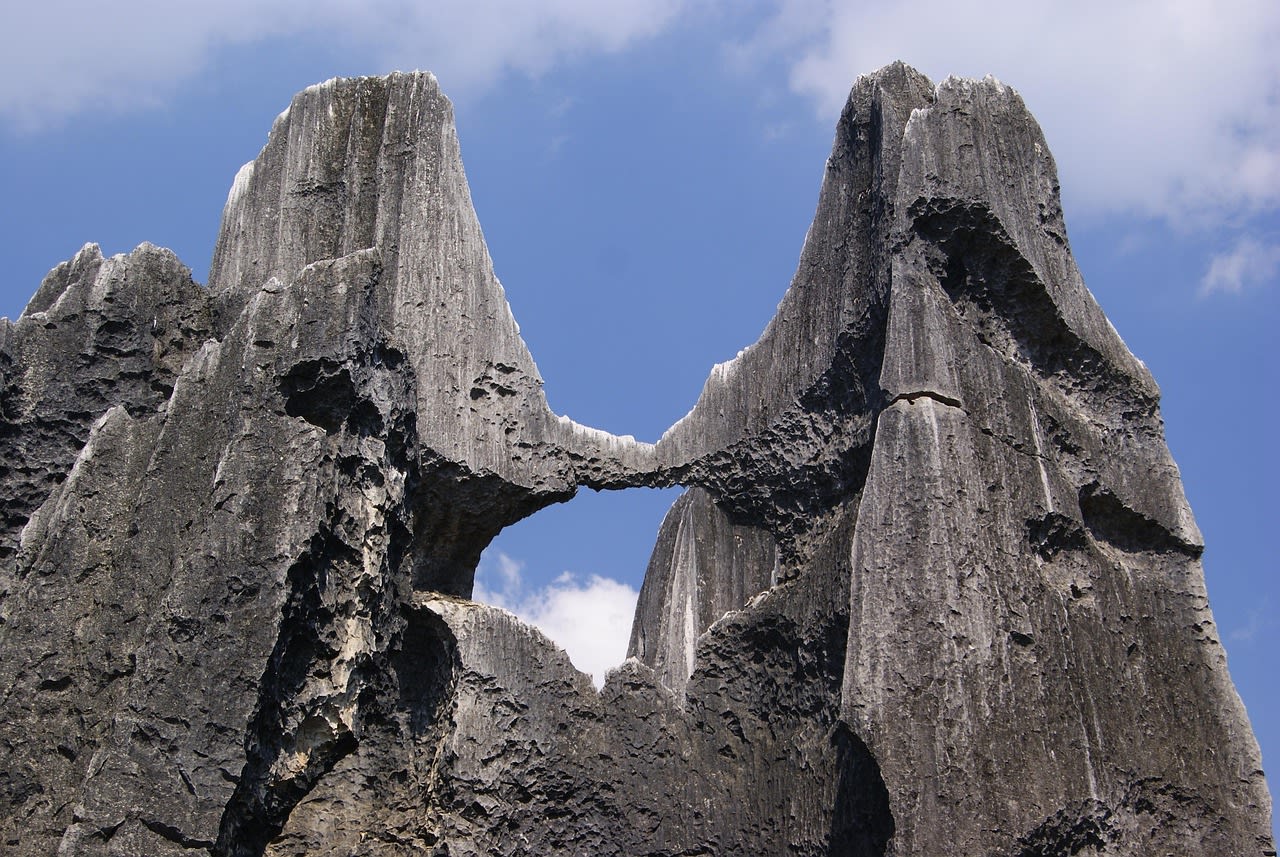
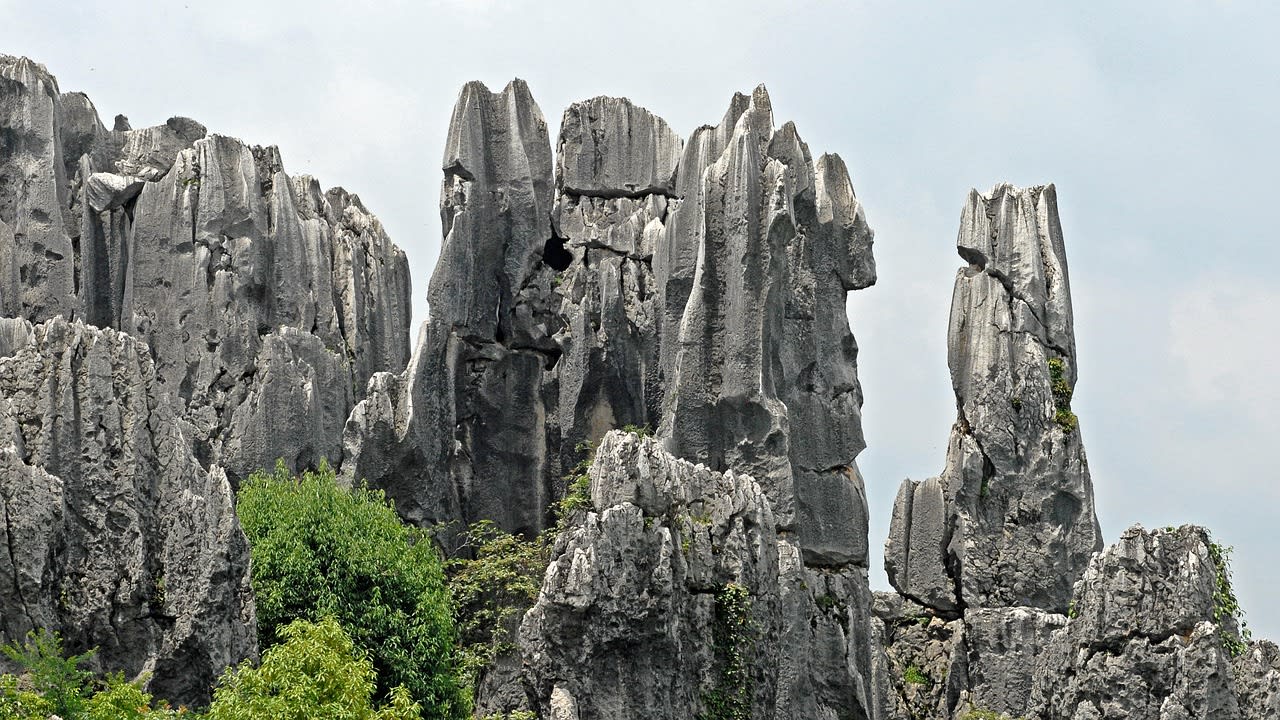
Tsingy de Bemaraha Strict Nature Reserve and National Park is a UNESCO World Heritage Site (1990) in the Melaky region of western Madagascar, covering approximately 1,575 km² of one of the most remarkable geological formations on Earth: a forest of razor-sharp grey limestone pinnacles — the tsingy (meaning 'where one cannot walk barefoot' in Malagasy) — rising 30–50 metres from the plateau surface and separated by narrow crevices and canyon passages that support an extraordinary assemblage of endemic flora and fauna. The Grand Tsingy (the main northern massif) and the Petit Tsingy (the more accessible southern section) together constitute the world's largest intact tsingy landscape, formed by the dissolution and vertical erosion of Jurassic limestone over approximately 150 million years. The isolated canyon microhabitats within the tsingy — sheltered from wind, retaining moisture, and accessible only to specialist climbing organisms — have driven extraordinary adaptive radiation of endemic species, including the Decken's sifaka lemur (with feet adapted for climbing vertical rock faces), the Bemaraha woolly lemur, numerous endemic reptiles, and over 650 plant species of which approximately 85% are found nowhere else in the world.
🌍 Geography and Ecosystem
- Grand Tsingy Circuit: The main hiking circuit in the northern section of the park, traversing 4–6 km of the most dramatic tsingy terrain via a combination of ladders, fixed chains, and 12 suspension bridges spanning the deepest crevices. The circuit takes 4–7 hours and requires good physical fitness and a tolerance for heights — sections involve vertical ladder climbs and narrow bridge crossings with the tsingy floor 30 metres below. The views from the top of the pinnacle complex are extraordinary.
- Manambolo River Gorge: The Manambolo river, entering the park from the south, has cut a spectacular canyon through the limestone with walls of 100–200 metres. Pirogue (dugout canoe) tours through the gorge, available from the park entrance at Bekopaka, provide views of the vertical cliff walls and the tsingy formations above. Crocodiles — Nile crocodile and the endangered Madagascar croc — are present in the river; local guides manage access accordingly.
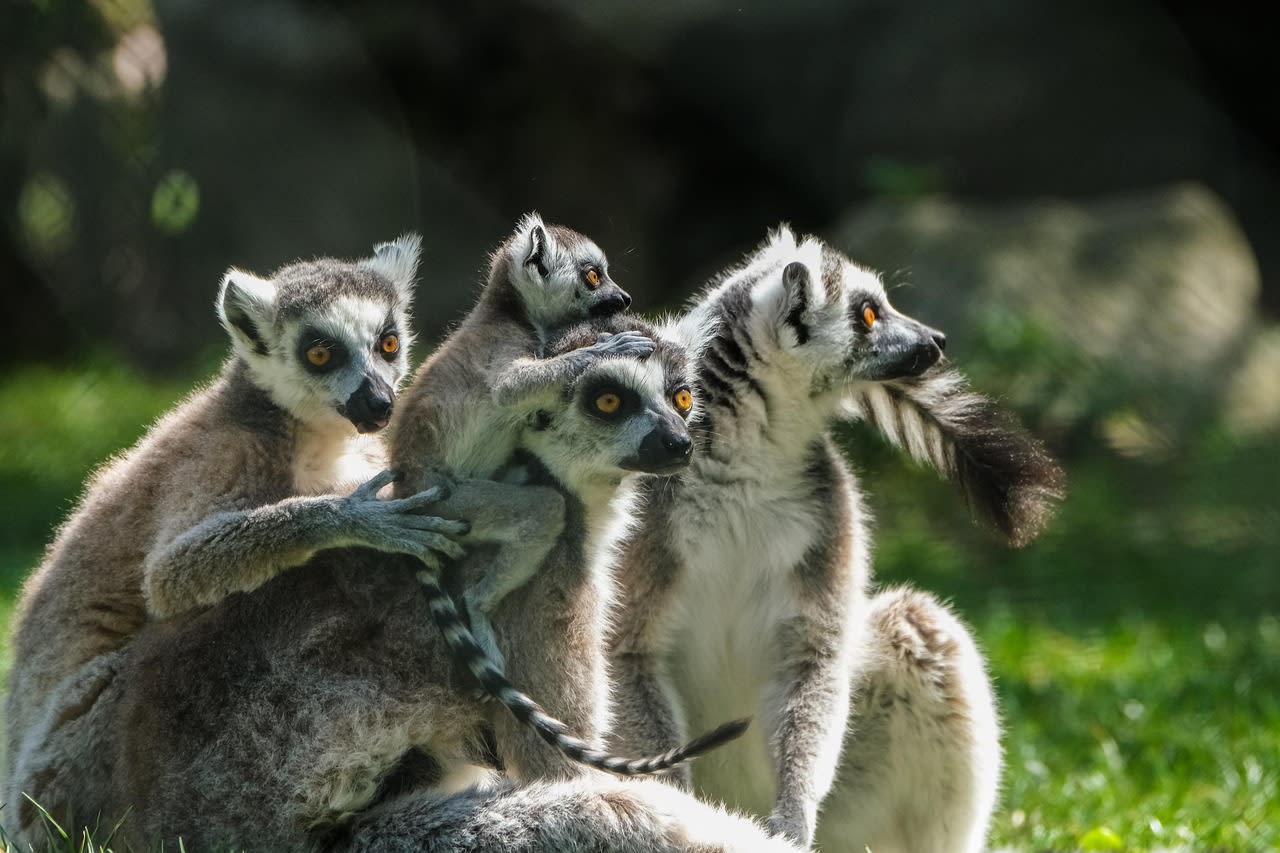
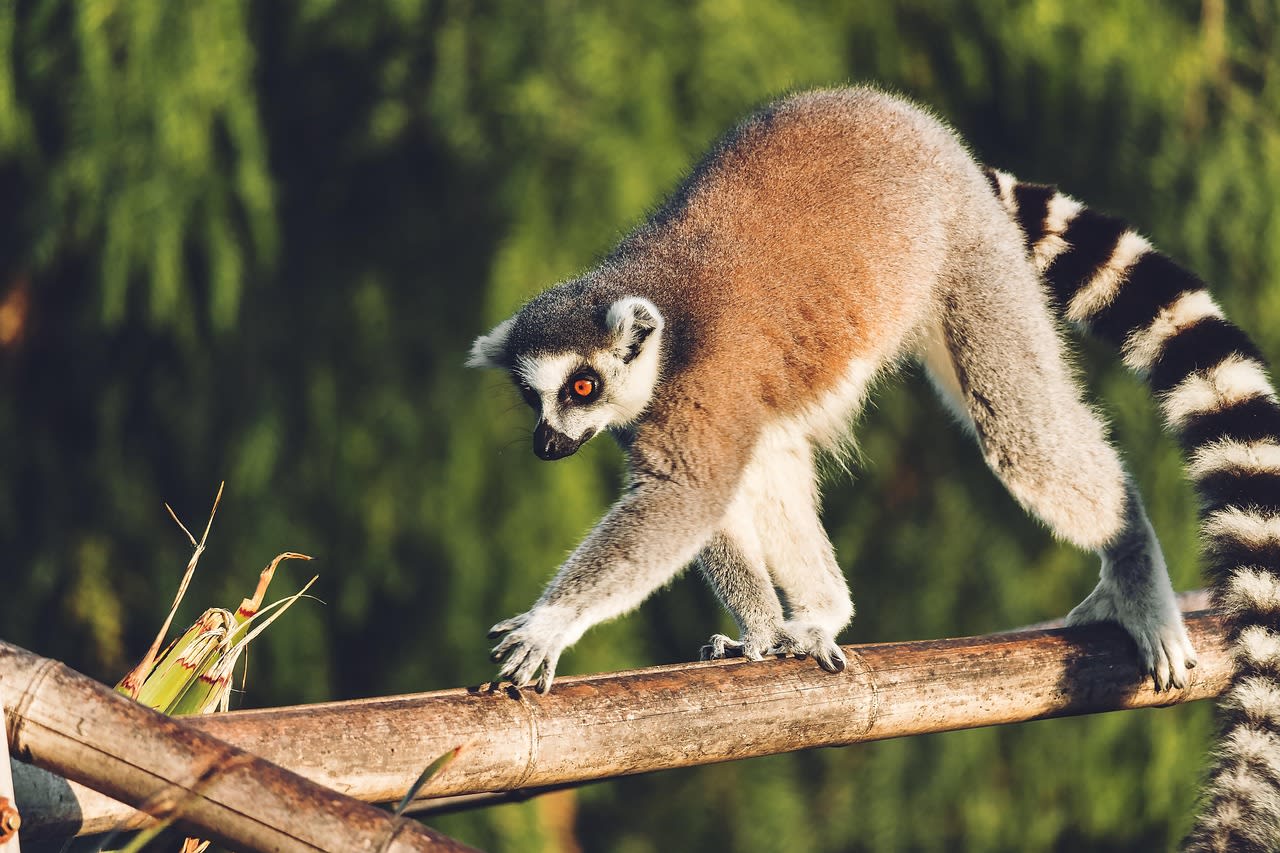
- Decken's Sifaka Habitat: The white-and-tan Decken's sifaka (Propithecus deckenii) has evolved feet with hard, rough pads and particularly strong hind legs for vertical rock face jumping — a specialisation unique among lemurs. Groups of 3–8 individuals occupy territories within the tsingy and regularly move between rock faces in spectacular horizontal leaps of 3–5 metres between pinnacles. Morning and late afternoon are the most active observation periods. Full-day tsingy visits will almost certainly include sifaka encounters.
- Petit Tsingy: The smaller, more accessible southern section of the tsingy (3 km from Bekopaka village), where the pinnacles are lower (5–15 m) and more widely spaced, allowing navigation without the fixed-rope infrastructure of the Grand Tsingy. Suitable for families and visitors without extensive hiking experience. The Petit Tsingy gives a genuine taste of the geological character and endemic flora and fauna of the park in a half-day with significantly less physical demand.
📜 History and Cultural Significance
The UNESCO World Heritage inscription in 1990 was among the earliest recognitions by the international community of Madagascar's extraordinary endemic biodiversity — a recognition that preceded the wave of conservation NGO investment in the island by more than a decade. The park was established partly on the basis of its geological significance and partly on the preliminary biological surveys that indicated the high endemism of the tsingy canyon flora and fauna. Subsequent studies have revealed the tsingy to be a far more biologically rich environment than initially appreciated, with new species of lemur, reptile, and plant described from the park as recently as 2005–2015.
🏃 Activities and Attractions
- Grand Tsingy Via Ferrata Circuit: The main visitor experience — a 4–7 hour circuit through the Grand Tsingy using fixed iron ladders, chains, and 12 suspension bridges to access pinnacle tops, canyon passages, and viewpoints that are otherwise completely inaccessible. Full protective equipment (helmet, harness, gloves) is provided at the park entrance. Mandatory guide accompaniment. The circuit is physically demanding but technically accessible to healthy adults with no prior climbing experience.
- Petit Tsingy Exploration: The half-day southern tsingy circuit requires no fixed-rope equipment and is accessible without a harness. The terrain is genuine tsingy with resident lemur groups (Decken's sifaka and the smaller grey mouse lemur), endemic lizards, and the surreal pinnacle landscape. Better for morning visits as the Grand Tsingy circuit typically starts at 07:00.
- Manambolo River Pirogue Tour: Dugout canoe tours through the Manambolo gorge (2–3 hours) provide the most spectacular approach to the tsingy, with 100-metre canyon walls and tsingy formations visible above. Guides identify wildlife on the riverbanks including the Madagascar kingfisher, black-crowned night heron, and the characteristic silhouette of Decken's sifaka groups on the canyon ledges.
- Night Walk for Nocturnal Species: Guided night walks from Bekopaka camp identify nocturnal lemurs (woolly lemur, mouse lemur), chameleons (multiple endemic species active at night), and the Malagasy leaf-tailed gecko clinging to rock faces and tree trunks. Night walks are run by park guides from 19:00 and take approximately 1.5 hours.
- Bekopaka Village Cultural Visit: The small village of Bekopaka at the park entrance is inhabited by the Sakalava people, and a guided tour of the village includes visits to the traditional zebu cattle corral (zebu being the primary measure of wealth in the Sakalava tradition), the market, and the craftwork of mat and basket weaving from pandanus palm leaves. Purchasing crafts directly from the artisans provides income that supplements the community's benefit from park tourism fees.
💡 Travel Tips
Best Season: April–November (dry season). The road from Morondava becomes completely impassable in the wet season (December–March) and the park effectively closes. May–August is most comfortable with temperatures of 25–30°C; September–November is hotter (35–40°C) but visitor numbers are lowest and lemur activity is highest as the dry season stress increases foraging.
What to Pack: Full sun protection — the tsingy offers minimal shade and direct tropical sun above the pinnacles is extreme. Long sleeves and trousers protect against sharp limestone edges during the circuit. Sturdy closed-toe shoes (no sandals on the Grand Tsingy circuit — limestone is razor-edged). 3 litres minimum water per person for the Grand Tsingy day. Harness, helmet, and gloves are provided by the park.
Accommodation: Bekopaka village has several guesthouses (auberges) ranging from basic (no electricity, cold water) to comfortable mid-range. The Olympe du Bemaraha is the best-regarded. All accommodation must be booked in advance as capacity is very limited. 2–3 nights at minimum are needed to do both Grand and Petit Tsingy plus the river tour.
🌱 Conservation
The three lemur species most dependent on the tsingy — Decken's sifaka (Propithecus deckenii), the Bemaraha woolly lemur (Avahi cleesei), and the Cleese's woolly lemur (named after actor John Cleese, a prominent Madagascar conservation supporter) — are all endemic to the western dry forest zone and are classified as Vulnerable or Endangered on the IUCN Red List, with populations estimated in the low thousands. The park infrastructure — guides, harnesses, bridges, entrance fees — provides meaningful livelihood to the Bekopaka community, reducing the pressure to exploit the park's biological resources for subsistence. The Madagascar National Parks authority reinvests a proportion of entry fees into local community development programmes.