Avenue of the Baobabs
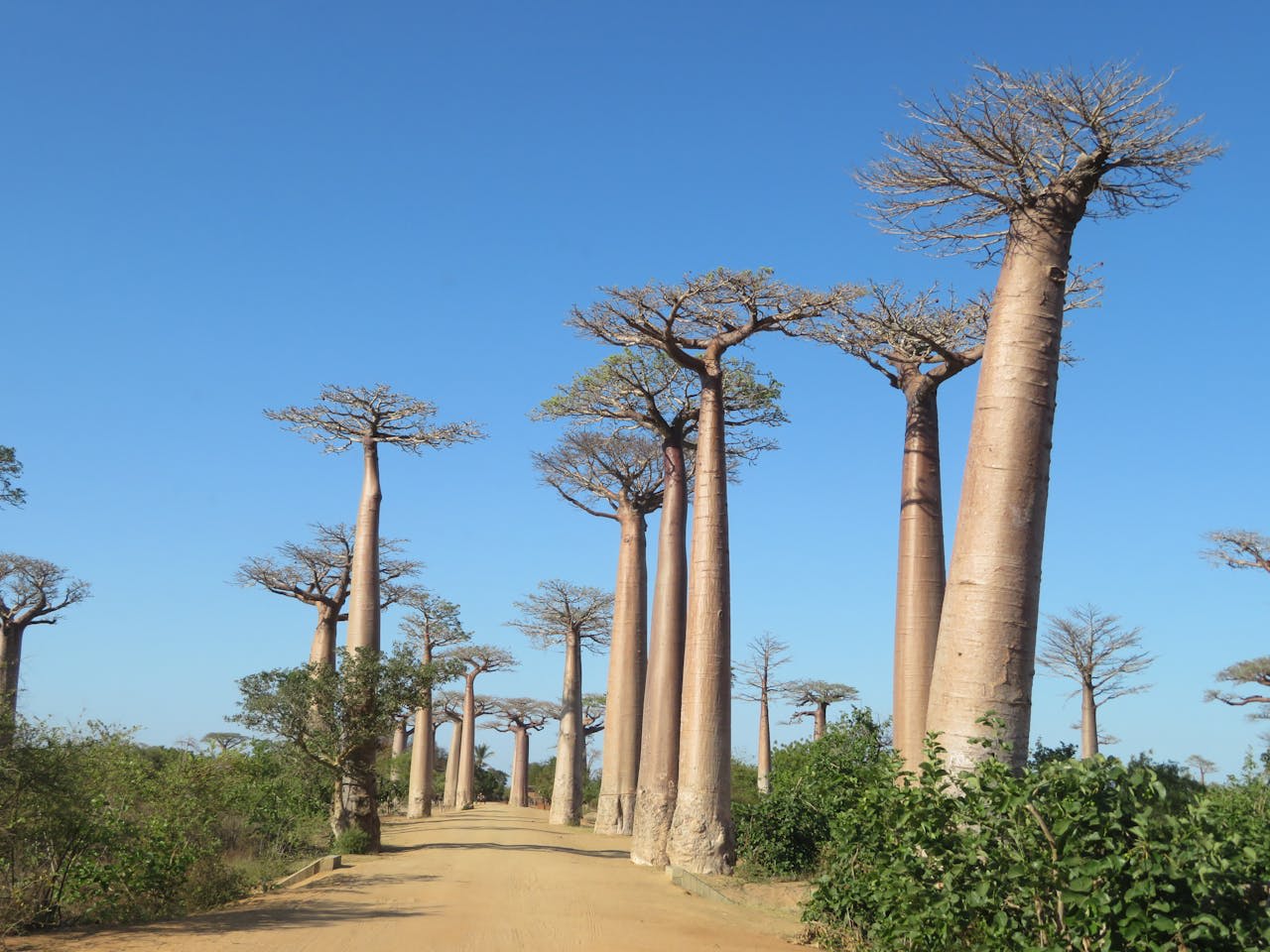
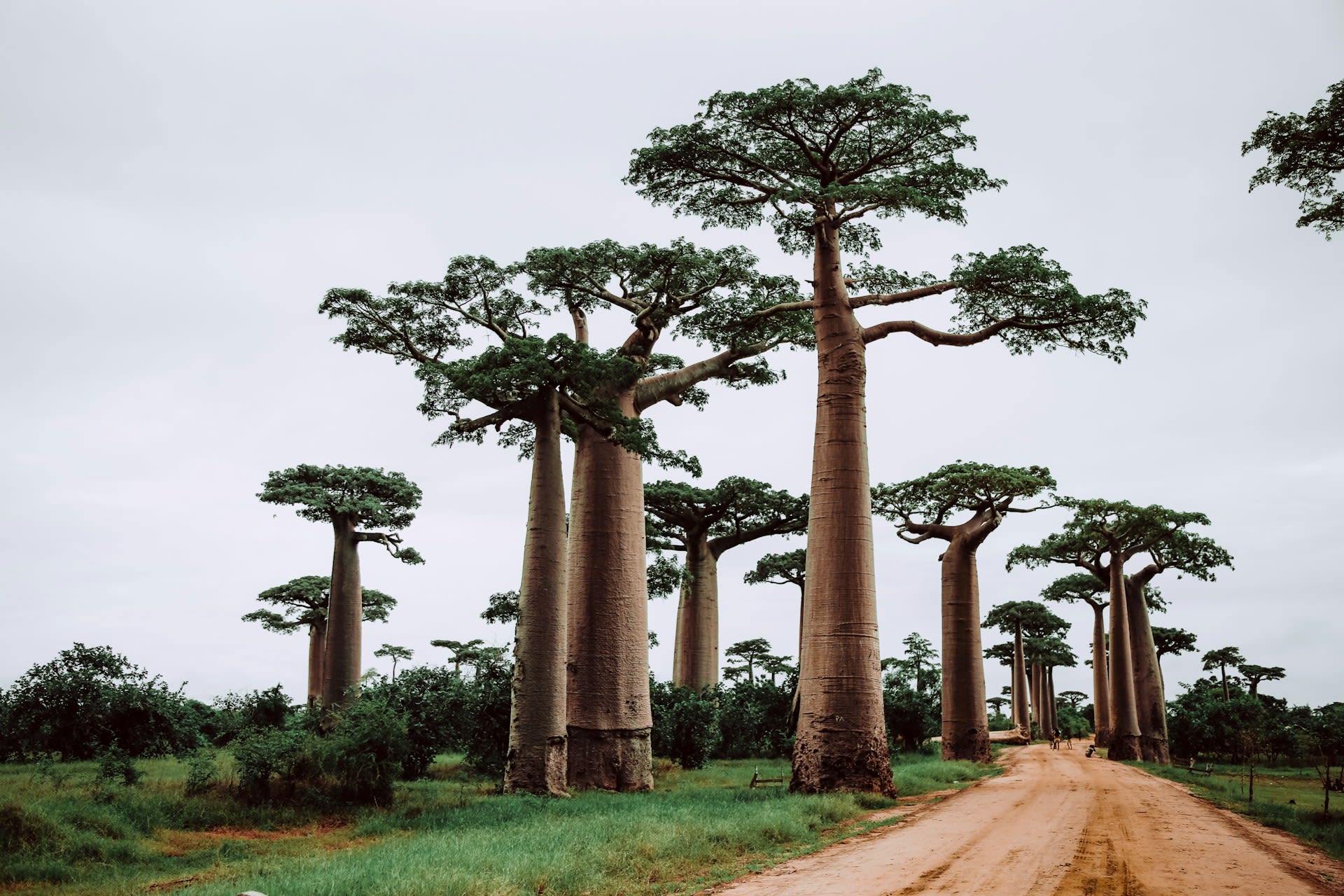
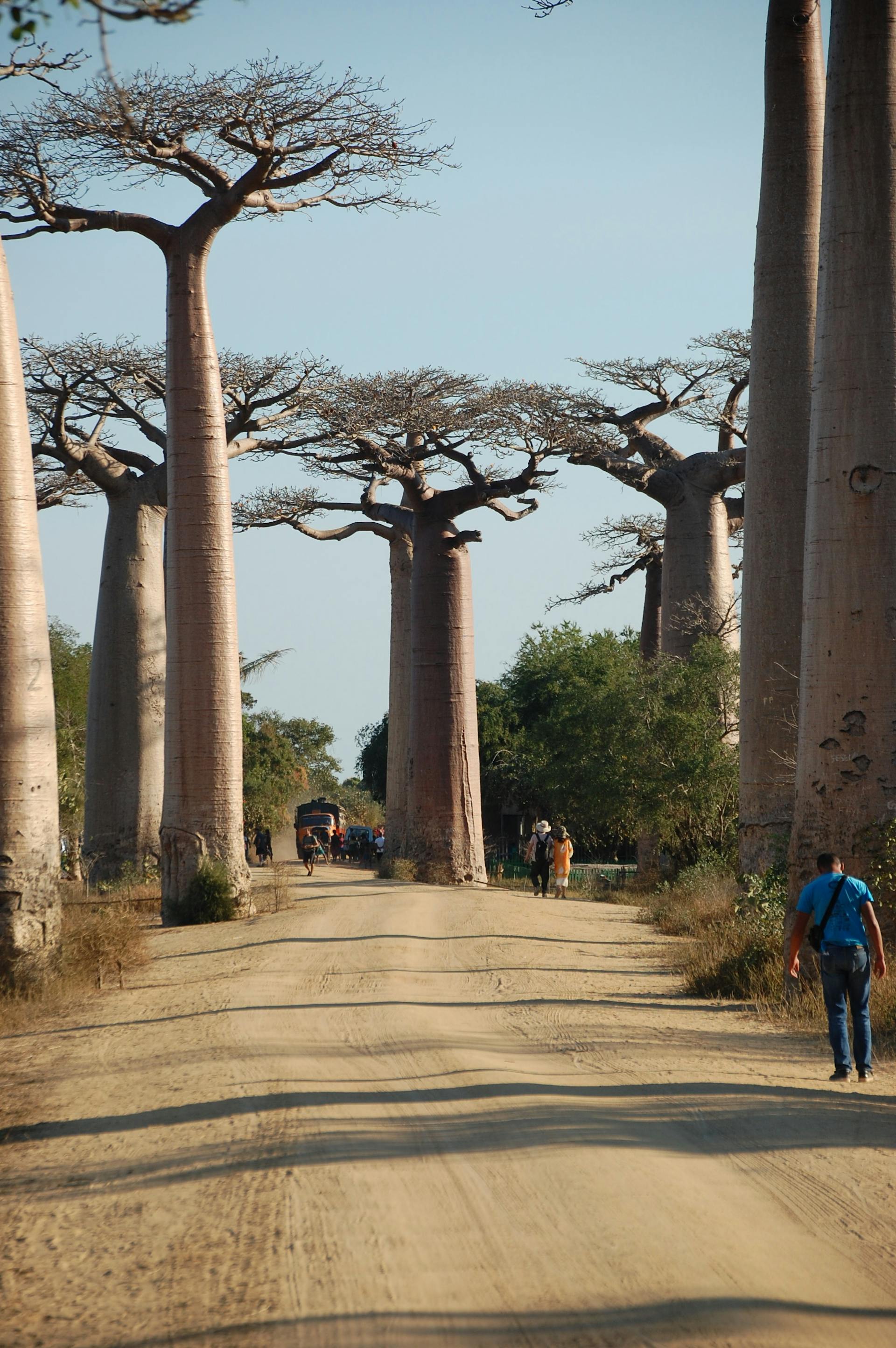
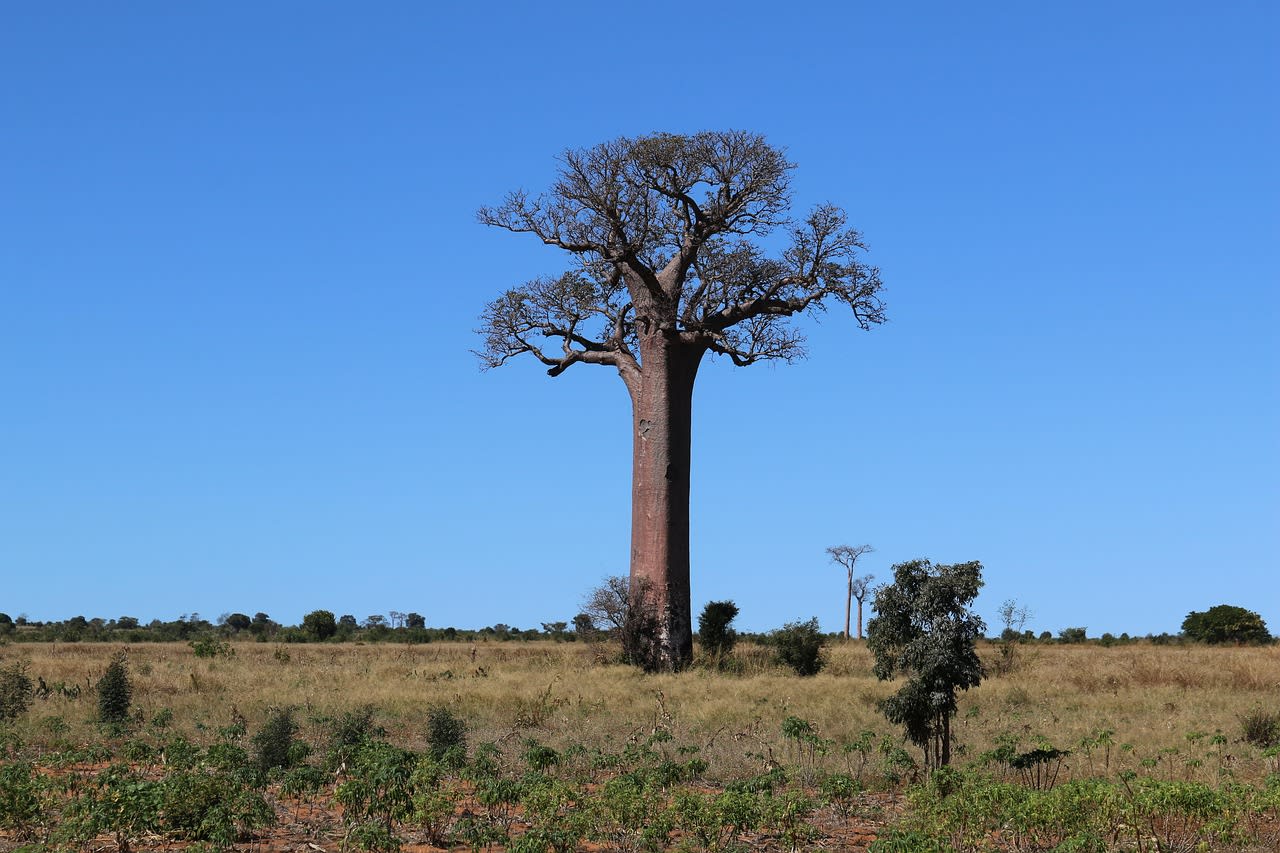
The Avenue of the Baobabs (Malagasy: Avenin'ny Baobab) is a dirt road of approximately 260 metres lined by approximately 25 monumental specimens of Grandidier's baobab (Adansonia grandidieri) — Madagascar's largest and most endangered baobab species — near the village of Morafenobe on the road between Morondava and Belon'i Tsiribihina in the Menabe region of western Madagascar. The trees stand 25–30 metres tall with trunks measuring 3–5 metres in diameter, their distinctive bottle-shaped profiles bare of leaves for much of the dry season (May–November), when the massive trunk — which stores up to 120,000 litres of water in its fibrous wood — becomes the dominant visual element of an already extraordinary landscape. The oldest individuals are estimated to be 800 years old. Once part of a dense tropical dry forest that covered the Menabe region, these trees are the remnant survivors of wholesale deforestation for agriculture and charcoal production — a living ruin of a landscape that has been almost entirely destroyed. The avenue was officially protected as a Natural Monument by the Malagasy government in 2007, the first of its kind in Madagascar.
🌍 Geography and Ecosystem
- The Avenue Trees Themselves: The 25 main trees of the avenue show extraordinary individual character — some are perfectly cylindrical, others bulged at the base, several have bifurcating trunks that frame views along the road. The dry-season bare-trunk appearance, when leaves are absent and the sky is visible through the crown tips, is the most dramatic condition for photography; the brief wet-season leafing creates a completely different softened appearance.
- Twin Baobabs (Baobabs Amoureux): Approximately 1 km north of the main avenue, two intertwined Grandidier's baobabs whose trunks have grown together in a spiral embrace over centuries — the larger tree is estimated at over 1,000 years old. Local legend holds that a young couple turned into trees after making a promise of eternal love, and the twins have become a pilgrimage site for Malagasy couples.
- Seasonal Flooding: During the wet season (December–March), the rice paddies flanking the avenue flood to mirror-like depths of 10–20 cm, creating one of the most extraordinary photographic compositions in Africa: the giant baobab trunks reflected perfectly in the flooded fields. This image — taken with a wide-angle lens at dawn or dusk — is among the most widely reproduced landscape photographs from Madagascar.
- Menabe-Antimena Protected Area: The broader protected area covering 295,000 hectares of western Madagascar dry forest and coastal mangrove, within which the avenue sits, protects some of the last remaining dry deciduous forest on the island — habitat for the critically endangered giant jumping rat (Hypogeomys antimena), the narrow-striped mongoose, and several lemur species including fat-tailed dwarf lemur and red-fronted brown lemur.
📜 History and Cultural Significance
The Menabe region was historically the heartland of the Sakalava people, one of Madagascar's major ethnic groups, whose royal dynasty controlled the western coastal zone from the 16th to 19th centuries. Baobab trees held sacred significance in Sakalava culture — large specimens were associated with ancestral spirits and were sites of offering and prayer. The deforestation of the Menabe region accelerated dramatically after Madagascar's independence in 1960 and particularly during periods of political instability in the 1970s–90s, when governance of forest resources collapsed. It is estimated that over 90% of Madagascar's original forest cover has been lost since human settlement approximately 2,000 years ago, placing it among the most severely deforested large islands on Earth. The avenue trees survived because their massive trunks made them impractical to cut and because they served as landmarks on the Morondava–Belo road — a purely accidental conservation outcome.
🏃 Activities and Attractions
- Sunset and Sunrise Photography: The two optimal times for visiting the avenue — an hour before sunset (golden light on the orange trunks) and 30 minutes before sunrise (blue pre-dawn light with potential rice paddy reflections in wet season). The bare-trunk silhouette at these times against coloured sky has become one of Africa's most iconic landscape images. Bring a tripod; long exposure at dusk produces blurred zebu-cart movement that adds narrative to the composition.
- Full Moon Night Photography: On the two or three nights around full moon, guided night visits allow photographing the avenue under moonlight. The silver light on the pale grey trunks with a dark blue sky and the sound of frogs and nightjars creates a profoundly different and equally beautiful version of the site. Several local guides specialise in these sessions.
- Village Life and Zebu Watching: The avenue functions as a village road — zebu cattle carts, women carrying water from the well, children going to school, and herders moving flocks pass through throughout the day. Engaging with village life, watching the zebu carts navigate between the enormous trunks, and drinking coconut water with local vendors under the trees provides cultural context that the photography-focused visit alone cannot provide.
- Morondava Town and Coast: The coastal town of Morondava (45 km from the avenue) has excellent seafood restaurants, a bustling morning fish market, and the longest beach in the Menabe region. The mangrove-lined Morondava river estuary is a productive bird-watching area with kingfishers, herons, and the endemic Malagasy kingfisher. Pirogue (outrigger canoe) tours of the mangroves depart from the town beach.
- Kirindy Reserve Night Walk: The Kirindy dry forest reserve (60 km north of Morondava) is the best place in Madagascar to see the fossa (Cryptoprocta ferox) — Madagascar's largest carnivore and a cat-like animal related to mongooses — and the giant jumping rat, both nocturnal. Night walks with a guide are the standard activity; September–October is the fossa breeding season when sightings are most frequent.
💡 Travel Tips
Best Season: May–October (dry season) for comfortable travel and clear skies. December–March (wet season) for the extraordinary rice paddy reflections and the brief leafing of the baobabs. The wet season road to the avenue becomes very muddy and a 4WD is essential. July–August is peak tourist season; the avenue is accessible year-round.
Accommodation: Morondava has a range of hotels from budget guesthouses to comfortable beach hotels. The most atmospheric stay is at a small guesthouse within walking distance of the avenue itself (several available in the adjacent village of Marofandilia) allowing multiple visits at different times of day without transport costs.
Photography Tips: A wide-angle lens (16–24mm on full frame) is most useful for in-avenue compositions. A 70–200mm telephoto works for isolating individual trunk textures. Arrive at least 30 minutes before golden hour — the best light lasts only 15–20 minutes at each extreme of the day.
🌱 Conservation
The Malagasy Baobab conservation programme, run by the Missouri Botanical Garden and the University of Antananarivo, has established a seed nursery and replanting programme that has planted approximately 10,000 Grandidier's baobabs across the Menabe region since 2010 — a small start against the scale of the conservation deficit. The programme also monitors the existing large specimens using satellite remote sensing, detecting ring debarking (removal of bark for traditional medicine) and fire damage before they become critical. The avenue itself suffers from uncontrolled foot traffic around the root systems during peak visitor hours — compaction of the thin laterite soil around the base of 800-year-old trees is a genuine threat, and the Natural Monument designation lacks the visitor management infrastructure to address it effectively.