Camargue
The Camargue is a vast river delta at the mouth of the Rhône in southern France — 930 km² of salt marshes, reed beds, brackish lagoons, and sandy beaches forming the largest river delta in Western Europe and one of the continent's most significant wetland ecosystems. Located between Arles and the Mediterranean coast in the Bouches-du-Rhône department, the Camargue is internationally famous for its three iconic wild inhabitants: greater flamingos — one of Europe's largest breeding colonies (10,000–15,000 pairs at the Étang de Fangassier) — the Camargue horse, a semi-feral breed of extraordinary antiquity that runs free through the marshes, and the Camargue bull, a black cattle breed descended from ancient aurochs maintained by the gardians (Camargue cowboys) in the traditional ranching culture of the delta. The Parc Naturel Régional de Camargue (820 km²) and the Réserve Nationale de Camargue (13,117 ha) protect the core wetlands. The Camargue is listed as a Ramsar Wetland of International Importance and designated a UNESCO Biosphere Reserve.
🌍 Geography and Ecosystem
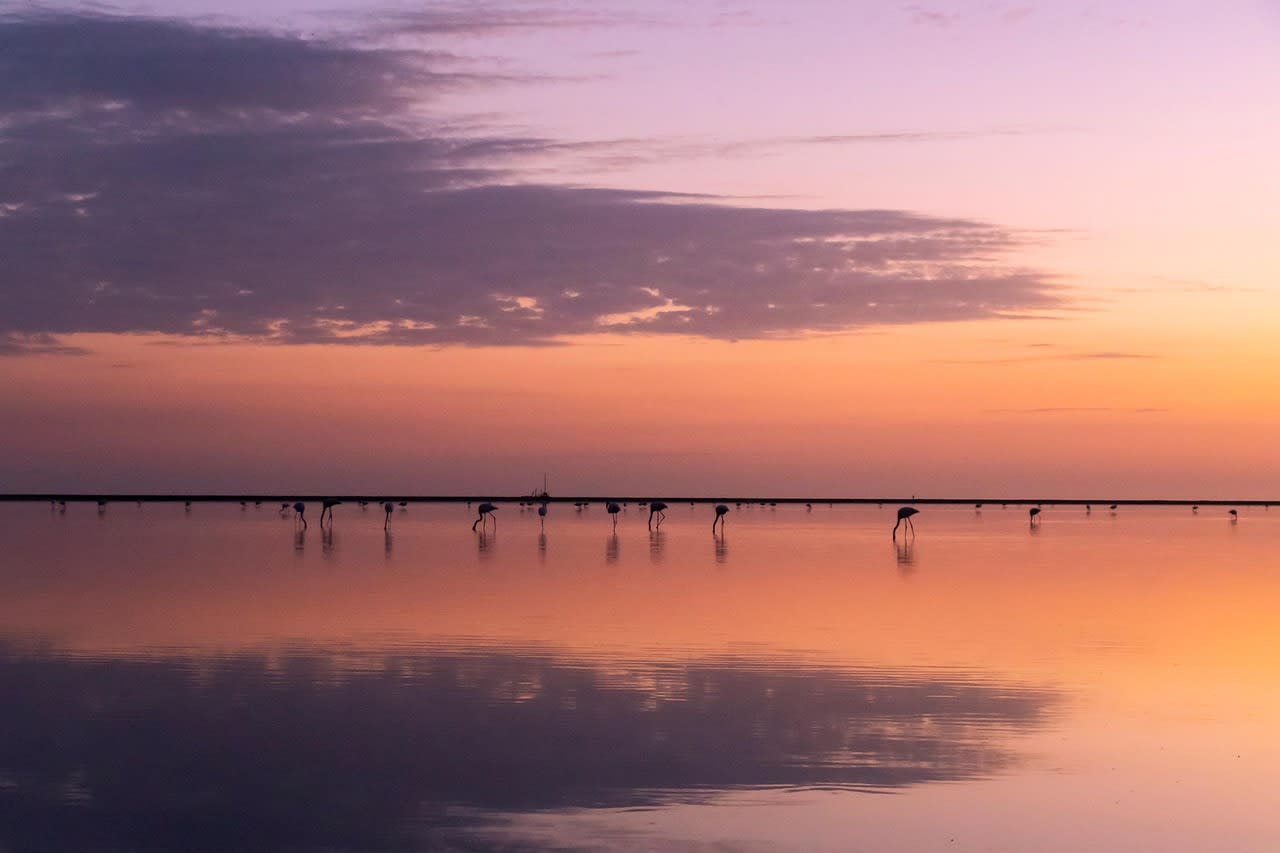
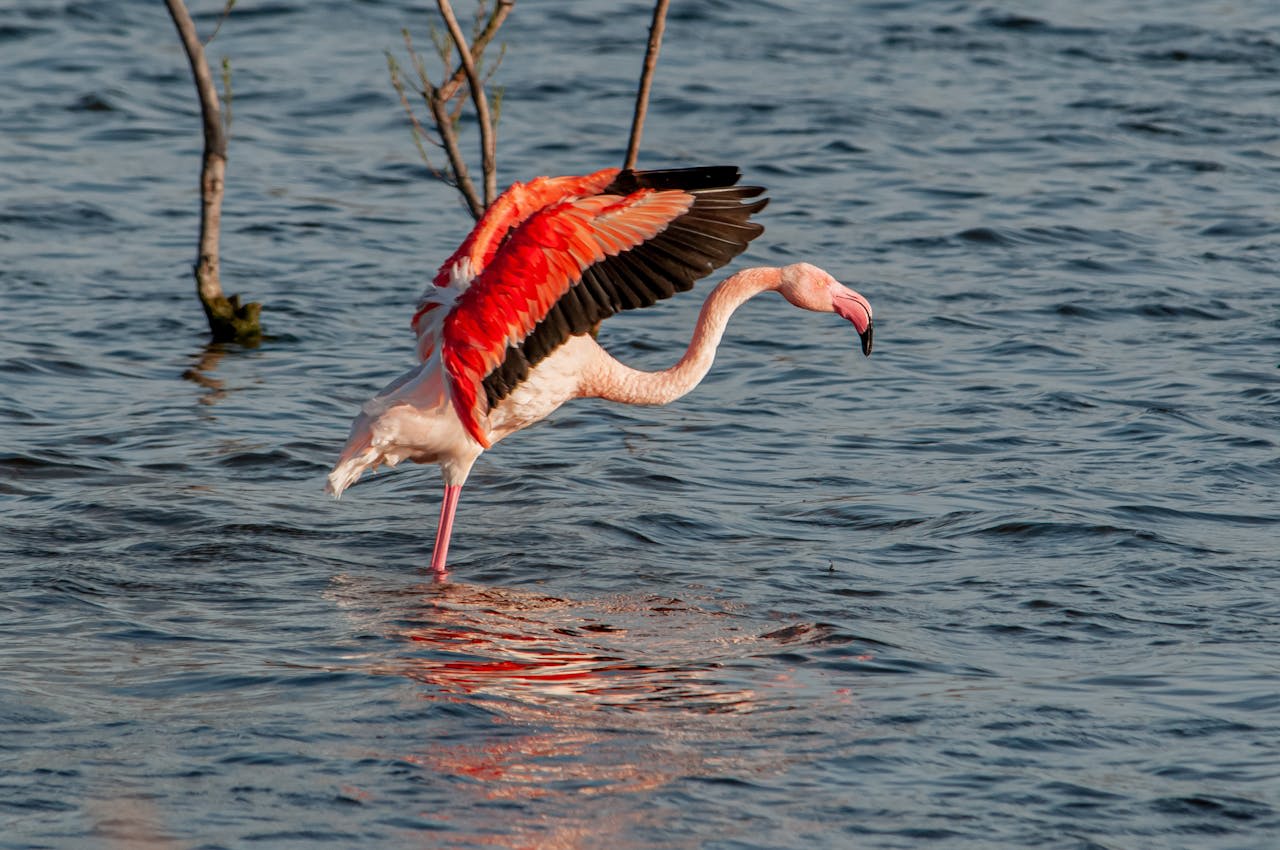
- Flamingo Colonies: The greater flamingo (Phoenicopterus roseus) breeds at the Camargue in one of the largest colonies in Europe — nesting on low islands in the hypersaline Étang de Fangassier, accessible only by authorised research boats. The pink tide of thousands of flamingos in the morning light over the Vaccarès lagoon — wading in the shallows, filtering brine shrimp, taking flight in synchronised V-formations — is the defining wildlife spectacle of southern France. Flamingos are present year-round but breeding activity peaks April–June.
- Étang de Vaccarès: The Étang de Vaccarès (6,500 ha) is the largest permanent lake in the Camargue and the heart of the national reserve — a shallow brackish lagoon of extraordinary ecological productivity hosting large populations of ducks, herons, egrets, spoonbills, avocets, and waders throughout the year. The lagoon is accessible from the D37 road with several observation towers and a visitor centre at La Capelière providing orientation to the bird diversity.
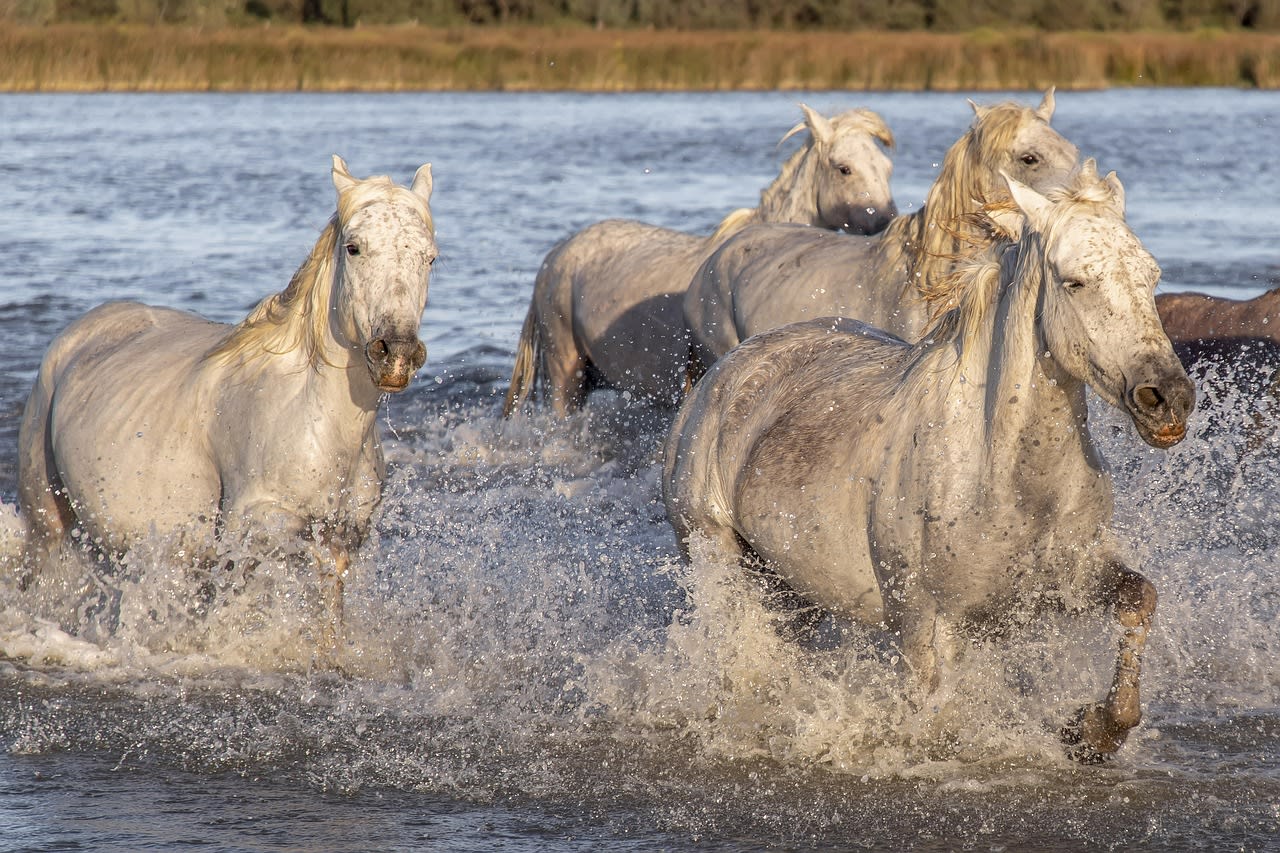
- Camargue Horse and Bull: The semi-feral Camargue horse — a small, stocky, grey-white breed of ancient lineage (possibly descended from the horses of the Roman era or earlier) — runs in herds through the salt marshes and reed beds, managed loosely by gardians who maintain the traditional cattle herding culture on horseback. The Camargue bull — smaller and more agile than domesticated breeds, with long curved horns — is grazed extensively across the delta in a system that maintains the mosaic of open marsh and grazed grassland essential for wading bird habitat.
- Saintes-Maries-de-la-Mer Beach: The coastal strip of the Camargue at Saintes-Maries-de-la-Mer is a long beach of fine sand backed by dunes and the reed marsh of the Petite Camargue, facing the Mediterranean Gulf of Lion. The beach is exposed and wild rather than resort-developed — the Mediterranean context without the manicured infrastructure of the Côte d'Azur. The town itself is the spiritual capital of Romani culture in France, site of an annual pilgrimage in May to the shrine of Sara (patron saint of the Romani people) that draws tens of thousands of pilgrims.
📜 History and Cultural Significance
The gardians — Camargue cowboys maintaining the semi-wild horse and bull culture — are documented from the 14th century and represent a continuous pastoral tradition unique in Western Europe. Their culture — horsemanship, cattle management, the trident as a herding tool rather than a weapon — draws on influences from the wider Mediterranean ranching traditions and has developed a distinctive regional identity celebrated in the Fête des Gardians in Arles each May. The Romani pilgrimage to Saintes-Maries, believed to have been established since the 9th century in its current form, makes the Camargue the most culturally layered wetland in France — combining natural wilderness, ancient pastoral tradition, and living spiritual practice.
🏃 Activities and Attractions
- Horseback Riding: Riding with Camargue horses through the marshes — guided by a gardian — is the traditional and still the most immersive way to experience the delta. Several horse ranches (mas) around Saintes-Maries and Aigues-Mortes offer half-day and full-day guided trail rides through salt marsh, reed beds, and beach terrain. The horses are exceptionally surefooted in the shallow water and soft mud of the delta — a terrain that horses have navigated here for centuries.
- Bird Watching at La Capelière: The Réserve Nationale de Camargue visitor centre at La Capelière on the Vaccarès shore provides access to a network of marked trails and observation towers covering the most productive bird habitat in the reserve. October–November migration concentrates enormous numbers of waders and wildfowl in the lagoon shallows; April–June is breeding season with flamingos, spoonbills, and herons active. The Camargue hosts over 400 bird species across the year — more than any other comparable area in France.
- Cycling the Camargue Trails: A network of designated cycling routes crosses the delta — the flattest cycling terrain in southern France — threading between lagoons, rice fields, salt pan roads, and beachfront. The Véloroute du Rhône passes through Arles and along the Grand Rhône levée to the sea. Several cycle hire operators in Arles and Saintes-Maries provide bikes and route maps; the 70 km circuit from Arles to Saintes-Maries via the Vaccarès lake shore is a full-day cycling itinerary through the core of the delta.
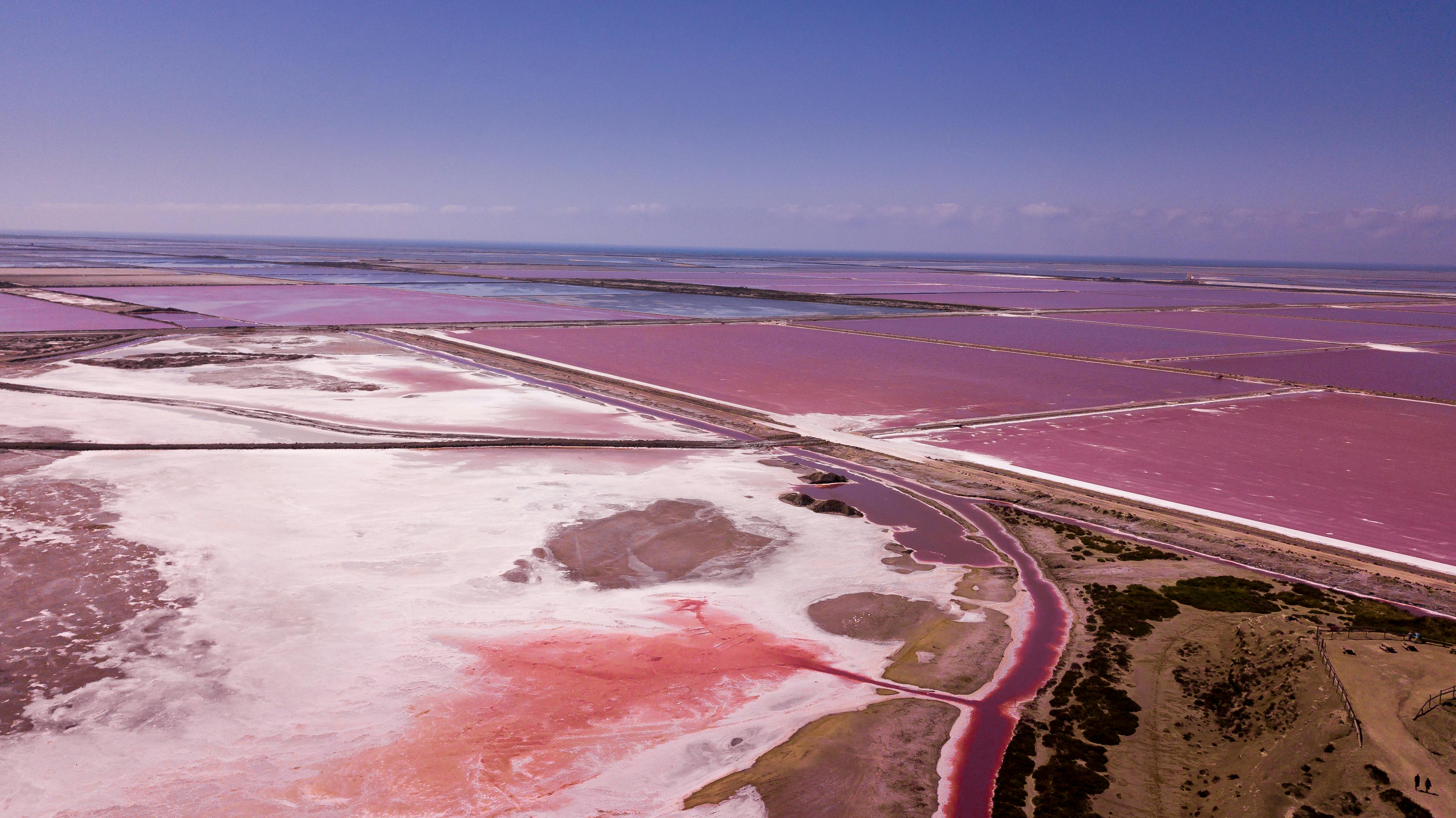
- Salt Pan Observation (Salin de Giraud): The industrial salt pans at Salin de Giraud in the eastern Camargue turn extraordinary shades of pink, orange, and red in late summer (August–September) when concentrations of halophilic algae colour the evaporating brine. Flamingos concentrate in these pans year-round, and the graphic quality of the coloured water, geometric dykes, and pink birds against a flat horizon is unlike any other landscape in France. The Salin de Badon in the reserve interior is accessible on foot via the La Capelière trails and offers more intimate flamingo observation.
💡 Travel Tips
Best Season: April–June is outstanding — breeding flamingos, spring migration of waders, wildflowers on the dune meadows, and mild temperatures. August–October brings the coloured salt pans and autumn migration. December–February is off-season but surprisingly rewarding for winter bird concentrations and empty landscapes — the Camargue light in winter (crisp and low-angled from the south) is exceptional for photography. July–August is hot (35°C+), crowded at Saintes-Maries beach, and insects (mosquitoes) are intense — insect repellent is essential from May onwards.
Accommodation: Saintes-Maries-de-la-Mer is the main base with hotels from budget to comfortable mid-range. Traditional mas (Camargue farmhouses) converted to guesthouses and horse-riding centres provide the most immersive accommodation — several are set within the reserve proper, accessible only by track. Arles offers better hotel variety and the bonus of being one of France's great Roman and medieval cities.
🌱 Conservation
The flamingo population, which fluctuates between 8,000 and 15,000 breeding pairs depending on annual water conditions, is one of the conservation successes of the Camargue — the colony was near-eliminated by egg collection and disturbance in the early 20th century, and has recovered through strict protection of nesting islands and management of lagoon water levels to maintain suitable breeding conditions. The Tour du Valat biological research station, operating on the edge of the reserve since 1954, conducts long-term monitoring of waterbird populations, water chemistry, and vegetation change that underpins conservation management across the delta. Invasive species — particularly the coypu (a South American rodent) which destroys reed beds and bank structures — are managed by trapping programs coordinated across the reserve.