


Dune of Pilat
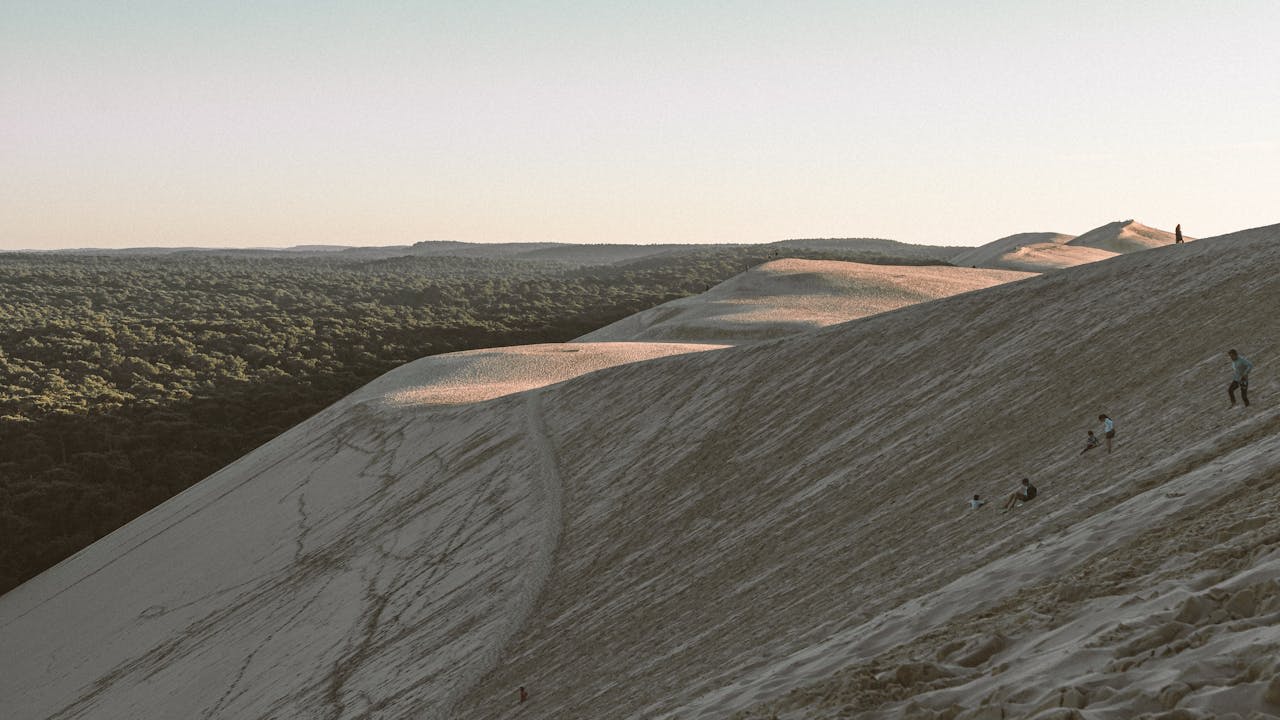
The Dune of Pilat, also known as the Grande Dune du Pilat, is a famous natural landmark located along the Atlantic coast of France, near the town of Arcachon. Rising to over 110 meters high and stretching three kilometers along the coast, this massive sand dune is the tallest in Europe and offers breathtaking views of the surrounding forests, the Atlantic Ocean, and the Banc d'Arguin nature reserve.
🌍 Geography and Ecosystem
This region showcases a rich tapestry of landscapes and ecosystems.
- The Dune of Pilat is situated within the Aquitaine Coastline, surrounded by the Landes de Gascogne Regional Natural Park, known for its diverse ecosystems.
- Comprised of fine sand carried by the wind and sea currents, the dune is in a constant state of flux, shifting and reshaping its form with the changing tides and winds.
- Its unique location between the Landes forest and the Atlantic Ocean contributes to its impressive size and stability.
- The dune's formation is attributed to the accumulation of sand that is carried by the Adour River to the sea, where it is then pushed back onto the shore by ocean currents.
- The Dune of Pilat is not only a natural wonder but also serves as a protective barrier against coastal erosion and contributes to the region's biodiversity.
📜 History and Cultural Significance
The history of the Dune of Pilat (Dune du Pilat), the tallest sand dune in Europe, spans several centuries and is closely tied to the natural and human history of the Atlantic coast of southwestern France. Historical records from the 18th century already reference the dune, which has continuously evolved due to the combined forces of wind, tides, and ocean currents. Initially, the dune played a strategic role as a natural barrier protecting inland forests and settlements from Atlantic winds and potential maritime invasions. Over time, its sand was also used for local construction and land management. During the 19th and 20th centuries, growing scientific interest highlighted the dune’s dynamic nature, as it gradually migrates inland, reshaping the surrounding landscape. Culturally, the Dune of Pilat has become an iconic symbol of the Arcachon Bay region and of France’s Atlantic coastline, representing both the raw power and fragile beauty of nature. Its vast scale and ever-changing form have inspired artists, photographers, writers, and nature enthusiasts, while its designation as a protected natural site reflects modern efforts to balance public access, tourism, and environmental conservation.
🏃 Activities and Attractions
Visitors can enjoy a variety of experiences while exploring the area.
- Climbing to the summit of the dune for panoramic views of the Atlantic Ocean, Arcachon Bay, and the Landes forest.
- Paragliding from the crest of the dune, offering a thrilling aerial perspective of the natural landscape.
- Sandboarding and sliding down the slopes of the dune for a fun and adventurous experience.
- Strolling along the beach at the dune’s base or taking a refreshing swim in the ocean.
- Exploring nearby forest trails and learning about the native flora and fauna within the protected natural park.
💡 Travel Tips
- Sandboarding: Glide down the sandy slopes of the dune for an exhilarating adventure.
- Paragliding: Soar above the dune and take in panoramic views of the coastline from a bird's-eye perspective.
- Hiking: Traverse the dune's summit for stunning vistas of the surrounding landscapes.
- Picnicking: Enjoy a leisurely meal while surrounded by the natural beauty of the dune and its surroundings.
- Sunset-watching: Witness the breathtaking spectacle of the sun setting over the Atlantic Ocean from the dune's vantage point.
- Paragliding: Soar above the dune and take in panoramic views of the coastline from a bird's-eye perspective.
- Hiking: Traverse the dune's summit for stunning vistas of the surrounding landscapes.
- Picnicking: Enjoy a leisurely meal while surrounded by the natural beauty of the dune and its surroundings.
- Sunset-watching: Witness the breathtaking spectacle of the sun setting over the Atlantic Ocean from the dune's vantage point.
🌱 Conservation
For travelers planning to visit the Dune of Pilat, it is recommended to arrive early in the day to avoid crowds and secure parking, especially during peak tourist seasons. Comfortable footwear is essential for climbing the sandy slopes, and visitors are advised to bring water, sunscreen, and a camera to capture the stunning views. Additionally, being mindful of the fragile ecosystem of the dune is crucial, so visitors should stay on designated paths and avoid disturbing the natural surroundings.
✨ Conclusion
Conservation efforts for the Dune of Pilat focus on preserving its unique ecosystem and preventing erosion caused by human activities and climate change. Measures such as planting vegetation to stabilize the dune, limiting access to certain areas, and raising awareness about the importance of conservation are ongoing initiatives. The protection of this natural landmark is vital not only for maintaining its beauty but also for safeguarding the biodiversity of the surrounding region and ensuring its ecological sustainability for future generations.