Mount Wuyi
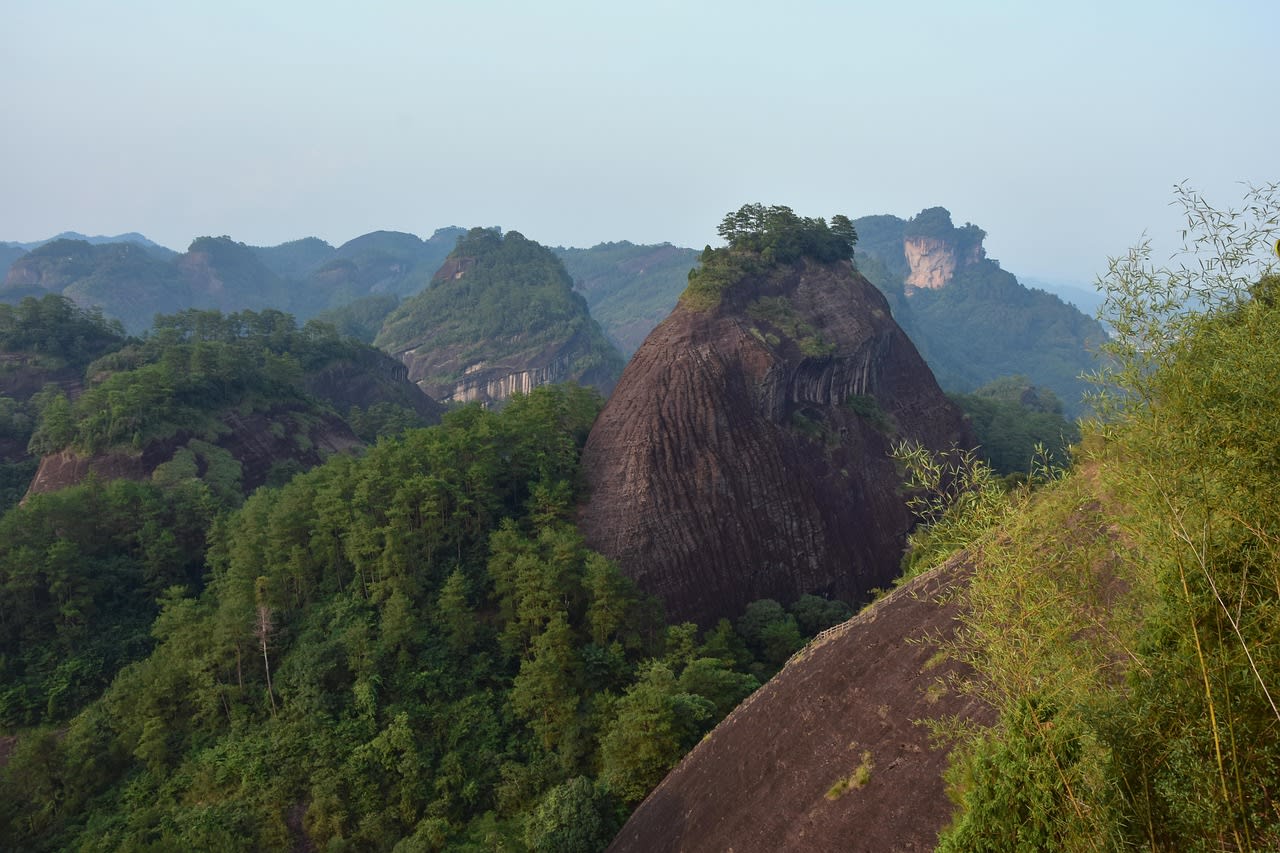
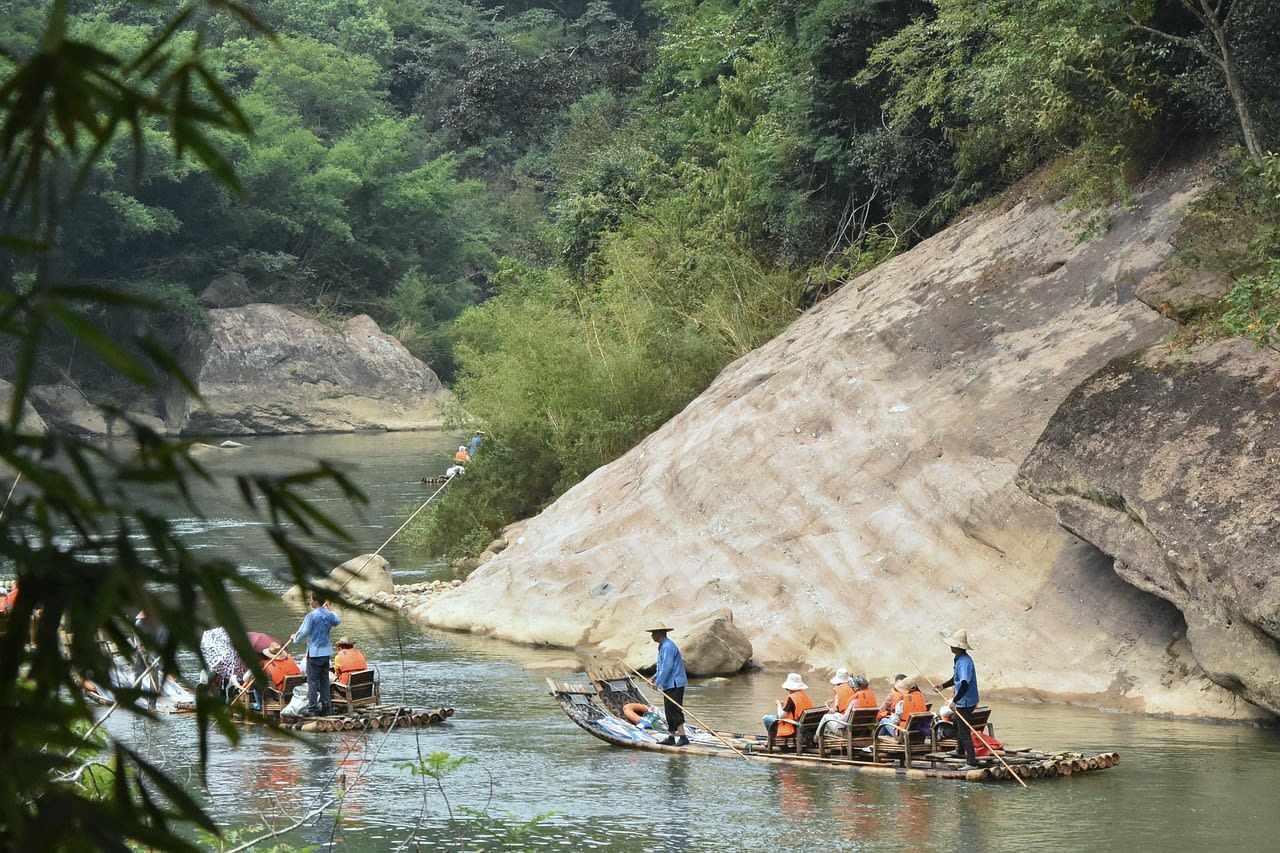
Mount Wuyi (Wǔyí Shān — 武夷山) is a UNESCO World Heritage Site (1999) in northern Fujian Province, China — a 999.75 km² protected landscape combining outstanding natural scenery with exceptional cultural significance. The mountain area's defining geological feature is its Danxia landscape — dramatic peaks of deep red Cretaceous sandstone, shaped by erosion into towers, cliffs, and river gorges that define one of China's most painted and poeticised landscapes. The Nine Bend River (Jiuqu Xi) curves nine times through the gorge beneath the red peaks — navigated by bamboo raft, a 9 km journey that is one of China's most celebrated scenic experiences. The mountain's cultural heritage is equally significant: the Wuyi Academy, established by the Confucian philosopher Zhu Xi in the 12th century, became one of China's four great academies and the birthplace of Neo-Confucianism — an intellectual tradition that shaped Chinese, Japanese, Korean, and Vietnamese thought for 700 years. The mountain is also the origin of the world's most famous oolong tea — Da Hong Pao (Big Red Robe) — whose four parent bushes growing on a cliff face are among the most economically valued individual plants in the world.
🌍 Geography and Ecosystem
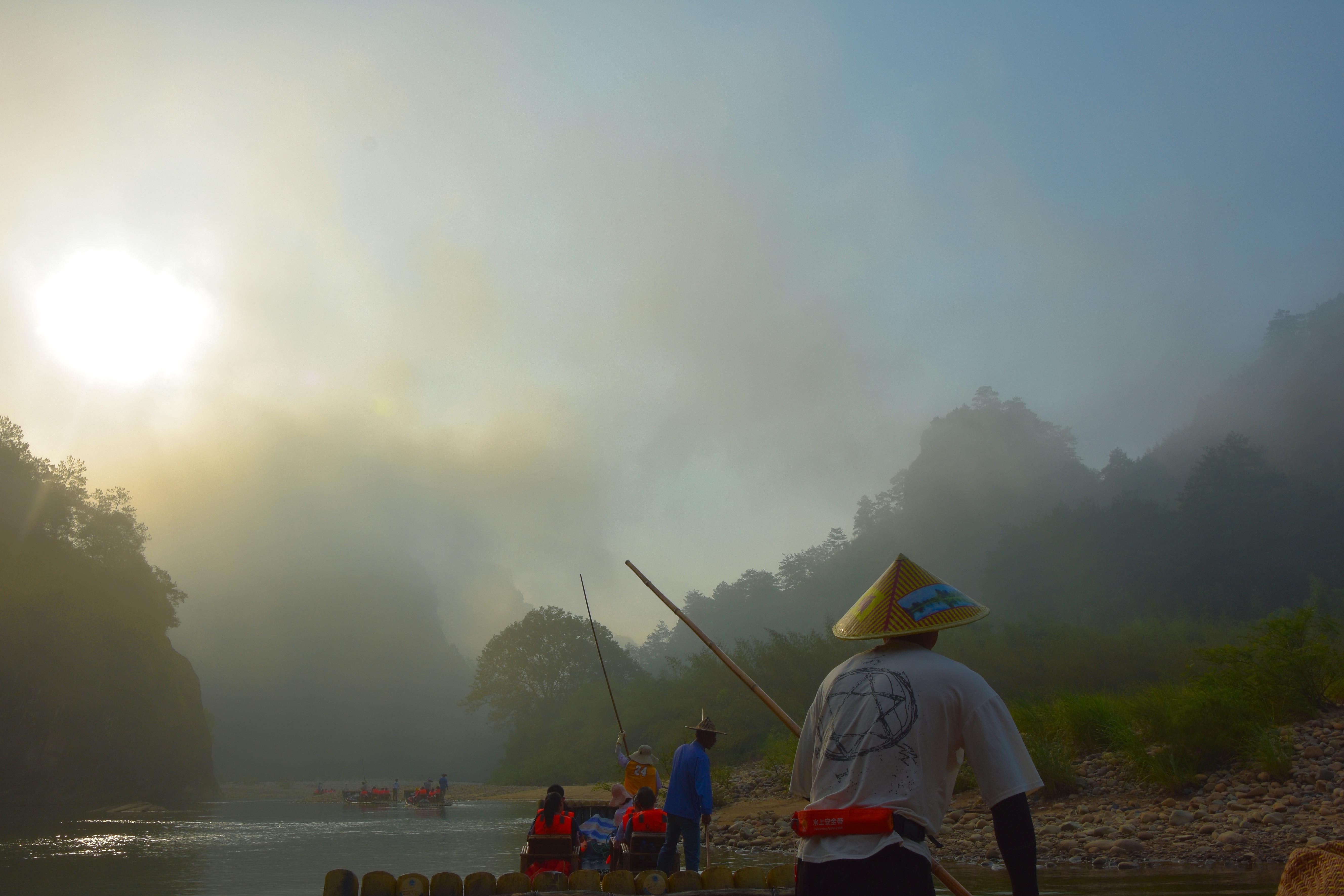
- Nine Bend River Bamboo Raft: The 9 km bamboo raft journey down the Nine Bends River — the definitive Wuyi experience — takes 1.5–2 hours, drifting past red sandstone peaks reflected in the still green water, passing ancient cliff-side coffin burial sites of the Yue people, and viewing the peaks from river level in an orientation completely different from the hiking trails above. Morning mist filling the gorge makes dawn departures the most atmospheric. Rafts carry 6 passengers; independent booking is possible through the scenic area management.
- Da Hong Pao Tea Bushes: Six surviving tea bushes of the original Da Hong Pao oolong cultivar grow on the cliff face at Jiulongke — the 'six mother trees' from which all commercially grown Da Hong Pao is propagated by cutting. The bushes produce only a few hundred grams of tea per year; the actual harvest from these parent plants has not been sold commercially since 2005 (the last harvest sold at auction for USD 28,000 per 20g). The cliff site is a pilgrimage for Chinese tea culture enthusiasts. Wuyi rock tea estates surrounding the scenic area produce commercially available Da Hong Pao, Shui Xian, and Rou Gui oolongs.
- Tianyou Peak and Dahongpao Trail: The main hiking circuit visiting Tianyou Peak (365 m), the Natural Bridge arch, and the Da Hong Pao tea bush cliff face — a 3–4 hour walk through the core scenic area. Tianyou Peak's summit offers the most celebrated panoramic view of the Nine Bends gorge from above — a perspective showing all nine bends simultaneously, the bamboo rafts visible as green dots on the water far below. The trail passes the ancient cliff-edge Chongyou Temple and a series of Song dynasty inscriptions carved into the rock face.
- Biodiversity: Wuyi Mountain's nature reserve (71% forest cover, 83% of which is primary forest) is one of China's most biodiverse sites — the UNESCO citation specifically recognises it as a global centre of biodiversity for eastern Asia. Over 2,500 plant species, 71 mammal species, and 101 reptile and amphibian species have been recorded, including the Chinese giant salamander (the world's largest amphibian), the South China tiger (critically endangered, possibly extinct in the wild), and the clouded leopard. The mountain's position at the biodiversity interface of subtropical and temperate zones makes it an important refugium for species from both zones.
📜 History and Cultural Significance
The cliff-side boat coffins visible during the Nine Bends raft tour are a separate prehistoric cultural layer — boat coffins of the ancient Yue people (3,000–4,000 years old), placed in cliff niches accessible only by rope from above, preserved by the dry cliff overhang conditions. Approximately 180 boat coffins have been identified in the Wuyi gorge — the largest concentration of this Bronze Age funeral practice in China.
🏃 Activities and Attractions
- Nine Bends Bamboo Raft at Dawn: Booking the first departure of the day (usually 07:30–08:00) on the Nine Bends bamboo raft provides the mist-filled gorge experience before the crowds arrive. The morning mist fills the valley floor between the red peaks — the raft drifts through it at water level, silent except for the poling. Photography from water level of the red cliff reflections is at its most dramatic in the flat pre-noon light.
- Tianyou Peak Sunrise: Taking the cable car or hiking trail to Tianyou Peak before dawn to watch the sunrise from the top — the Nine Bends gorge emerging from mist as the light builds — is one of Wuyi's signature experiences. The cable car operates from 06:30; the hike takes 45 minutes. The viewpoint from Tianyou summit shows the full Nine Bends sequence from above, with the bamboo rafts just beginning their descent in the mist below.
- Da Hong Pao Tea Culture Experience: A guided tea tasting at one of the Wuyi rock tea estates on the mountain's lower slopes — tasting the terroir-distinct oolongs grown on different rock types (the 'three pits and two gullies' of premium Wuyi rock tea) and visiting the parent bushes at Jiulongke cliff. Several tea estates offer immersive half-day programmes including tea picking (during October harvest), hand-processing demonstration, and a full gongfu cha (Chinese tea ceremony) tasting session.
- Water Curtain Cave and Jiangjun Rock: Water Curtain Cave — a cliff alcove behind a seasonal waterfall that was once a Taoist hermitage — and Jiangjun Rock (General's Rock) are accessible on the western slope hiking trail, a route less visited than the main Tianyou area and giving a quieter perspective on the Danxia formations. The cave's ancient inscriptions and the former hermit cells cut into the cliff provide tangible connection to the mountain's contemplative tradition.
- Wuyi Rock Tea Tasting in Wuyishan City: The commercial tea district of Wuyishan city (immediately adjacent to the scenic area) is a dense concentration of Da Hong Pao tea shops offering tastings of every quality level, from affordable commercial blends to premium single-bush oolongs costing thousands of yuan per gram. Spending an afternoon exploring the tea shops with a local guide provides education in Chinese tea culture, the difference between rock tea categories, and the astounding price differentials in the premium oolong market.
💡 Travel Tips
Best Season: March–May for spring mist and wild rhododendrons on the slopes. September–November for autumn colour (October peak) and the best weather clarity. July–August is peak season but hot (35°C) and humid. January–February is cold but uncrowded — the mountain is beautiful under light snow. The October Da Hong Pao tea harvest (October 15–25) coincides with the best autumn colour and the most active tea estate visits.
Accommodation: Wuyishan city has a wide range including luxury resorts (Wuyi Mountain Villa, Wuyishan Holiday Hotel), mid-range hotels, and budget guesthouses. Staying within the scenic area at one of the mountain hotels provides early morning access to the peak and raft areas before day visitor arrivals. Advance booking essential for national holiday periods (Golden Week in October is the busiest).
🌱 Conservation
The primary conservation challenge is the Da Hong Pao tea economy — the premium price of authentic Wuyi rock tea has driven agricultural expansion onto marginal steep slopes within the mountain area, replacing forest with tea plantation and generating the pesticide and herbicide runoff that affects the Nine Bends River water quality. The nature reserve boundaries and the World Heritage core zone designation limit but do not eliminate this pressure. The Chinese giant salamander — dependent on clean mountain stream habitat — is present in the Wuyi rivers but has declined significantly, likely due to water quality degradation and illegal harvesting for the restaurant trade.