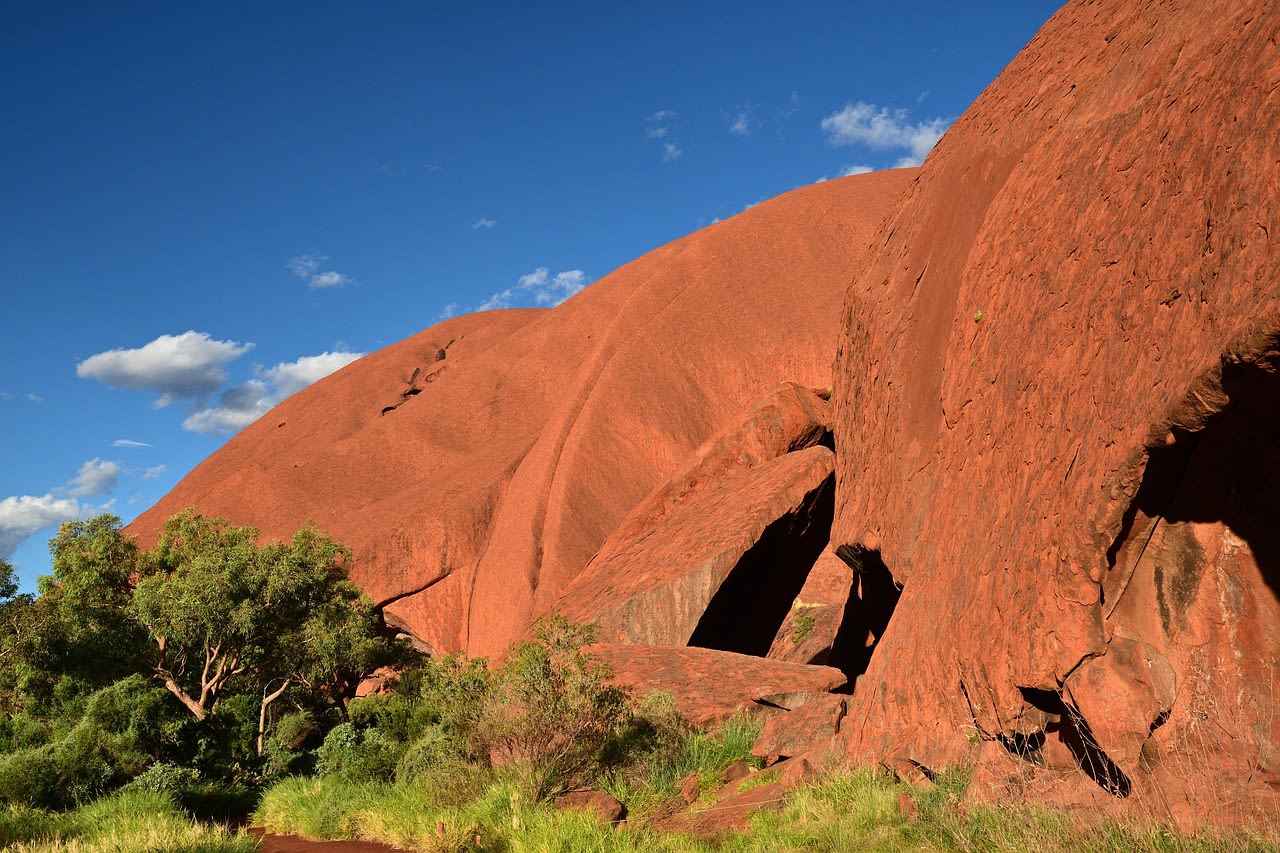
Uluru (Ayers Rock)
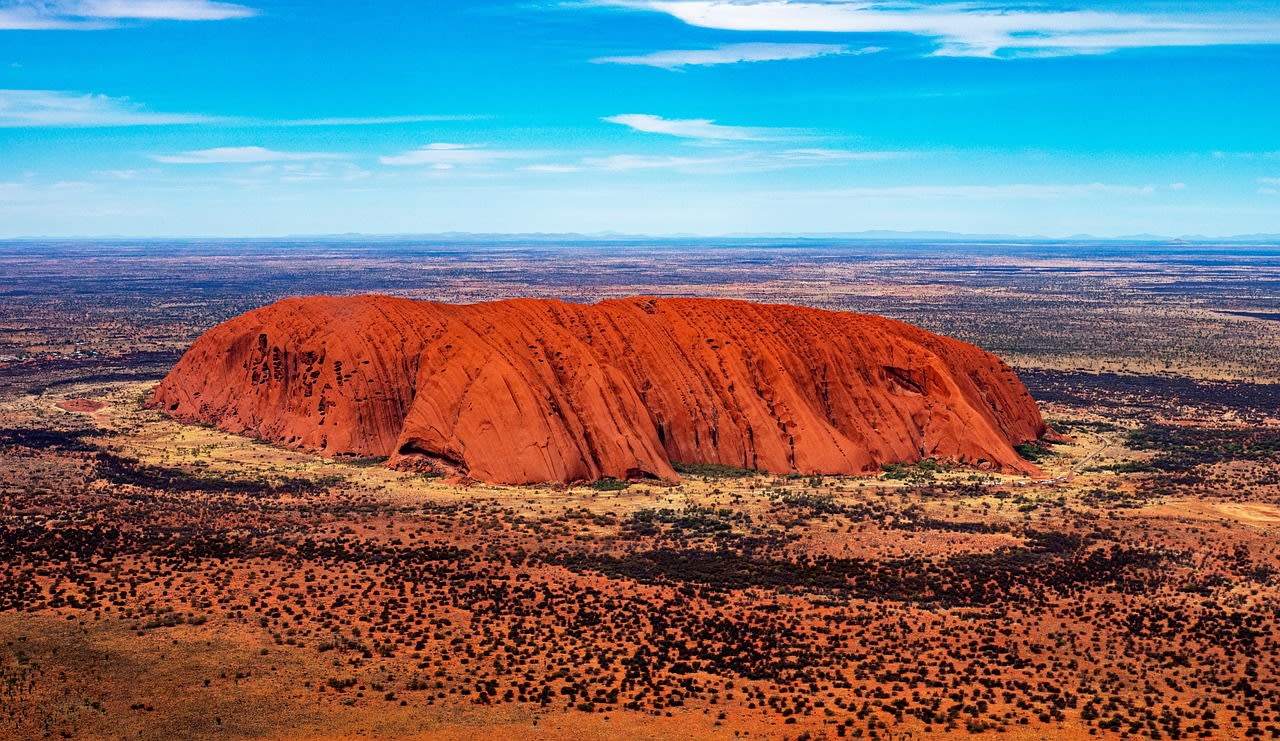
Uluru is not just a geological marvel — it is a deeply sacred site and one of the most powerful symbols of Australia’s Indigenous heritage. Rising dramatically from the vast red desert of Central Australia, this ancient sandstone monolith commands both physical presence and spiritual meaning. Its changing colors, immense scale, and cultural stories connect visitors to a landscape shaped over tens of thousands of years.
🌍 <strong>Geography and Ecosystem</strong>
Uluru is located within Uluru–Kata Tjuta National Park, approximately 450 kilometers southwest of Alice Springs in the Northern Territory. The rock itself is a massive sandstone monolith, standing 348 meters high and measuring 9.4 kilometers around its base. Most of Uluru’s mass lies hidden beneath the ground, making it even more impressive than it appears.
- - The surrounding desert ecosystem features spinifex grasses, desert oaks, mulga trees, and seasonal wildflowers that bloom after rain.
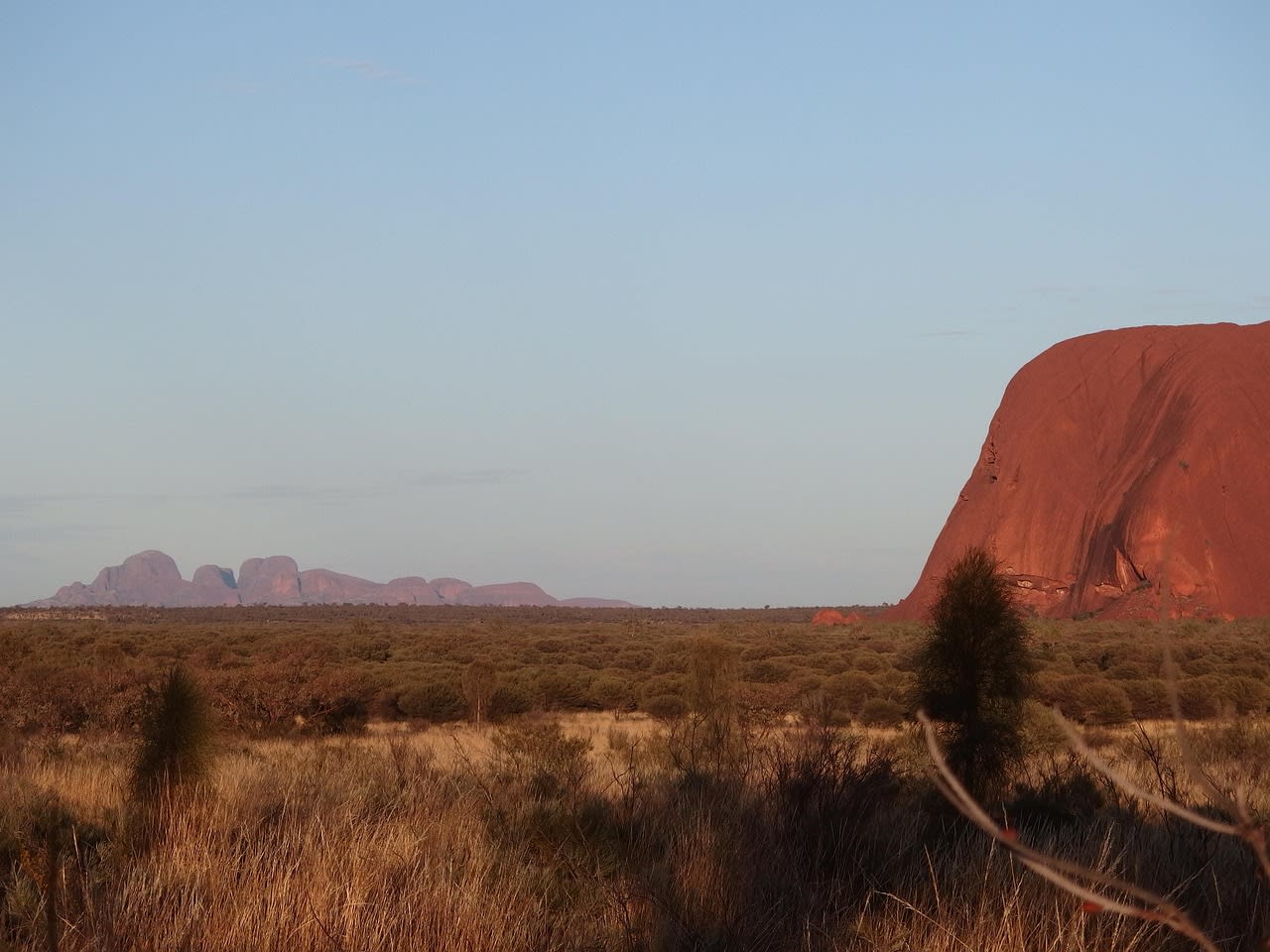
- - Nearby Kata Tjuta (The Olgas) consists of 36 large rock domes that share deep cultural, spiritual, and geological connections with Uluru.
- - Despite the harsh arid climate, the park supports diverse wildlife including perenties, thorny devils, echidnas, wallabies, and over 170 bird species.
📜 <strong>History and Cultural Significance</strong>
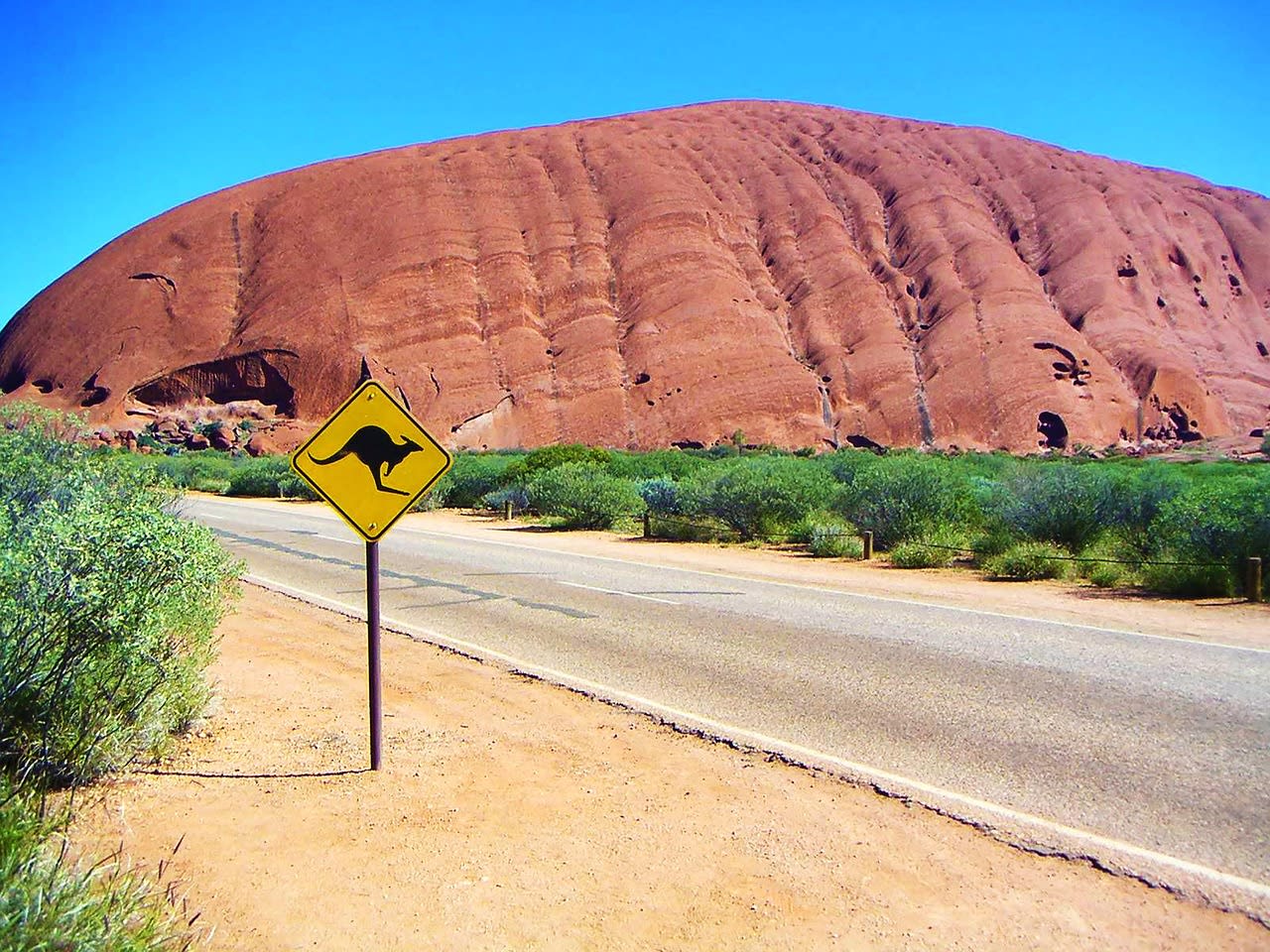
Uluru holds profound spiritual importance to the Anangu people, the traditional custodians of the land. According to Tjukurpa — the Anangu law and belief system — Uluru was created by ancestral beings during the Dreamtime. Every cave, ridge, and mark on the rock tells a story tied to moral lessons, ceremonies, and cultural responsibilities. Ancient rock art found in shelters around the base serves as a living record of these teachings. Out of respect for Anangu culture, climbing Uluru was permanently banned in 2019.
🏃 <strong>Activities and Attractions</strong>
Uluru offers a variety of immersive experiences that foster a deep connection with both nature and culture.
- - Join a guided walk with an Indigenous ranger to learn about Tjukurpa, bush medicine, and survival skills.
- - Witness the breathtaking transformation of Uluru at sunrise and sunset, when the rock shifts through shades of red, orange, and purple.
- - Cycle or walk the full base track to experience Uluru from multiple perspectives and distances.
- - Enjoy a camel ride through the desert dunes for a unique view of the landscape.
- - Visit the Uluru-Kata Tjuta Cultural Centre to explore Anangu art, storytelling, and conservation initiatives.
💡 <strong>Travel Tips</strong>
The best time to visit Uluru is during the cooler months from May to September, when daytime temperatures are more comfortable. Bring sun protection, sturdy walking shoes, and plenty of water, as temperatures can rise quickly. Always follow park signage, avoid entering restricted sacred areas, and be mindful when photographing cultural sites. Entry to the park requires a visitor permit, which directly supports conservation efforts and the local Anangu community.
🌱 <strong>Conservation and Land Management</strong>
Uluru is protected through a joint management partnership between the Anangu people and Parks Australia. Conservation efforts focus on preserving biodiversity, protecting sacred sites, managing invasive species, and educating visitors about cultural respect. Key initiatives include the climb ban, sustainable infrastructure development, fire management using traditional knowledge, and support for Indigenous-led tourism and ranger programs.
✨ <strong>Conclusion</strong>
Uluru is far more than a landmark — it is a living cultural landscape infused with ancient wisdom, spiritual meaning, and natural beauty. Whether you are listening to Dreamtime stories, walking quietly around its base, or watching it glow beneath a setting sun, Uluru offers an experience that resonates deeply on emotional, cultural, and spiritual levels. It is a place that leaves visitors not only inspired, but transformed.