Kangaroo Island
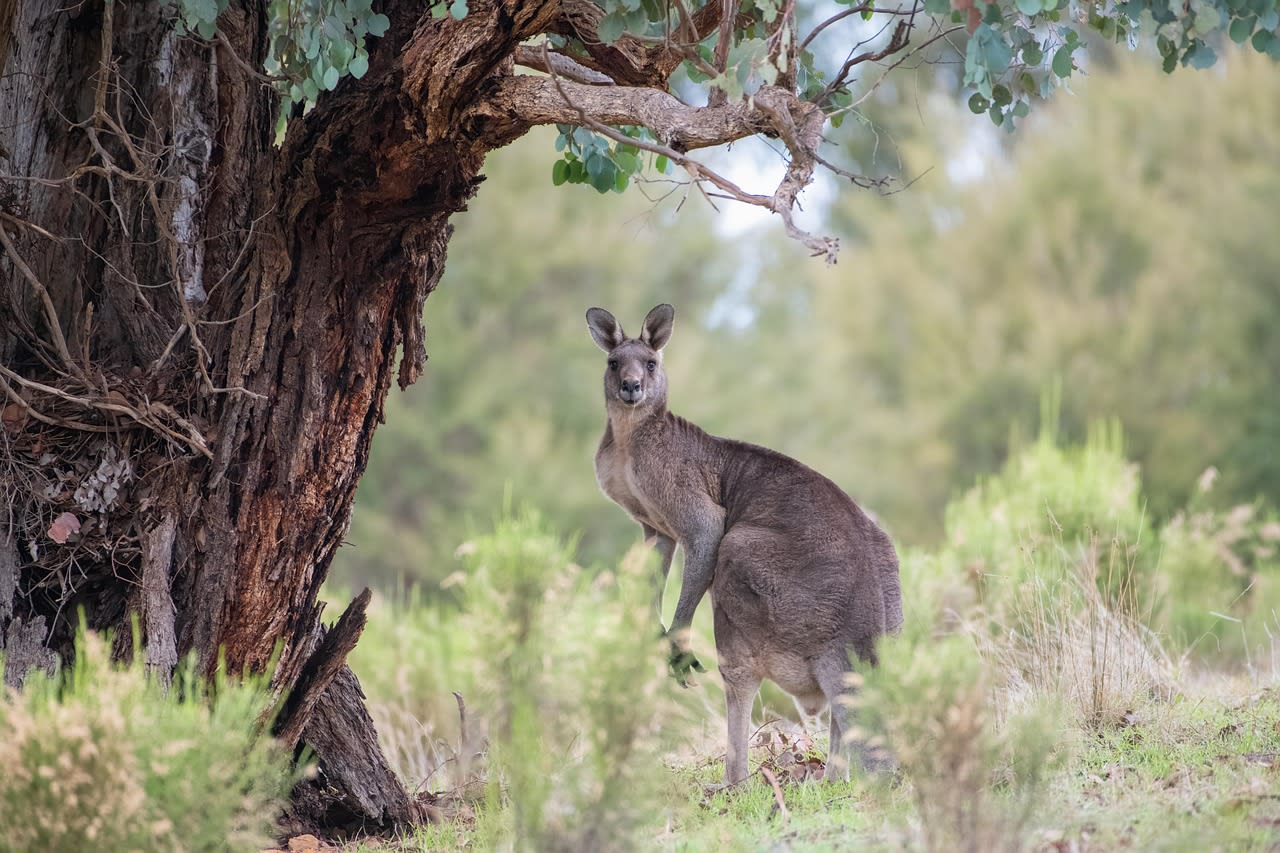
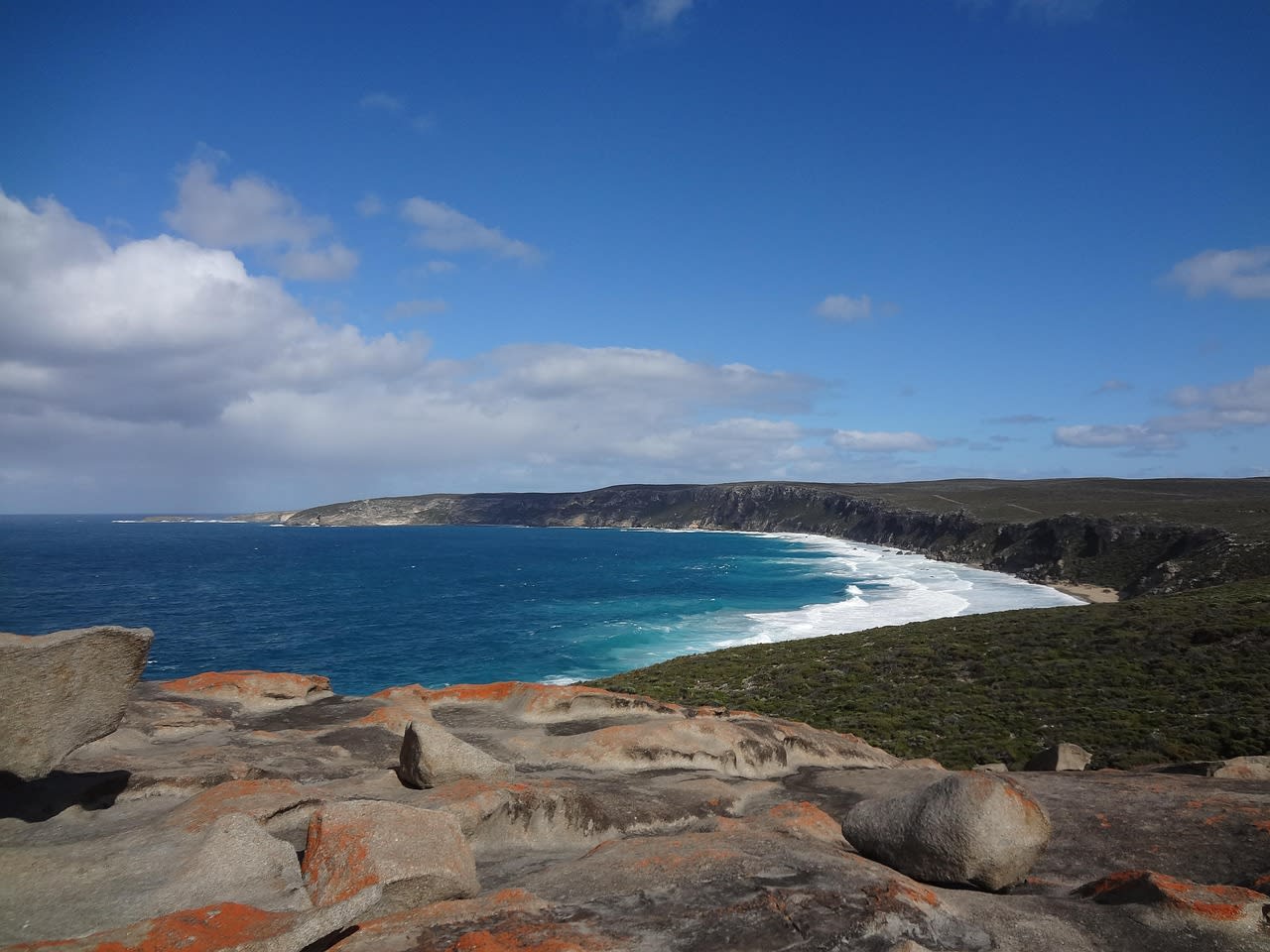
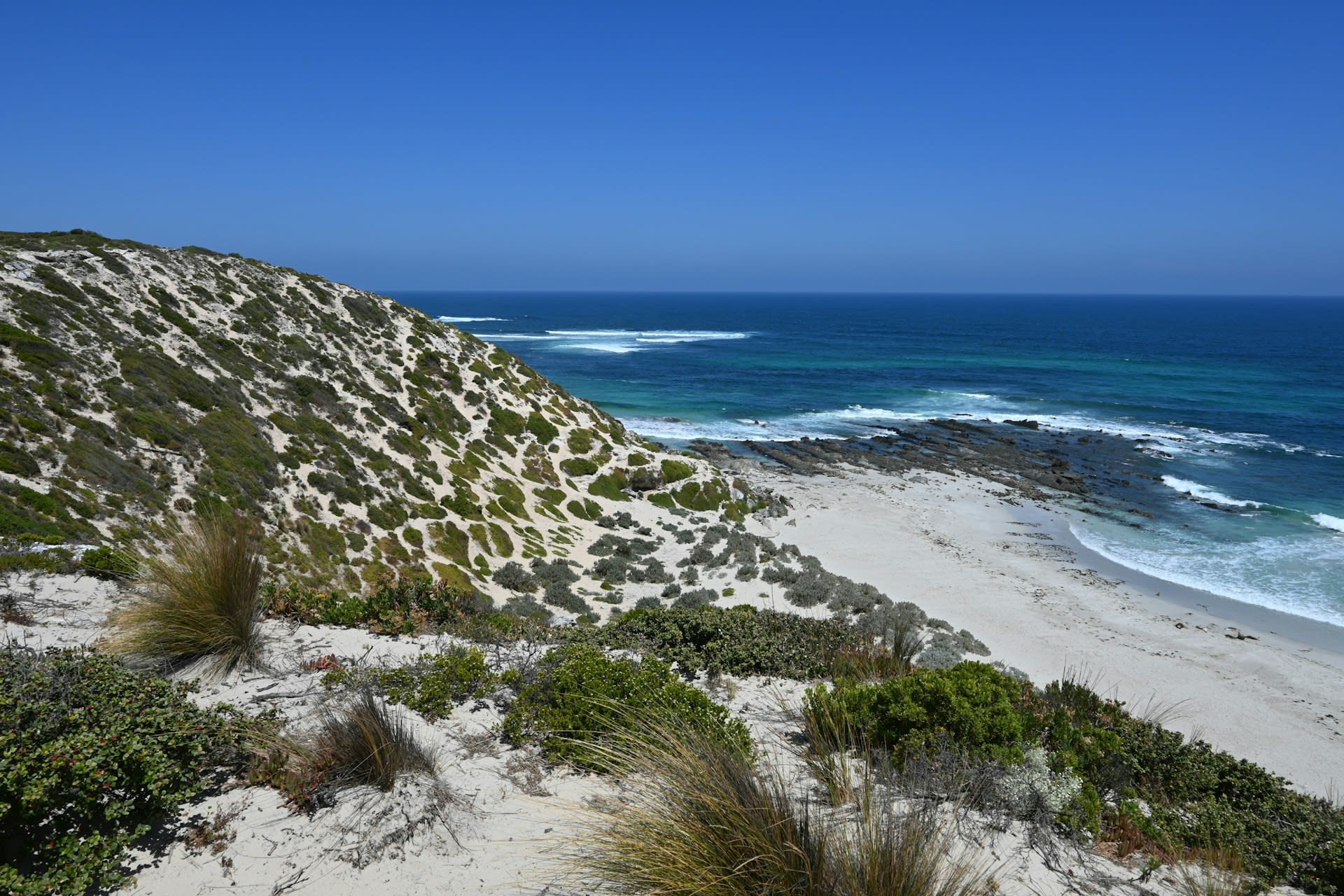
Kangaroo Island — Karta Pintingga ('island of the dead') in Ngarrindjeri language — is a 4,405 km² island 16 km off the Fleurieu Peninsula in South Australia, separated from the mainland by the Backstairs Passage approximately 10,000 years ago as post-glacial sea levels rose. The separation proved to be the island's defining ecological event: in the absence of the fox and rabbit introduced to mainland Australia (which devastated native fauna across the continent), Kangaroo Island retains exceptional populations of kangaroos, wallabies, koalas, short-beaked echidnas, southern brown bandicoots, and platypus — animals that visitors to the mainland rarely encounter despite their cultural prominence. Flinders Chase National Park covers approximately one third of the island's western end and contains the island's most dramatic geological formations: Remarkable Rocks, a cluster of orange-and-grey granite boulders balanced on a granite dome above the Southern Ocean, and Admirals Arch, a natural rock archway inhabited by a colony of New Zealand fur seals. Seal Bay Conservation Park on the south coast provides one of the world's most intimate access experiences to a wild sea lion colony.
🌍 Geography and Ecosystem
- Seal Bay: A beach on the island's south coast where a colony of approximately 800 Australian sea lions (Neophoca cinerea) rests, hauls out, and raises pups. Australian sea lions are endemic to southern Australia and are classified as Endangered — one of the world's most threatened pinniped species. Guided tours walk visitors along boardwalks to within metres of resting sea lions in one of the most accessible wild pinniped experiences in the world. The animals ignore human presence completely when acclimatised to guided tour groups.
- Remarkable Rocks: A cluster of approximately 75 orange and grey granite boulders, each the size of a car to a small house, perched on a smooth granite dome above the Southern Ocean cliff edge at Cape du Couedic. Formed by differential weathering of the granite over 500 million years, the boulders take forms that are both grotesque and beautiful — hollowed, bridged, and undercut by wind and salt spray. The orange colouration is from iron-oxidising lichen. Sunrise and sunset light transforms the colour intensity dramatically.
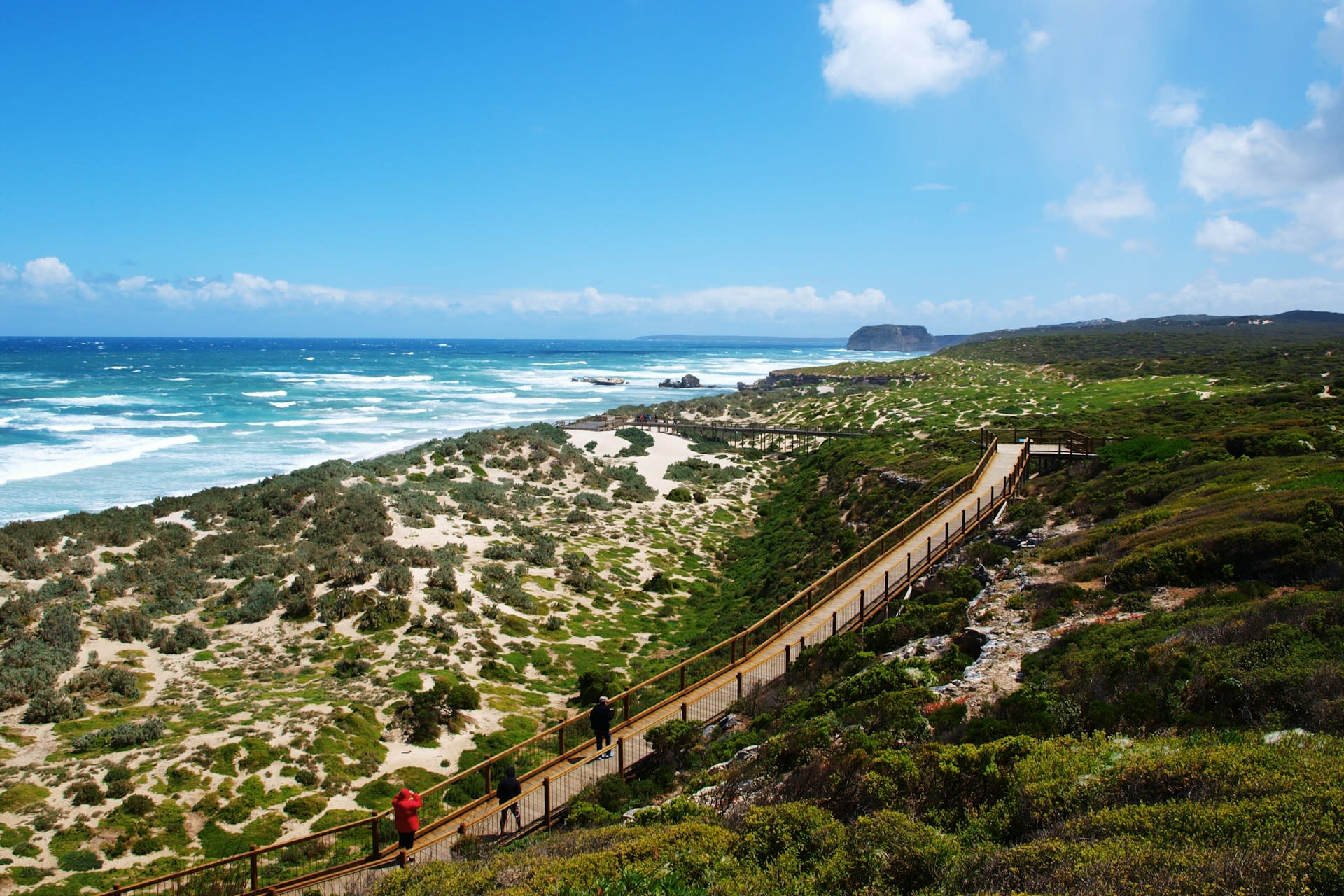
- Admirals Arch: A natural rock arch at the southern tip of Cape du Couedic, formed by Southern Ocean wave action cutting through the limestone headland. The arch and the rocky platform below are occupied year-round by a colony of approximately 700 New Zealand fur seals, accessible via a boardwalk that descends through the cliff to water level. The seals' boisterous colony behaviour — barking, fighting, and hauling across the rocks — is extraordinary close-range observation.
- Flinders Chase National Park: The park covering the island's western third (326 km²) is the centrepiece of Kangaroo Island's wildlife — dense populations of kangaroos and wallabies (tame enough to approach within metres), echidnas foraging at dawn, and the southern brown bandicoot active in the heath. The park road passes through old-growth stringybark eucalyptus forest holding the island's platypus population in the Rocky River catchment — platypus are reliably observed at dusk in the Rocky River pools.
📜 History and Cultural Significance
The island became a base for sealers and whalers from the 1810s — a rough community of men who took seals for pelts and oil, raided Aboriginal women from the mainland, and produced a creole community that was among the first European settlements in South Australia. Formal settlement began with the founding of Kingscote in 1836 — the first official town in South Australia. Agriculture — primarily sheep farming, honey production (using pure Ligurian bees imported in 1881), and horticulture — developed through the 19th and 20th centuries alongside the conservation values the island became known for from the 1980s. The January 2020 bushfires — part of the catastrophic 'Black Summer' — burned 48% of the island including much of Flinders Chase National Park, killing an estimated 25,000 koalas and disrupting the wildlife that had made the island famous.
🏃 Activities and Attractions
- Guided Tour at Seal Bay: The Parks South Australia guided tour to the Australian sea lion colony at Seal Bay is the island's signature experience — 45 minutes walking along a beach among resting sea lions, guided by a ranger who provides natural history interpretation. The sea lions are completely habituated and often sleep across the boardwalk path, requiring visitors to detour around them. An extended dusk tour allows visits when the animals return from the sea and the colony is most active.
- Wildlife Night Drive: Kangaroo Island's nocturnal wildlife — southern brown bandicoot, common brushtail possum, common ringtail possum, short-beaked echidna — is most active after dark. Guided night drives on the island's back roads spotlight these species in the mallee scrub. The island's Tammar wallaby population (extinct on the mainland) is observed in large numbers on roadsides after dark — the island supports one of the world's largest remaining populations of this species.
- Remarkable Rocks and Admirals Arch: A half-day drive to the western end of Flinders Chase National Park visits both Remarkable Rocks (best at sunrise when the orange granite glows) and Admirals Arch (the fur seal colony viewable year-round). The cliff walk between the two sites crosses wind-sculpted coastal heath above Southern Ocean surge. The Rocky River campsite nearby is one of the best wildlife-watching spots on the island — kangaroos and echidnas move through the campsite at dawn.
- Kayaking Vivonne Bay and American River: The sheltered waters of Vivonne Bay on the south coast — voted Australia's best beach in a national survey — and American River on the north coast offer calm-water kayaking among dolphins, rays, and seabirds. Dolphins regularly escort kayakers in both locations. Vivonne Bay's lagoon holds good populations of southern eagle ray and the occasional Australian fur seal visiting from offshore colonies.
- Ligurian Honey Tasting: Kangaroo Island maintains the world's only disease-free, pure-strain population of Ligurian honey bees, introduced from Italy in 1881 and protected since 1885 from importation of other bee strains. The honey produced from the island's mallee and tea-tree flora has a distinctive flavour profile and is sold across Australia as a premium product. Several apiary tours on the island explain the history and allow tasting across different floral sources.
💡 Travel Tips
Best Season: September–November (spring) is the optimal combination of mild weather, wildflower season, and active wildlife including newly born sea lion pups and joeys in pouches. March–May (autumn) is quieter with good weather and the sea lion pups from summer births now swimming independently. December–February is the Australian summer — busy, warm (22–28°C), but excellent for swimming and water activities. June–August brings storms and cool temperatures but dramatically lower accommodation prices.
Accommodation: Kingscote and Penneshaw have the widest range including hotels, guesthouses, and holiday apartments. Flinders Chase National Park has self-contained wilderness retreats and a campsite at Rocky River (booking essential). Several boutique lodges — including the acclaimed Southern Ocean Lodge (rebuilt post-2020 fires) — offer luxury wilderness accommodation on the south coast.
🌱 Conservation
The island remains fox-free and rabbit-free, maintained by a strict biosecurity programme at both the ferry terminal and the airport. This absence — the foundation of the island's exceptional wildlife values — requires constant vigilance: a single pregnant fox reaching the island could establish a population capable of eliminating ground-nesting seabirds, bandicoots, and wallabies within a generation. The biosecurity programme, run by the Department of Primary Industries and Regions South Australia, is one of Australia's most effective island biosecurity operations and provides a model for mainland island management.