


Białowieża Forest
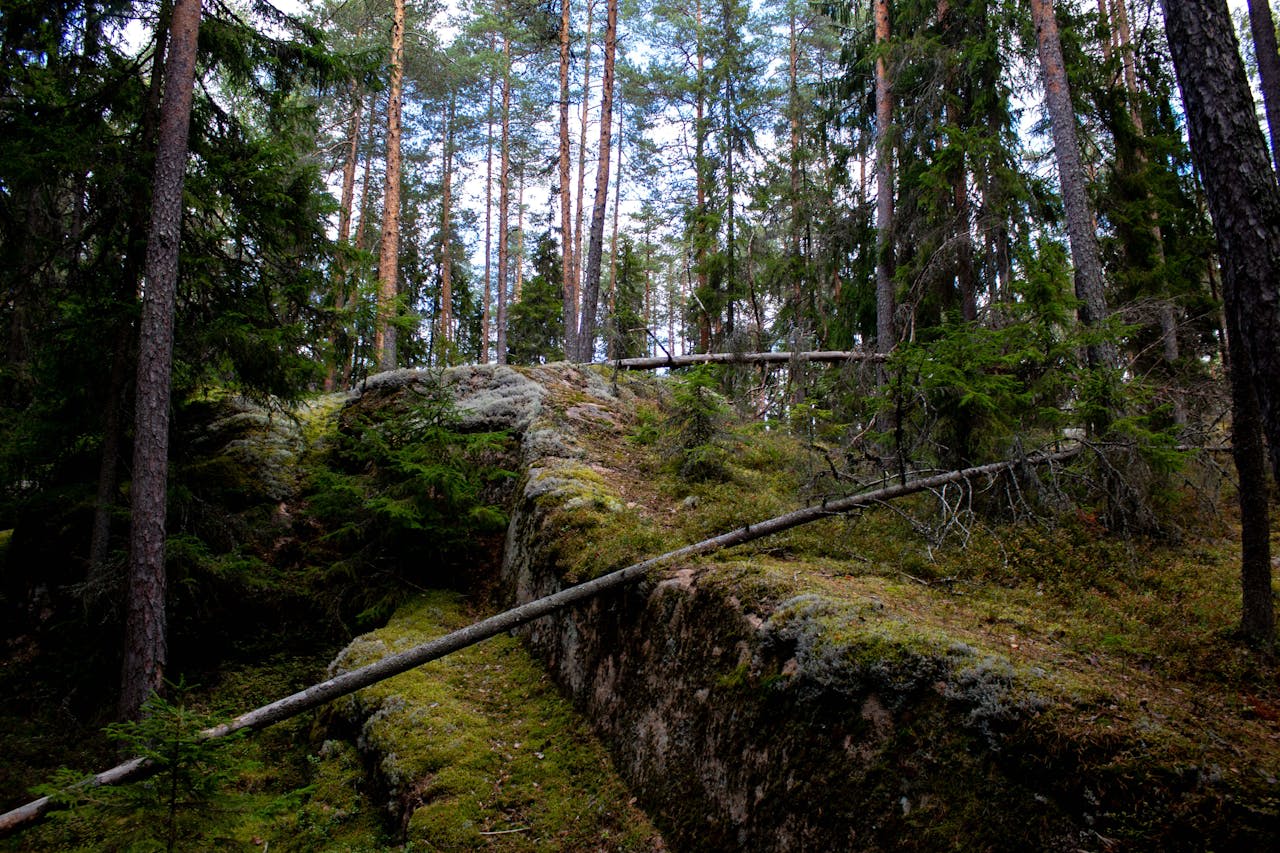
Białowieża Forest (Polish: Puszcza Białowieska) is the last and largest remnant of the primeval temperate lowland forest that once covered the entirety of the European Plain from the Atlantic to the Ural Mountains — an ancient woodland complex of approximately 1,500 km² straddling the border between Poland and Belarus, of which the Polish section (625 km²) was designated a UNESCO World Heritage Site in 1992 and expanded with the Belarusian side in 2014. The forest has never been subjected to systematic commercial logging, making it uniquely significant among European forests: it contains trees of extraordinary age and girth (individual oaks over 500 years old and 5 metres in circumference are not rare), standing dead wood in quantities found nowhere else in Central Europe, and forest processes — natural regeneration, fungal decomposition, fallen-log succession — that are absent from all managed forests. The forest is most famous for being the home of the European bison (Bison bonasus), the largest land animal in Europe, which was hunted to global extinction in the wild by 1927 and reintroduced to Białowieża from zoo stock beginning in 1952 — one of the most successful large mammal reintroductions in history. The wild herd now numbers approximately 600 individuals on the Polish side.
🌍 Geography and Ecosystem
- Strictly Protected Zone (Rezerwat Ścisły): The 10,517-hectare core of the Polish national park, accessible only with a licensed guide and closed to all management intervention since 1921. This zone contains the finest primeval forest in Europe — ancient oaks up to 500 years old, Norway spruces over 50 metres tall, and dead wood in various stages of decomposition providing habitat for over 1,000 saproxylic (dead-wood-dependent) insect species.
- European Bison Reserve: Adjacent to the village of Białowieża, the enclosed reserve maintains a captive bison herd of approximately 20 individuals visible year-round, including bulls weighing up to 920 kg. The reserve also houses tarpan (wild horse) reconstructs, konik horses, red deer, roe deer, and wild boar in large naturalistic enclosures. It functions as a backup gene pool for the wild reintroduction programme.
- Bison Tracking in the Wild: The wild bison herd roams across the full forest complex, and sightings on the forest tracks and meadows (particularly in winter when bison concentrate near supplementary feeding points) are relatively reliable with a knowledgeable guide. Bison are most active at dawn and dusk. Early November to March provides the best sighting conditions due to leafless trees and snow tracks.
- Forest Birdlife: Białowieża holds one of the richest bird communities in Central Europe, including three-toed woodpecker, white-backed woodpecker, pygmy owl, tengmalm's owl, collared flycatcher, red-breasted flycatcher, and in summer the rare aquatic warbler in the adjacent meadows. The dead-wood abundance supports woodpecker densities 5–10 times higher than managed forests. Over 250 bird species have been recorded.
📜 History and Cultural Significance
The German Army administered the forest during World War I (1915–18) and conducted the first and only large-scale industrial logging of the forest interior, extracting approximately 1.5 million cubic metres of timber and hunting the bison essentially to extinction — the last wild Polish bison was shot by a German soldier in February 1921. The shock of this loss directly motivated the forest's designation as a national park in 1921 — the same year the last wild bison died — and initiated the captive breeding programme that eventually enabled the reintroduction of bison to the wild herd. During World War II, the Białowieża area was occupied by both Soviet and German forces and was the site of significant partisan activity in the Armia Krajowa resistance; over 5,000 local Jews were murdered in German actions in the forest in 1942.
🏃 Activities and Attractions
- Guided Tour of the Strictly Protected Zone: Mandatory for the core reserve, guided tours (3–4 hours, approximately 8 km) depart from the Palace Park in Białowieża village. Licensed guides provide ecological interpretation and ensure visitors follow the regulations that protect the primeval forest character. Morning tours in autumn or winter provide the best light and wildlife conditions. Book the day before or in advance during peak season.
- Bison Tracking Safari: Specialist guides offer half-day and full-day bison tracking tours on the forest tracks and meadows, using knowledge of seasonal bison movement patterns and winter feeding areas to maximise sighting probability. Successful sighting rates with experienced guides in winter are over 80%. Bring a telephoto lens — bison are large but move quietly through the undergrowth and can be difficult to see until you are within 50 metres.
- Cycling the Forest Tracks: A network of unmarked forest roads criss-crosses the buffer zone of the national park, accessible without a guide by bicycle. The routes pass through old-growth forest sections, forest meadows, and the Narewka river valley. Bicycle hire is available in Białowieża village. The 30-km circuit to Teremiski and back provides a good half-day introduction to the forest landscape.
- Natural History Museum: The Museum of the Białowieża National Park in the village contains excellent exhibitions on the forest ecosystem, the history of bison extinction and reintroduction, and the ecology of dead wood in primeval forest. The preserved specimen of the last wild Polish bison (shot 1921) is held here — a poignant exhibit in the context of the recovery story.
- Winter Cross-Country Skiing and Snowshoeing: When snow cover is sufficient (typically January–February), the forest tracks provide exceptional cross-country skiing through ancient winter forest — one of the most atmospheric landscapes in Poland in snow conditions. Snowshoe rental is available in the village, and self-guided snowshoe routes through the buffer zone are marked.
💡 Travel Tips
Best Season: November–March for bison sightings (snow reveals tracks, bison congregate at feeding areas) and full primeval forest atmosphere with snow. May–June for maximum bird activity including woodpeckers, flycatchers, and the spring bison rut. Avoid August peak tourist season if possible — the village can be crowded and guide availability is stretched.
Access Rules: The strictly protected zone (Rezerwat Ścisły) requires a licensed guide — independent entry is not permitted. The buffer zone (Park Krajobrazowy) can be accessed independently on marked routes. Cycling is permitted only on designated forest roads. Foraging is prohibited. Drones are banned throughout the forest.
Accommodation: Białowieża village has several guesthouses and a PTTK hostel. Hajnówka town (15 km west) has more options. Rooms fill quickly during bison season weekends (November–February) — book several weeks in advance.
🌱 Conservation
The European bison (Bison bonasus) reintroduction programme is the forest's conservation triumph. From 12 individuals in a Polish-Swedish zoo in 1952, the Białowieża wild herd has grown to approximately 600 animals, and bison have been reintroduced to other European sites including the Carpathians, the Caucasus, and the German Rothaar Mountains. The current wild population across Europe exceeds 7,000 individuals, upgraded from Endangered to Near Threatened by the IUCN in 2020. However, the genetic diversity of all living bison derives from only 12 founding individuals — a bottleneck with long-term implications for disease resistance and adaptive capacity that is being addressed through careful genetic management of the captive reserve herds.