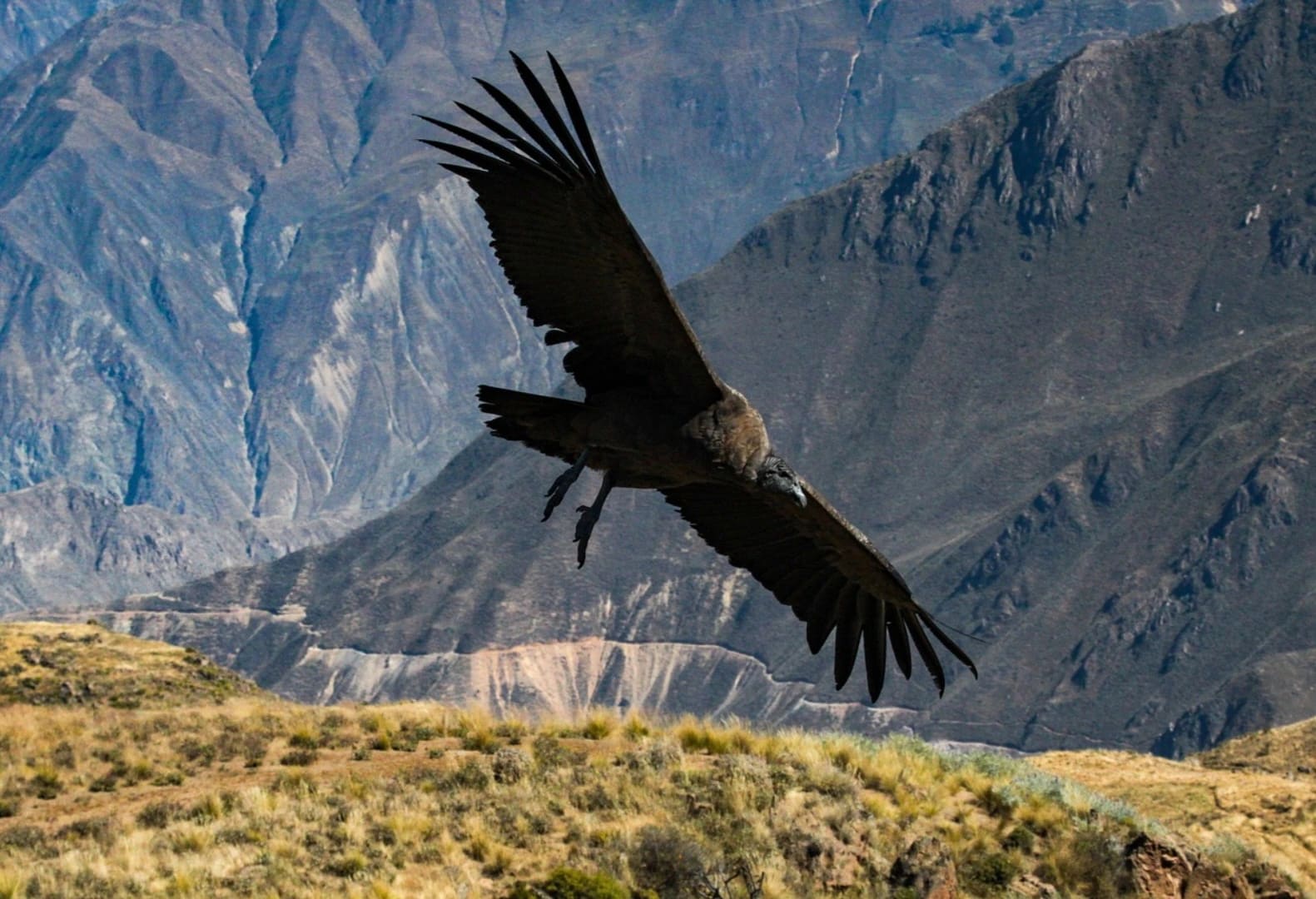
Colca Canyon
Colca Canyon, located in the Arequipa region of southern Peru, is one of the deepest canyons in the world, measuring over 3,000 meters deep. This natural wonder is not only a breathtaking geological formation but also a haven for adventure seekers and nature lovers. Surrounded by stunning landscapes, Colca Canyon is home to terraced agricultural fields, small villages, and a rich cultural history. It offers an unforgettable experience with activities like hiking, birdwatching, and exploring ancient Inca ruins. Colca Canyon is also famous for being a prime spot to observe the majestic Andean condor in flight.
🌍 Geography and Natural Features
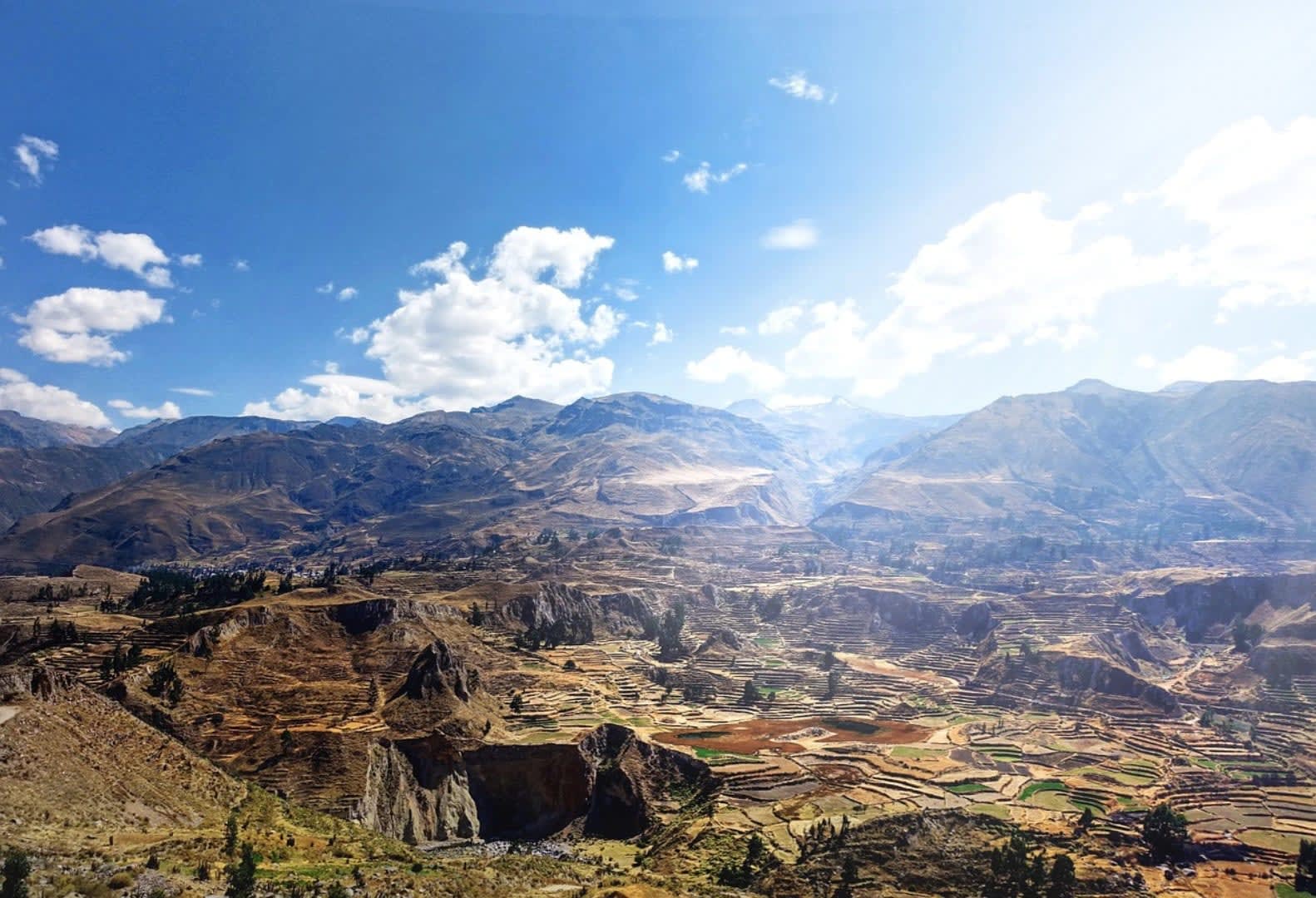
Colca Canyon is located in the Andes mountains and is renowned for its incredible depth and natural beauty. The canyon is part of the Colca River valley, which has been shaped over millennia by tectonic movements and the erosion of the landscape. The valley is lined with traditional terraces that have been used for agriculture since Inca times, and the surrounding mountains offer stunning views of snow-capped peaks and unique geological formations.
Key geographical features of Colca Canyon include:
Key geographical features of Colca Canyon include:
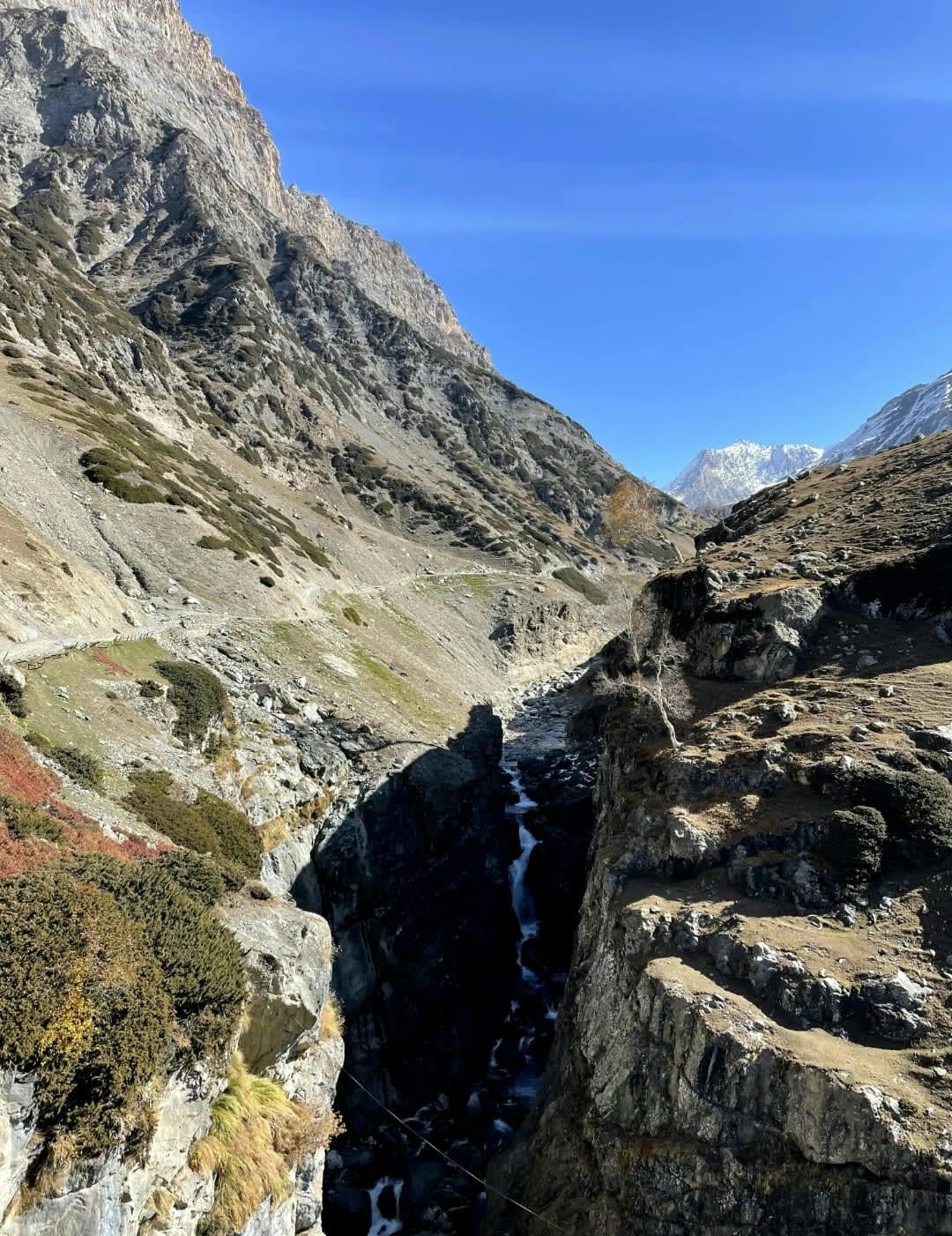
- Colca Canyon: One of the deepest canyons in the world, at over 3,000 meters deep, providing dramatic and awe-inspiring views.
- Colca River: The river that runs through the canyon, adding to the canyon’s natural beauty and serving as an essential water source for the surrounding area.
- Inca Terraces: Ancient agricultural terraces still in use today, showcasing the ingenuity of the Inca civilization.
- Andean Peaks: The towering mountains surrounding the canyon, including Mount Sabancaya, an active volcano that adds to the region’s rugged beauty.
- Crater Valleys: The canyon is surrounded by numerous smaller valleys and craters, offering varied landscapes and unique hiking opportunities.
📜 History and Cultural Significance
The Colca Canyon has been inhabited for thousands of years, with evidence of pre-Incan cultures dating back to at least 1,000 BC. The Inca civilization is known to have cultivated the terraces that still exist today, and the canyon played an important role in their agricultural and spiritual practices. The region is also home to several indigenous groups, such as the Cabana and Collagua people, who have preserved their traditions and languages for centuries.
Colca Canyon has also been an important site for colonial history, as the Spanish conquerors arrived in the area and interacted with the indigenous populations. The village of Chivay, located near the canyon, remains a hub for local culture and traditions, where visitors can experience the influence of both ancient and colonial Peruvian heritage.
Colca Canyon has also been an important site for colonial history, as the Spanish conquerors arrived in the area and interacted with the indigenous populations. The village of Chivay, located near the canyon, remains a hub for local culture and traditions, where visitors can experience the influence of both ancient and colonial Peruvian heritage.
🏃 Activities and Attractions
Colca Canyon offers a range of activities that allow travelers to experience its natural beauty and cultural heritage. From hiking through the canyon to watching the Andean condors soar overhead, there’s something for everyone.
Top activities and attractions in Colca Canyon include:
Top activities and attractions in Colca Canyon include:
- Hiking in Colca Canyon: One of the most popular activities is hiking through the canyon. There are various routes, from easier treks to more challenging hikes that take you to the bottom of the canyon, where you can enjoy the stunning views and remote villages.
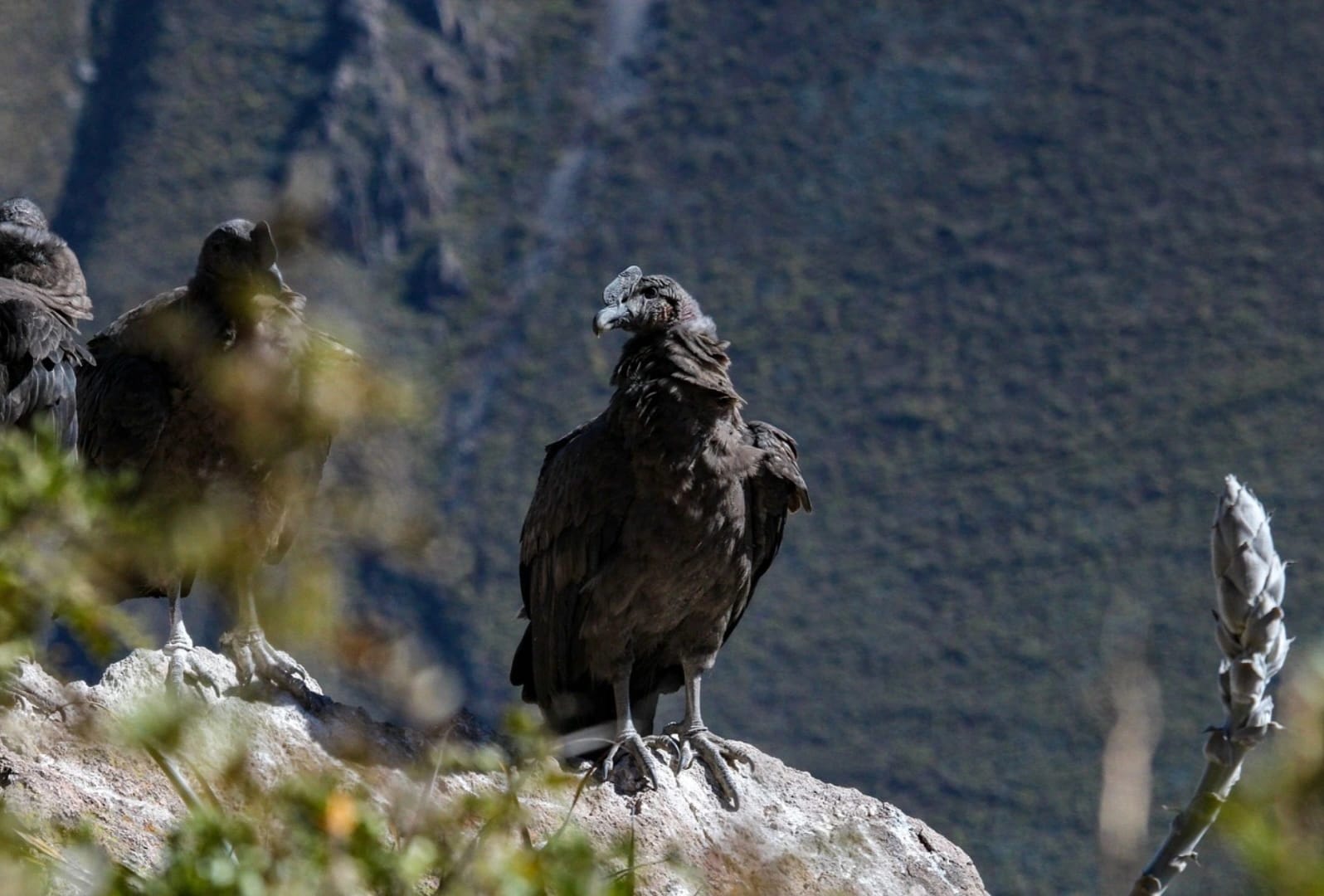
- Condor Watching: Colca Canyon is one of the best places to observe the Andean condor, a majestic bird with a wingspan of over 3 meters. The Cruz del Condor viewpoint is a prime location for spotting these incredible birds.
- Visit the Colca Hot Springs: After a day of exploring, relax in the natural hot springs in Chivay, where visitors can soak in mineral-rich waters with views of the surrounding mountains.
- Explore Inca Terraces: Take a guided tour of the ancient agricultural terraces that have been used for centuries by local communities. These terraces offer insights into the farming techniques of the Inca and pre-Inca civilizations.
- Village Tours: Visit traditional villages such as Yanque and Coporaque to learn about the local culture and customs. Many of these villages maintain their traditional way of life, with colorful festivals, markets, and indigenous crafts.
💡 Travel Tips
To make the most of your visit to Colca Canyon, here are some helpful tips:
1. Acclimate to the Altitude: Colca Canyon is located at high altitudes, so it’s important to allow time for acclimatization to avoid altitude sickness.
2. Pack for Varying Weather: The weather in Colca Canyon can change quickly. Be prepared for sunny days, chilly evenings, and occasional rain showers. Bring layers, sturdy hiking shoes, and a waterproof jacket.
3. Hire a Local Guide: Hiring a local guide can enhance your experience by providing insights into the canyon’s history, wildlife, and local culture.
4. Be Respectful of Local Communities: The villages around Colca Canyon are home to indigenous people who maintain their traditional ways of life. Always be respectful and ask for permission before taking photos of people or their property.
5. Stay Hydrated: The dry air and altitude can make you feel thirsty quickly. Be sure to carry plenty of water, especially if you’re hiking.
1. Acclimate to the Altitude: Colca Canyon is located at high altitudes, so it’s important to allow time for acclimatization to avoid altitude sickness.
2. Pack for Varying Weather: The weather in Colca Canyon can change quickly. Be prepared for sunny days, chilly evenings, and occasional rain showers. Bring layers, sturdy hiking shoes, and a waterproof jacket.
3. Hire a Local Guide: Hiring a local guide can enhance your experience by providing insights into the canyon’s history, wildlife, and local culture.
4. Be Respectful of Local Communities: The villages around Colca Canyon are home to indigenous people who maintain their traditional ways of life. Always be respectful and ask for permission before taking photos of people or their property.
5. Stay Hydrated: The dry air and altitude can make you feel thirsty quickly. Be sure to carry plenty of water, especially if you’re hiking.
🌱 Conservation Efforts
Colca Canyon is a protected area, and several initiatives have been put in place to conserve its unique ecosystems and preserve its cultural heritage. These include the protection of the Andean condor population, which is an important part of the canyon’s biodiversity. Additionally, local communities work closely with conservation organizations to manage the canyon's natural resources sustainably.
Conservation efforts in Colca Canyon include:
1. Condor Protection: The Andean condor is an endangered species, and efforts are being made to protect its breeding grounds and prevent habitat loss.
2. Ecotourism Initiatives: Sustainable tourism practices are encouraged to minimize environmental impact while providing economic opportunities for local communities.
3. Terrace Preservation: The ancient Inca terraces are carefully maintained to preserve both the agricultural and cultural heritage of the region.
Conservation efforts in Colca Canyon include:
1. Condor Protection: The Andean condor is an endangered species, and efforts are being made to protect its breeding grounds and prevent habitat loss.
2. Ecotourism Initiatives: Sustainable tourism practices are encouraged to minimize environmental impact while providing economic opportunities for local communities.
3. Terrace Preservation: The ancient Inca terraces are carefully maintained to preserve both the agricultural and cultural heritage of the region.
✨ Conclusion
Colca Canyon is a must-see destination for those looking to experience the natural beauty, cultural history, and adventure of southern Peru. Whether you’re hiking its dramatic depths, watching the Andean condors glide across the sky, or learning about its ancient terraces, Colca Canyon offers an unforgettable experience. With its awe-inspiring landscapes and vibrant local culture, Colca Canyon is one of Peru's most iconic destinations.