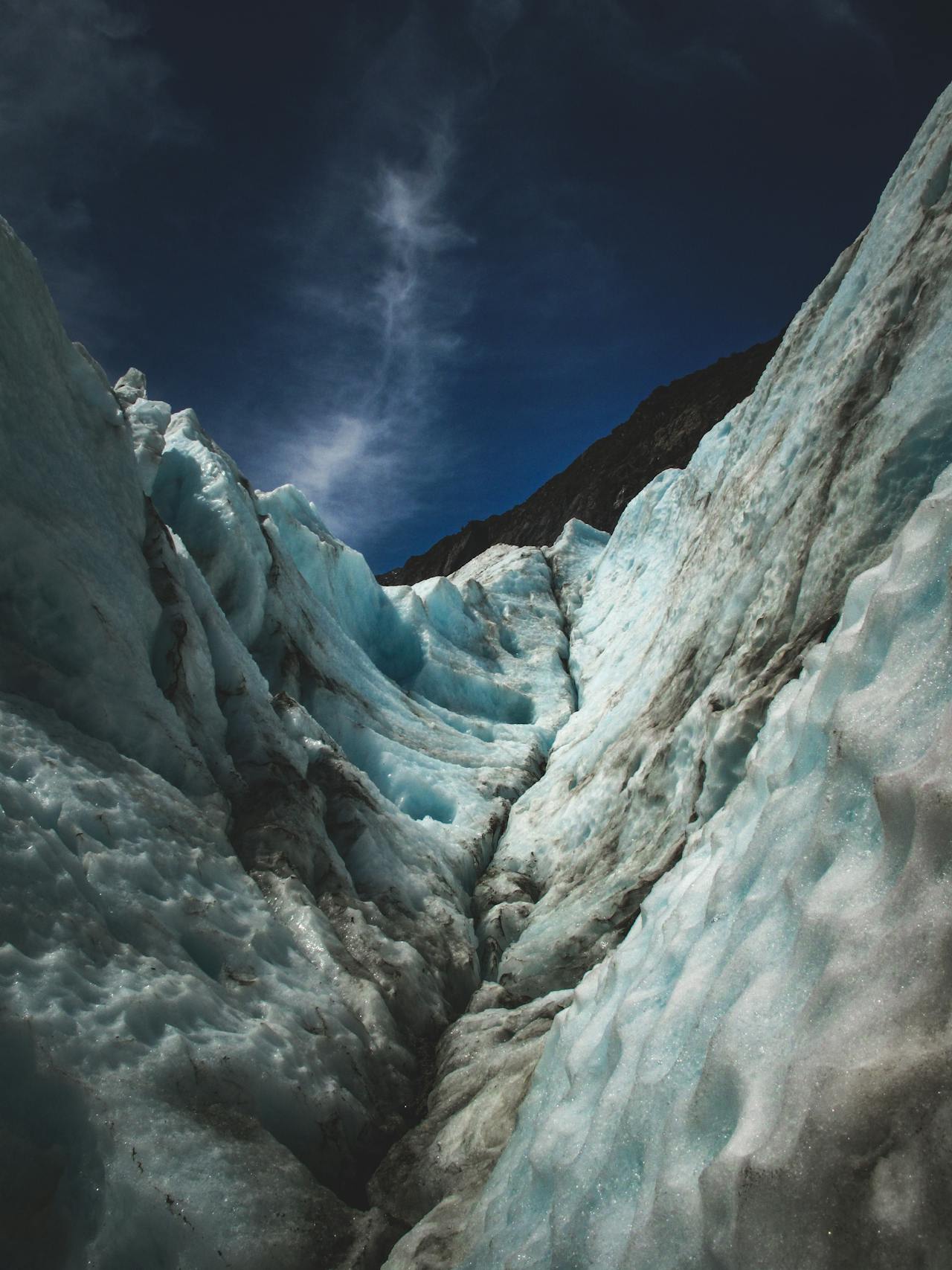
Franz Josef Glacier
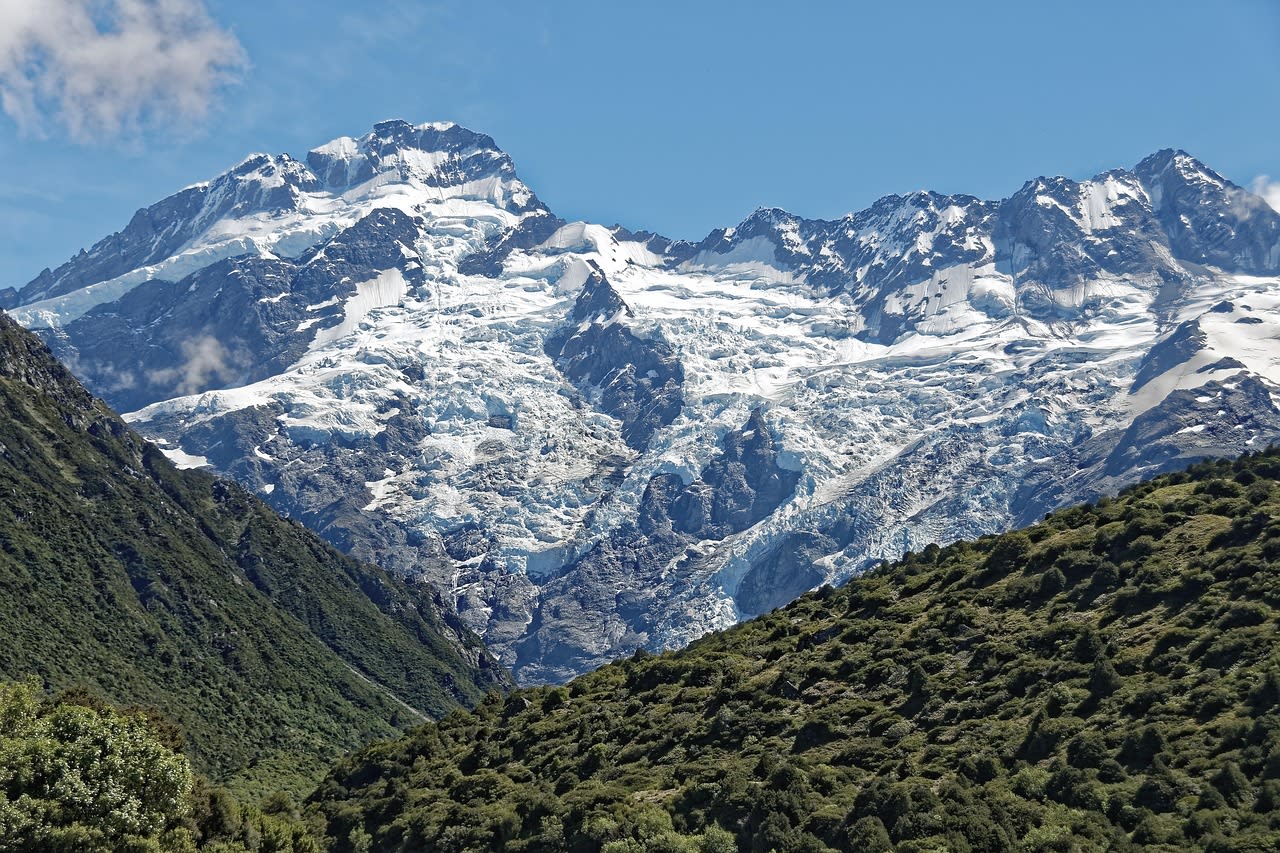
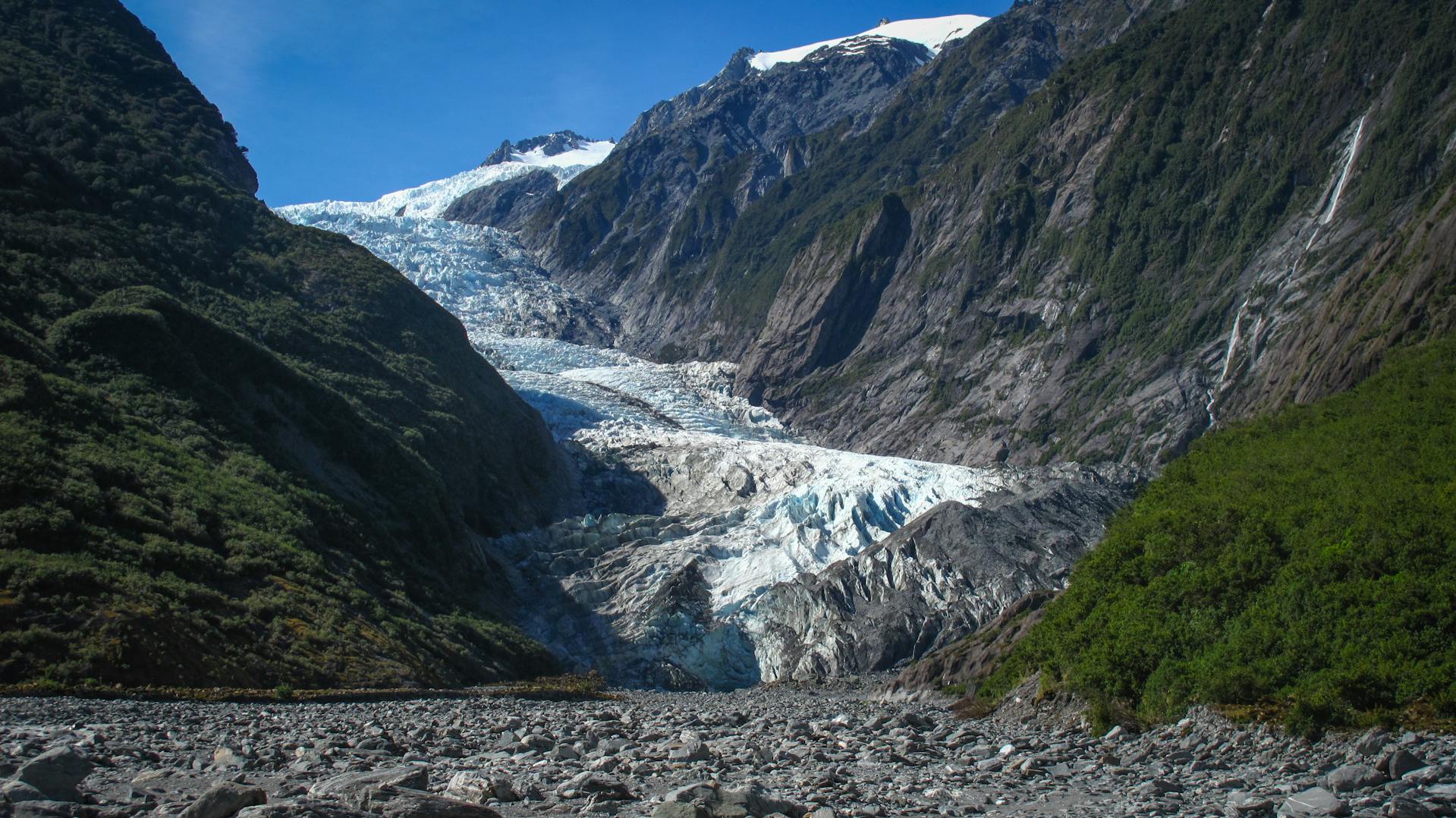
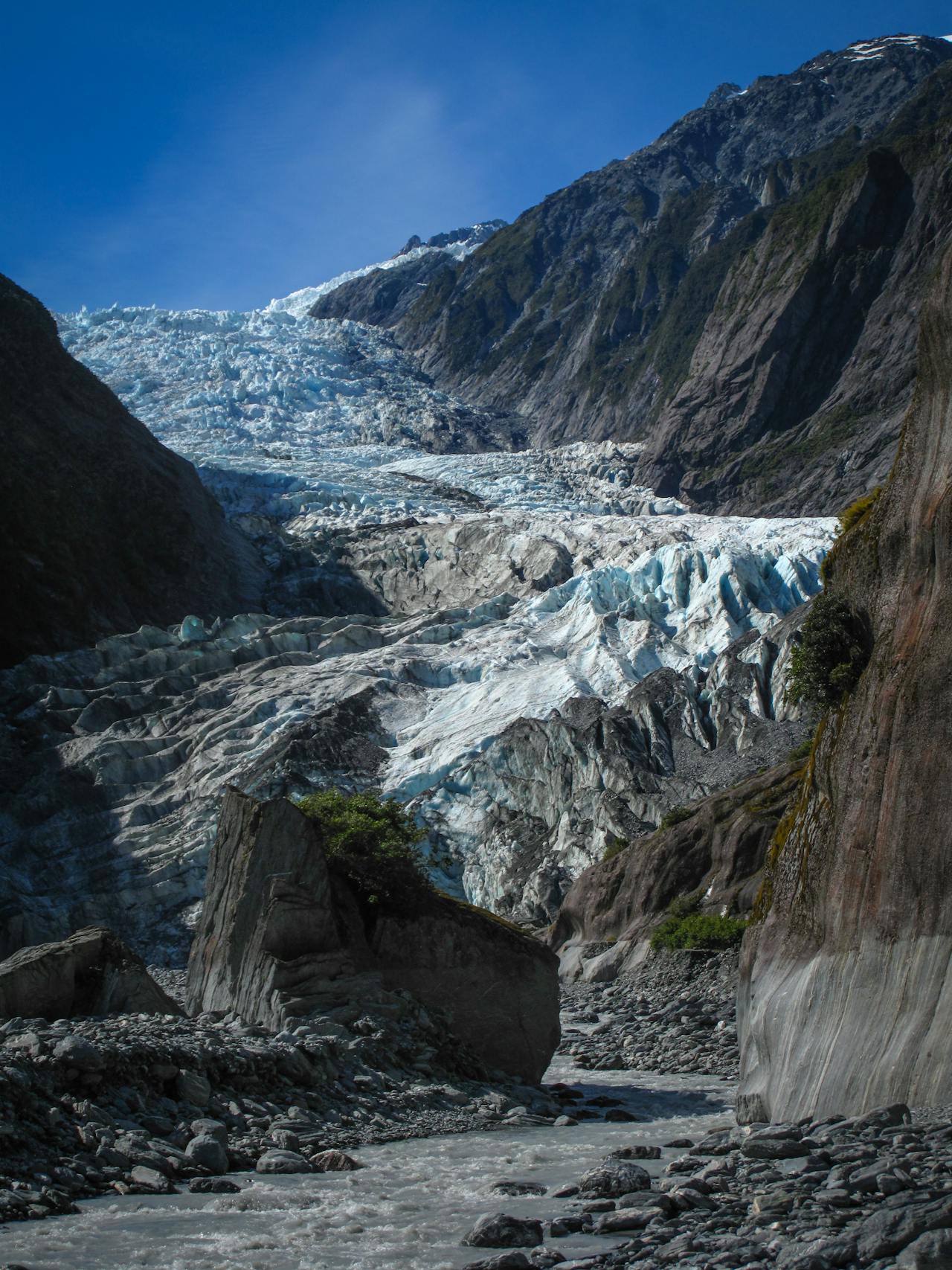
Franz Josef Glacier (Kā Roimata o Hine Hukatere — 'the tears of Hine Hukatere') is a 12 km temperate glacier in Westland Tai Poutini National Park on New Zealand's West Coast, 23 km north of Fox Glacier and sharing the same Māori name — the frozen tears of a woman whose lover fell from the peaks. Like Fox, Franz Josef descends from the Main Divide névé fields at 2,700 m to a terminus at approximately 300 metres above sea level, flowing through a narrow gorge of podocarp rainforest that creates the globally unique spectacle of a glacier descending through tropical-looking green forest. The glacier was named in 1865 by geologist Julius von Haast after the then-Emperor of Austria-Hungary, Franz Josef I. The Franz Josef township of 400 residents 5 km from the glacier terminal is the primary service hub for the West Coast's glacier tourism industry, and on fine days when helicopter operations are possible, the township is one of the busiest tourism nodes in the South Island.
🌍 Geography and Ecosystem
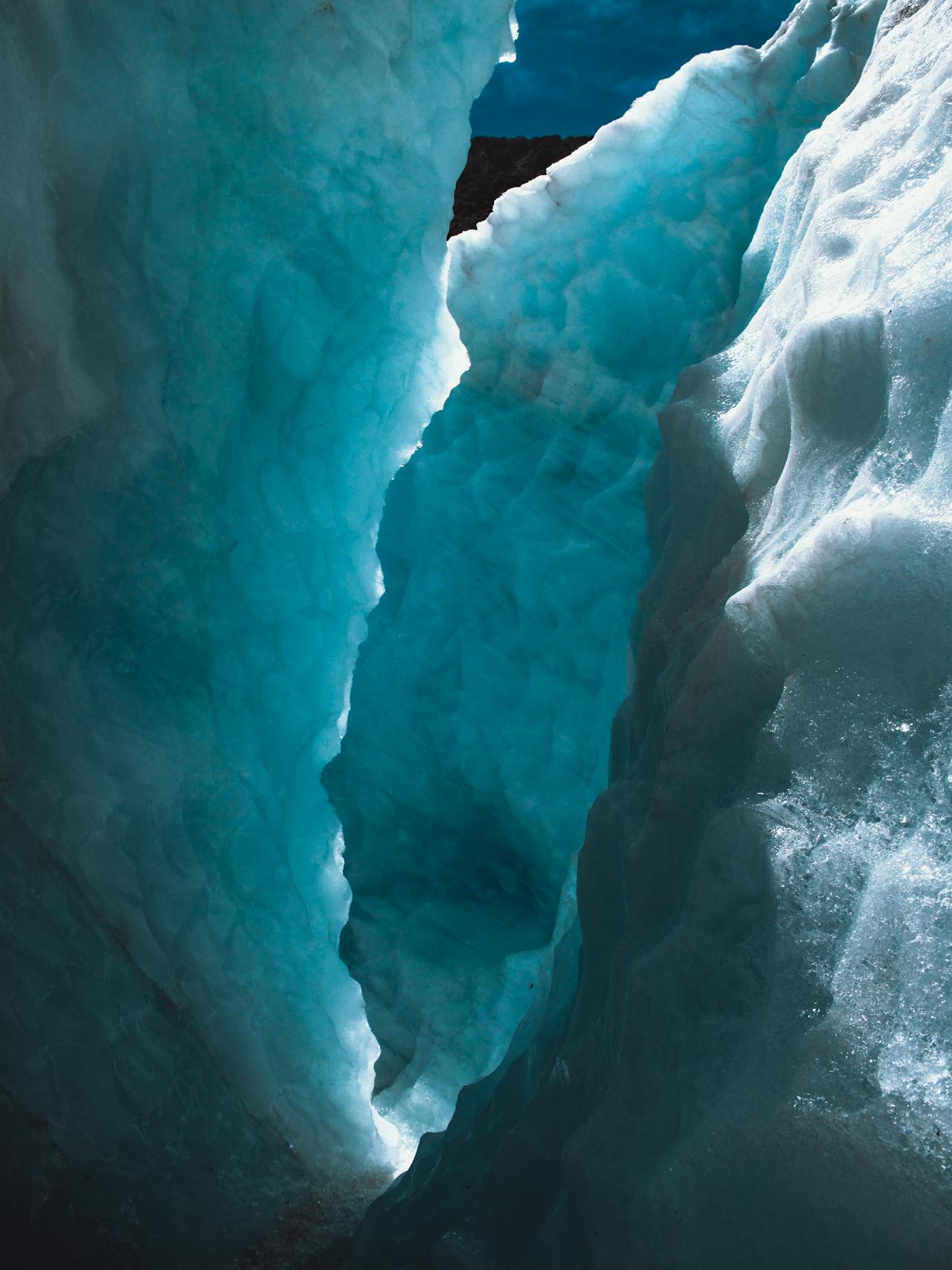
- Glacier Terminal Face: The Franz Josef terminal face — a 30–50 metre high cliff of grey and blue ice — is the primary visual focus of the valley walk. The face calves blocks of ice without warning; the safety barrier is set back 200 m from the ice for this reason. The distinctive blue colour of the deepest crevasse ice reflects the wavelength of light that penetrates most deeply into ice — all other wavelengths are absorbed, leaving only blue. The intensity of blue varies with ice density and crevasse depth.
- Sentinel Rock Viewpoint: A short side track from the main valley walk leads to a rock outcrop providing an elevated view of the glacier terminal area and the valley walls. The viewpoint shows clearly the moraine lines of previous glacier positions — the lateral moraines of the 1980s advance are visible as distinct ridges on the valley walls several hundred metres above the current glacier level.
- Hot Pools at Franz Josef: The Waiho Hot Pools in Franz Josef township — a geothermal facility using hot spring water — provide a distinctive combination unavailable at most glacier destinations: soaking in geothermal hot water with a view of the glaciated peaks above. The contrast of hot water in cold mountain air is compelling, and the pools serve as a standard activity for rainy days when glacier helicopters are grounded.
- Okarito Lagoon: A 26-km drive north of Franz Josef, Okarito is New Zealand's largest unmodified coastal wetland — a lagoon and estuary of extraordinary bird diversity and the only breeding habitat of the white heron (kōtuku) in New Zealand. Kayak tours and guided wildlife walks at the lagoon provide birdwatching encounters with kotuku, royal spoonbill, and the rare Australasian bittern in a landscape of extraordinary tranquillity.
📜 History and Cultural Significance
The glacier became accessible to tourism with the opening of the Westland National Park in 1960 and the completion of State Highway 6 along the West Coast. The classic Franz Josef activity for six decades was a guided walk on the glacier surface, approaching the terminal face on foot from a carpark and walking up the ice with guides cutting steps. The progressive retreat and increased crevassing of the lower glacier through the 2000s–2010s made this route increasingly hazardous, and the traditional guided walk was ended in 2019. Helicopter access to the upper glacier is now the standard ice experience, maintaining the economic core of a township that has no alternative economic base.
🏃 Activities and Attractions
- Helicopter Ice Walk on Upper Glacier: The signature Franz Josef experience — helicopter flight to the upper glacier at 600–1,000 m, followed by a 2–3 hour guided walk on stable blue ice. The upper glacier terrain features seracs, ice caves, and the broad view of the névé field extending to the Main Divide peaks. The helicopter approach gives the best possible aerial perspective of the glacier's full extent before landing. Weather windows of 3–4 clear hours are required; the West Coast frequently sees these in the morning before afternoon cloud develops.
- Valley Walk to Terminal Face: A 2-hour return walk from the carpark through the glacial outwash valley to the safety barrier below the terminal face — free and accessible to all fitness levels. The walk is strongly recommended as preparation for understanding the glacier's scale before taking a helicopter flight. The interpretive panels marking the glacier's historical positions at 10-year intervals (the 1908 terminus was 3 km further down the valley) provide immediate context for the scale of retreat.
- Okarito Lagoon Kayak: A 26 km drive north to Okarito delivers access to one of New Zealand's finest wildlife kayaking experiences — paddling the lagoon channels among white herons, royal spoonbills, and little blue penguins in a wetland of extraordinary quietness. Guided and self-guided kayak hire available from Okarito Kayaks. The dawn kayak tour is the most productive for wildlife, with kotuku (white heron) particularly active in the early morning light.
- Treetop Walk at Hokitika: The West Coast Treetop Walk at Hokitika (50 km north of Franz Josef) — a 450 m elevated walkway through the upper canopy of a 1,000-year-old native forest at 20 metres above the ground — provides a perspective on the rainforest structure that ground-level walks cannot offer. The tower at the end rises to 47 m for panoramic views across the coastal plain to the Southern Alps.
- Kayaking on Lake Mapourika: A black-water lake 8 km north of Franz Josef township, completely enclosed by podocarp rainforest and mirror-calm on windless mornings. Kayaking on Mapourika with the glacier peaks reflected in the still, dark water is one of the West Coast's quieter but most beautiful experiences. Guided tours available from Franz Josef township.
💡 Travel Tips
Best Season: October–April for best helicopter weather windows and longer daylight. The West Coast receives 180+ rain days per year — helicopter cancellations are frequent in all seasons. Book with free cancellation and plan flexibility. July–September can have exceptional clear spells after fronts pass, with snow on the peaks and brilliant clarity. The thermometer rarely drops below freezing in the township regardless of season.
Accommodation: Franz Josef township (larger than Fox) has the widest West Coast range: Scenic Hotel Franz Josef Glacier (best in town), several backpacker hostels for budget travellers, and holiday parks with cabins. Book several months ahead for December–February and Easter. The hot pools in the township provide an excellent rainy-day option when glacier helicopters are grounded.
🌱 Conservation
The surrounding national park's forest ecosystem is managed by DOC through aerial 1080 drops (sodium fluoroacetate) every 3–5 years to control stoat, possum, and rat populations that would otherwise suppress native bird breeding success. The programme is controversial among some community members but is scientifically demonstrated to be the most effective predator control method at the scale of the West Coast forest. Kiwi populations in the treated zones recover measurably after each drop, with substantially increased chick survival. The kea — present in the Franz Josef valley year-round and reliably encountered at the carpark and township — is partially at risk from 1080 and from tourist interactions (kea are food-conditioned by human feeding, which compromises their wildness). DOC actively manages visitor interaction guidelines for kea at both glacier sites.