Gobi Desert
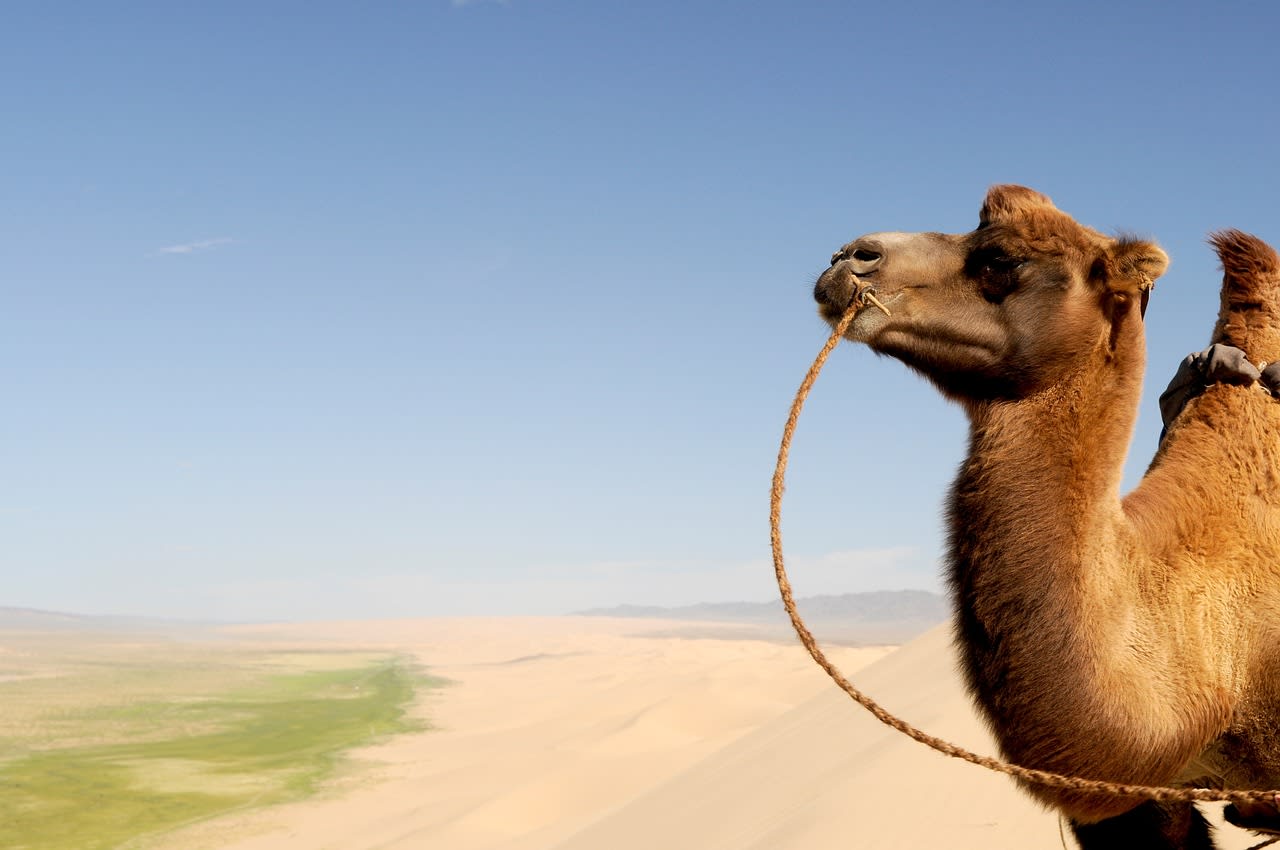
The Gobi Desert is the largest desert in Asia and the fifth-largest in the world — a 1.3 million km² expanse of cold desert, semi-desert, and steppe spanning southern Mongolia and northern China. Despite its name, the Mongolian Gobi is not primarily sand — only approximately 5% is sand desert; the majority is a bare rock and gravel hamada desert of extraordinary openness and silence. The Gobi holds three of the world's most significant paleontological sites: Bayanzag (Flaming Cliffs), where American paleontologist Roy Chapman Andrews discovered the world's first dinosaur eggs in 1922; the Nemegt Formation, which has yielded Tarbosaurus and multiple sauropod species; and the Djadochta Formation, source of the famous 'fighting dinosaurs' specimen (Protoceratops and Velociraptor locked in mortal combat). The living desert supports Bactrian camels (both wild and domestic), Gobi bear (Mazaalai — one of the world's rarest bear subspecies with fewer than 50 individuals), Mongolian wild ass (khulan), and snow leopard on the desert's rocky margins. The Khongoryn Els — a 180 km-long sand dune system rising to 300 m — produce an audible 'singing' sound when the dunes slip.
🌍 Geography and Ecosystem
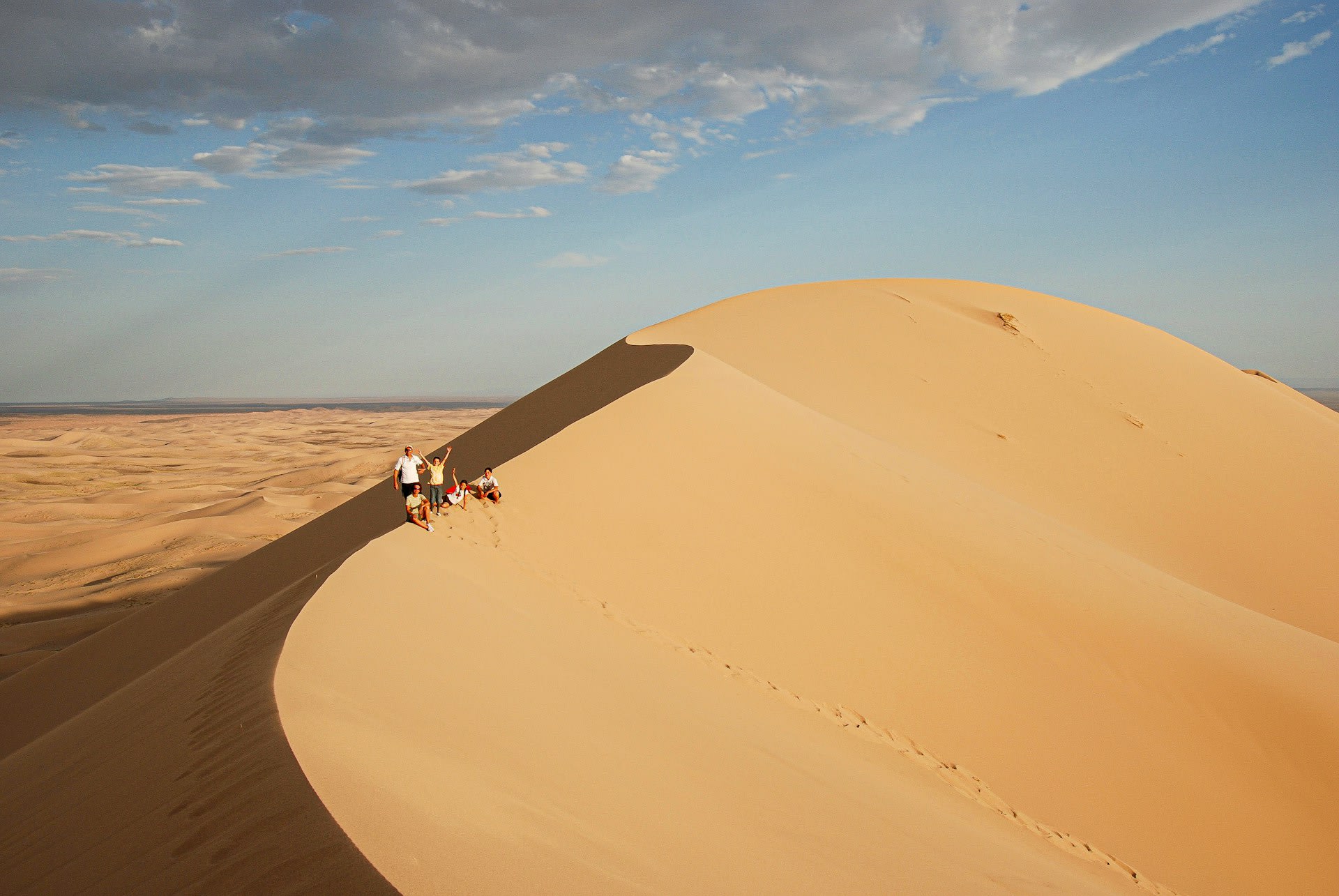
- Khongoryn Els (Singing Dunes): A 180 km-long sand dune system in the Gurvan Saikhan National Park, with the largest dunes rising 300 m from the flat desert floor. The dunes 'sing' — a low, resonant rumble audible from several kilometres — when the dune face slips in dry conditions, produced by the granular flow of millions of sand grains in a phenomenon caused by the specific sand grain size and dryness. Camel rides along the dune base and climbing the dune crest for sunset views are the primary activities. Ger camps operate at the dune base May–September.
- Bayanzag (Flaming Cliffs): A badland of eroded red sandstone in the Ömnögovi Province — named 'Flaming Cliffs' by Roy Chapman Andrews for the appearance of the orange sandstone in sunset light. The site has yielded over 100 dinosaur species since systematic excavation began in 1922, including the first confirmed dinosaur eggs and the first Oviraptor and Velociraptor specimens. Surface erosion continues to expose new fossil material after each wind and rain — visitors can occasionally find fragments on the cliff surface. A small museum near the site provides paleontological context.
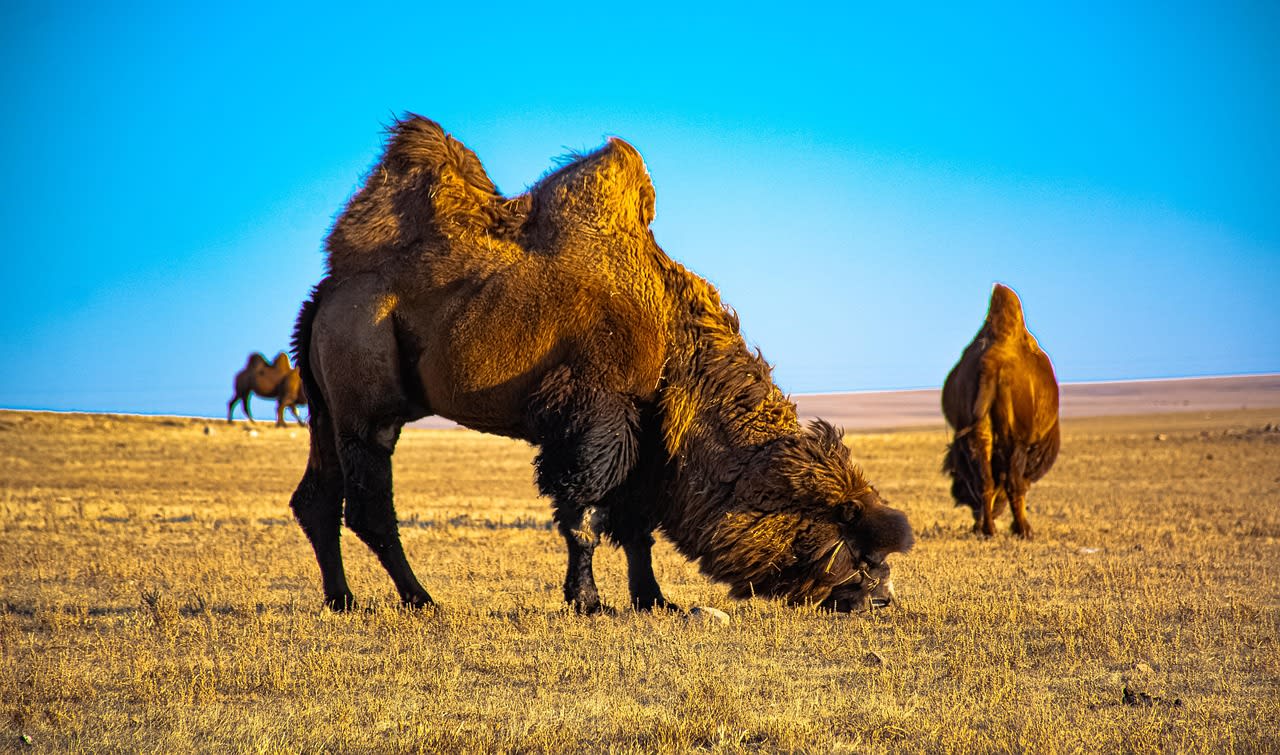
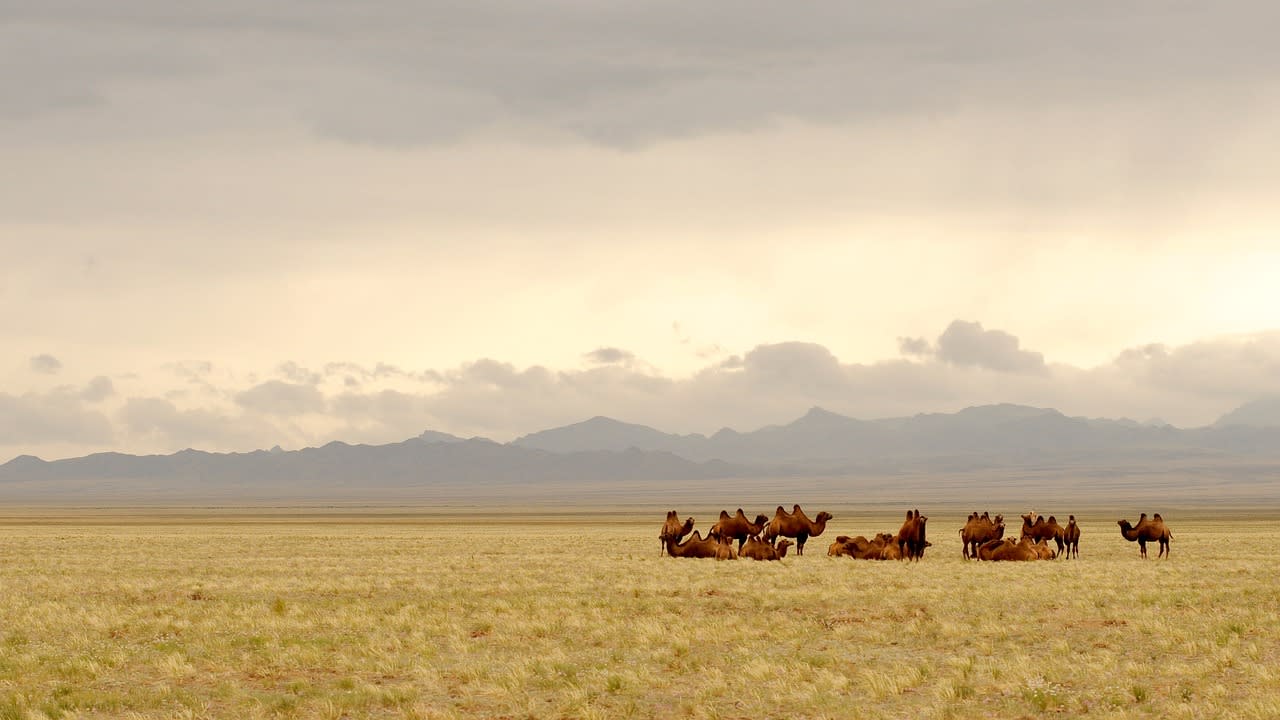
- Wild Bactrian Camel: The Mongolian Gobi is one of only two areas where truly wild Bactrian camels (Camelus ferus) — a distinct species from the domestic Bactrian camel — survive. The wild Bactrian camel population is estimated at 950 individuals globally, most in the Great Gobi Strictly Protected Area. Smaller and narrower than domestic camels, wild Bactrian camels can drink salt water and tolerate radiation levels fatal to most mammals — an adaptation whose mechanism is not yet understood.
- Gobi Bear (Mazaalai): With fewer than 50 individuals surviving in the Great Gobi Strictly Protected Area, the Gobi bear (Ursus arctos gobiensis) is one of the world's rarest bear subspecies — a desert-adapted brown bear surviving on desert plants, insects, and occasional small mammals. Camera trap surveys by the Mongolian government and WWF document the population twice annually. The bears are confined to the three spring oases in the Great Gobi — areas unreachable by visitors without special permits.
📜 History and Cultural Significance
The 1920s Central Asiatic Expeditions of the American Museum of Natural History — led by Roy Chapman Andrews, widely believed to be a partial model for Indiana Jones — transformed scientific understanding of Asian dinosaur paleontology and established the Gobi as a globally important fossil site. Andrews' 1922 discovery of the first confirmed dinosaur eggs at Bayanzag was one of the most significant paleontological finds of the 20th century, overturning the prevailing scientific assumption that dinosaurs did not lay eggs. Subsequent Mongolian-Soviet and Mongolian-American expeditions (particularly in the 1990s) produced an extraordinary series of discoveries including the 'fighting dinosaurs' specimen and multiple new Cretaceous species.
🏃 Activities and Attractions
- Camel Trek on the Khongoryn Els: A sunrise or sunset camel ride along the base of the Khongoryn Els singing dunes — riding a Bactrian camel led by a Mongolian herder through the flat desert floor with the dune wall rising to the east — is one of Central Asia's most evocative travel experiences. The afternoon before sunset is optimal: the dune faces are in direct light, the sand colour is deepest orange, and the dune song is most audible in the late afternoon wind. Overnight ger camp at the dune base allows multi-day camel tours into the desert interior.
- Dinosaur Fossil Tour at Bayanzag: A guided walk on the Bayanzag cliff surface with a paleontologist guide identifying the geological formations and occasionally surface fossils (eggs, bone fragments) that erosion has exposed. The Mongolian Institute of Paleontology runs legal fossil tours; collecting any fossil material is strictly illegal. The orange badland landscape at sunset, with the open Gobi stretching to the horizon in every direction, is extraordinarily photogenic and emotionally vast.
- Ger Homestay with Nomadic Families: Staying with a nomadic herding family in their ger — eating boiled mutton and airag (fermented mare's milk), helping with the animals at dawn, and sitting in the ger doorway watching the Gobi stars emerge — is the primary cultural experience of a Gobi journey. Families host visitors in attached guest gers with basic facilities. The hospitality (zochid buudal) tradition is genuine; the exchange of food and conversation in a landscape of complete emptiness is a distinctive travel experience.
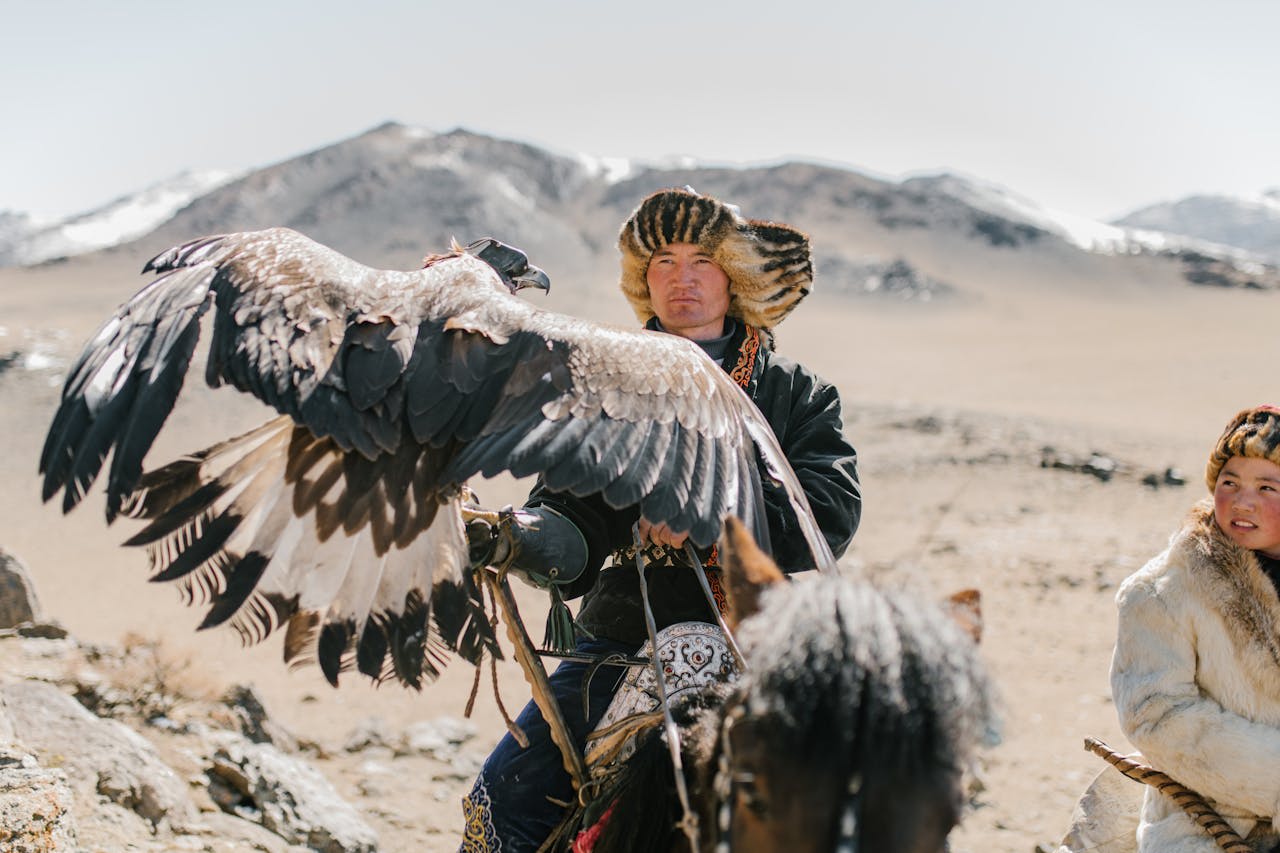
- Yol Valley (Eagle Valley): A narrow gorge in the Gurvan Saikhan Mountains south of Dalanzadgad, where a permanent stream creates a microhabitat of ice persisting until July even in summer. The canyon walls rise 200 m and support lammergeier, golden eagle, and ibex. The combination of ice in a desert gorge in summer is the kind of Gobi paradox that the landscape regularly delivers. Day trip from Dalanzadgad.
- Night Sky Observation: The Gobi's extreme remoteness from light pollution and the dry desert air produce some of the world's finest naked-eye sky conditions — the Milky Way's central band is visible as a structural object, the Andromeda Galaxy is resolved without binoculars, and the planet visibility is extraordinary. Several ger camps offer guided astronomical sessions with telescopes. The horizon-to-horizon sky visible from the flat desert floor, with no tree or building obstruction in any direction, is the Gobi's most democratic gift.
💡 Travel Tips
Best Season: May–June and September–October are ideal — temperatures of 15–25°C, minimal wind, and clear skies. July–August is warmer (30–35°C) but manageable and the longest daylight hours. March–April is the dzud (harsh winter/spring) risk period — avoid. Winter (November–February) temperatures drop to −40°C and are survivable only with specialised equipment and a local guide who knows the terrain. Summer tours with overnight ger stays are the standard Gobi experience.
Packing: Sunscreen (desert UV is extreme), windproof jacket, warm layer for cold nights (temperatures drop 20°C after sunset even in summer), good quality sleeping bag for ger stays, dust protection for camera equipment, and water supply for at least 3 litres per person per day. Cash in Mongolian Tugrik (MNT) — electronic payment is non-existent outside Ulaanbaatar.
🌱 Conservation
The Gobi ecosystem faces the paradox of desertification — the desert is expanding southward and the vegetation at its margins is degrading due to a combination of overgrazing (the Mongolian livestock population tripled between 1990 and 2020) and climate change (the northern Gobi has warmed by approximately 2.2°C since 1940). The saxaul forest that anchors desert soils and provides habitat for Gobi wildlife is being cut for fuelwood in some areas. China has attempted large-scale saxaul replanting on its side of the border with mixed success. The nomadic herding communities that have managed the Gobi sustainably for 3,000 years are under economic pressure that changes both the scale of grazing and the seasonal patterns of movement.