Altai Mountains
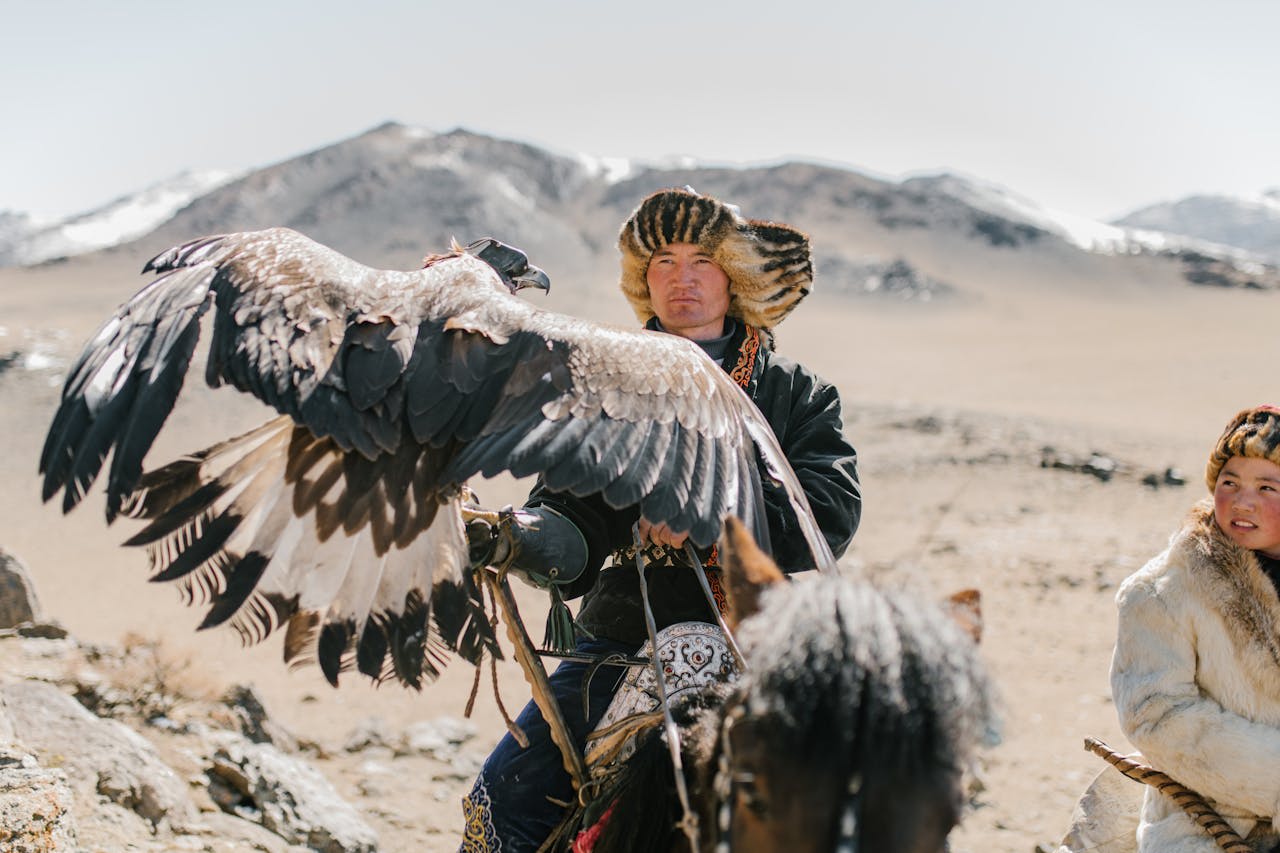
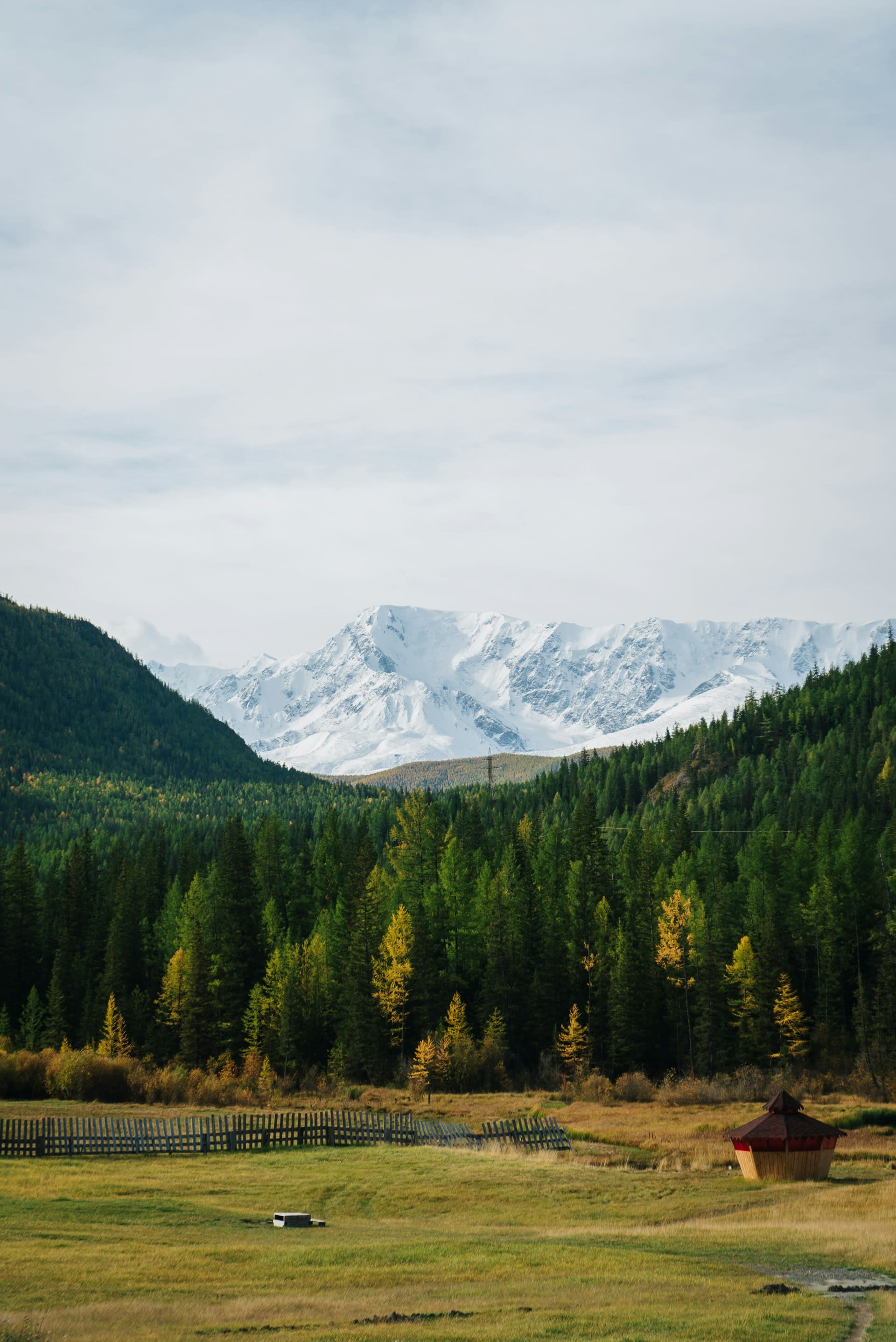
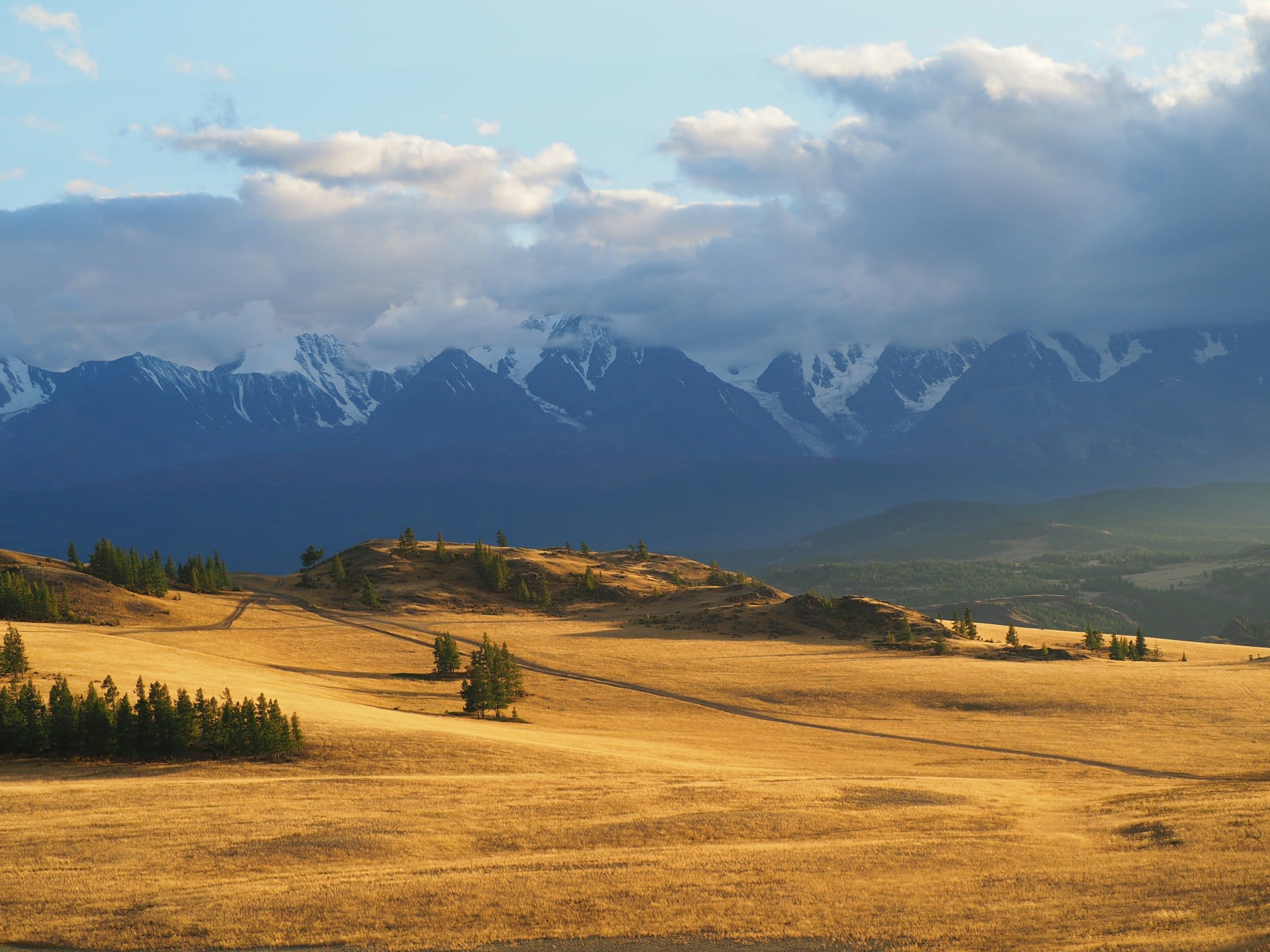
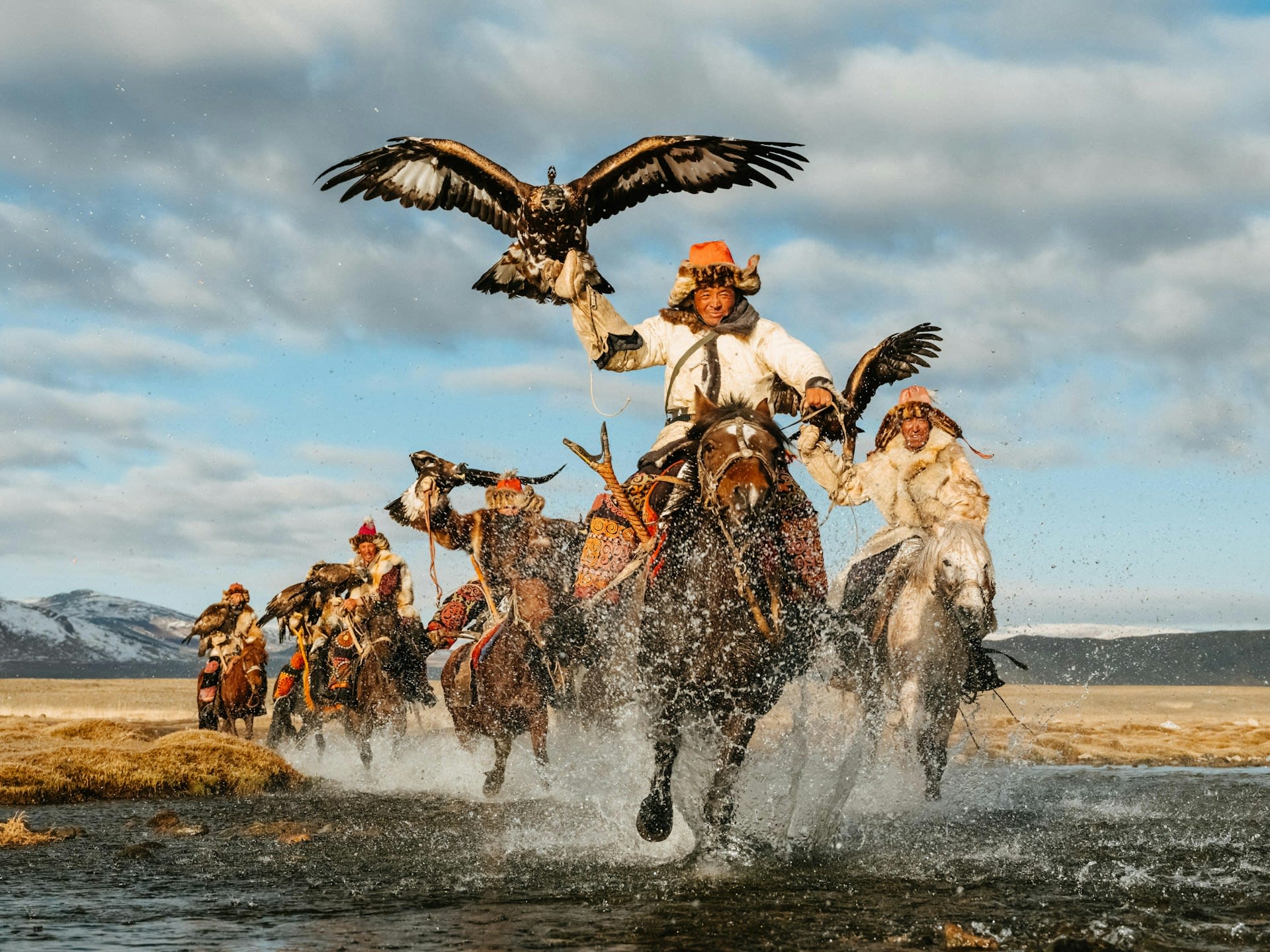
The Mongolian Altai is the eastern extension of the Altai mountain system, running 1,500 km from the Siberian Altai in Russia through Mongolia's western provinces to the Gobi-Altai in the south. The highest section — the Mongol Altai Nuruu in Bayan-Ölgii Province — culminates at Khüiten Peak (4,374 m) on the border tripoint of Mongolia, Russia, and China, flanked by multiple glaciers including the Potanin Glacier (6.5 km, the longest in Mongolia). The range is home to the Kazakh people — ethnic Kazakhs who settled in western Mongolia in the 19th century and have maintained their Central Asian nomadic culture, language, and the ancient tradition of hunting with golden eagles — trained raptors used to hunt fox and hare from horseback in the autumn steppe. The Golden Eagle Festival in Ölgii city (October) has become one of Mongolia's most celebrated events, showcasing eagle hunting skills in a competition format. The Altai is a landscape of glaciated peaks, steppe valleys, and nomadic herding that has been almost entirely untouched by modern infrastructure — its isolation is its primary character.
🌍 Geography and Ecosystem
- Eagle Hunting with Kazakh Hunters: The Kazakhs of Bayan-Ölgii province practice berkutchi — the tradition of hunting with golden eagles trained over a 5–7 year period from juveniles taken from the nest. A mature hunting eagle weighs 5–7 kg and can be flown on horseback to pursue fox, hare, and occasionally wolf across the open steppe. The relationship between the hunter and eagle is lifelong — the eagle is eventually released back to the wild at the end of its hunting career. The tradition has been practiced by Kazakh nomads for at least 2,000 years and is recognised by UNESCO as Intangible Cultural Heritage.
- Khüiten Peak and Potanin Glacier: Mongolia's highest peak at 4,374 m is a standard mountaineering objective for expeditions based in Ölgii — a technically moderate ascent by the normal route (glaciated, crampons and ice axe required) with extraordinary summit views of the Mongolia-Russia-China border tripoint. The approach trek of 2 days from the nearest road crosses the Potanin Glacier snout and multiple moraines. Several Ölgii-based trekking agencies run expeditions July–September.
- Petroglyphs of the Altai: The rock faces throughout the Mongolian Altai carry an extraordinary density of prehistoric petroglyphs — rock engravings depicting ibex, deer, snow leopard, and hunting scenes dating from the Bronze Age (3000 BC) through the Turkic and Mongol periods (500–1500 AD). The densest concentrations are at Tsagaan Salaa and Baga Oigor in Bayan-Ölgii — UNESCO World Heritage sites with over 10,000 individual engravings. The images preserve the fauna and hunting practices of the steppe nomads over 5,000 years.
- Snow Leopard in the Altai: The Mongolian Altai is part of the snow leopard's core range — the rocky slopes of the high range above 2,500 m are primary snow leopard habitat, with an estimated 500+ individuals across the full Mongolian Altai. Camera trap surveys by the Snow Leopard Trust (based in Seattle) have documented individual snow leopards in the Tavan Bogd area adjacent to Khüiten. Guided wildlife expeditions during winter (January–March) when snow leopards descend to lower elevations hunting blue sheep offer the best sighting opportunities.
📜 History and Cultural Significance
The Kazakhs of the Mongolian Altai are a relatively recent arrival — they migrated from Kazakhstan and the Russian Altai in the 1830s–1870s, fleeing conflicts with the Russian Empire, and settled in the Bayan-Ölgii region with Qing dynasty permission. They maintained a distinct ethnic identity — Kazakh language, Islamic faith (Sunni Muslim), and the nomadic pastoral traditions of the Central Asian steppe — that makes Bayan-Ölgii a cultural exception within Buddhist, Mongolian-speaking Mongolia. The eagle hunting tradition (berkutchi) was brought by the Kazakhs and has been maintained as a living tradition, gaining international attention from the 1990s and a significant tourism economy from the annual Golden Eagle Festival.
🏃 Activities and Attractions
- Golden Eagle Festival (October): The annual Golden Eagle Festival in Ölgii city in early October draws 60–70 Kazakh eagle hunters with their trained birds for a 2-day competition of eagle hunting skills — releasing the eagle from a mountaintop to the hunter below, accuracy tests, and traditional games on horseback. The event provides the most concentrated opportunity to observe and interact with the eagle hunting tradition. The visual of 60+ golden eagles simultaneously on their hunters' arms is extraordinary. Book accommodation and tours in Ölgii 3–4 months ahead for the festival weekend.
- Eagle Hunter Homestay and Training Observation: A 3–5 day stay with a Kazakh eagle hunting family in their winter homestead in the Altai valleys — observing the eagle's daily training, feeding, and management; riding with the hunter on the steppe; and sharing family meals of boiled mutton, kurut (dried cheese), and tea. Several specialist tour operators connect visitors with specific families who welcome guests outside the festival period. This provides a depth of cultural engagement completely absent from the festival day alone.
- Tavan Bogd National Park Trek: A 5–8 day trek in the Tavan Bogd ('Five Saints') national park surrounding Khüiten Peak — crossing glacier moraines, camping in high alpine valleys, and traversing the Potanin and Grane glaciers en route to base camp. The trek provides the full Altai high mountain experience — glaciated peaks, permanent snow, ibex on the ridges, and the complete absence of any other party in a landscape of 10,000 km² of protected wilderness. Pack horse support and local guides are available from Ölgii.
- Petroglyphs at Tsagaan Salaa: A half-day drive from Ölgii leads to the UNESCO-recognised petroglyph site at Tsagaan Salaa — thousands of Bronze Age and Turkic rock engravings depicting deer, ibex, snow leopard, and hunting scenes on the river valley rock faces. The sheer density and variety of images on a single rock face is astonishing — the site preserves a 5,000-year visual record of the Altai ecosystem and its human relationship. A local archaeologist guide provides the context that makes the difference between seeing marks on rock and reading a narrative.
- Nomadic Horse Trek: Multi-day horse treks from valley ger camps through the Altai steppe — riding between nomadic family camps, crossing high passes, and camping with pack horses in landscapes of glacial valley and wildflower meadow — are the most immersive way to engage with the Altai landscape. Several Ölgii agencies offer 7–14 day routes with no fixed itinerary, adjusting to the landscape conditions and the herding family network. June–August for flowers and snow-free passes; September–October for autumn colour and the first snow on the peaks.
💡 Travel Tips
Best Season: July–August for trekking and high mountain access — snow-free passes, wildflowers, longest daylight. September for the beginning of autumn colour (golden larch) and fewer visitors. Early October specifically for the Golden Eagle Festival — book all accommodation and flights well ahead. April–June for the spring nomadic migration season — herding families moving to summer pastures with newborn animals. Winter (December–February) is extreme (−40°C) but possible for eagle hunting experiences with appropriate equipment and local guide.
Currency and Infrastructure: Bayan-Ölgii uses Mongolian Tugrik; most transactions are cash-only outside Ölgii city. The province has no petrol stations outside the city — fuel is carried in jerry cans for all extended trips. Satellite communication (Thuraya or Iridium) is standard practice for multi-day wilderness trips. All activities require pre-arranged guides and drivers with local knowledge.
🌱 Conservation
The Snow Leopard Trust has run community-based conservation programmes in the Mongolian Altai since the 1990s, building local ranger capacity and running a livestock insurance programme that compensates herders for snow leopard kills — reducing retaliatory killing. The golden eagle (Aquila chrysaetos) population is relatively stable in the Altai, benefiting from the Kazakh cultural protection that makes killing an eagle socially unacceptable. The eagle hunting tradition itself functions as an inadvertent conservation mechanism — the hunters' knowledge of the landscape and wildlife is incomparable, and their economic stake in a healthy ecosystem is direct.