

Dead Sea
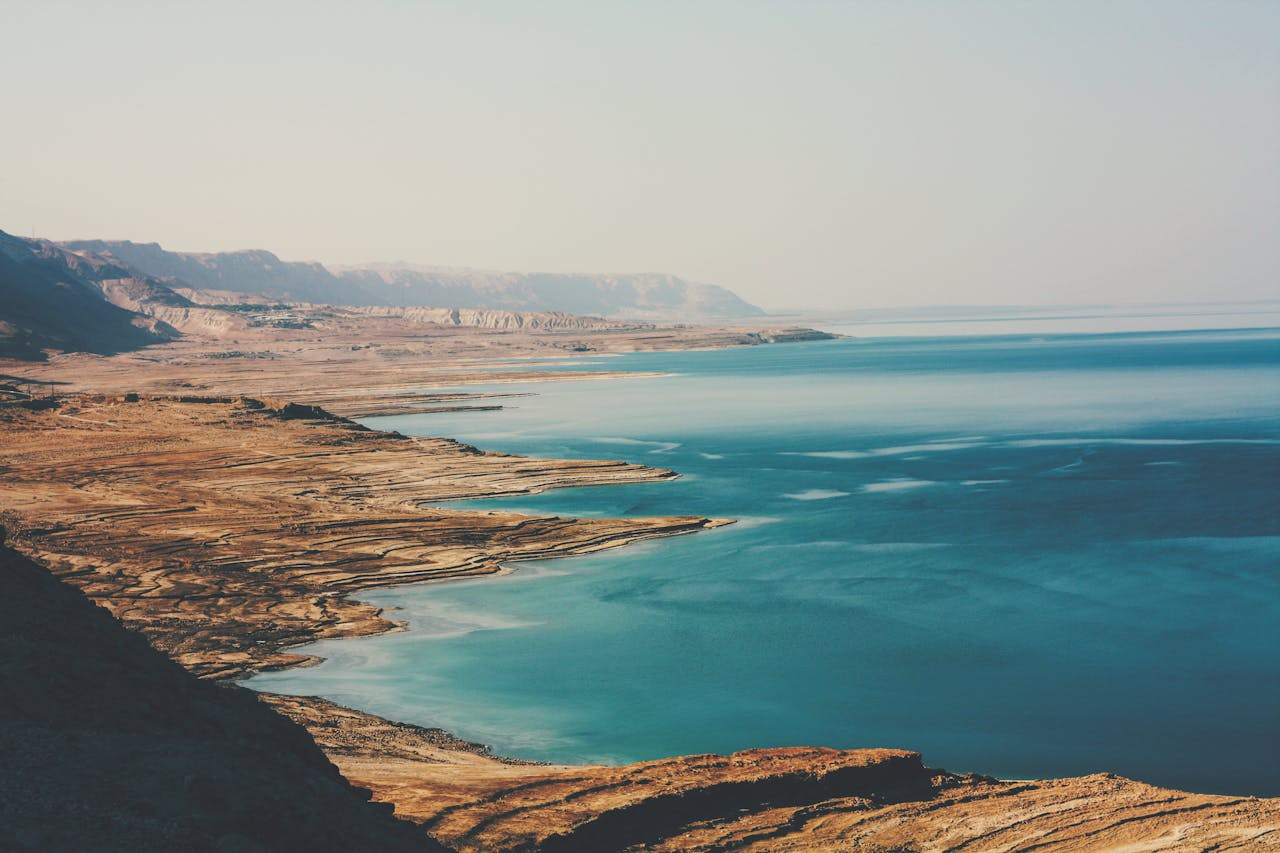
The Dead Sea (Arabic: البحر الميت, Al-Bahr al-Mayyit; Hebrew: ים המלח, Yam ha-Melah) is the lowest point on Earth's land surface at approximately 430 metres below sea level — a figure that has been increasing as the lake continues to shrink — and one of the most extraordinary natural bodies of water on the planet. Bordered by Jordan to the east and Israel and the Palestinian West Bank to the west, the Dead Sea is a terminal lake with no outflow, fed primarily by the Jordan River and numerous mineral springs but losing water only to evaporation. The result is a salinity of approximately 34% — ten times saltier than the ocean — combined with extraordinarily high concentrations of magnesium, calcium, potassium, and bromine chloride, creating water so dense (1.24 g/cm³ compared to 1.025 for ocean water) that the human body floats effortlessly at the surface with no swimming effort whatsoever. The lake's unique chemistry has been exploited for millennia for its reputed therapeutic properties, and the Jordan side hosts a cluster of resort hotels and spas along its eastern shore that make it one of the most accessible therapeutic natural destinations in the Middle East.
🌍 Geography and Ecosystem
- Salt Formations and Coastal Geology: The receding shoreline has exposed extraordinary salt formations — white salt crusts covering boulders, salt stalactites hanging from cliff overhangs above the water line, and salt pillars rising from the exposed lake bed. The most famous formation is the so-called 'Lot's Wife' salt pillar on the Israeli shore near Mount Sodom. The salt deposits on the Jordanian shore at Wadi Mujib delta are particularly spectacular after winter floods wash white crystalline salt across the dark basalt shoreline rocks.
- Wadi Mujib (Jordan's Grand Canyon): A spectacular river canyon that descends from the Moab plateau 900 metres above to the Dead Sea shore on the Jordanian side, with walls of sandstone and limestone reaching 1,000 metres. The Mujib Biosphere Reserve (covering 212 km² of the canyon and adjacent plateau) protects exceptional biodiversity along the permanent watercourse — ibex, wolf, caracal, and the threatened Nubian ibex. The canyon floor wading trail (Siq Trail) is one of Jordan's finest adventure activities.
- Lowest Point Marker: The Jordan side Dead Sea highway (Route 65) passes numerous 'lowest point on Earth' markers with the current elevation displayed. The most photographed is near the junction for the resort hotels, where a large sign displays the current sea-level reading — which decreases by approximately 1 metre per year due to water extraction from the Jordan River upstream.
- Mineral Springs at Hammamat Ma'in: Hot mineral springs 60 km south of Amman and 30 km from the Dead Sea shore, where sulphurous thermal water (40–63°C) cascades as waterfalls into pools. The springs are used since Roman times for their therapeutic properties and are accessible as a day trip combined with Dead Sea bathing — a 2,000-year-old Middle Eastern wellness circuit.
📜 History and Cultural Significance
The curative properties of Dead Sea water — particularly for psoriasis, eczema, and joint conditions — have been exploited since antiquity. Herod the Great maintained a therapeutic complex at Callirrhoe, on the eastern shore, for the treatment of his chronic skin conditions. Modern clinical studies have confirmed significant therapeutic benefit of Dead Sea mud and mineral exposure for several dermatological and musculoskeletal conditions, and the eastern shore is now a major medical tourism destination.
🏃 Activities and Attractions
- Floating in the Dead Sea: The defining experience — lying on your back in water of 1.24 g/cm³ density and finding it physically impossible to sink. The water's buoyancy is so extreme that reading a newspaper while floating is the iconic tourist pose. Important: the water must not enter eyes or mouth (the salinity causes intense stinging and temporary blindness). Shower immediately after bathing to prevent salt-skin interaction. Best done at the public beach or at a resort beach rather than unmanaged shore sections where the bottom is uneven.
- Dead Sea Mud Treatment: The black mineral-rich mud from the Dead Sea floor, available at all resort beaches in sealed packages, is applied to the skin, allowed to dry for 20 minutes, and washed off in the lake — a process reported to improve skin texture and psoriasis symptoms through the combination of mineral absorption and UV exposure (the 430-metre below sea level position means a thicker atmospheric column filtering high-frequency UV). Whether or not the claims are medically verified, the sensation is undeniably pleasant.
- Wadi Mujib Canyon Hike (Siq Trail): The Siq Trail in Mujib Biosphere Reserve involves wading waist-deep up the Mujib river gorge between 300-metre walls, swimming short sections, and climbing through waterfalls on fixed ropes. The trail (2–3 hours) is one of the finest adventure activities in Jordan and is completely unlike any other experience on the Dead Sea itinerary. Open April–October; advanced booking essential through the RSCN website.
- Sunset from the Karak Highway Viewpoint: The King's Highway between Madaba and Karak passes several viewpoints above the Dead Sea from the Moab plateau, 900 metres above the lake surface. The sunset view down the canyon walls to the sea — with the Judean Hills turning orange on the far shore — is one of the finest panoramic views in Jordan, entirely free and unmarked.
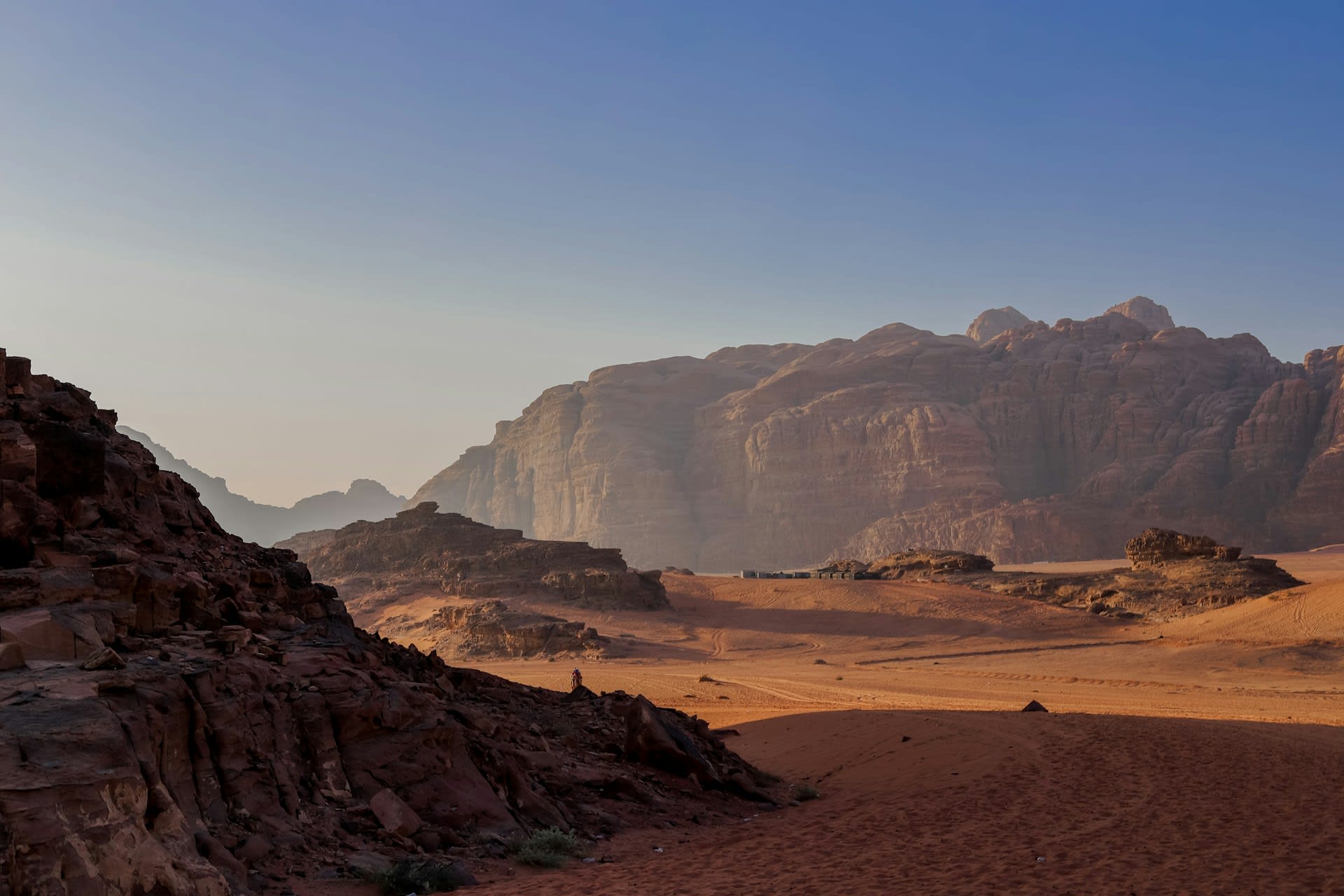
- Visiting Wadi Rum + Dead Sea Circuit: The classic south Jordan circuit combines Petra (the Nabataean rock city, 250 km south), Wadi Rum (90 km further south), and the Dead Sea resort (3 hours north of Petra) into a 4–5 day itinerary covering Jordan's three most significant natural and archaeological sites. The circuit is feasible by car or on guided tour from Amman.
💡 Travel Tips
Best Season: October–April for comfortable air temperatures (25–35°C). The summer months (June–September) see temperatures regularly exceeding 40°C — bathing is possible but outdoor exploration is very limited. March and October are ideal: warm enough for comfortable bathing, cool enough for canyon hiking in Wadi Mujib.
Beach Access: The Jordanian Dead Sea shoreline has limited free public beach access — most easily accessible swimming points are at the resort hotels (day entry approximately JOD 30–50 including towel and facilities, often including the mud treatment). The O Beach public beach in Sweimeh area is the most affordable option for independent travellers.
Safety: Open wounds, freshly shaved skin, and any facial cuts will sting intensely in Dead Sea water. Do not swim or splash — floating only. If water enters your eyes, flush immediately with fresh water (carried by all beach attendants). Wearing sandals into the water is advisable as the salt formations on the bottom can be sharp.
🌱 Conservation
The primary proposed solution — the Red Sea–Dead Sea Conveyance Project, which would pipe desalinated water from the Gulf of Aqaba to replenish the Dead Sea while providing fresh water to Jordan, Israel, and Palestine — has been under negotiation between the three countries since 2005. The project faces environmental objections (introducing Red Sea water with different chemistry may produce gypsification of the Dead Sea), political complications, and financing challenges. As of 2025, the project remains unsigned. Without intervention, scientists project the Dead Sea could disappear entirely within 150–200 years.