
Nusa Penida
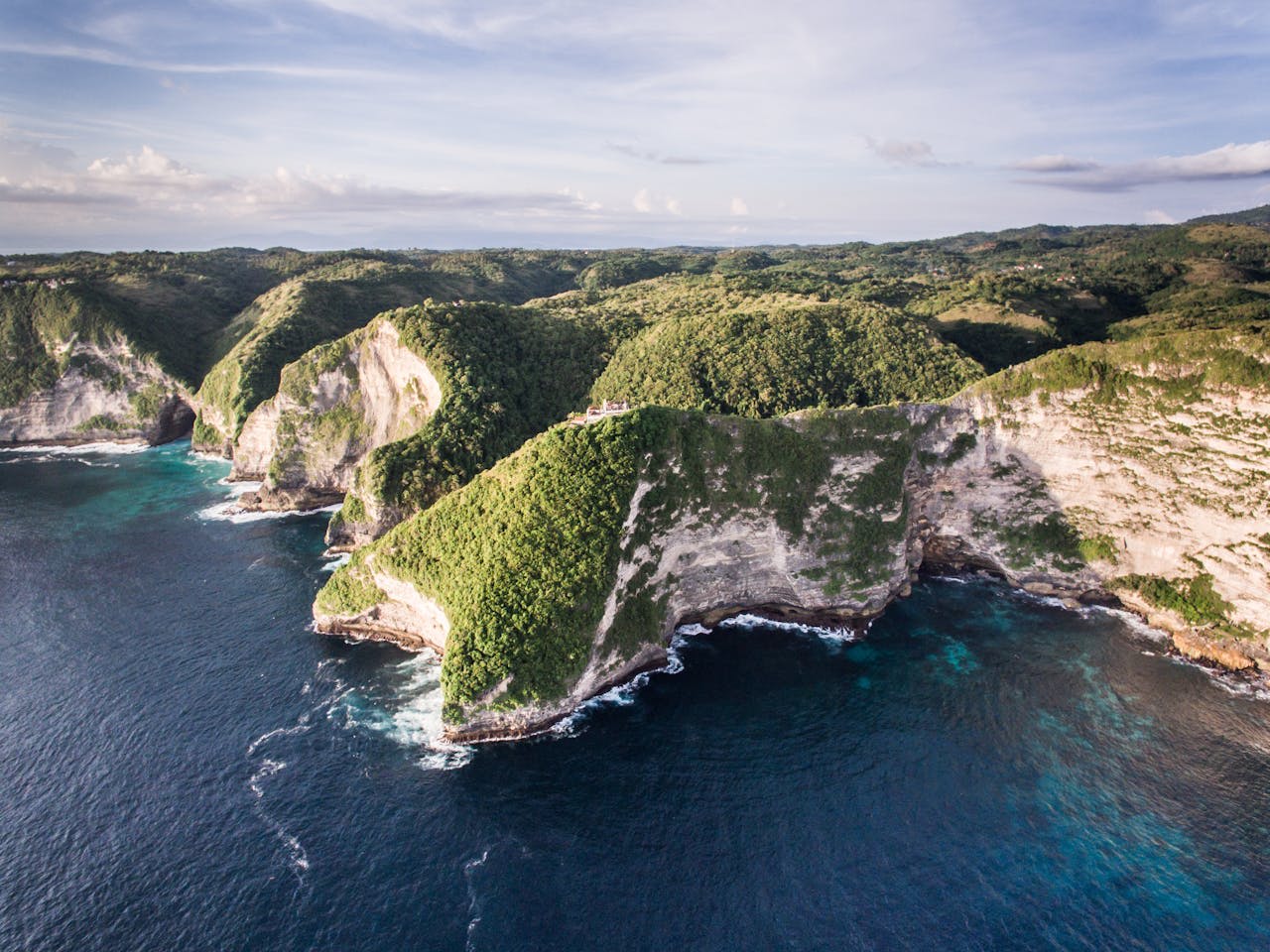
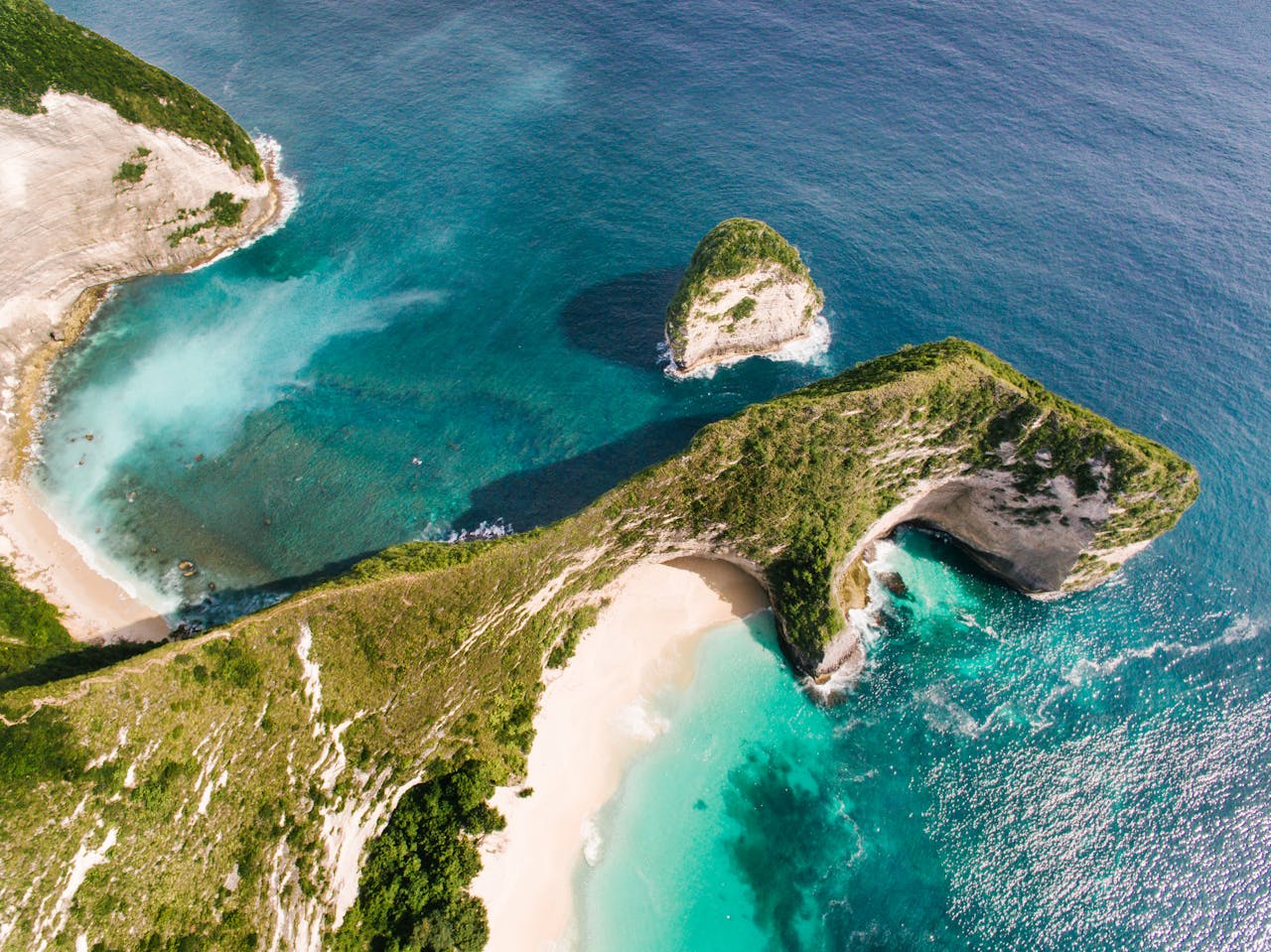
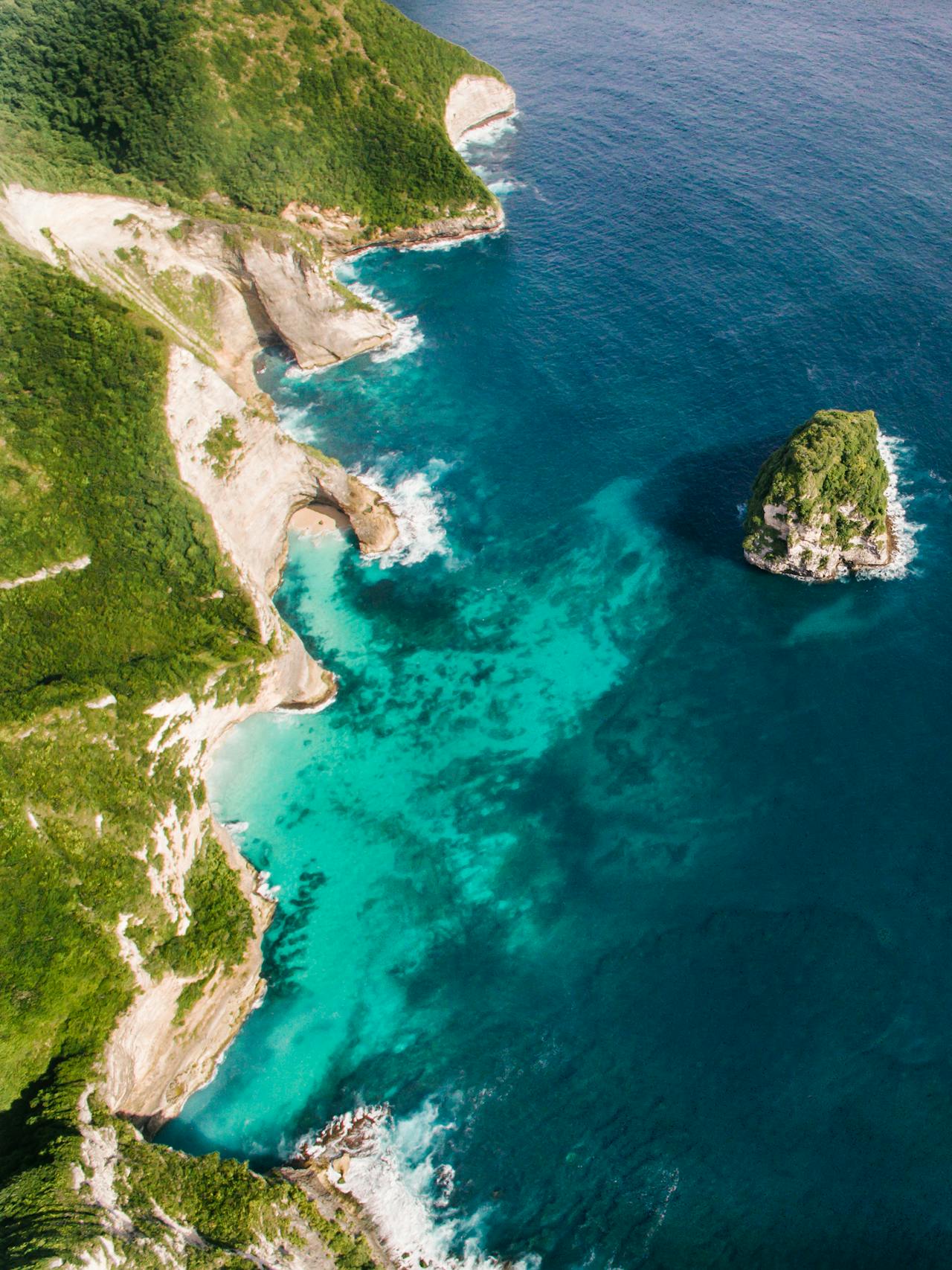
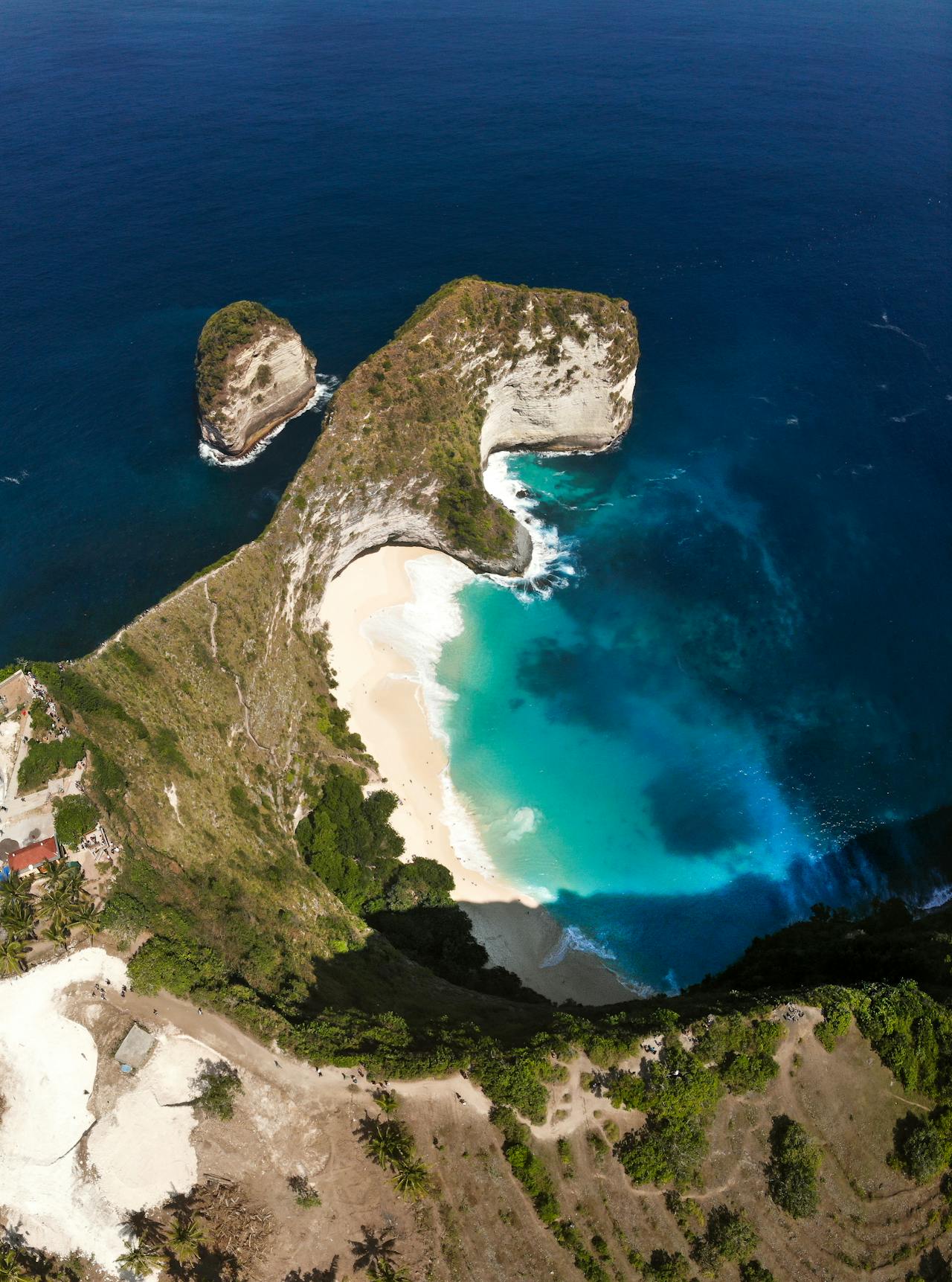
Nusa Penida is the largest (202 km²) of the three Nusa islands southeast of Bali, separated from the mainland by the Badung Strait — a deep oceanic channel where cold, nutrient-rich upwelling from the Indian Ocean meets the warm Bali Sea, creating the exceptional marine biodiversity that makes Nusa Penida one of Southeast Asia's premier diving destinations. The island's limestone plateau rises dramatically from the sea on its southern coast in vertical cliffs 50–100 metres high, with hidden beaches accessible only by steep stairways cut into the cliff face. Kelingking Beach — a cove sheltered by a headland shaped like a T-Rex dinosaur, photographed from above — has become one of Southeast Asia's most viral landscape images. Manta Point on the island's southwest coast is one of the world's most reliable and accessible locations to snorkel and dive with oceanic manta rays — individual mantas with wingspans exceeding 4 metres that visit the cleaning station regularly throughout the year. The island's interior remains largely undeveloped — a plateau of Hindu temples, dry scrubland, and villages that contrast sharply with Bali's tourist-saturated south.
🌍 Geography and Ecosystem
- Manta Point: A seamount off the southwest tip of Nusa Penida where oceanic manta rays (Mobula birostris) — classified as Vulnerable on the IUCN Red List — aggregate at a cleaning station serviced by wrasse and cleaner shrimp. Mantas with wingspans of 3–5 metres cruise in lazy circles while cleaner fish remove parasites. Snorkelling is permitted; the mantas approach within metres of stationary snorkellers. Morning visits (before 10:00) see the highest manta density. The site is also known for encounters with the rare oceanic sunfish (Mola mola) in July–October.
- Kelingking Beach: The island's most photographed site — a cliff-top viewpoint overlooking a beach accessible via a 45-minute vertical staircase descent to a cove of white sand and turquoise water, sheltered by the T-Rex headland. The beach itself is exposed to strong swell and swimming is often dangerous; the experience is primarily the descent, the cove, and the return climb. The cliff-top photograph looking down at the headland and the hidden beach is one of Southeast Asia's most recognisable landscape images.
- Angel's Billabong and Broken Beach: A natural rock-pool (Angel's Billabong) cut into the cliff edge at the western end of the island, accessible at low tide, where the ocean fills a pool of extraordinary clarity through a rock channel. Adjacent is Broken Beach (Pasih Uug) — a circular bay where the cliff arch has collapsed, creating a natural amphitheatre with an arch window through which the ocean churns. Both sites are accessible from the same carpark and walkable in 2 hours.
- Crystal Bay: The primary dive and snorkel site on the north coast — a sheltered bay with calm water and excellent coral and fish diversity. The bay is a reliable location for mola mola (ocean sunfish) encounters in July–October, when these 1,000 kg disc-shaped fish rise from deep water to be cleaned by cleaner wrasse at the reef. Mola mola encounters at Crystal Bay are among the most extraordinary fish experiences in Southeast Asia.
📜 History and Cultural Significance
Economically, Nusa Penida was historically a seaweed farming community — the clear waters of the Badung Strait being ideal for cultivating Eucheuma cottonii seaweed, harvested for carrageenan extraction used in food processing. Seaweed farming continues in the northern bays, coexisting with the tourism boom that has transformed the island since approximately 2015. Tourism arrived relatively recently — the fast boat connections from Sanur (Bali) that now carry 30,000+ tourists per month were established only in the 2010s. The speed of development has created infrastructure challenges on an island with limited fresh water, no developed sewage system, and roads initially designed for motorbikes now carrying large tourist buses.
🏃 Activities and Attractions
- Manta Ray Snorkelling at Manta Point: A boat tour from Nusa Penida's north coast to Manta Point takes 20–30 minutes. Guides position the boat upstream of the cleaning station and snorkellers slide quietly into the water. Oceanic mantas — filtering plankton with their cephalic fins as they glide in slow circles — are reliably encountered April–October; December–February sees fewer individuals. Being surrounded by multiple mantas at close range in clear open water is one of Southeast Asia's definitive wildlife experiences.
- Diving Crystal Bay and Mola Mola Season: Crystal Bay diving during the July–October mola mola season offers one of the world's strangest and most memorable fish encounters — the ocean sunfish, as large as a small car and shaped like a swimming head with no body, rising to the reef to be serviced by cleaner wrasse. The dive requires attention to strong currents and cold thermoclines; diving with a local guide familiar with Crystal Bay's current patterns is essential.
- West Coast Cliffs and Beaches Tour: A scooter or driver tour of the western cliff coast — Kelingking Beach, Angel's Billabong, Broken Beach, and Suwehan Beach — covers the island's most dramatic scenery in a full day. Distances between sites are short (all within 15 km) but the roads are steep and rutted in places; a scooter requires confidence on rough roads or hire a local driver. Early start (pre-07:00) reaches Kelingking before the tour boat crowds arrive.
- Diamond Beach and Atuh Beach: The east coast of Nusa Penida has two exceptional cliff-access beaches — Diamond Beach and Atuh Beach — accessible by steep staircases from the plateau above. Both beaches are sheltered, sand-floored, and framed by extraordinary karst rock formations rising from the water. Swimming is generally calmer here than the exposed south coast. The combination of both beaches in a half-day is one of the island's finest experiences.
- Pura Dalem Penataran Ped Pilgrimage: The most important temple on the island, set in a banyan grove on the north coast near Ped village, is a living centre of Balinese Hindu practice visited continuously by pilgrims. Non-Hindu visitors can observe ceremonies and the temple complex with appropriate dress (sarong, provided at the entrance). The temple's spiritual energy — the presence of Jero Gede Macaling's power — is palpable in the atmosphere of the complex and its setting.
💡 Travel Tips
Best Season: April–October (dry season) for the best visibility for snorkelling and diving, most reliable mola mola sightings (July–October), and highest manta ray density at Manta Point. November–March brings rain, reduced visibility, and stronger swells on the south coast cliff beaches. Water temperature is 22–27°C year-round. July–August is peak season — Kelingking Beach queues can be extreme; arrive before 08:00.
Accommodation: Nusa Penida's accommodation is concentrated in Toyapakeh and Crystal Bay (north coast), with a growing number of cliff-view villas on the west coast near Kelingking. Accommodation quality ranges from simple guesthouses to boutique resorts. Staying overnight allows access to sunset and sunrise viewpoints at Kelingking and Diamond Beach without the day-tripper crowds that dominate 08:00–15:00.
🌱 Conservation
The primary conservation threats are the rapid and largely unregulated growth of tourism — the island received approximately 2 million visitors in 2019 compared to around 100,000 in 2013. Plastic waste disposal, construction on cliff-edge sites, and the sheer volume of visitors at Kelingking and Manta Point are creating cumulative impacts that the island's infrastructure is not equipped to manage. The Nusa Penida Marine Sanctuary ranger patrol has insufficient resources to enforce anchoring restrictions on the hundreds of daily boat trips. Several conservation NGOs including the Coral Triangle Center are working on plastic reduction and coral transplantation programmes, but the pace of tourism growth is outrunning conservation capacity.


