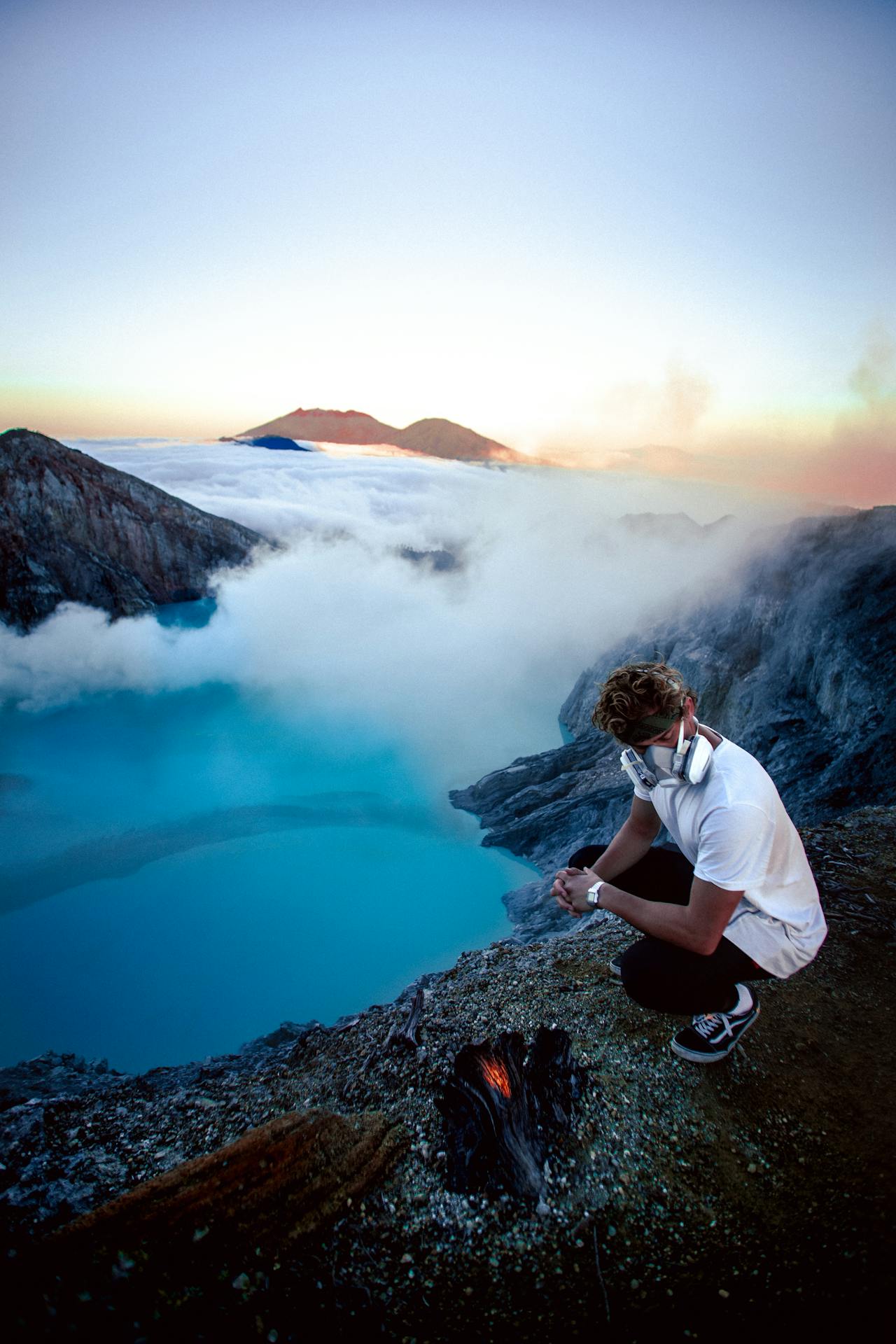
Kawah Ijen
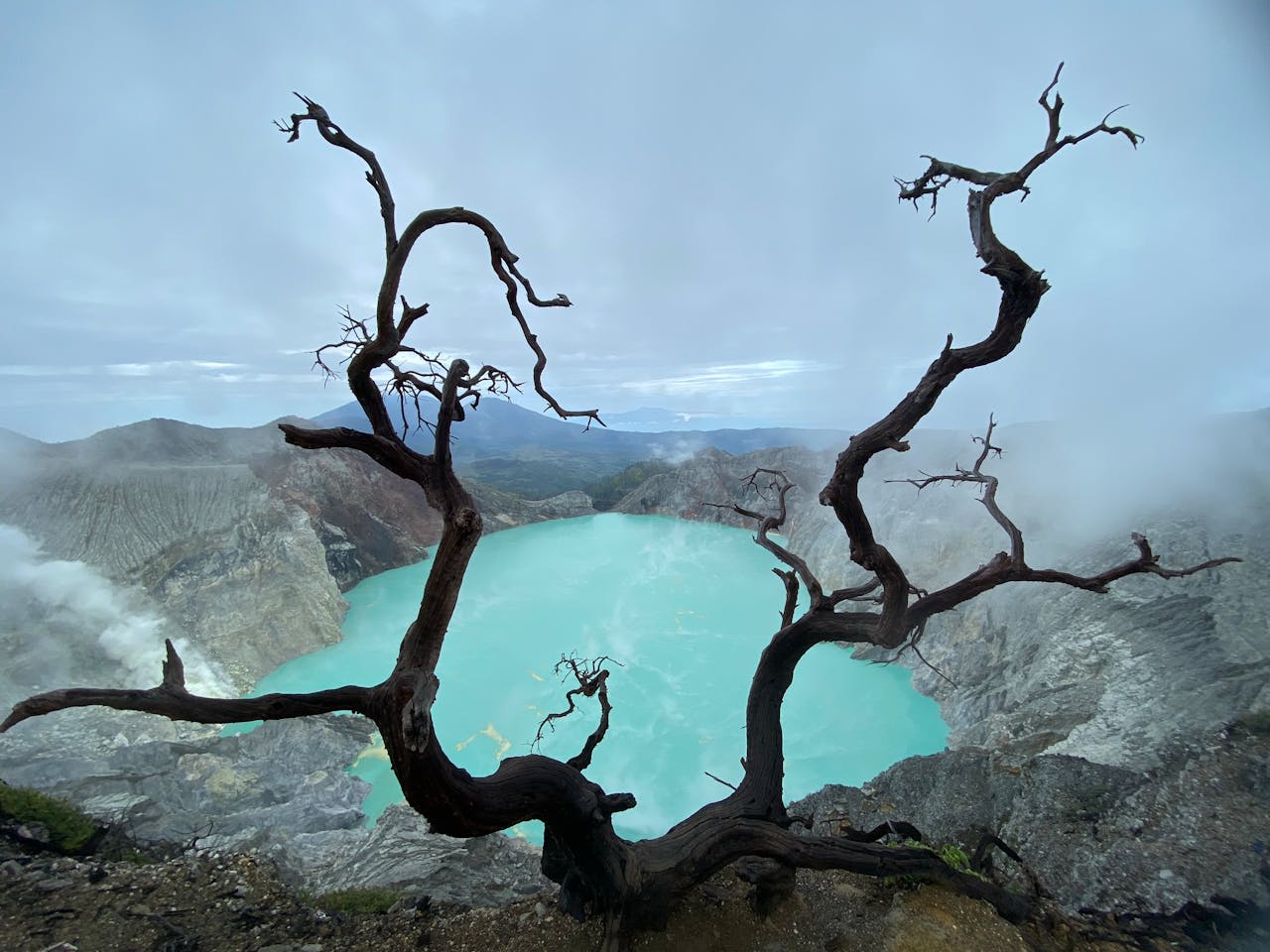
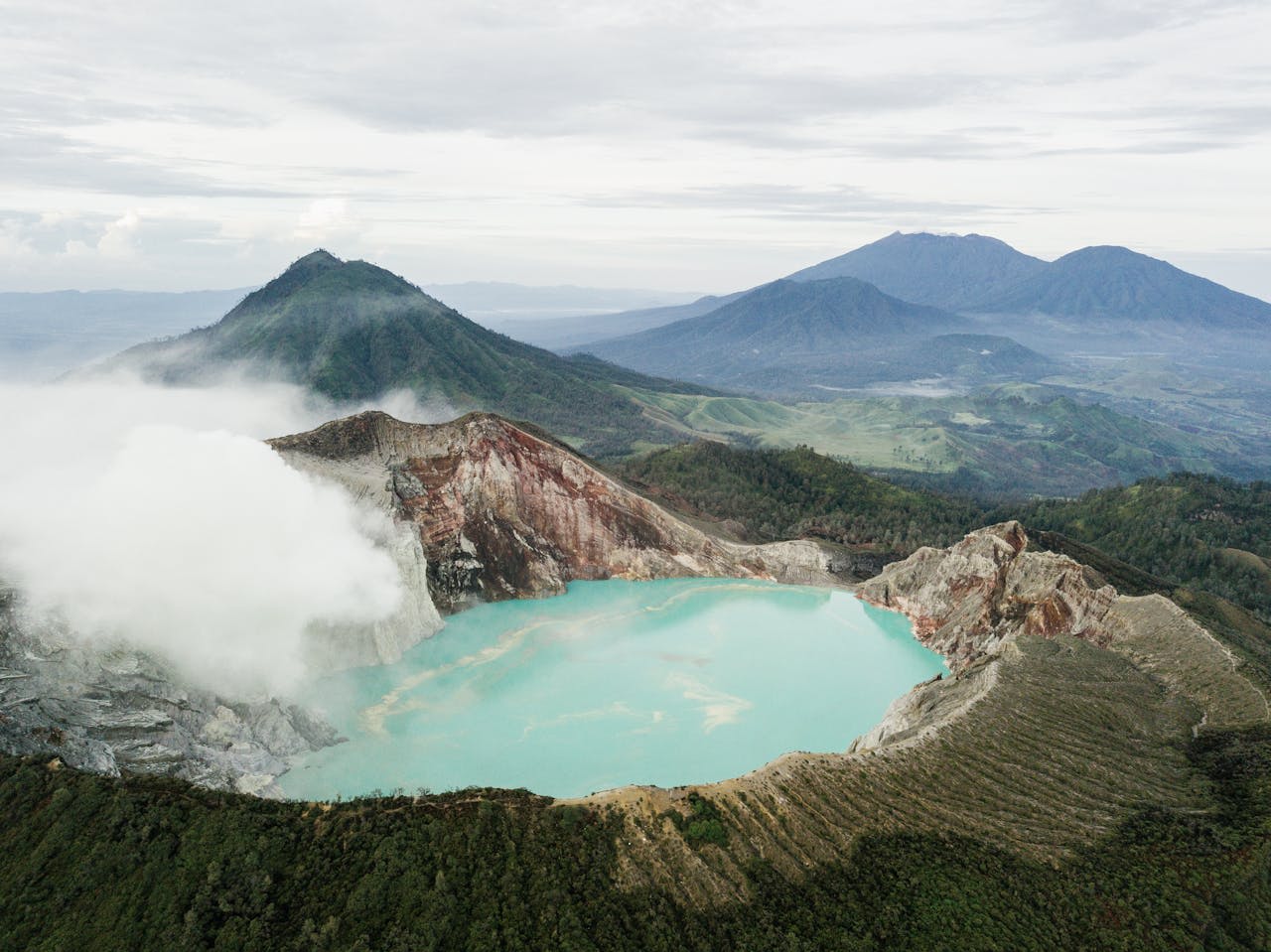
Kawah Ijen (literally 'Ijen Crater') is an active stratovolcano in the Banyuwangi Regency of East Java, Indonesia, part of the Ijen volcanic complex — a massif of six overlapping volcanoes sharing a single ancient caldera. The crater of Kawah Ijen contains the world's largest highly acidic crater lake — Kawah (the Indonesian word for crater) — at approximately 960 metres by 600 metres, with a pH approaching zero and a temperature of 60°C, making it one of the most corrosive bodies of water on Earth. At the lake's edge, sulfuric gases escape through fumaroles and combust in contact with the oxygen-rich air to produce an extraordinary phenomenon: flames of pure electric blue, the colour of combusting sulfur dioxide, burning at temperatures of 600°C and visible only at night or in pre-dawn darkness. The blue flames are Kawah Ijen's defining spectacle — visible only between midnight and sunrise before the daylight renders them invisible against the sky. The sight of blue fire cascading down a volcanic vent in a lake of ghostly cyan acid is among the most surreal natural phenomena visible anywhere on Earth.
🌍 Geography and Ecosystem
- The Blue Flames (Api Biru): The electric-blue sulfuric flames are produced when hydrogen sulfide gas escaping from fumaroles at the lake edge ignites in contact with atmospheric oxygen. The flames burn at 600°C and the molten sulfur they produce flows as a burning liquid down the vent channels into the lake, where it solidifies as yellow sulfur. Visibility requires arriving at the crater between 00:00 and 04:00 — the phenomenon is invisible in daylight. Photography requires a tripod and ISO sensitivity above 3200. Gas masks are essential in the crater; the sulfur dioxide concentration can cause respiratory damage within minutes of unprotected exposure.
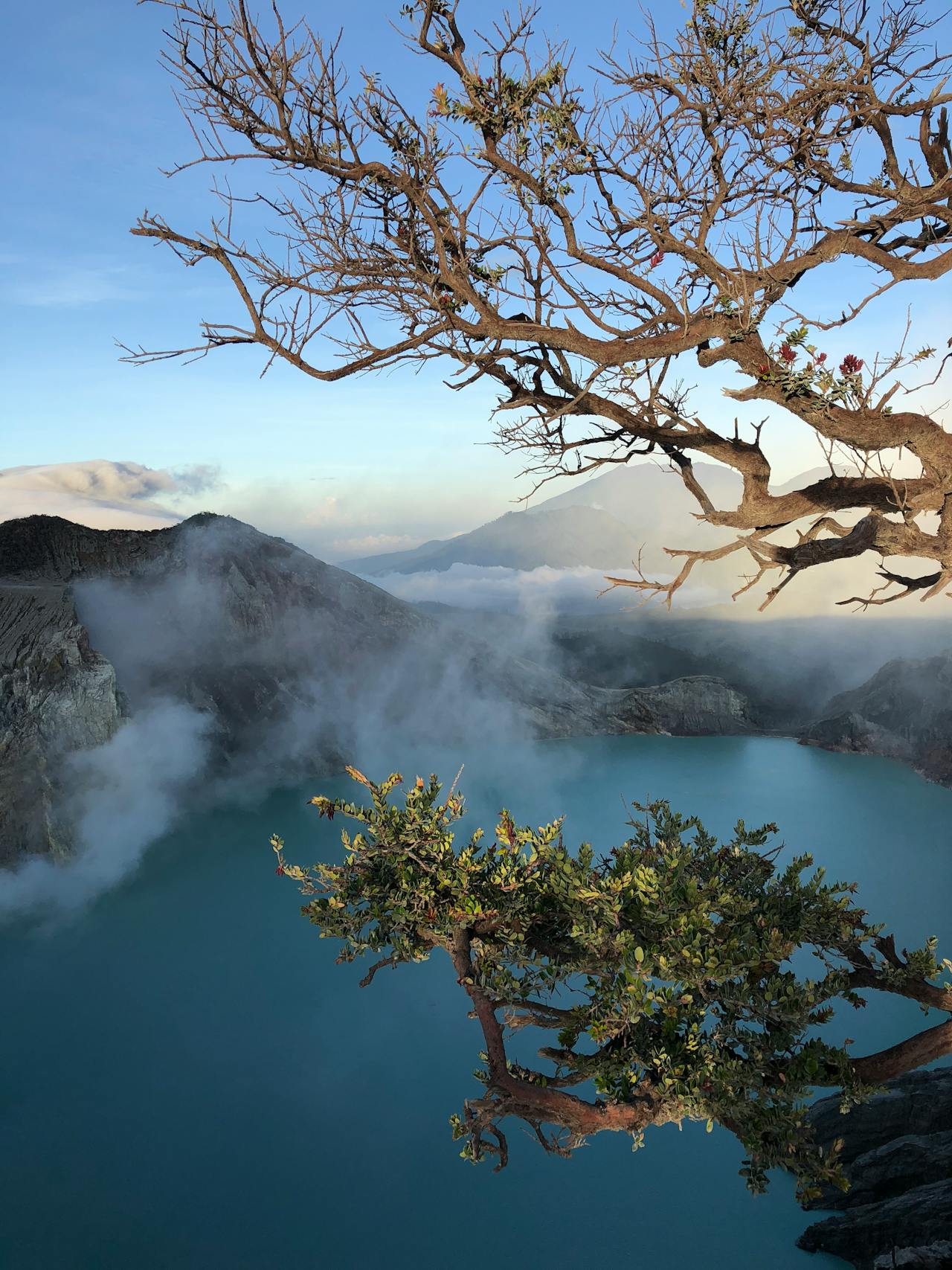
- The Crater Lake: The turquoise-cyan colour of the Kawah Ijen lake — seen at dawn as the light reaches the crater floor — is produced by the suspension of elemental sulfur particles in the hyper-acidic water. The lake is one of the world's most chemically extreme environments, with a pH of 0.5 and dissolved sulfuric acid concentration sufficient to dissolve metals. The lake overflows periodically during high-rainfall periods, releasing acidic water into the Banyupahit River downstream — killing fish and damaging agricultural irrigation for tens of kilometres.
- Ijen Coffee Plantation: The outer slopes of the Ijen massif below the crater rim are covered by one of Indonesia's highest-altitude coffee plantations — the volcanic soil and cool temperatures at 900–1,400 m produce the Ijen Arabica coffee, regarded as among Java's finest. Plantation tours visiting the processing facilities and tasting the coffee grown literally on a volcano are available from Bondowoso, and the plantation road provides the primary access route to the crater trailhead at Paltuding.
- Banyuwangi Wildlife: The Ijen Plateau is flanked by Alas Purwo National Park (to the south) and Baluran National Park (to the north) — two coastal lowland parks protecting mangrove, dry monsoon forest, and savanna. Baluran is known as 'Africa van Java' for its open savanna grassland with banteng cattle, deer, peacocks, and the occasional wild dog. Combined with the Ijen crater visit, a Banyuwangi itinerary can include both highland volcanic and lowland wildlife experiences in two days.
📜 History and Cultural Significance
The miners have become internationally documented subjects — their labour, their makeshift gas mask respirators (often simply a cloth or nothing), and their yellow sulfur-encrusted work environment have been photographed by documentary photographers from around the world since the 1990s. The Kawah Ijen sulfur miners are one of the most frequently referenced examples of dangerous informal labour in the developing world and have attracted significant NGO interest in health and safety improvement programmes. Despite the conditions, mining provides income in one of Java's less developed rural areas, and many miners are second or third-generation workers who have worked the crater their entire adult lives.
🏃 Activities and Attractions
- Blue Flame Night Hike: Departing from Paltuding trailhead at midnight, the 3 km crater hike (750 m vertical gain) takes 1.5–2 hours and reaches the crater rim before descending into the crater itself to the lake edge and fumarole vents. Gas masks are compulsory and available for hire at the trailhead. In the crater at 02:00–03:00, the blue flames are at maximum visibility — cascading blue fire running down the black vent channels into the glowing lake. Sulfur miners work simultaneously through the night; the combination of the flames, the miners' headlamps, and the sulfur steam is visually overwhelming.
- Crater Lake at Sunrise: Staying in the crater through the pre-dawn darkness to watch the turquoise lake emerge from the sulfur mist as the sky lightens is one of Southeast Asia's most extraordinary dawn experiences. The lake colour — cyan-turquoise against the yellow sulfur deposits and grey crater walls — is only fully visible in the first direct sunlight after 05:30. Photographers typically spend 3–4 hours in the crater from midnight to after sunrise.
- Watching the Sulfur Miners: The miners' presence in the crater contextualises the landscape completely differently from any conventional national park experience — the combination of a hellish volcanic environment with human labour operating in conditions of obvious physical danger creates a documentary dimension that is ethically complex and visually extraordinary. Most visitors interact with miners respectfully; purchasing solidified sulfur figures (made as tourist items by the miners) provides direct supplementary income. Tipping miners is common and appreciated.
- Ijen Plateau Coffee Tour: A daytime activity to balance the night hike — guided tour of the Arabica coffee plantation on the Ijen slopes, including harvesting demonstration (during September–November harvest season), wet processing at the mill, and tasting of the volcanic-soil coffee. The plantation road passes through tropical forest with Java's endemic birds including the emerald dove and Javan kingfisher.
- Bali-Banyuwangi Ferry Connection: Kawah Ijen sits 70 km from Ketapang ferry port — the connection point between East Java and Bali. Most itineraries combine Kawah Ijen with Bali by taking the 45-minute ferry crossing: overnight Bali to Banyuwangi, night hike at Ijen, then return to Bali or continue overland through Java. The crossing is quick and inexpensive, making the combination a very efficient use of 2–3 travel days.
💡 Travel Tips
Best Season: May–October (dry season) for the clearest crater views and most stable weather. The dry season also means calmer crater lake conditions with less overspill. November–April (rainy season) increases cloud cover in the crater, reducing visibility of both the blue flames and the lake. However, the trail remains open year-round — wet season visitors should budget for the possibility of mist in the crater obscuring the flame views. Visit on weekdays to avoid the weekend crowds from Surabaya and Bali.
Safety: Gas masks are mandatory — do not attempt the crater descent without one. The volcanic gases (SO₂, H₂S) at the fumarole area cause rapid respiratory damage without protection. Stay on the marked trail near the lake — the crater floor is unstable in places and the lake water is fatally acidic. If a volcanic tremor is felt or sirens sound, evacuate the crater immediately via the trail to the rim. The volcano is monitored by PVMBG (Indonesian volcanological agency) and the trail is closed during elevated alert periods.
🌱 Conservation
The explosion in tourism since approximately 2015 has created additional pressure — the trail to the crater rim, previously used primarily by miners, now carries several hundred tourists per night on busy weekends. Litter management, trail erosion, and the unregulated hiring of unofficial guides are persistent management challenges. The national park authority has introduced a ticketing and guide registration system to manage visitor numbers and ensure safety compliance, but enforcement remains inconsistent. The blue fire phenomenon is unchanged by tourism — the volcanic chemistry that produces it operates independently of human activity on the surface above.


