


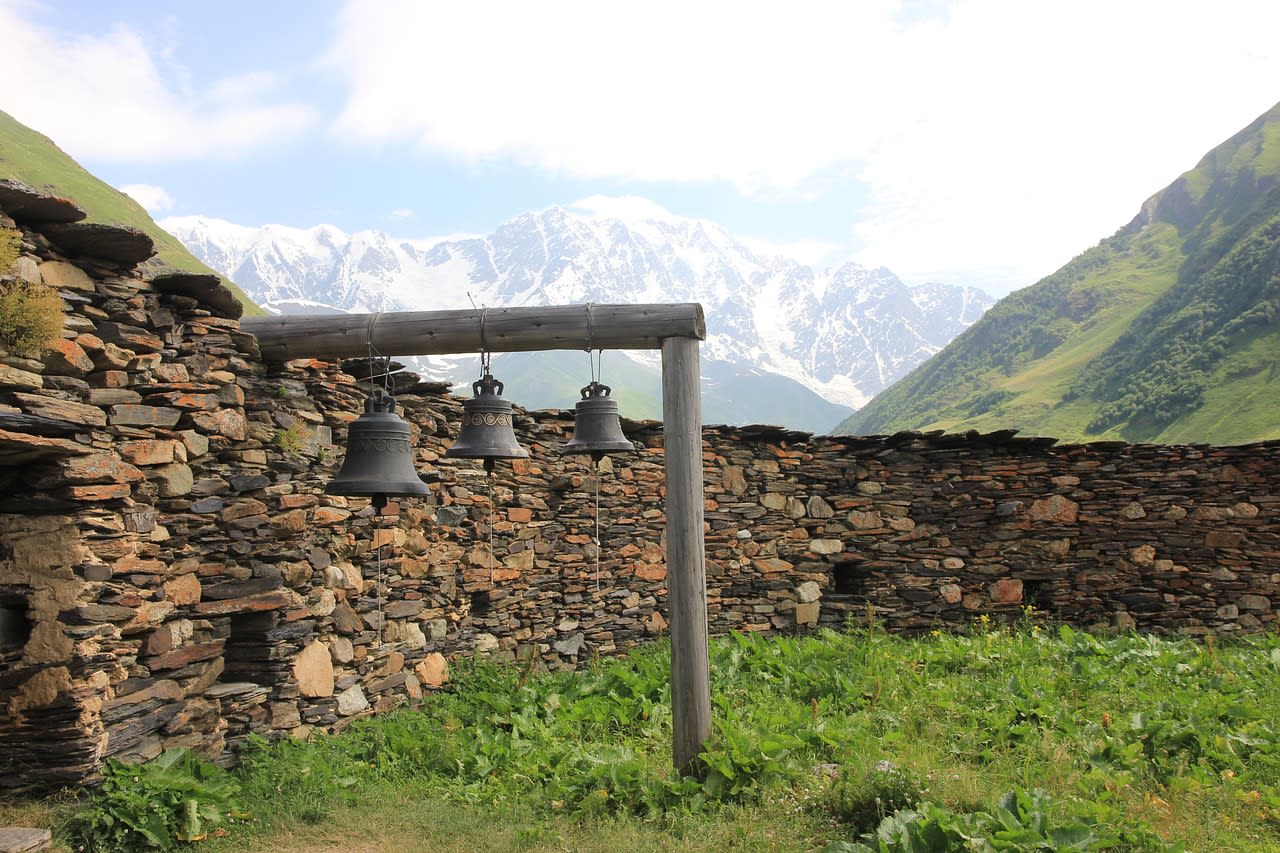

Svaneti
Svaneti (Georgian: სვანეთი) is the highest-altitude inhabited region in Georgia and one of the most spectacularly isolated highland cultures in the world — a series of ancient villages above 2,000 metres in the upper Enguri river valley and its tributaries, hemmed in by the Greater Caucasus Mountains, which here reach their highest points anywhere in Georgia: Shkhara (5,193 m), Tetnuldi (4,858 m), and Ushba (4,710 m, considered the most technically challenging Caucasian summit). The defining visual character of Svaneti is the Svan watchtower (koshki) — square stone towers 20–25 metres tall, built between the 9th and 13th centuries as both defensive refuges and symbols of family status, of which approximately 175 survive in the region, primarily in the villages of Mestia and Ushguli. The historic villages of Upper Svaneti were inscribed as a UNESCO World Heritage Site in 1996 for their outstanding combination of medieval architecture and mountain landscape.
🌍 Geography and Ecosystem
- Ushguli Village Complex: Four hamlets at 2,200 metres altitude at the head of the Enguri valley, constituting one of the highest permanently inhabited settlements in Europe. The village cluster is dominated by ancient Svan watchtowers (over 20 intact examples) and is surrounded on three sides by the glaciated flanks of Mount Shkhara. Accessible only by rough mountain road or 2-day trek from Mestia; the road to Ushguli is impassable in heavy snow (approximately November–April).
- Chalaadi Glacier Trek: A 3-hour return hike from Mestia through forest and moraine to the snout of the Chalaadi glacier — one of the most accessible glacier approaches in the Caucasus. The glacier has retreated approximately 1.5 km since 1960, and the contrast between the current ice margin and the eroded moraine of the former extent provides a visceral illustration of climate-driven glacier change.
- Mestia Town and Svan Towers: The main town of Upper Svaneti (population approximately 2,500), located at 1,440 metres, retains a forest of original Svan watchtowers in its older quarters. The Svaneti Museum of History and Ethnography holds a remarkable collection of medieval Georgian icons, manuscripts, and liturgical objects — many evacuated to Svaneti from lowland Georgia during Mongol and Ottoman invasions — including 9th–14th century enamel triptychs and illuminated Gospels of outstanding quality.
- Koruldi Lakes Alpine Trek: A 6–7 hour hike from Mestia to three high-altitude lakes at 2,850 metres on the ridge above the town, with views of Ushba (4,710 m), Tetnuldi (4,858 m), and the entire Svaneti valley system. The most popular multi-day alpine route in Svaneti involves camping at the lakes with all peaks visible at dawn before descent to Mestia. The trekking season runs from late June to early October.
📜 History and Cultural Significance
The Svan towers were built primarily between the 9th and 13th centuries as a response to the twin threats of blood feuding between families and external invasion — each tower provided a refuge for an entire family and could be defended from the arrow loops near the top. The tradition of blood vengeance (likhimde) among Svan families created a social equilibrium of deterrence in which the tower served as both refuge and statement. The towers fell out of defensive use as blood feuding declined in the Soviet period but their maintenance remained a matter of family honour. Today, approximately 175 of an original estimated 600–700 towers survive, many in poor structural condition requiring urgent restoration.
🏃 Activities and Attractions
- Mestia to Ushguli Trek (4 Days): The classic multi-day trek in Svaneti — a 45-km route through four major passes reaching up to 2,700 metres, passing glaciers, high-altitude villages, and alpine meadows between the two main Svaneti settlements. Mountain huts and village guesthouses provide overnight accommodation. This trek is consistently ranked among the top 10 mountain treks in Europe. Guide and porter hire available in Mestia.
- Koruldi Lakes Day Hike: The finest single-day hike from Mestia — 6–7 hours to the three lakes at 2,850 metres with views of four 4,000+ metre peaks. A steep but well-tracked ascent through birch forest and rhododendron scrub to open alpine meadow. The descent via the ridge to the west provides different perspectives on the Svaneti valley. A classic acclimatisation route before attempting higher passes.
- Svaneti Museum: The museum in Mestia holds one of the most extraordinary collections of medieval Georgian art outside Tbilisi — 9th–14th century enamel triptychs, illuminated manuscripts on vellum, bronze ceremonial vessels, and Orthodox icons painted on wooden panels that survived only because the mountains made them inaccessible to invaders. Entry by small fee; guided interpretation available in Georgian, Russian, and English.
- Ski Touring and Heli-Skiing: The Tetnuldi ski resort above Mestia, developed from 2015, provides formal downhill skiing on glacial terrain with lifts reaching 3,165 metres. The backcountry and ski touring potential of the Svaneti ridges is exceptional — unguided slopes above 3,500 metres with vertical drops of 2,000+ metres and access to multiple glacier cirques. Heli-skiing operations depart from Mestia in January–March.
- Attending a Svan Feast (Supri): Svan hospitality centres on the supri — a communal feast with multiple courses of local food (Svan salt-seasoned meats, khachapuri bread, bean stews) and rounds of the local mulberry vodka (chacha) with toasts led by a tamada (toastmaster). Staying in a family guesthouse and being invited to a family supri or a community feast is the deepest access to living Svan culture available to visitors.
💡 Travel Tips
Best Season: June–September for trekking and all activities. July–August for reliable weather and full guesthouse availability. Late September–early October for autumn colour and emptier trails. The Ushguli road is typically passable May–November only; the mountain passes on multi-day treks close by late October. Winter (December–April) for skiing at Tetnuldi but limited trekking options.
Accommodation: Mestia has a growing number of guesthouses and small hotels — book in advance for July–August. Along the Mestia–Ushguli trek, community guesthouses in Zhabeshi, Adishi, and Iprali provide basic but warm accommodation with full board. Ushguli has a handful of guesthouses; staying overnight allows the morning light on Shkhara before day-trippers arrive.
Safety: Mountain weather changes rapidly in the Caucasus — carry waterproof layers and additional warm clothing on all treks. The high passes on the Mestia–Ushguli route (up to 2,716 m) should not be crossed in thunderstorm conditions. Mobile phone coverage is available in Mestia and Ushguli but absent on the trail between them.
🌱 Conservation
The Svan towers themselves face a structural conservation crisis: many are cracked, leaning, or missing significant sections of their upper stonework, and restoration requires specialist skills in dry-stone masonry that are becoming rare even in Svaneti. The Georgian National Agency for Cultural Heritage Preservation has launched a tower restoration programme funded partly by EU grants and partly by Georgian state funds, but the number of towers requiring work exceeds available resources. The glaciers above Svaneti are retreating rapidly — the Lekhziri glacier has lost approximately 1 km of length since 1960 — and the resulting changes in water supply timing and volume are already affecting the alpine meadow irrigation systems that support traditional highland agriculture.
