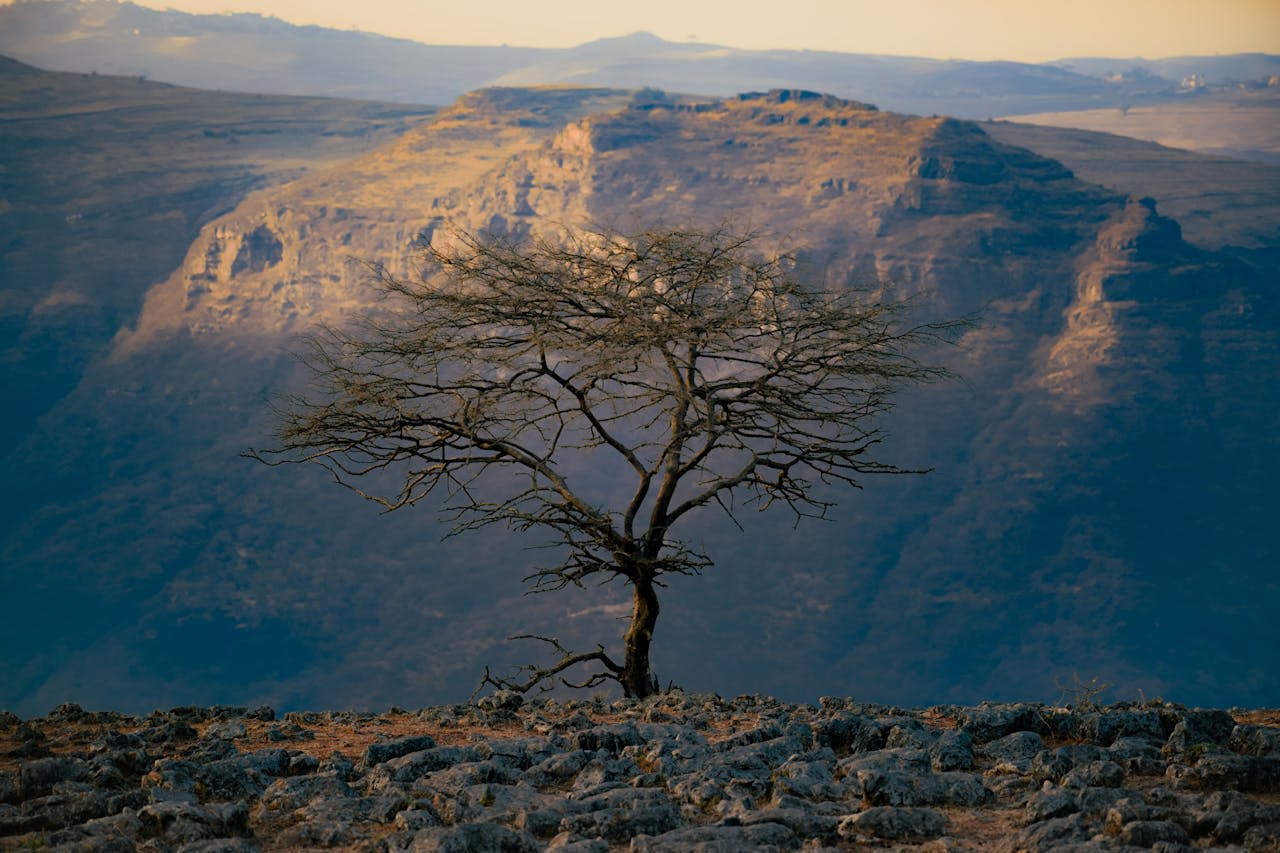
Simien Mountains
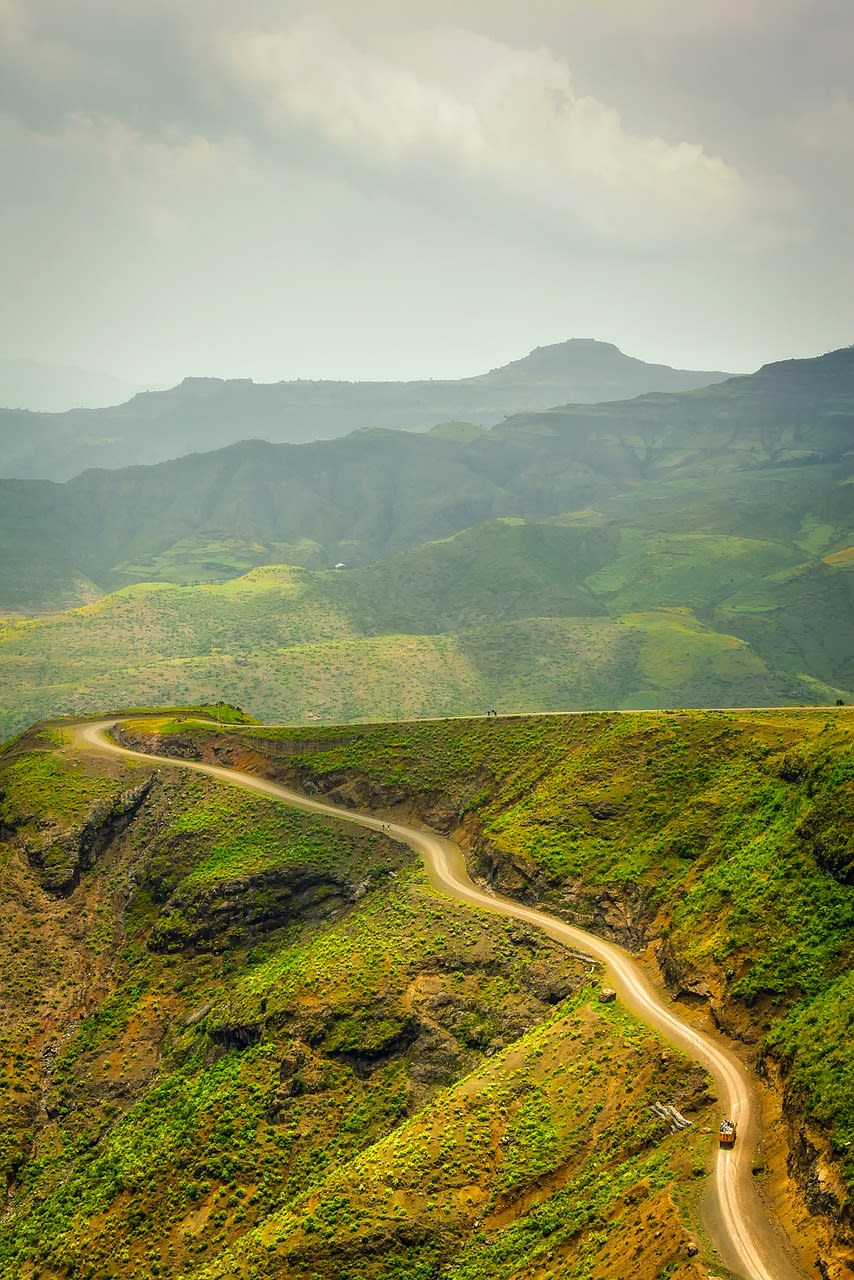
The Simien Mountains National Park is a UNESCO World Heritage Site (1978, one of the first four UNESCO sites in Ethiopia) protecting a highland massif of extraordinary geological and biological significance in the Gondar Zone of northern Ethiopia, rising to 4,550 metres at Ras Dashen — the highest point in Ethiopia and the tenth-highest peak in Africa. The landscape is defined by the dramatic erosion of the Ethiopian plateau basalts: the flat highland surface has been dissected by rivers cutting progressively deeper into the Precambrian basement, creating escarpments of 1,000–1,500 metres that fall nearly vertically from the plateau edge to the valleys below, with isolated peaks (ambas) rising as towers above the general plateau level. The park protects globally critical populations of three endemic large mammals: the Gelada baboon (Theropithecus gelada, found only in Ethiopia and the world's only truly grass-eating primate), the Ethiopian wolf (Canis simensis, the rarest canid in the world with only ~450 individuals remaining), and the Walia ibex (Capra walie, endemic to the Simien escarpments with only approximately 600 individuals).
🌍 Geography and Ecosystem
- Imet Gogo Viewpoint (3,926 m): The most dramatic escarpment viewpoint in the Simien Mountains — a platform of rock projecting over the escarpment edge with a 1,000-metre drop to the valley below and views stretching 60+ km on clear days. The viewpoint is typically reached on the second day of the standard 4-day Simien trekking route. Gelada baboon groups of 200–600 individuals frequently graze within 20 metres of the viewpoint.
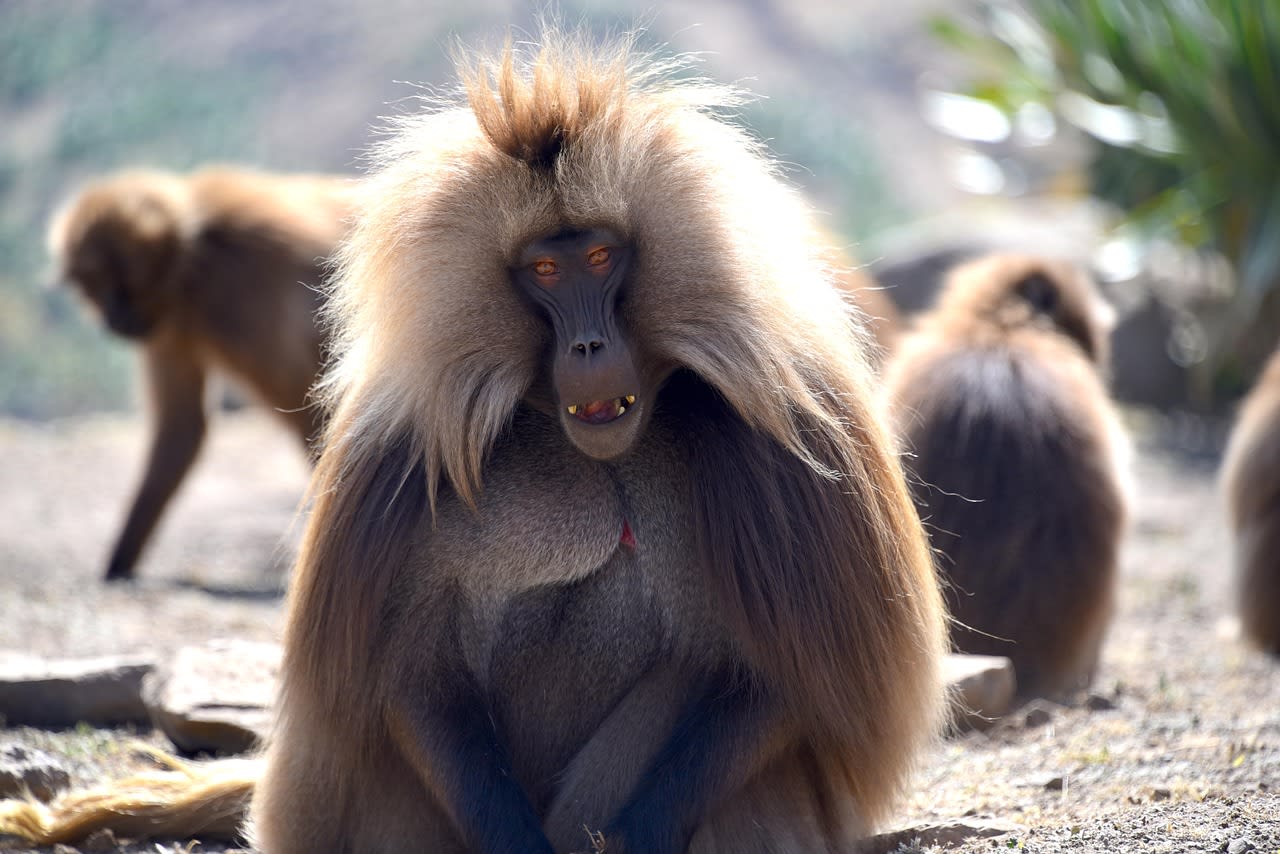
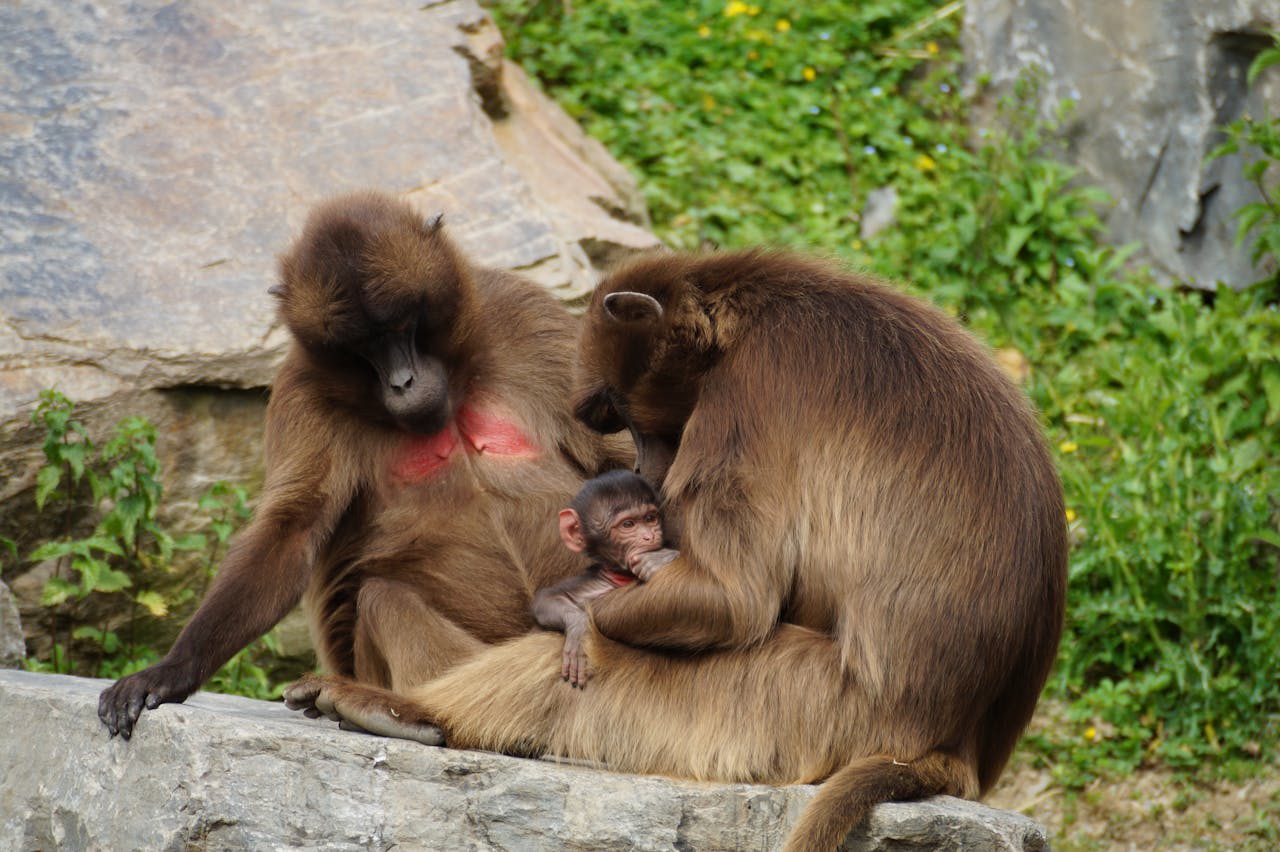
- Gelada Baboon Herds: The Simien Mountains host approximately 9,000 Gelada baboons — the largest population of this Ethiopian endemic primate and the most accessible location worldwide for Gelada observation. Groups of 200–600 individuals spend most daylight hours on the plateau, moving slowly through the grassland in a continuous social operation of foraging, grooming, and vocalisation. The male Gelada's distinctive red chest patch is used for display; the collective 'hum' vocalisations of a large Gelada herd are one of the most extraordinary wildlife sounds in Africa.
- Ras Dashen Summit (4,550 m): Ethiopia's highest point, reached by a 3-day ascent from the Chenek camp area. The final summit day crosses high-altitude Afroalpine desert landscape of rock and giant lobelia, with views on clear days to Lake Tana 100 km to the southwest. The ascent requires no technical climbing but demands good physical condition and acclimatisation — altitude sickness is a real risk for visitors arriving directly from Addis Ababa (2,355 m).
- Ethiopian Wolf Habitat: The Afroalpine zone above 3,600 metres is the primary habitat of the Ethiopian wolf (Canis simensis) — the world's rarest canid, with only approximately 450 individuals remaining in fragmented populations across the Ethiopian highlands. The Simien Mountains hold one of the largest wolf populations. The wolves are diurnal and prey primarily on Afroalpine rodents (Ethiopian Highland hare, Starck's hare, and various mole rats), often ignoring the Gelada herds around them. Dawn and dusk are the optimal viewing times on the plateau above Chenek.
📜 History and Cultural Significance
The park was inscribed on the UNESCO World Heritage List in 1978 — one of the first four original World Heritage Sites in Africa — primarily for the endemic wildlife and the extraordinary Afroalpine landscape. It was placed on the UNESCO World Heritage in Danger list in 1996 due to population encroachment and agricultural conversion within the park boundaries, and remained there until 2017, when it was removed following measurable improvement in park management and the expansion of the park boundaries to 412 km². The management improvements resulted from a sustained collaboration between the Ethiopian Wildlife Conservation Authority, the Frankfurt Zoological Society, and the African Wildlife Foundation.
🏃 Activities and Attractions
- 4-Day Classic Trek (Sankaber–Chenek): The standard introduction to the Simien Mountains — 4 days covering the most dramatic escarpment sections, including the Imet Gogo viewpoint, Gich plateau, and Chenek camp with daily Gelada encounters and possible Ethiopian wolf sightings. Mandatory park scout (park ranger) accompanies all groups; optional mule hire for luggage. Camping at designated sites with basic facilities. This is one of Africa's finest short mountain treks.
- Ras Dashen Summit Extension (7–9 days): Extending the classic trek to reach the Ras Dashen summit adds 3–5 days to the itinerary, traversing increasingly wild terrain above the standard tourist circuit into genuinely remote highland wilderness. The summit approach crosses the highest Afroalpine zone with giant lobelias, high-altitude heathers, and the characteristic silence of 4,000+ metres. Guide and mule logistics essential for the extended route.
- Gelada Baboon Trekking: The early morning encounter with a large Gelada herd on the plateau above Chenek is one of Africa's finest primate experiences — not because the animals are habituated to tourist attention (they largely ignore humans) but because the sheer scale of the social group, the extraordinary vocalisations, and the opportunity to observe complex social behaviour at close range is unlike any other primate encounter on the continent. Many visitors consider this equal to or exceeding a gorilla tracking experience.
- Bird Watching: The Simien Mountains are one of Ethiopia's premier birding destinations, with 21 species endemic to Ethiopia and Eritrea recorded in the park. Key species: thick-billed raven (the world's largest raven), blue-winged goose (endemic to Ethiopia), spot-breasted plover, Rüppell's black chat, and the extraordinary lammergeier (bearded vulture) which regularly soars above the escarpments in thermal updrafts.
- Gondar Town and Fasil Ghebbi: The historic city of Gondar (75 km south of the park entrance) contains the Fasil Ghebbi royal enclosure — a UNESCO World Heritage Site of six 17th–18th century castles and ceremonial buildings of extraordinary architectural character, blending Portuguese, Indian, and Aksumite influences. A Simien Mountains trek combined with 1–2 days in Gondar provides one of Ethiopia's finest combined natural and cultural itineraries.
💡 Travel Tips
Best Season: October–March for clear skies, good visibility, and dry trails. The dry season (November–January) provides the finest trekking conditions with minimal rain, clear escarpment views, and cooler temperatures (3–15°C on the plateau). April–June is a shoulder season with occasional rain but good wildlife activity. Avoid July–September (rainy season) when trails are muddy, views obscured, and some camps inaccessible.
Altitude: The plateau is at 3,200–3,900 metres — genuine altitude that requires acclimatisation. Spend 1–2 days in Addis Ababa (2,355 m) before flying to Gondar (2,133 m) and then ascending to the park. Ascend slowly on day 1 of the trek. Diamox (acetazolamide) is worth considering for the Ras Dashen extension. Most altitude sickness cases resolve with a day at lower elevation.
Park Requirements: All trekkers must be accompanied by a park scout (mandatory, approximately ETB 400/day) and must camp at designated sites. Mule hire (approximately ETB 300/mule/day) is optional but strongly recommended for multi-day treks with camping equipment. Entry fee approximately USD 30 per person per day. Guide hire in Debark through the Community-Based Tourism Association provides income to local families.
🌱 Conservation
The park management continues to balance the interests of approximately 16,000 people who live within or adjacent to the park boundaries with the requirements of strict nature protection. Community benefit-sharing from tourism fees — scouts are employed exclusively from local communities, mule hire is managed by local cooperatives, and campsite maintenance contracts are awarded locally — provides the economic incentive for community support of conservation. The UNESCO monitoring process, which includes a periodic State of Conservation review, maintains international attention on the park's management quality and has been a significant factor in sustaining government investment in the park.