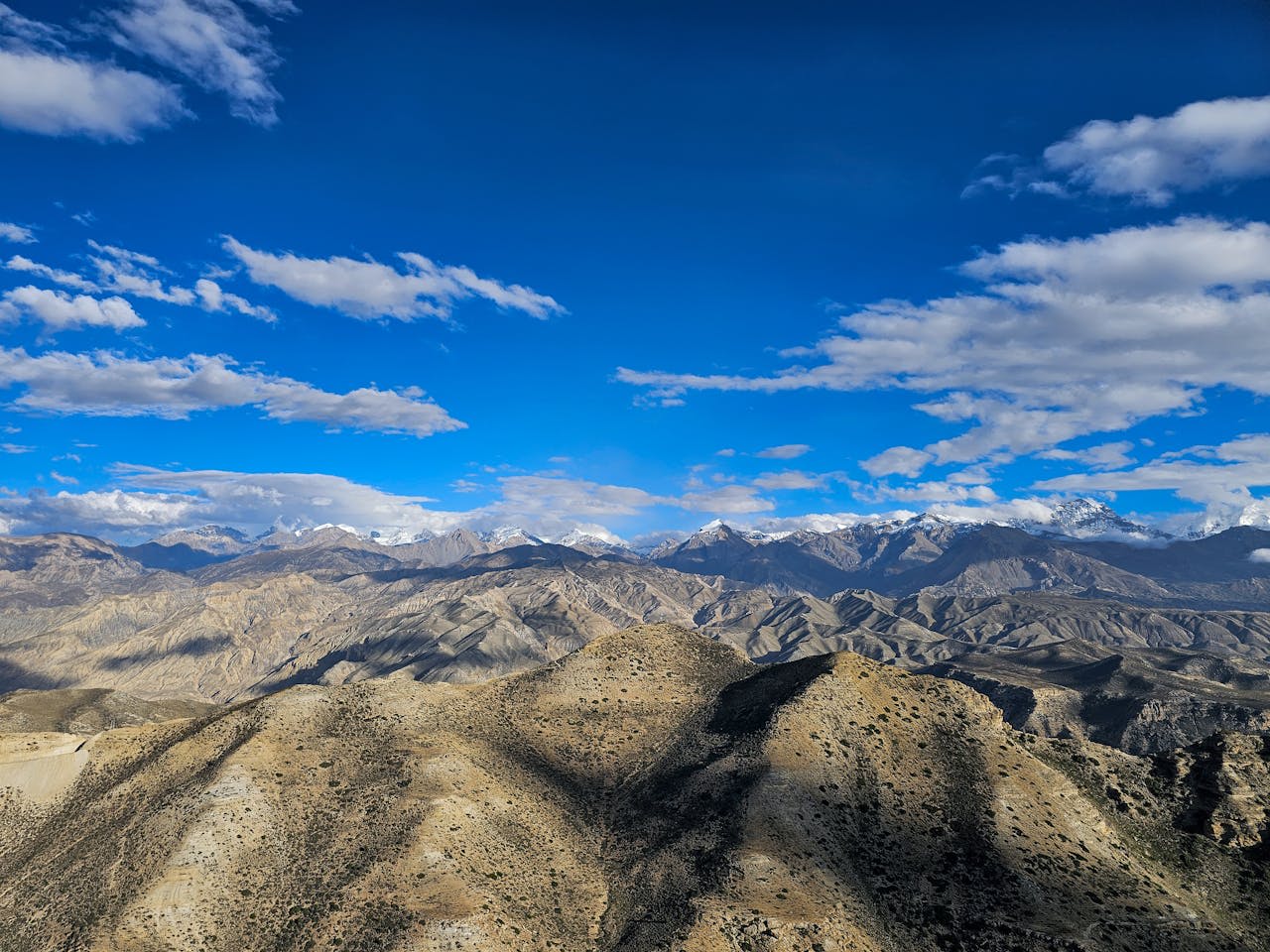
Mustang Region
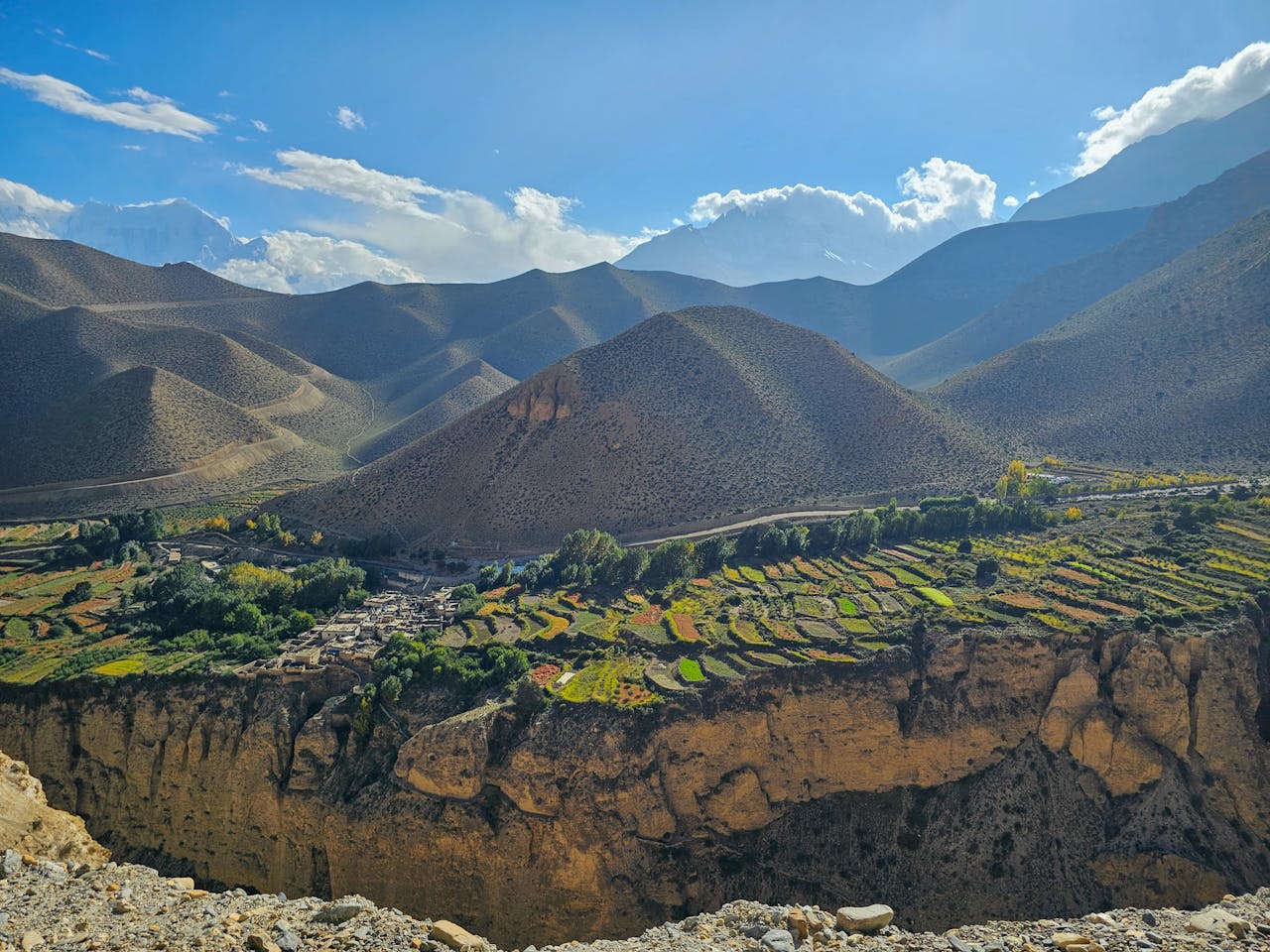
The Mustang Region is a high-altitude district of Gandaki Province, northwestern Nepal — a restricted area occupying the upper Kali Gandaki gorge valley system in the rain shadow of the Annapurna (8,091 m) and Dhaulagiri (8,167 m) massifs. Upper Mustang (Lo) was an independent Tibetan Buddhist kingdom — the Kingdom of Lo — that maintained its autonomy until formally incorporated into Nepal in 1795 and continued to exist as a semi-autonomous monarchy until the abolition of Nepal's feudal system in 2008. The landscape is extraordinary: at 3,500–4,500 m elevation, the Mustang plateau receives almost no monsoon rainfall (the Himalaya blocks the monsoon cloud systems), creating an arid, high-altitude desert of sculpted red and ochre eroded canyons, cave cities (thousands of ancient habitations and monastic chambers carved into the cliff faces, some 3,000–5,000 years old), and Tibetan Buddhist architecture — monasteries, chortens (stupas), and the walled medieval city of Lo Manthang — in a landscape visually similar to the Tibetan Plateau but entirely within Nepal. The region was closed to foreigners until 1992, when limited access (requiring a special restricted area permit, currently USD 500 for 10 days) was permitted.
🌍 Geography and Ecosystem
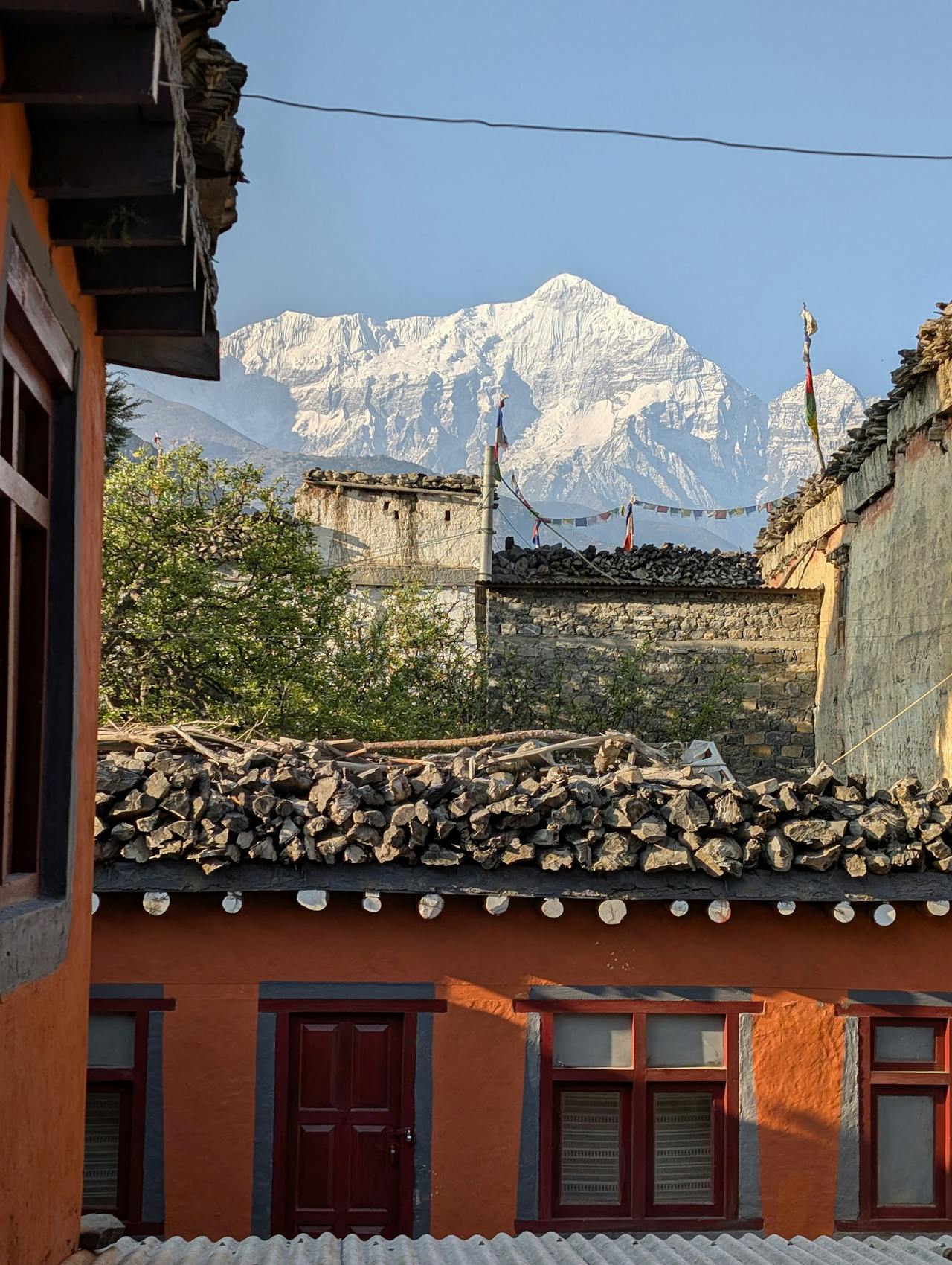
- Lo Manthang (Walled City): The walled city of Lo Manthang — the ancient capital of the Kingdom of Lo — is a completely intact medieval walled settlement at 3,840 m, its white clay walls enclosing approximately 170 households plus the royal palace of the Lo-Gyalpo (King of Lo), four major temples, and the monastery complexes that preserve some of the finest 15th–16th century Tibetan Buddhist murals surviving anywhere in the world. The frescoes in the Jampa Lhakhang and Thubchen Gompa — detailed depictions of Buddhist cosmology and deity cycles in brilliant mineral pigments — are in a remarkable state of preservation due to the extreme dryness of the Mustang climate.
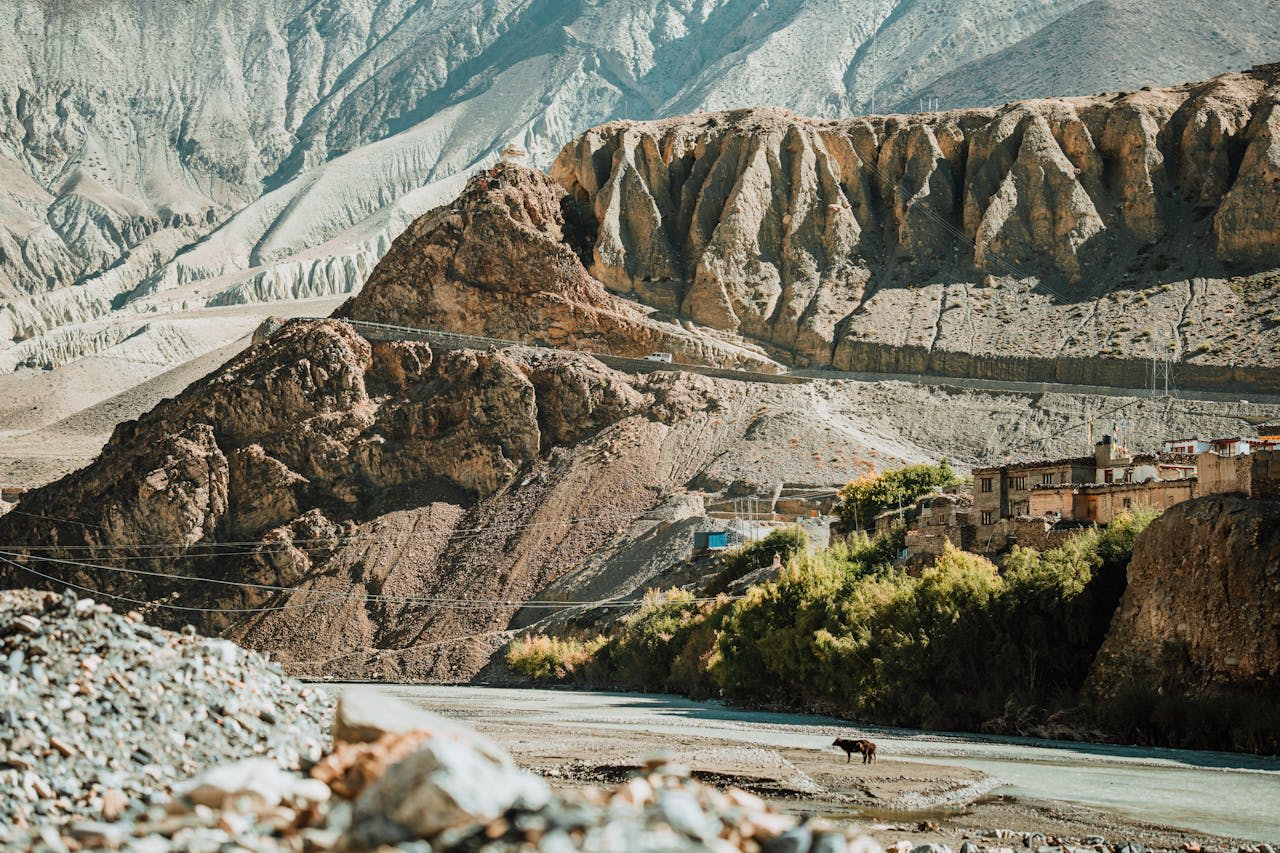
- Cave Cities: The Mustang plateau is honeycombed with ancient caves — thousands of openings in the eroded cliff faces that were used as habitations, grain stores, meditation chambers, and monastic retreats from at least 3,000 years ago. The most significant are the Samsara Cave Cluster near Chhoser (approximately 10,000 caves in a single cliff system) and the Nyphu Gompa caves near Ghami. Some caves at higher cliff levels contain sky burial platforms and human remains dating to the early Iron Age — inaccessible without technical climbing equipment and visible only from the valley floor below. A 2014 archaeological expedition discovered mummies, manuscripts, and ritual objects in sealed upper-level cave chambers.
- Kali Gandaki Fossil Fields: The Kali Gandaki riverbed in the Mustang section contains abundant ammonite fossils (shaligram) — spiral marine fossils from the Jurassic period (160–175 million years old) representing ancient sea creatures preserved when the Himalayan sea (Tethys Ocean) closed as India collided with Asia. The shaligram stones are sacred in Hinduism as a form of Vishnu and are collected by pilgrims and traders throughout the Kali Gandaki valley. The presence of ocean fossils at 3,500 m altitude is a visceral demonstration of the Himalayan orogeny.
- Mustang Landscape and Erosion: The Mustang landscape is defined by the ongoing erosion of the sedimentary plateau — wind, occasional rain, and freeze-thaw action creating an ever-changing landscape of mushroom rocks, eroded pinnacles, natural arches, and layered canyon walls in shades of red, ochre, yellow, and grey. The colours are at their most intense in the low-angled light of early morning and late afternoon — the combination of the colour palette, the medieval white-walled settlements, and the snow peaks visible above the plateau edge is unlike any other landscape in South Asia.
📜 History and Cultural Significance
The Kingdom of Lo was founded by the Tibetan warrior Ame Pal in 1380 — the royal dynasty he established continued in direct succession for 630 years until 2008. The kingdom produced a Tibetan Buddhist cultural tradition of extraordinary richness: the 15th-century murals in Lo Manthang's temples were commissioned by Lo royalty at the height of Tibetan art, and the monastery libraries contain manuscripts and texts that may represent the last surviving copies of certain Tibetan Buddhist canonical works. The Tiji Festival — the three-day annual celebration of the defeat of a demon threatening the Lo kingdom, held in Lo Manthang in May — is the most spectacular living Buddhist festival in Nepal, with costumed masked dances performed by monks on the central courtyard of Lo Manthang over three days.
🏃 Activities and Attractions
- Lo Manthang Exploration: The walled city is the centrepiece of any Upper Mustang visit — two to three days allow thorough exploration of the temples, the royal palace (open for guided visits), the monastery complex of Lo Gekar (one of the oldest gompas in Nepal), and the surrounding canyon landscape. Dawn light on the white walls and the view from the plateau edge above the city (10-minute walk) delivers the full Mustang landscape with the Himalayan snow peaks behind. The Tiji Festival (typically May) is the finest time to be in Lo Manthang if logistics align.
- Upper Mustang Trek (Lo Manthang Circuit): The standard trekking route enters Mustang from Jomsom (accessible by flight from Pokhara) and follows the Kali Gandaki north through Kagbeni, Chele, Ghami, and Charang to Lo Manthang — 5–7 days of walking through increasingly dramatic canyon scenery, with overnight in guesthouses at each village. The return can vary via the Naar-Phu Valley route to Manang for a more remote circuit. The Restricted Area Permit (USD 500 for 10 days; USD 50/day after 10 days) is the primary barrier — trekkers must use a licensed trekking agency and guide, which typically arranges all permits.
- Muktinath Temple: The Muktinath temple complex at 3,710 m — at the southern entrance to Mustang and accessible without a restricted area permit — is one of the most sacred Hindu and Buddhist pilgrimage sites in the Himalaya. A flame fed by natural gas emerging from a spring burns continuously within the temple enclosure, creating the unusual combination of water and fire sacred to both traditions. The temple complex is surrounded by 108 water spouts (sacred to both Hinduism and Buddhism) and receives Hindu pilgrims from India and Buddhist pilgrims from Tibet and Nepal simultaneously.
- Jeep Safari and Photography: For visitors who want to reach Lo Manthang without extended trekking, a jeep route (completed 2014) now connects Kagbeni to Lo Manthang via a rough mountain track, negotiable in 4WD vehicles in 7–9 hours. The jeep route is significantly less comfortable than trekking and misses the incremental landscape experience of the walking route, but provides access to Lo Manthang for visitors with limited time or reduced mobility. The light quality and landscape photography in Mustang (orange canyon, white settlements, blue sky, snow peaks) is exceptional in all seasons but optimal in the clear post-monsoon period (October–November).
💡 Travel Tips
Best Season: March–June (spring) and September–November (post-monsoon autumn) are the main trekking seasons. The Tiji Festival in May is a major draw for cultural tourism. The Mustang plateau receives almost no monsoon rain, making June–August accessible (unlike most of Nepal) but hot and dusty in the lower valleys. Winter (December–February) is cold (-20°C at night at elevation) but clear and virtually crowd-free — the landscapes under snow with the white walled city are exceptional for photography.
Accommodation: Simple teahouses and guesthouses operate along the trekking route in all main villages. Lo Manthang has several small guesthouses with basic facilities. Electricity is limited (solar) and hot showers scarce. Bring all medications, snacks, and personal items from Pokhara — resupply in Upper Mustang is very limited.
🌱 Conservation
The primary conservation challenge is the declining vitality of the traditional culture itself: as road access and motorisation replace the salt trade and yak caravanning that sustained the Mustang economy for centuries, and as younger generations migrate to Kathmandu and Pokhara for education and employment, the villages along the Kali Gandaki are depopulating. Several villages south of Lo Manthang have been largely abandoned in the past 20 years. The monastery murals in Lo Manthang — fragile, ancient, and irreplaceable — are conserved through an ongoing programme supported by the American Himalayan Foundation, which has funded professional conservation of the Thubchen and Jampa Lhakhang frescoes. Climate change is affecting the region through reduced snowfall, which threatens the cold-adapted ecosystem of the plateau and the water sources that villages depend on.