Lake Como
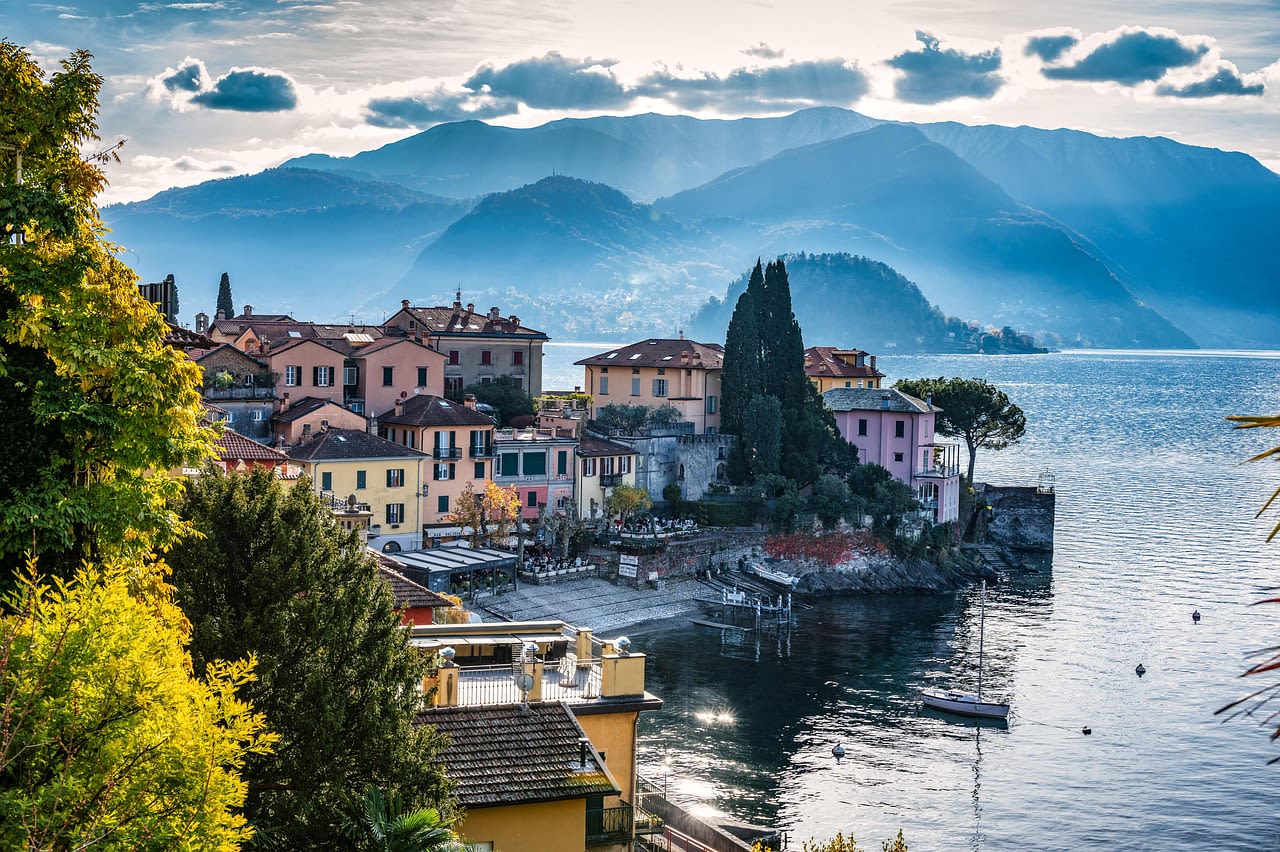
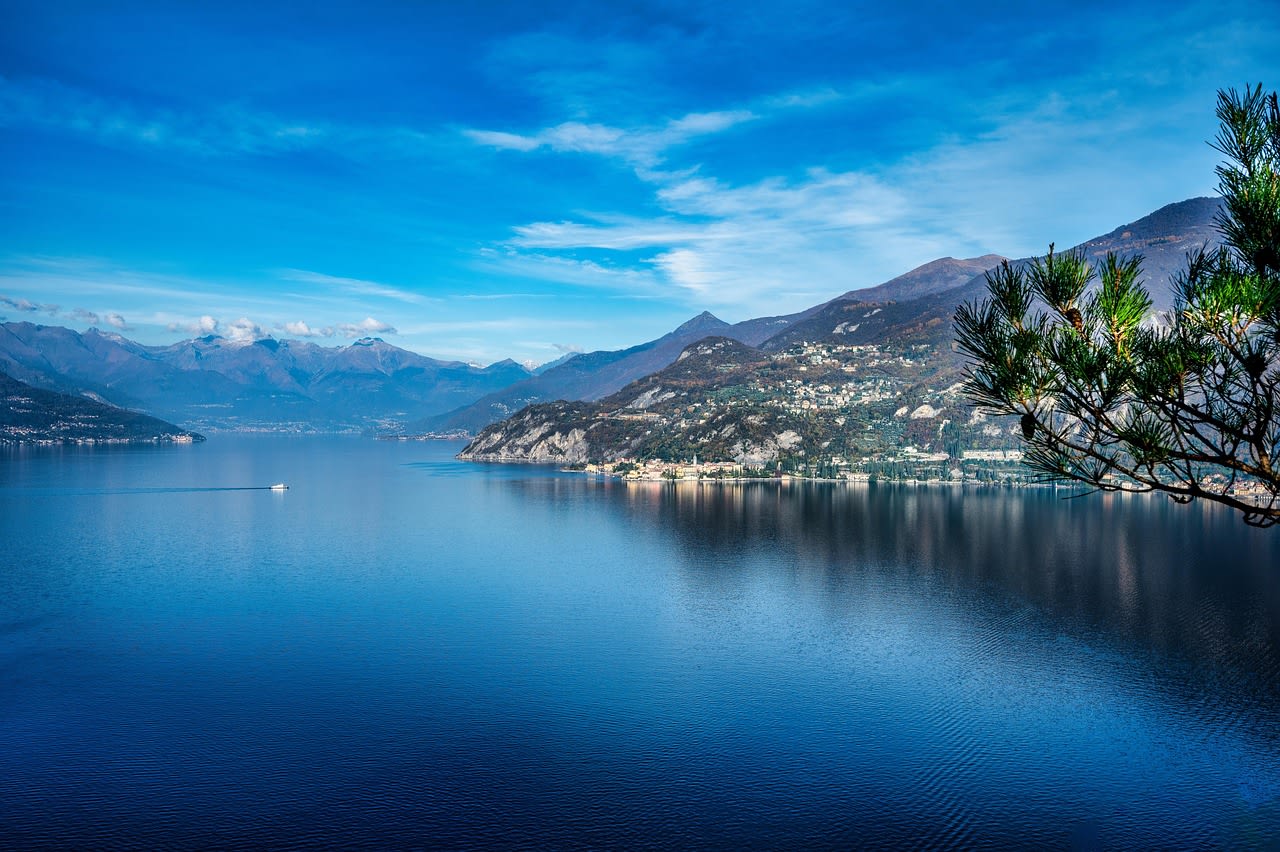
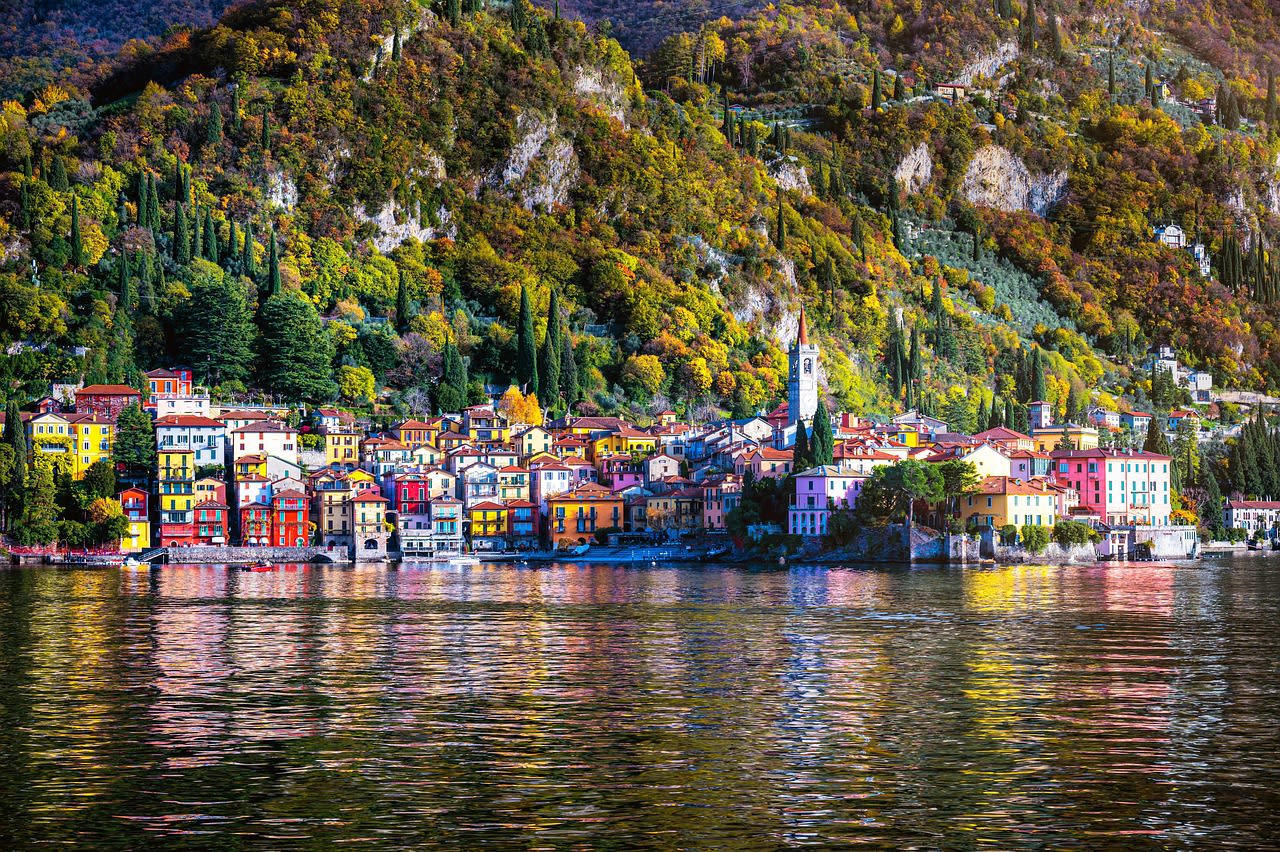
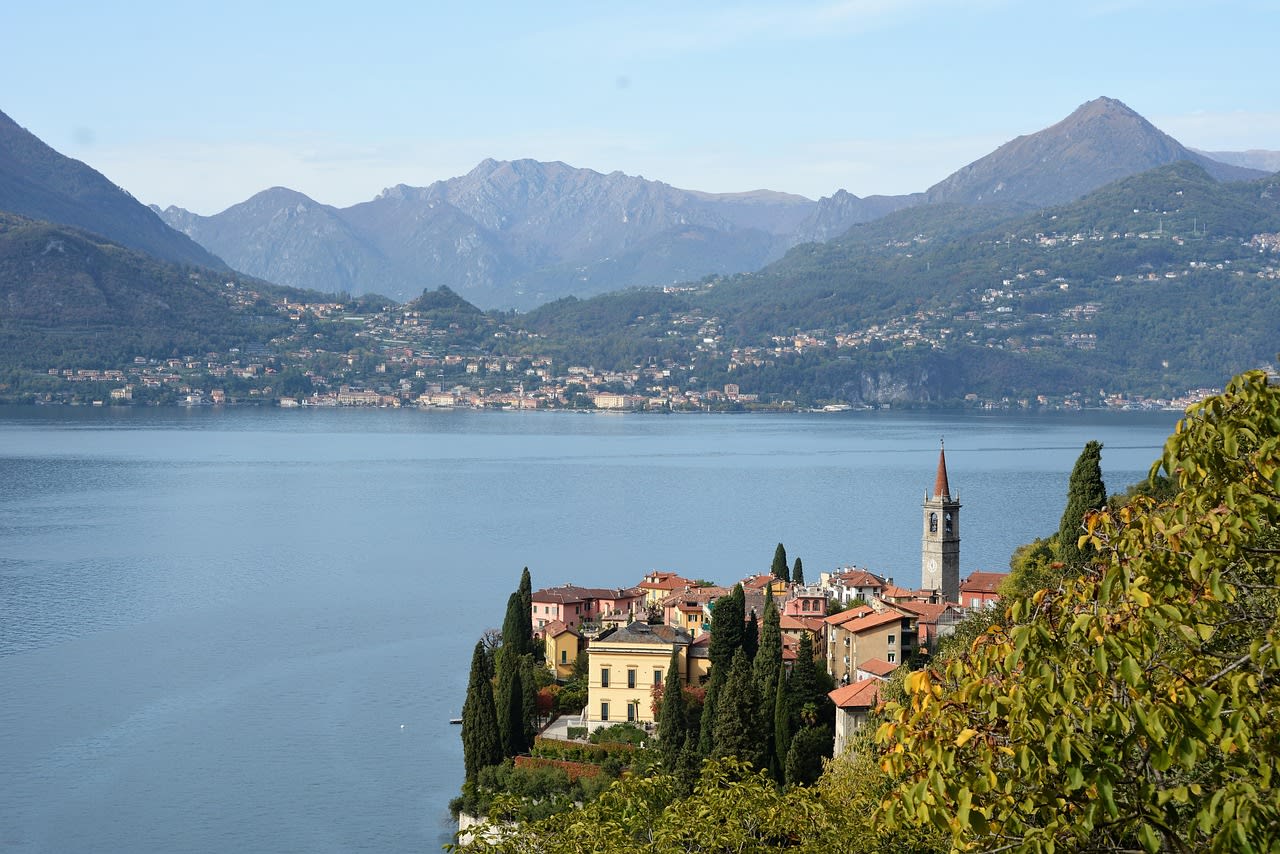
Lake Como (Lago di Como) is an inverted Y-shaped glacial lake in the Lombardy region of northern Italy — the deepest lake in Italy (410 m), the third largest by area (146 km²), and one of the most celebrated European landscapes for over two millennia. The lake occupies a deep glacial trough carved by Alpine glaciation, bordered by steep forested mountain slopes rising to 2,400 m, with the southern branches of the lake opening to the flat Po Valley plain. The lakeside climate — sheltered from northern alpine cold by the mountains and warmed by the thermal mass of the water — supports a sub-Mediterranean microclimate that allows palms, oleanders, azaleas, and camellias to grow at a latitude comparable to London. This has made the Como lakeside the preferred location for Italian villa gardens since Roman times — the gardens of Villa del Balbianello, Villa Carlotta, Villa d'Este, and Villa Melzi are among the finest historic garden landscapes in Europe. The combination of deep blue water, dramatic mountain backdrop, historic villas, and elegant villages makes Lake Como the quintessential Italian lake landscape — a fact demonstrated by its consistent status as one of Europe's most photographed locations and the choice of multiple feature film productions including Star Wars and James Bond.
🌍 Geography and Ecosystem
- Lake Microclimate and Vegetation: The submediterranean microclimate of the Como lakeside — minimum winter temperatures rarely below 0°C due to the lake's thermal mass, summers warm but moderated by altitude — allows a vegetation mix unparalleled in the Alpine foothills: Oleander, lemon, magnolia, camellia, azalea, and Himalayan rhododendron grow alongside native chestnut, oak, and hornbeam forest. The villa gardens exploit this to create flowering displays from February (camellias) through October (late roses and hydrangeas) that would be impossible at equivalent latitudes without the lake's protection.
- Villa del Balbianello: The most photographed promontory on Lake Como — a peninsula above the village of Lenno where the 18th-century Villa del Balbianello (now owned by FAI, the Italian Environmental Fund) rises from terraced gardens of box hedges, wisteria, and loggias directly above the lake surface. The garden's succession of outdoor rooms on different cliff levels, each framing different lake views, represents Italian garden design at its most purely theatrical. Accessible by boat from Lenno (the overland path is restricted).
- Bellagio: The village of Bellagio at the point of the Y is the scenic centrepiece of the lake — a compact medieval town of cobbled lanes, arcaded streets, and lakeside piazzas on the narrow promontory between the two branches. The Villa Melzi gardens (early 19th century, English-style landscape design with Japanese garden elements) and the Villa Serbelloni (now a luxury hotel, gardens open for guided tours) represent the finest accessible lakeside villa gardens at Bellagio. The view from the Bellagio lakefront across to the Alps is one of the classic Italian landscape compositions.
- Mountain Backdrop: The steep mountains behind the lake — reaching Monte Legnone (2,610 m) and Pizzo dei Tre Signori (2,554 m) to the north — provide both the landscape context and a range of hiking trails above the tree line accessible from the lake villages by funicular (the Como–Brunate funicular) or on foot. The contrast between the manicured lakeside gardens and the wild Alpine terrain visible in the same view is the fundamental aesthetic tension that has made Como landscapes compelling to painters, writers, and photographers for centuries.
📜 History and Cultural Significance
The Romantic movement of the 19th century made Lake Como a required Italian destination for northern European writers: Stendhal, Flaubert, Longfellow, and Mark Twain all wrote about Como with varying degrees of extravagance. Franz Liszt composed at Villa d'Este; Bellini wrote La Sonnambula with the lake as setting. The construction of the lakeshore road connecting the villages and the arrival of the steam ferry service in 1826 opened the lake to middle-class tourism, establishing the infrastructure of ferry routes and lakeside cafés that has changed remarkably little to the present day.
🏃 Activities and Attractions
- Villa Garden Visits: The three finest accessible villa gardens are Villa del Balbianello (Lenno — boat access, magnificent promontory position, FAI-managed, limited hours), Villa Carlotta (Tremezzo — by ferry, extraordinary azalea and camellia blooms April–May, the finest spring garden on the lake), and Villa Monastero (Varenna — linear lakeshore garden, less crowded than the main sites, beautiful in all seasons). All charge entry fees; advance booking is recommended for Villa del Balbianello in summer.
- Lake Ferry and Boat Hire: The Navigazione Laghi public ferry service connects all major lakeside villages and is the optimal way to see the lake — the view from the water at mid-lake level reveals the full relationship between village, villa, mountain, and water that is invisible from the shore road. Day pass ferry tickets allow unlimited boarding and disembarking at all stops. Small motorboat hire from Como, Bellagio, and Menaggio allows independent exploration of coves and promontories inaccessible by ferry.
- Como–Brunate Funicular and Mountain Walk: The Como–Brunate funicular (operating since 1894) climbs 600 m from Como city to the village of Brunate in 7 minutes — a short walk from the funicular summit delivers views over the full lake and down to the Milan plain to the south. From Brunate, marked trails continue through chestnut forest and open meadow to the lighthouse monument at Volta (another hour), and then to San Maurizio summit (1,316 m, panoramic views in all directions) for a full mountain day from the lake shore.
- Kayaking and Paddleboarding: The sheltered northern branches of the lake and the bays around Bellagio and Varenna are excellent kayaking terrain — calm in the morning hours before afternoon wind builds, with clear water, dramatic mountain walls, and the regular spectacle of the Como–Lecco hydrofoil rushing past at 40 km/h. Several operators rent kayaks and stand-up paddleboards from Menaggio, Bellagio, and Varenna. Morning lake surface conditions (glassy, mirror-flat, reflecting mountain and villa) are the finest of the day for both paddling and photography.
💡 Travel Tips
Best Season: April–May is peak garden season — Villa Carlotta's azalea and camellia blooms are at maximum intensity in late April. June–September is the main tourist season with swimming, boat hire, and all services open. September–October has warm water (still 20°C), autumn colour on the lower mountain slopes, and reduced crowds. November–March is the off-season — some hotels and ferries reduce service, but the lake in autumn mist and winter light has an atmospheric quality that summer cannot match.
Avoiding Crowds: Bellagio and the car ferries (Como–Bellagio–Varenna) are saturated July–August. Base yourself in Varenna (smaller, more authentically Italian, quicker to reach by train) or Menaggio rather than Bellagio. Morning walks and ferry travel before 10am and after 4pm avoid the worst cruise-group and day-tripper pressure. The northern lake (Colico, Domaso) is much less visited than the central zone and equally beautiful.
🌱 Conservation
The lake ecology faces growing pressure from invasive fish species — particularly the black bass and catfish introduced for recreational angling and now significantly affecting the native fish community, including the endemic agone (shad) and missoltino (dried agone), traditionally the lake's cultural fish products. The Italian Fisheries Authority manages an ongoing control programme. Extreme rainfall events — increasing in frequency due to Alpine climate change — have caused severe flooding at several lakeshore villages, particularly Cernobbio, Cernobbio, and Varenna, where floodplain development has increased flood exposure. Climate projections for the Alpine foothills suggest increasing summer drought combined with more intense autumn rainfall — a pattern that challenges both the lake ecology and the lakeside infrastructure.