Cinque Terre
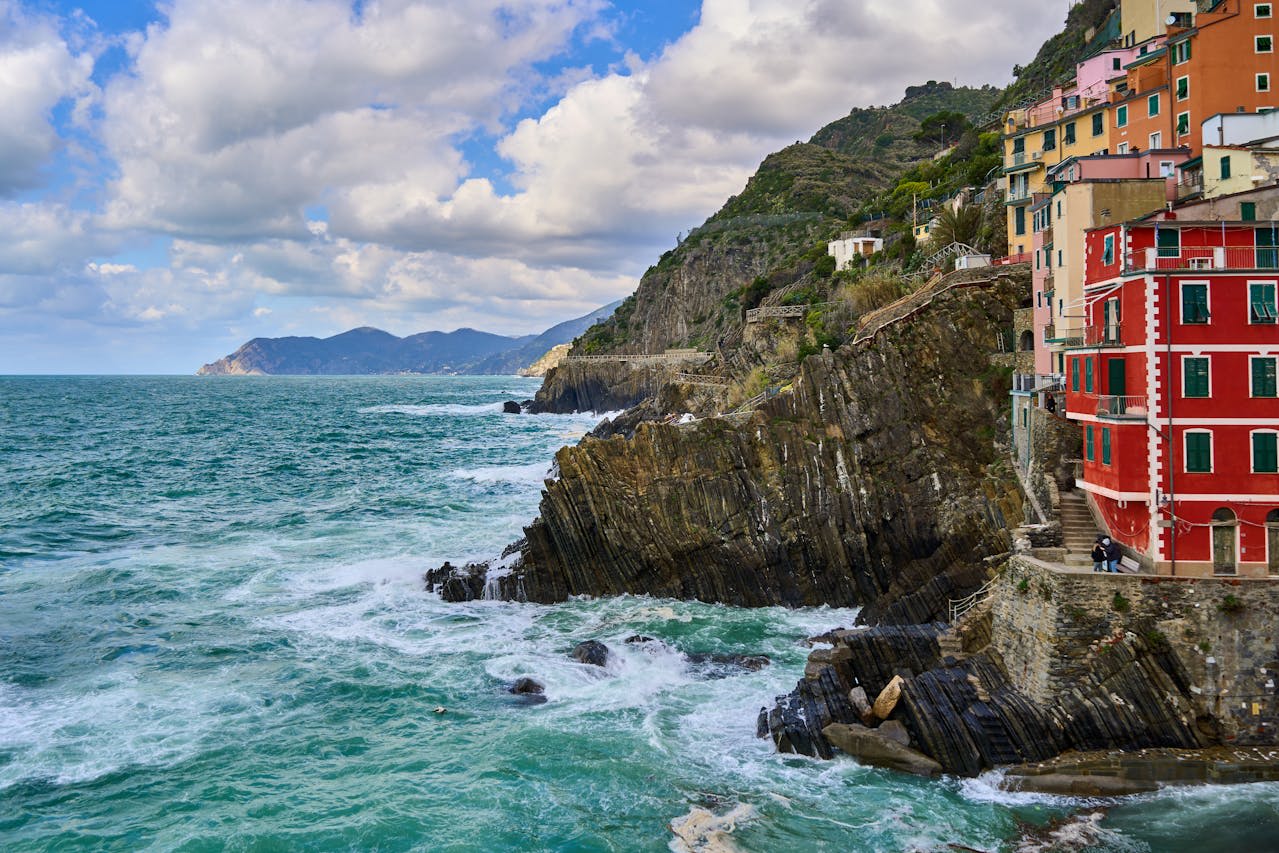
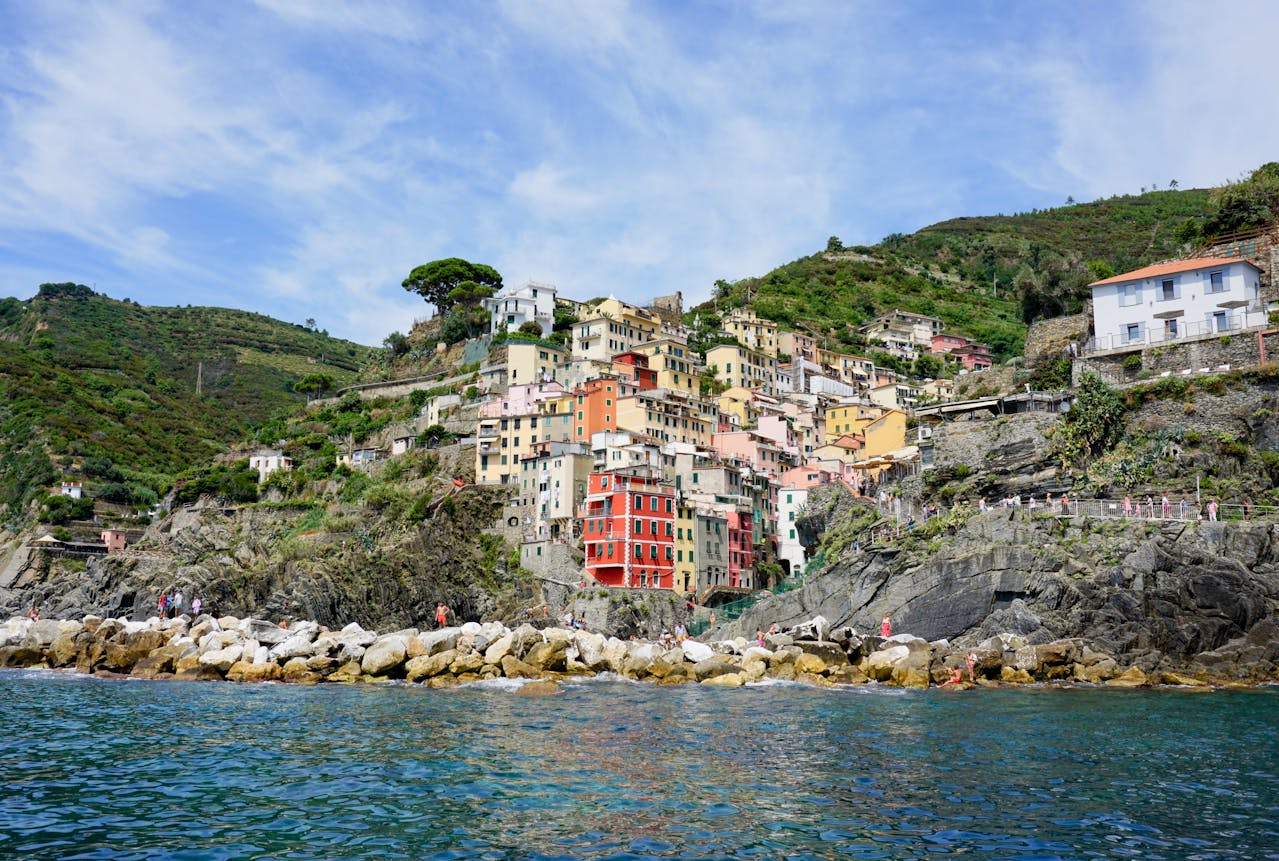
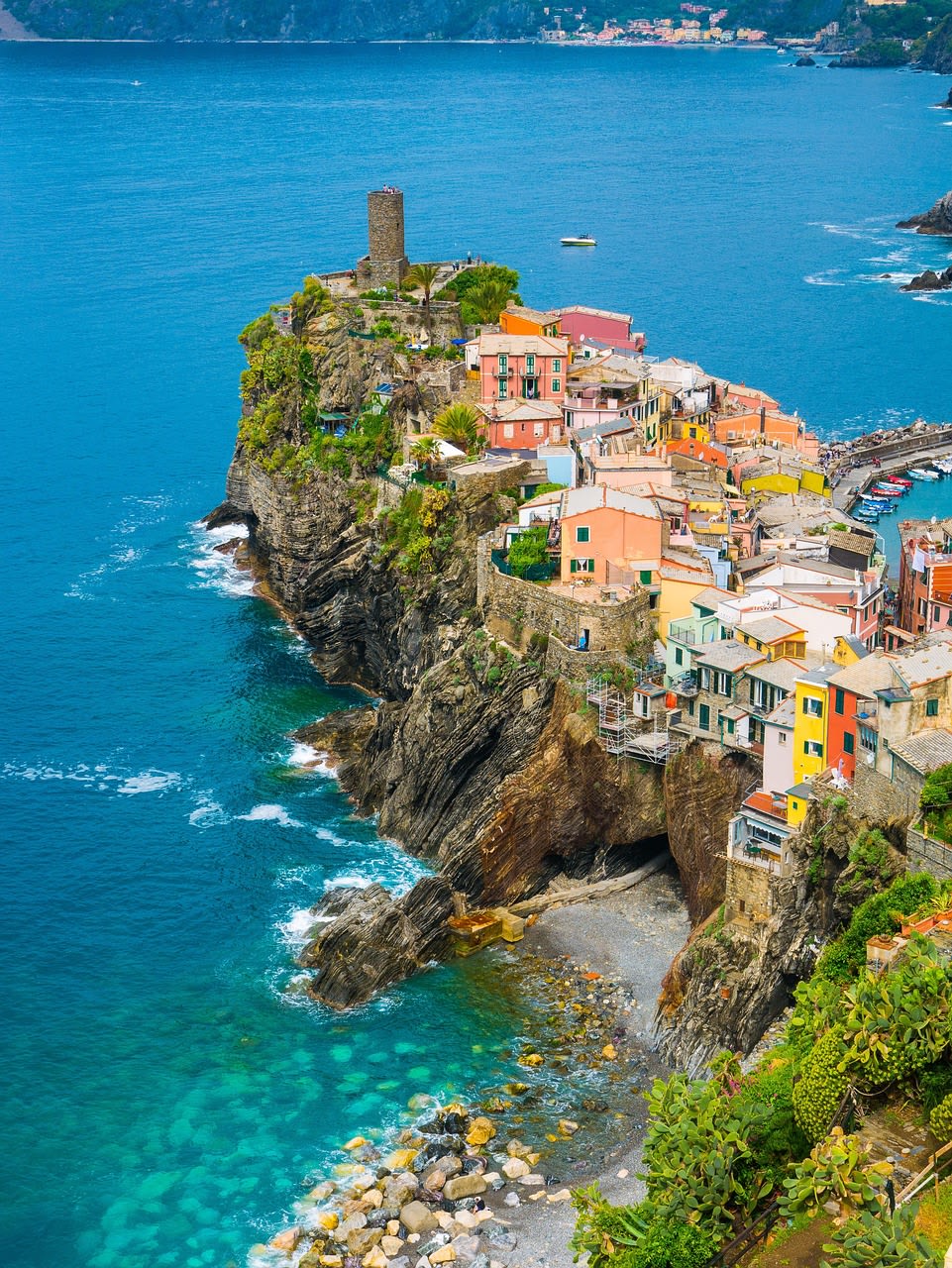
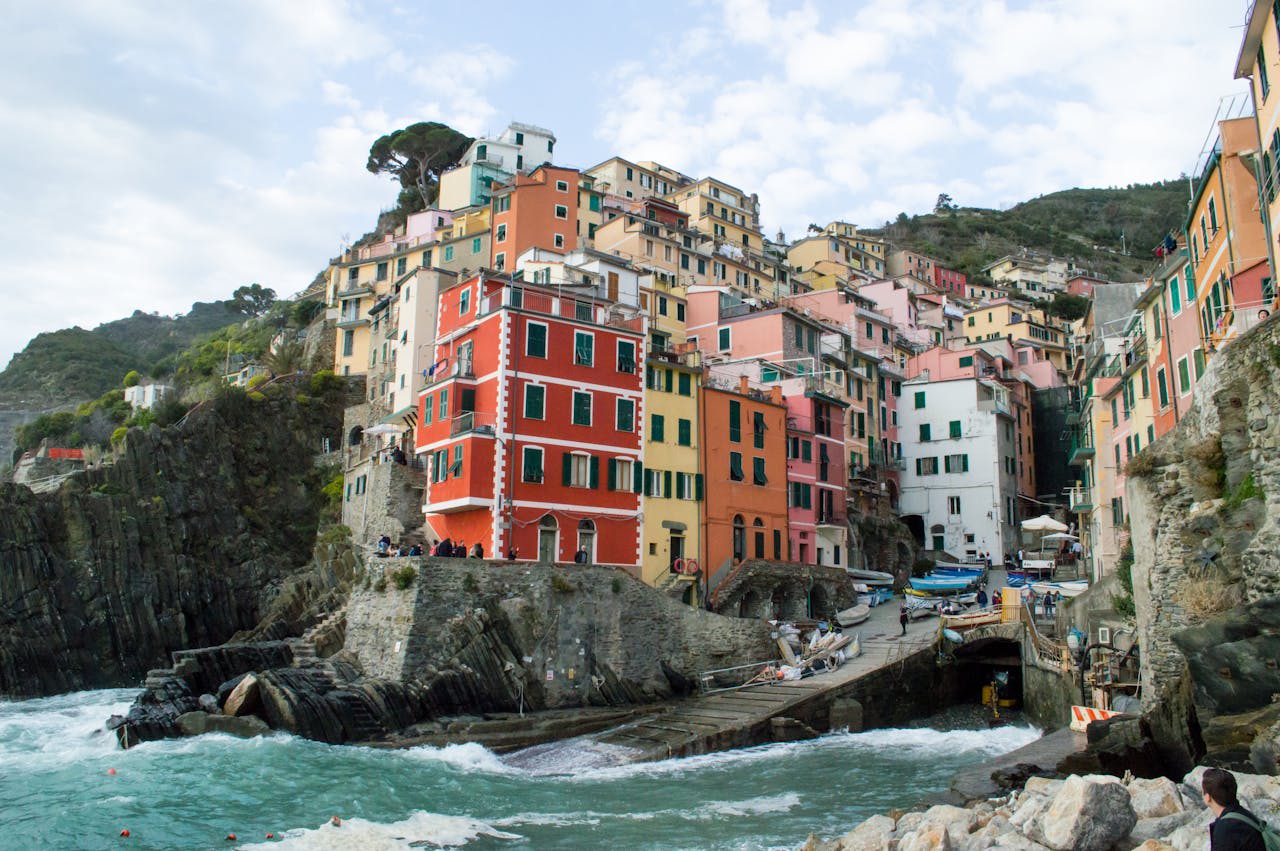
Cinque Terre (The Five Lands) is a 15 km stretch of the Ligurian coast in northwestern Italy where five ancient fishing villages — Monterosso, Vernazza, Corniglia, Manarola, and Riomaggiore — occupy the only level ground on a coastline of sheer coastal cliffs plunging directly into the turquoise Mediterranean. Designated a UNESCO World Heritage Site in 1997 and a National Park (Parco Nazionale delle Cinque Terre), the area is recognised for the extraordinary human achievement of creating the terraced vineyard landscape that covers the cliff faces — 6,000 dry-stone terraces totalling 1,200 km of retaining walls hand-built from local stone over 1,000 years, representing more stone construction work than the Great Wall of China per metre of terrain. The villages themselves — their multi-storey painted houses stacked vertically up the cliff faces in shades of ochre, rose, yellow, and terracotta above tiny fishing harbours — are among the most photogenic coastal settlements in Europe. The Cinque Terre is one of Italy's most visited destinations, a fact that has become its most pressing conservation challenge: annual visitors exceed 2.5 million and infrastructure capacity is severely strained.
🌍 Geography and Ecosystem
- Dry-Stone Terraces: The defining feature of the Cinque Terre landscape is the dry-stone terrace system covering the cliff faces above and between the villages — an estimated 6,800 km² of terraced surface supported by 1,200 km of stone retaining walls (muretti a secco). The terraces were built to cultivate Sciacchetrà grapes — a sweet dessert wine made from the local Bosco, Albarola, and Vermentino varieties grown on the cliff-face vineyards. Terrace maintenance is labour-intensive and economically marginal; approximately 70% of terraces have been abandoned since the 1960s as agricultural depopulation accelerated, with vegetation succession now reclaiming much of the former vineyard landscape.
- Vernazza: Considered the most beautiful of the five villages, Vernazza is the only one with a natural harbour — a small rocky inlet where the village's main piazza meets the sea, surrounded by multi-storey medieval buildings and the 11th-century Santa Margherita di Antiochia church tower rising above the harbour mouth. The combination of harbour, piazza, and cliff-face village makes Vernazza the most complete urban-natural composition on the coast and the location most frequently reproduced in Cinque Terre photography.
- Via dell'Amore: The Via dell'Amore (Lovers' Lane) — the most famous of the Cinque Terre trails, a cliff-face path cut into the rock connecting Riomaggiore and Manarola — was originally built in the 1920s to allow workers to access the railway maintenance tunnels and became famous as a romantic coastal walk at sea level. Damaged by rockfalls in 2012, it reopened in 2024 after major structural repair work. The path is 1.2 km long, largely flat, with the Ligurian Sea immediately below and the cliff face immediately above.
- Marine Park: The sea in front of the Cinque Terre is protected as a Marine Protected Area (Area Marina Protetta delle Cinque Terre), established in 1997 alongside the land national park. The underwater cliffs below the villages support rich Mediterranean reef habitats with sponges, gorgonian fans, moray eels, and schools of bream and sea bass. Posidonia seagrass meadows extend in the flat sandy areas between headlands. The marine park operates a zoning system with strict no-take zones showing measurable recovery of fish populations.
📜 History and Cultural Significance
The villages remained connected only by sea and the cliff trails until the Ligurian coastal railway was blasted through the headlands between the villages in 1874 — a civil engineering achievement that reduced the isolation of the villages and began the transformation from fishing economy to tourism economy. The railway remains the only motorised access to four of the five villages (Corniglia is the exception, with a connecting path to its station). Cars cannot enter any of the village centres. The UNESCO inscription in 1997 and the explosion of social media image-sharing from the early 2010s transformed the Cinque Terre from a well-regarded Italian coastal destination to one of Europe's most globally recognised landscapes — generating the over-tourism pressure that now dominates discussion of the area's management.
🏃 Activities and Attractions
- Village Trail Hiking: The classic Cinque Terre experience is hiking between villages on the coastal trail network — the low trails directly above the sea, and the higher alta via (high route) that connects all five villages via the vineyard terraces and hillside paths. The low trail between Monterosso and Vernazza (3.8 km, 600 m ascent) and between Vernazza and Corniglia (4 km, 500 m) are the most dramatic. A Cinque Terre Card (purchased at stations or online) is required for all trails and is validated at card readers at each trail entrance.
- Swimming and Snorkelling: Each village has a small swimming area — rocky platforms and small pebble beaches with direct access to the Ligurian Sea. Monterosso has the largest beach (sand). The cliffs below the villages offer snorkelling in clear Mediterranean water, with access from boat landings or rocky entry points. Morning swimming (before 10am) at any of the village beaches offers calm conditions and relatively empty water — afternoons are busy in July–August.
- Sciacchetrà Wine Tasting: The Cinque Terre's Sciacchetrà — a sweet amber passito wine made from late-harvested grapes dried on bamboo racks before pressing — is produced in tiny quantities (the entire Cinque Terre DOC produces only a few thousand bottles annually) and is one of Italy's rarest wines. Several small producers in Manarola and Riomaggiore offer cellar tastings; the combination of the cliff-vineyard location, the extreme production difficulty, and the honey-and-apricot character of the wine makes Sciacchetrà tastings among the most memorable food experiences on the Ligurian coast.
- Boat Tour: Renting a small boat from Riomaggiore or Manarola and navigating the coast at sea level — stopping at the small coves and sea caves inaccessible on foot — provides a perspective on the cliff-face villages and the limestone coastal architecture that walking trails cannot. The cliff-face vineyards, visible from above on the trails, can be seen from below at water level, revealing the full drama of the terrace engineering against the sea.
💡 Travel Tips
Best Season: April–June and September–October are optimal — comfortable temperatures (18–26°C), lower crowds, and the spring wildflower season (April–May) when the cliff terraces are at their most colourful. July–August is peak season and significantly overcrowded — trail entry restrictions are enforced (timed entry, limited numbers). October brings olive harvest and autumn colour in the terraced vegetation. November–March is quiet with some trail closures after rain.
Cinque Terre Card: The card (€7.50–18.00 depending on validity) covers trail access and is compulsory for all trails. Buy online in advance for July–August (same-day tickets sometimes sell out). Combined train+card passes are available from La Spezia station. Trail conditions change rapidly after rain — check the park website (parconazionale5terre.it) before starting any trail in autumn/winter.
🌱 Conservation
The park's Trail Card system and timed entry at peak periods are attempts to manage visitor flow, but enforcement is inconsistent and visitor numbers continue to grow. The park is trialling a terrace restoration programme that pays workers to rebuild collapsed retaining walls — some funded by Cinque Terre Card revenues. The EU has provided restoration grants under its Cultural Landscape Protection programme. The most critical intervention needed — reducing total visitor numbers through effective timed entry reservation and transport capacity limits — has been politically difficult to implement given the economic dependence of the local economy on tourism revenue.