Ladakh
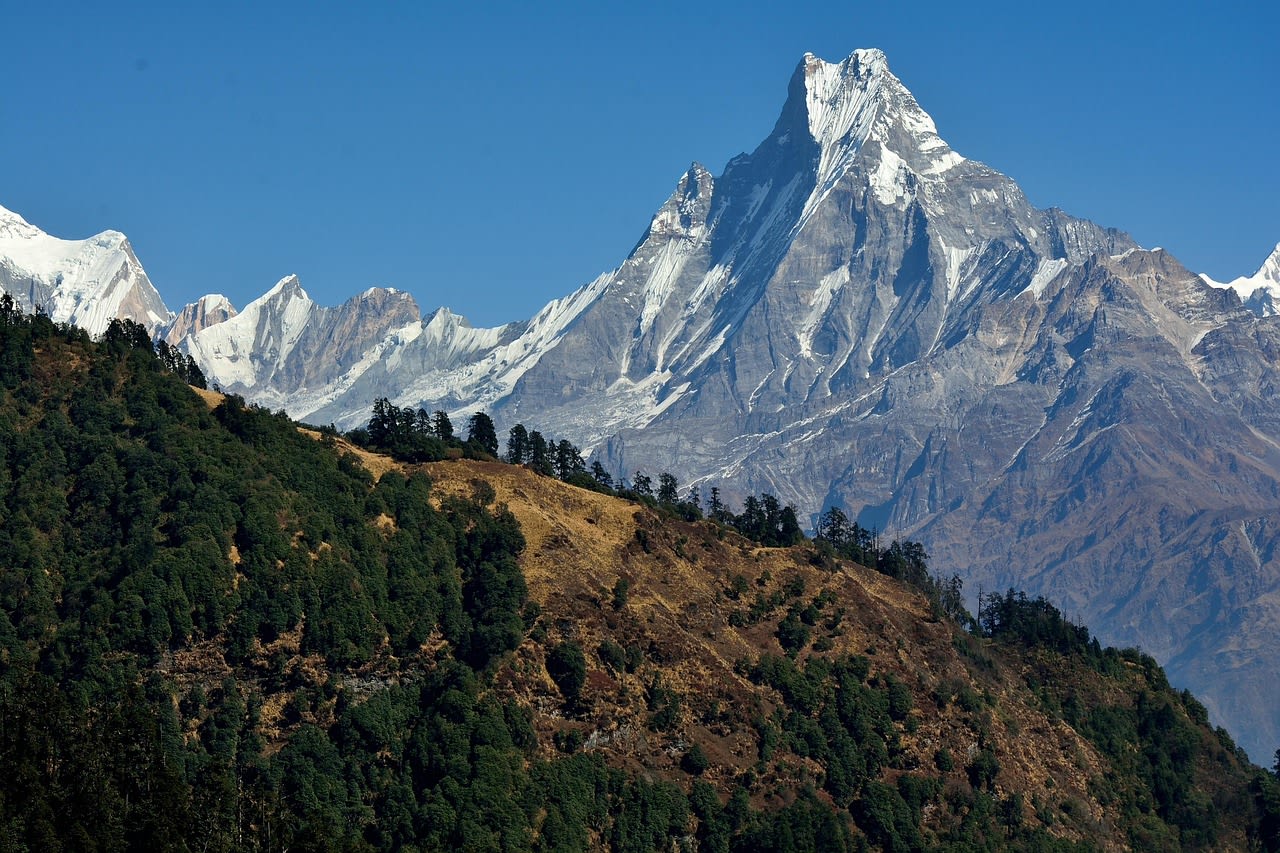
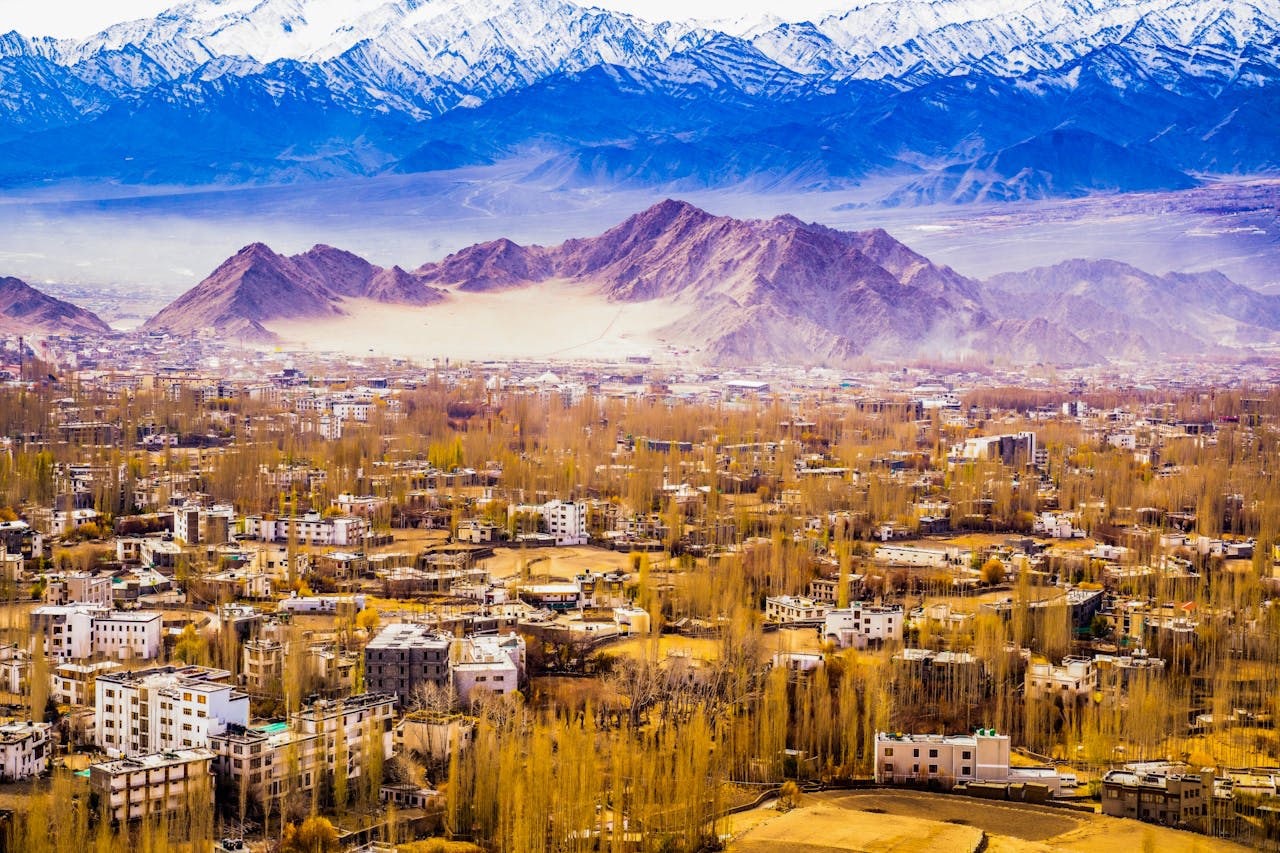
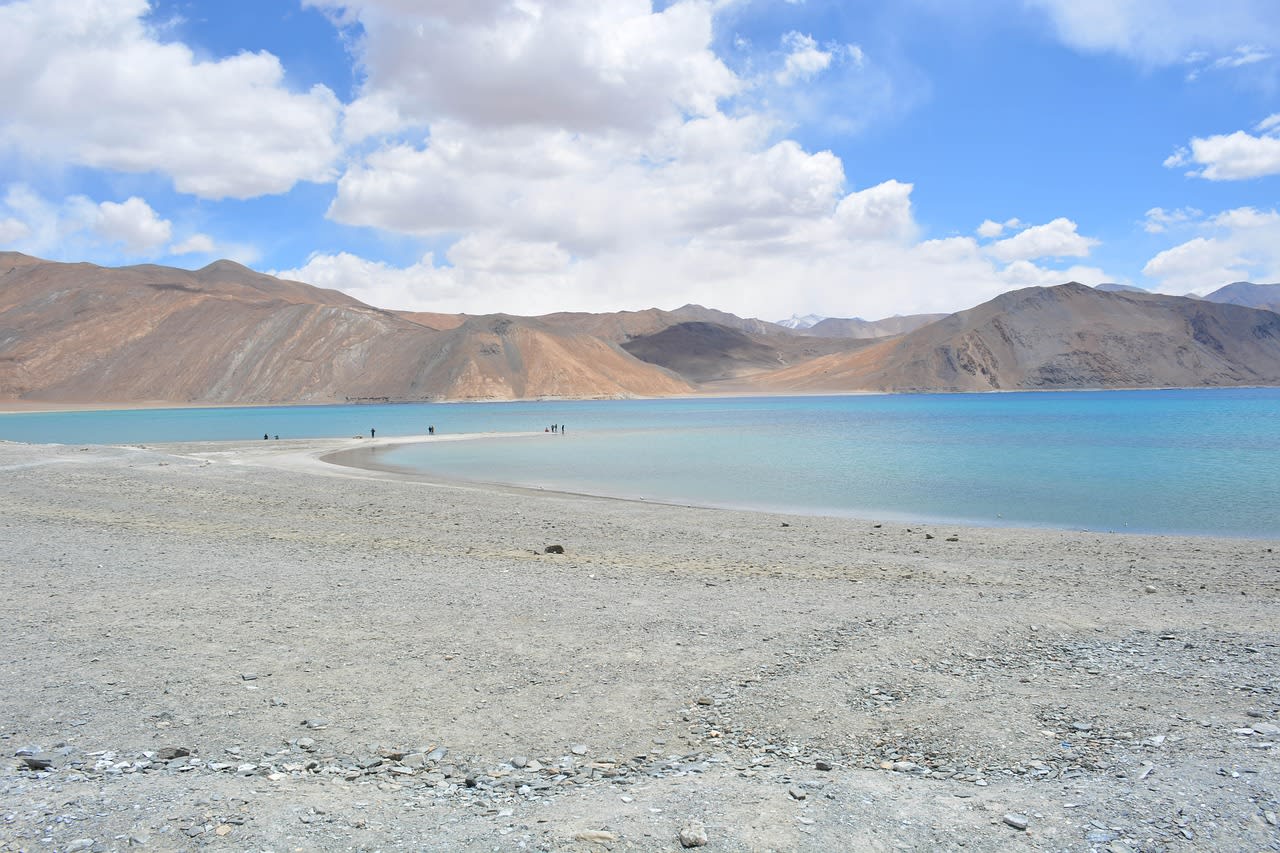
Ladakh ('Land of High Passes') is a Union Territory of India situated at 3,000–5,600 metres in the western Himalayas, bounded by the Karakoram Range to the north, the Greater Himalayas to the south, Tibet to the east, and Pakistan-administered Kashmir to the west. It is one of the world's most extreme inhabited landscapes — a cold desert of annual rainfall below 100 mm (less than the Sahara in many areas), sustained by glacial meltwater rather than rainfall, at altitudes that cause altitude sickness in the first days for unacclimatised visitors. Despite this apparent hostility, Ladakh has been inhabited continuously for millennia by the Ladakhi people — a Buddhist culture of Tibetan heritage whose monasteries (gompas) perch dramatically on clifftops and mountain ridges, their whitewashed walls and golden roofs visible from enormous distances across the bare brown landscape. Pangong Tso (Lake Pangong) — a 134 km long endorheic lake straddling the India-Tibet border at 4,350 m — is Ladakh's most iconic image: an intensely blue-green colour set against completely barren, brown mountains, with no vegetation of any kind for kilometres in any direction.
🌍 Geography and Ecosystem
- Pangong Tso: A 134 km lake at 4,350 m altitude, 40% of which lies in India and 60% in Tibet. The extraordinary turquoise-blue colour is produced by the high altitude and dissolved minerals in the glacially fed water. The lake is uninhabited on its shores — no fishing villages, no agriculture, just the bare mountain walls and the constantly changing water colour through the day. The three-hour drive from Leh across the Chang La pass (5,360 m) is itself a Himalayan landscape experience of enormous scale.
- Buddhist Monasteries: Ladakh has over 30 functioning Buddhist monasteries ranging from small village gompas to the large complexes of Thiksey, Hemis, Diskit, and Alchi. Thiksey — modelled on the Potala Palace in Lhasa — is the most architecturally impressive, a 12-storey complex visible from the Indus Valley 10 km away. Hemis is the largest, home to the annual Hemis Festival (July) when monks perform the sacred Cham masked dance. Alchi holds the oldest murals in Ladakh (11th century).
- Nubra Valley and Khardung La: North of Leh across the Khardung La pass (5,359 m — one of the world's highest motorable roads), the Nubra Valley is a sand dune desert at 3,000 m altitude — a dramatic landscape contrast with the high passes above it. The dunes near Hunder support a population of Bactrian double-humped camels used for tourist rides — a reminder that this was a Silk Road caravan route to Central Asia. The valley is home to the Diskit Monastery overlooking the Shyok River confluence.
- Snow Leopard Habitat: Ladakh's Hemis National Park (4,400 km² — India's largest national park) is the most productive area in India for snow leopard sightings — the combination of high prey density (blue sheep/bharal), experienced local guides, and the bare terrain that makes spotting easier than in forest habitats gives Hemis a reasonable success rate of 60–70% for guided winter expeditions (January–March). The Markha Valley within the park is the primary wildlife trekking route.
📜 History and Cultural Significance
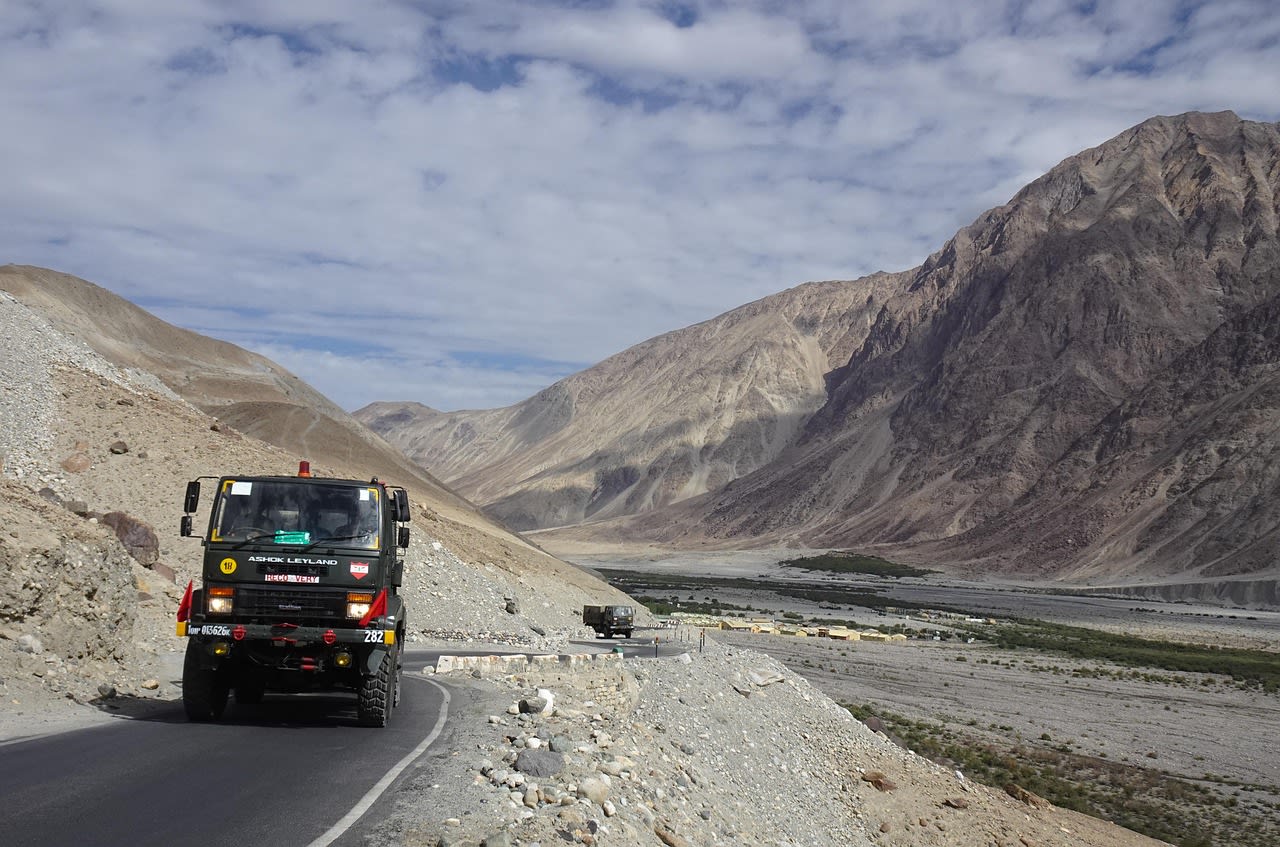
The strategic importance of Ladakh escalated dramatically after 1947 — the region borders both Pakistan and China and has been the site of military conflict in 1948, 1962, 1999, and ongoing low-level confrontation on the Line of Actual Control with China. The 1962 Sino-Indian War established the current de facto border with Tibet; the 1999 Kargil War with Pakistan was fought on the Ladakhi mountains north of Kargil. This military significance has shaped Ladakh's infrastructure (the Manali–Leh Highway was built as a military road) and its restrictions on foreigners in border areas. In 2019, Ladakh was separated from Jammu and Kashmir and made a Union Territory directly administered by the central government — a change that simplified bureaucracy for tourists but remains politically contentious.
🏃 Activities and Attractions
- Pangong Tso Overnight: The standard Pangong itinerary from Leh — driving over Chang La (5,360 m) to reach the lake by afternoon, camping or staying in a tent village on the lakeside, watching the colour change at dawn with no other visitors present, and returning via the Shyok Valley. The overnight stay is essential — the colour at early morning with the first light on the mountains is the lake's finest moment, available only to those who stay rather than day-trip from Leh.
- Monastery Circuit: A 2-day monastery circuit from Leh visiting Thiksey (sunrise from the gompa roof), Hemis, Shey, Stok, and Alchi — accessing the architectural, artistic, and cultural heritage of Ladakh's Buddhist civilisation. The monks are generally welcoming of respectful visitors; morning prayer at Thiksey (04:30) is a profound experience of monastic life in a high-altitude landscape that has changed little in 500 years.
- Markha Valley Trek: A classic 8–10 day trek through Hemis National Park from Chilling to Hemis village via the Markha Valley — crossing high passes (Kongmaru La at 5,085 m), camping in stone-walled shepherd villages, and crossing the habitat zone of snow leopard, bharal, and Tibetan wolf. One of India's finest mountain treks, combining Himalayan scenery with genuine cultural engagement with Ladakhi pastoralist communities in the high valleys.
- Cycling the Khardung La: Cycling over the Khardung La pass (5,359 m) from Leh is a bucket-list ride for altitude cyclists — a 40 km descent from the pass to Nubra Valley on high-altitude roads with the Karakoram Range panorama. The climb from Leh (3,524 m) to the pass gains approximately 1,835 m in 35 km. Mountain bikes can be hired in Leh. Acclimatisation of at least 3 days in Leh before attempting the pass is essential.
- Snow Leopard Wildlife Expedition: January–March guided snow leopard tracking expeditions in Hemis National Park and the Rumbak Valley — living in a village home, hiking the valley slopes with expert local trackers, and using binoculars to spot snow leopards on the rocky hillsides where they hunt blue sheep. Success rates are reported at 60–70% over 5–7 days with experienced local guides. These expeditions are also excellent for golden eagle, lammergeier, and Himalayan wolf.
💡 Travel Tips
Altitude Acclimatisation: Leh sits at 3,524 m — DO NOT engage in strenuous activity on arrival day. Allow at least 2 full rest days in Leh before visiting Pangong Tso or Nubra Valley. Altitude sickness (AMS) symptoms include headache, nausea, and fatigue. Diamox (acetazolamide) is widely available in Leh pharmacies. Descent is the only reliable treatment for severe AMS. The altitude is the primary danger for visitors, not the terrain or the wildlife.
Best Season: June–September for open roads and mild weather. July–August is peak season with all roads open including Pangong, Nubra, and the Tso Moriri lake circuit. January–March for snow leopard expeditions — extremely cold (−20°C at night) but rewarding. The summer monsoon barely reaches Ladakh — rain is rare even in July–August.
🌱 Conservation
The snow leopard population in Hemis National Park — estimated at 200–250 individuals, one of the highest densities in its global range — is protected by the park and by the community-based Snow Leopard Conservancy India Trust, which compensates herders for livestock kills by snow leopards and runs community tourism programmes. The primary conservation challenge is livestock depredation — snow leopards kill domestic sheep and goats, creating community hostility that historically led to retaliatory killing. Compensation and income-sharing through wildlife tourism have substantially reduced retaliatory killing in the Rumbak Valley area.