

Sarakiniko
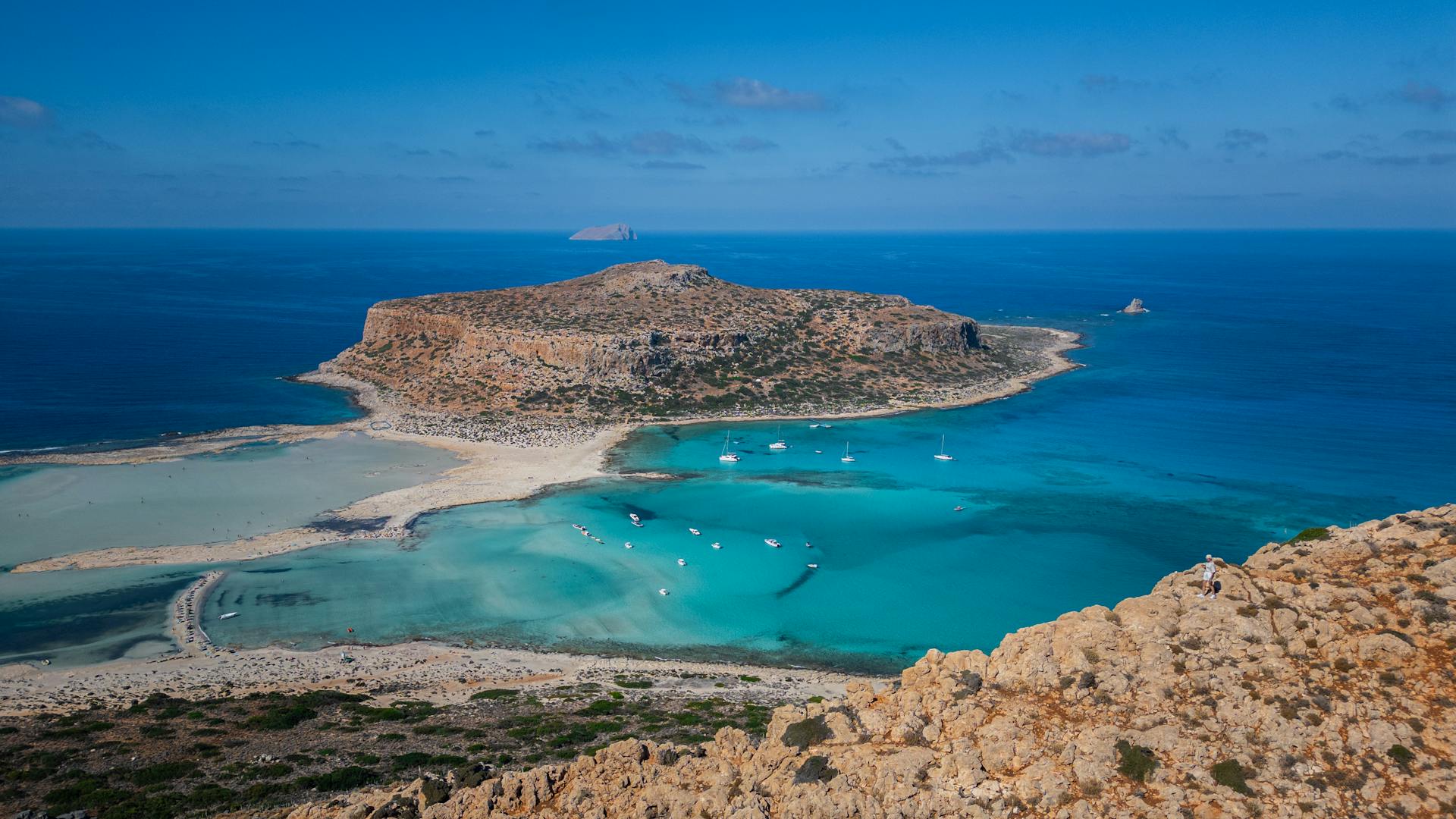
Sarakiniko is a coastal formation on the northern shore of Milos island in the Cyclades — a landscape of white volcanic pumice and ash eroded by the Aegean into smooth rounded forms, arching overhangs, sea channels, and natural swimming pools that create an environment unlike any other in Greece. The formations are the surfaced expression of Milos's volcanic geology — the island is a volcanic caldera, one of the most geologically active in the Cycladic volcanic arc, and its surface is covered with an extraordinary diversity of mineral formations: white pumice at Sarakiniko, coloured obsidian at Bombarda beach, fluorescent minerals at the old sulphur mines, and the pastel-coloured fishing boat garages (syrmata) of Klima village carved directly into the volcanic cliff. Sarakiniko itself is typically described as a moonscape — the comparison is almost obligatory and entirely apt: the smooth white mounds, the absence of vegetation on the pure mineral surface, the deep-blue sea framed by white rock, and the surreal light quality in afternoon sun create a landscape that has no equivalent in the Mediterranean. The sea access — direct swimming from the volcanic platform into clear Aegean water through sea-level channels between formations — makes it as much a swimming location as a geological spectacle.
🌍 Geography and Ecosystem
- Volcanic Pumice Formations: The Sarakiniko pumice is a rhyolitic ash deposit — fine-grained volcanic material ejected during a major eruption and subsequently cemented into a rock of low density and high porosity. Marine erosion over tens of thousands of years has sculpted the deposit into its current form — the rounded, almost polished surfaces are the result of wave abrasion during former higher sea levels, and the overhanging ledges and sea arches follow zones of different hardness in the pumice. The colour — brilliant white with grey veining where harder volcanic dykes intrude — is most intense in midday sun and takes on extraordinary gold and amber tones in early morning and late afternoon light.
- Sea Pools and Swimming: Natural channels and pools in the Sarakiniko formation create sheltered swimming areas within the volcanic landscape — some deep enough for jumping from the rock platforms above, others shallow enough to wade and snorkel. The combination of the formation scale (10–20 m high in some sections), the sea channel clarity, and the physical freedom to climb, dive, and explore the rock surface makes Sarakiniko more of an active landscape experience than a passive beach. Snorkelling in the channels between formations reveals the underwater continuation of the volcanic geology — sea caves, crevices, and rocky substrate covered with sea urchin, octopus, and colourful sponges.
- Klima and the Syrmata: Two kilometres south of Sarakiniko, the village of Klima presents a different facet of Milos's volcanic landscape — fishing boat garages (syrmata) carved directly into the volcanic cliff at water level, with boat access from the sea, and fishermen's cottages stacked above in the same cliff. The colour-washed garage doors (blue, ochre, terracotta, green) against the white volcanic cliff and the clear Aegean water make Klima one of the most photographed villages in the Cyclades.
- Milos Mineral Diversity: Milos's volcanic geology creates an unusual breadth of coastal mineral environments accessible on a single island visit: the white pumice of Sarakiniko (north coast), the coloured obsidian flow at Bombarda and Mandrakia (east coast), the red-pink tuff formations at Firopotamos (north), and the yellow sulphur mineral deposits at the old mining areas of Voudia (northeast). The island was the main source of obsidian for tool-making in the prehistoric Aegean — Milos obsidian artefacts have been found as far as Turkey, Egypt, and Spain, demonstrating a 10,000-year-old trade network extending across the entire Mediterranean.
📜 History and Cultural Significance
Milos is also the findspot of one of antiquity's most famous artworks: the Venus de Milo (Aphrodite of Milos) — the marble statue discovered in 1820 in an ancient theatre near the town of Plaka and sold to the French ambassador before being removed to the Louvre, where it remains. The island maintains a claim to its most famous ancient resident through a replica in the archaeological museum at Plaka.
🏃 Activities and Attractions
- Sarakiniko Swimming and Exploration: The Sarakiniko formation is accessible by car (parking area 10 min walk from main formation area) and is open year-round. The rock-climbing, jumping into sea channels, and swimming in natural pools is the primary activity and requires no equipment beyond swimwear and sandals for the hot rock surface. Dawn visits (the formation is most beautiful in early morning light and is empty before 9am in summer) are strongly recommended. Evening visits when the sun angles low from the west create golden shadows on the white pumice that are extraordinary for photography.
- Milos Boat Tour (Sarakiniko to Kleftiko): A full-day boat excursion circumnavigating Milos is the finest way to appreciate the island's coastal diversity — starting at Sarakiniko (north), visiting the fishing village of Mandrakia, the pirate coves of Kleftiko (southwest — a labyrinth of sea caves, arches, and clear water that was a legendary corsair hideout), and the multi-coloured tuff formations of Firopotamos. Boat tours depart from Adamas harbour daily June–September.
- Snorkelling at Papafragas and Firopotamos: The sea caves of Papafragas — three side-by-side cove inlets on the north coast cut through the volcanic cliff to openings at sea level — provide extraordinary snorkelling in an enclosed natural space where the filtered light, cave geology, and clear Aegean water combine in a way that is more swimming-pool than open sea. Papafragas is 2 km east of Sarakiniko, accessible by the same coastal road. Firopotamos fishing village to the west has snorkelling in the colourful volcanic rock formations at sea level.
- Catacombs and Archaeological Museum: The Christian Catacombs of Milos — cut into the volcanic rock near Tripiti in the 1st–5th centuries AD — are among the most complete early Christian underground cemetery complexes in the world (comparable to the Rome catacombs), with 126 tombs and approximately 8,000 individuals buried over four centuries. The Archaeological Museum of Milos at Plaka displays Cycladic, Minoan, Mycenaean, and Classical finds from the island, including a cast of the Venus de Milo in the position she was found.
💡 Travel Tips
Best Season: May–June and September–October are optimal — warm enough for swimming (sea temperature 22–25°C), manageable crowds, and accommodation availability. July–August is peak season with significant overcrowding at Sarakiniko — arrive before 8am or after 5pm. The Meltemi (northern wind) that dominates the Cyclades July–August affects boat tours on the exposed north coast around Sarakiniko; check conditions before booking. November–April: Milos is dramatically quieter, many accommodations close, but the volcanic landscape in winter light has an austere beauty unavailable in summer.
Accommodation: Adamas is the main hotel and restaurant base. The villages of Plaka (hilltop capital, Cycladic architecture), Pollonia (northeast, good tavernas), and Klima (at water level below the syrmata) provide alternative smaller-scale bases. Boutique hotels and villa rentals are concentrated in Plaka and the Triovasalos–Tripiti ridge area above Adamas.
🌱 Conservation
Milos's mining heritage — the island remains active in bentonite, perlite, and kaolin extraction — creates landscape degradation in the mineral extraction zones of the northeast and east coast that contrasts with the protected natural landscape of Sarakiniko and the west coast. The coexistence of active industrial mining and nature tourism is one of the distinctive management tensions on the island. The marine environment around Milos is formally protected within a national designation covering the Cyclades marine environment, but fishing pressure — particularly trammel net and longline fishing in the coastal zone — remains unregulated beyond general Greek fisheries law.