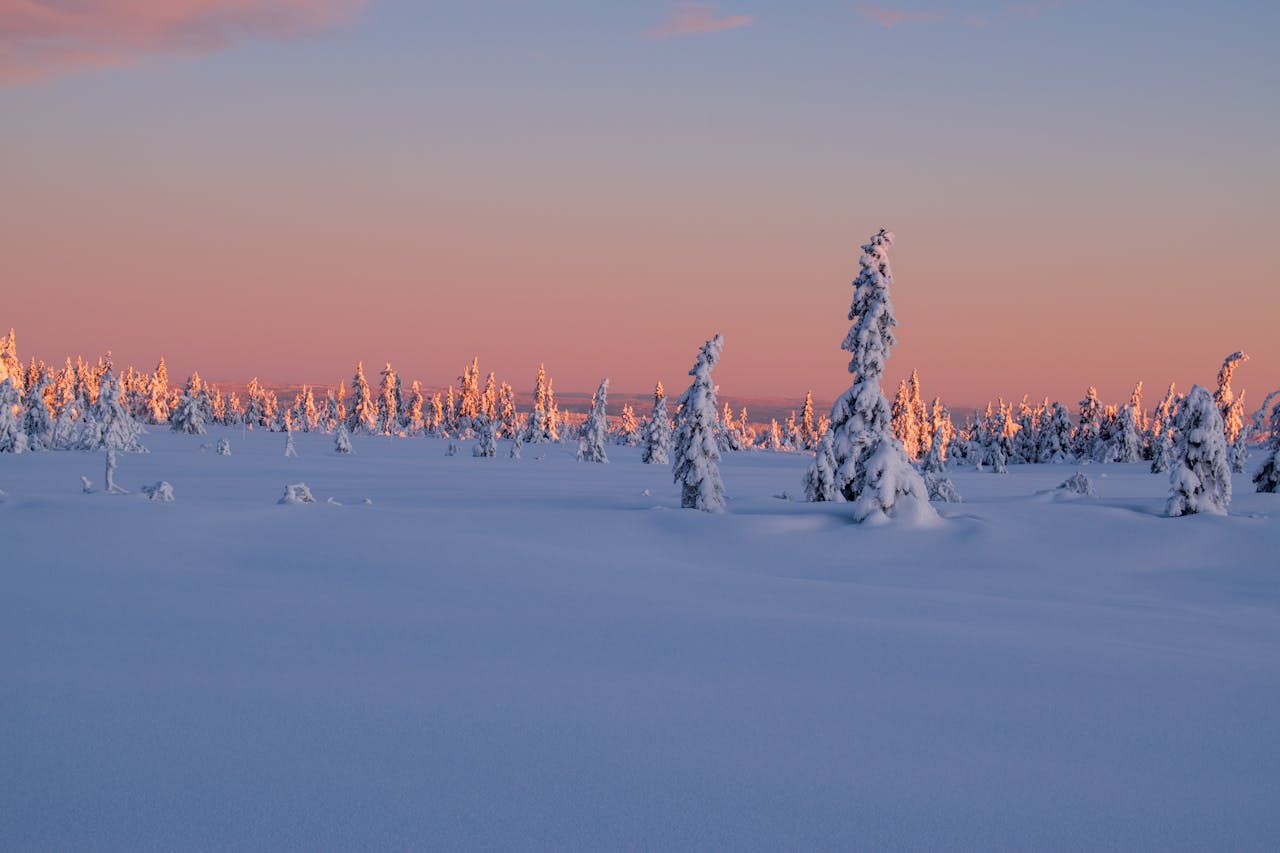
Finnish Lapland
Finnish Lapland is the northernmost region of Finland and one of Europe's last great wildernesses — a territory of 100,367 km² (roughly the size of Iceland) that lies almost entirely above the Arctic Circle and is home to fewer than 180,000 people, a density of 1.75 persons per km². The landscape is defined by the interplay of three ecosystems: the vast taiga boreal forest of spruce and pine that covers the southern two-thirds, the open fell (tunturi) plateaus of the north — rolling treeless highlands that constitute Finland's closest equivalent to mountains — and the thousands of lakes and rivers that freeze solid each November and thaw in a spectacular event each May. Lapland is the homeland of the Sámi people, Finland's only legally recognised indigenous people, who have herded reindeer across these landscapes for over 2,000 years. It is also one of the best places in the world to observe the aurora borealis (Northern Lights), which are visible on approximately 200 nights per year in the far north of the region.
🌍 Geography and Ecosystem
- Saariselkä Fell Plateau: A highland area in northeastern Lapland rising to 718 metres at Sokosti — the highest point entirely within Finland — encompassing the Urho Kekkonen National Park (2,550 km², Finland's second largest). The open fell terrain above the treeline provides the clearest aurora viewing in the country and is threaded by 500 km of marked wilderness hiking routes including the demanding Karhunkierros (Bear's Ring) trail.
- Lemmenjoki National Park: Finland's largest national park at 2,858 km², a river wilderness of ancient boreal forest, peaty wetlands, and the gold-bearing Ivalojoki river where gold was discovered in 1868 — triggering Finland's only gold rush. The park is accessible only by boat along the Lemmenjoki river or on foot, and its remote character means visitor numbers remain low even by Lapland standards.
- Lake Inari (Inarijärvi): Finland's third-largest lake at 1,040 km², dotted with over 3,000 islands and lying at 119 metres elevation in the heart of Sámi territory. The lake freezes to 60–80 cm thick each January and the ice road network across it operates from late January to mid-April. Arctic char, lavaret (vendace), and lake trout support both the commercial fishery and Sámi subsistence fishing traditions.
- Pallas-Yllästunturi National Park: A 1,020-km² fell chain in western Lapland, connecting the Ylläs ski resort fells to the Pallastunturi fell plateau through a corridor of pristine boreal forest. The Pallas–Hetta trail (55 km) is one of Finland's most walked long-distance routes, traversing open fell, old-growth forest, and reindeer pasture between the village of Hetta and Pallastunturi fell station.
📜 History and Cultural Significance
Finnish settlement of Lapland began in earnest in the 17th century, driven by Lutheran missionaries converting the Sámi and by settlers attracted by the fur trade and agricultural potential of the river valleys. The region experienced devastating destruction in World War II: the Finnish-German alliance in the Continuation War (1941–44) was followed by the Lapland War (1944–45), in which retreating German forces burned and destroyed virtually every town, farm, and bridge in the region as they withdrew to Norway — an act of deliberate devastation that left over 100,000 Lapland civilians homeless through an Arctic winter. Reconstruction of Lapland's built environment was essentially complete by 1950, which is why Lapland today has almost no pre-war architecture — a peculiarity with profound implications for its cultural heritage landscape.
🏃 Activities and Attractions
- Aurora Borealis Viewing: Finnish Lapland, particularly the areas around Saariselkä, Inari, and Utsjoki (Finland's northernmost municipality), lies within the auroral oval and receives approximately 200 cloudless aurora-visible nights per year. The key period is September to March. Guided aurora safaris on snowmobiles or reindeer sleds depart from all major Lapland resort towns nightly during the season. The best viewing requires darkness and clear skies — remote wilderness camps away from resort lighting.
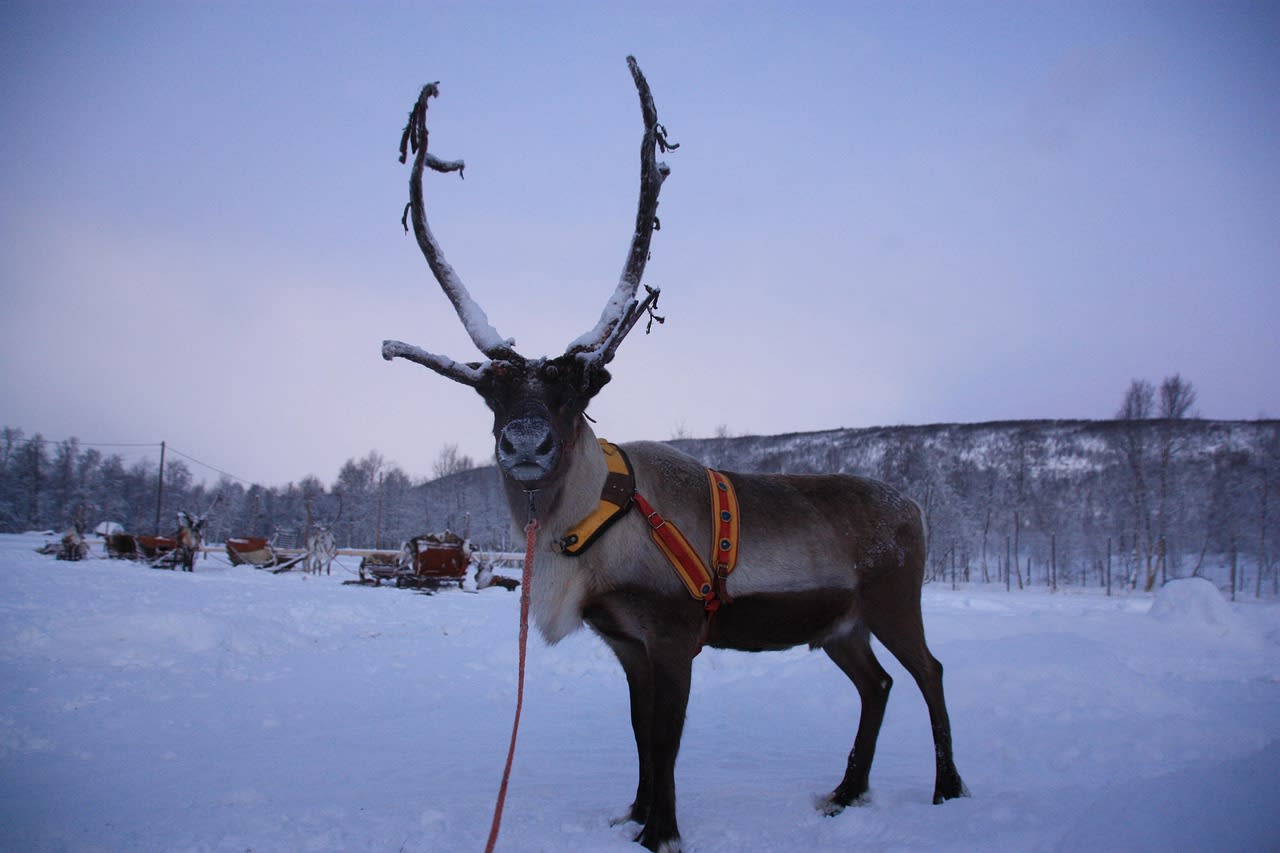
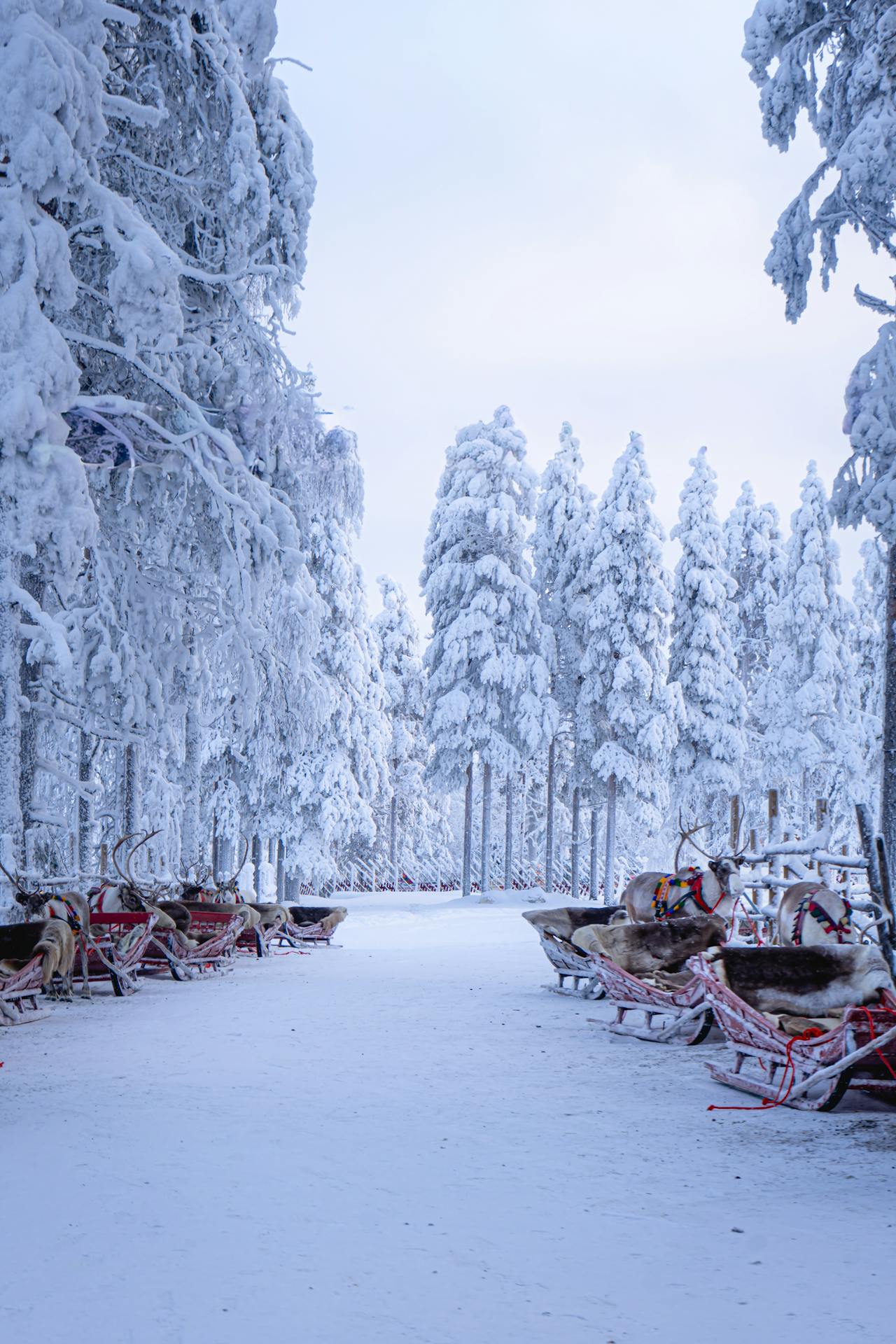
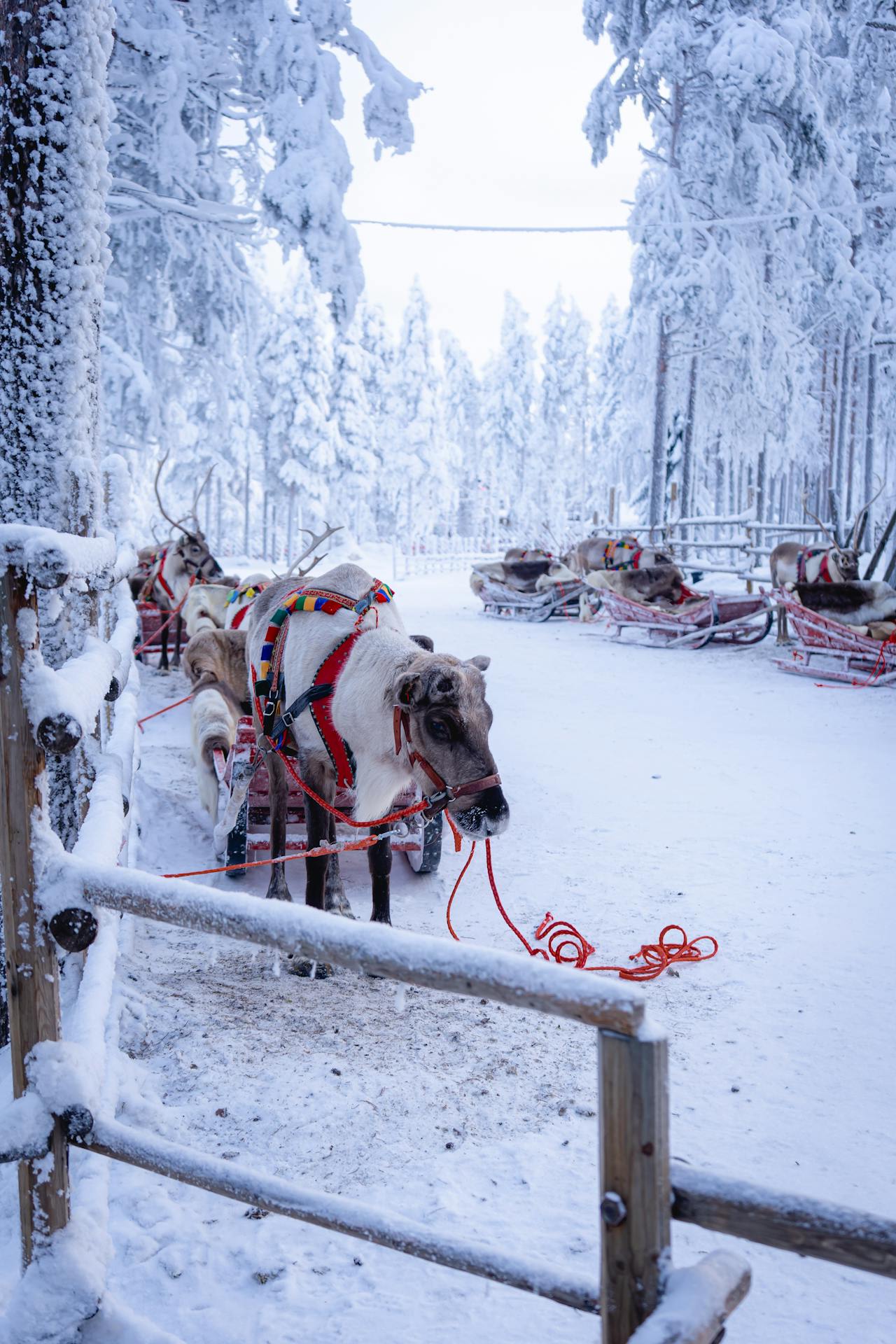
- Reindeer Sled Safari: Guided reindeer sled journeys through boreal forest and open fell are one of the signature Lapland experiences, offered by Sámi and Finnish reindeer herding families across the region. Visitors learn to handle the sled and interact with semi-domesticated reindeer in their winter pasture environment. Extended overnight expeditions sleep in wilderness cabins or traditional Sámi lavvu tents.
- Cross-Country Skiing and Snowshoeing: Finland's network of marked wilderness ski routes in Lapland — totalling over 4,000 km — are maintained by the Finnish Forest Service (Metsähallitus) and provide access to remote terrain impossible to reach on foot in winter. The Pallas–Hetta and Karhunkierros routes are among Finland's most celebrated, with overnight wilderness huts (autiotupa) spaced 10–20 km apart for self-sufficient travellers.
- Midnight Sun Hiking: From late May to late July, the sun does not set at all above the Arctic Circle — it simply describes a circle above the horizon, dropping to its lowest point around midnight before climbing again. Hiking in this continuous golden light, through cotton grass meadows and cloudberry fields with no darkness and no need for a head torch, is one of the most disorienting and beautiful experiences in European nature.
- Wilderness Fishing and Canoeing: The Lemmenjoki, Ounasjoki, and Tenojoki river systems provide world-class wild salmon and Arctic char fishing under Finnish and Sámi fishing rights regulations. Multi-day canoe expeditions through the river wilderness — camping on gravel bars, catching and cooking fish — represent Lapland at its most elemental. The Tenojoki (Tana) salmon river on the Norwegian border is internationally regarded as one of Europe's finest salmon rivers, with catches of 15–25 kg fish not uncommon.
💡 Travel Tips
Best Season: December–March for winter sports, aurora, and snowmobiling. February–March adds longer daylight (5–7 hours in late February) to the full winter experience. June–July for midnight sun hiking, canoeing, and fishing. September for autumn colours (ruska) — a 2–3 week window when the fell landscapes turn gold, red, and orange — combined with the first aurora season of the year.
What to Pack in Winter: Thermal base layers (wool or synthetic), mid-layer fleece, insulated outer layer rated to at least −30°C, windproof shell, insulated waterproof boots rated to −40°C, wool socks, balaclava, face mask, wool-lined gloves with outer mitts. Cotton kills — avoid it entirely in Arctic conditions. Rental of full Arctic clothing packages is available at most Lapland resorts for approximately €30–50 per day.
Polar Night and Mental Wellbeing: The polar night in northern Lapland (complete darkness) lasts from approximately 25 November to 17 January. It is genuinely dark — not just short days — and visitors susceptible to SAD (Seasonal Affective Disorder) should plan accordingly with light therapy, Vitamin D supplements, and active outdoor time around midday when a brief blue twilight occurs even in deep polar night.
Accommodation: Saariselkä resort village, Inari village (Sámi culture centre), Levi ski resort, and Ylläs ski resort are the main accommodation hubs. Glass-roofed aurora cabins (for sleeping under the Northern Lights) are available from multiple operators and must be booked 6–12 months in advance.
🌱 Conservation
The relationship between tourism and Sámi cultural preservation is a complex and ongoing negotiation. Lapland attracts approximately 3 million visitors annually, generating economic benefits that support Sámi businesses but also creating pressure for cultural commodification — the 'Lappish' imagery of reindeer, lavvu tents, and Santa Claus is commercially exploited in ways that Sámi organisations argue distort and trivialise their living culture. The Sámi Parliament of Finland has consistently advocated for visitor guidelines requiring cultural interpretation of Sámi traditions to be conducted or at minimum approved by Sámi communities, rather than by tourism operators without Sámi involvement. The reindeer herding rights — which predate Finnish statehood — are protected under Finnish law but face practical pressures from predator (wolf and wolverine) re-expansion, infrastructure development, and military training areas that fragment traditional herding corridors.